Adhyaya 214
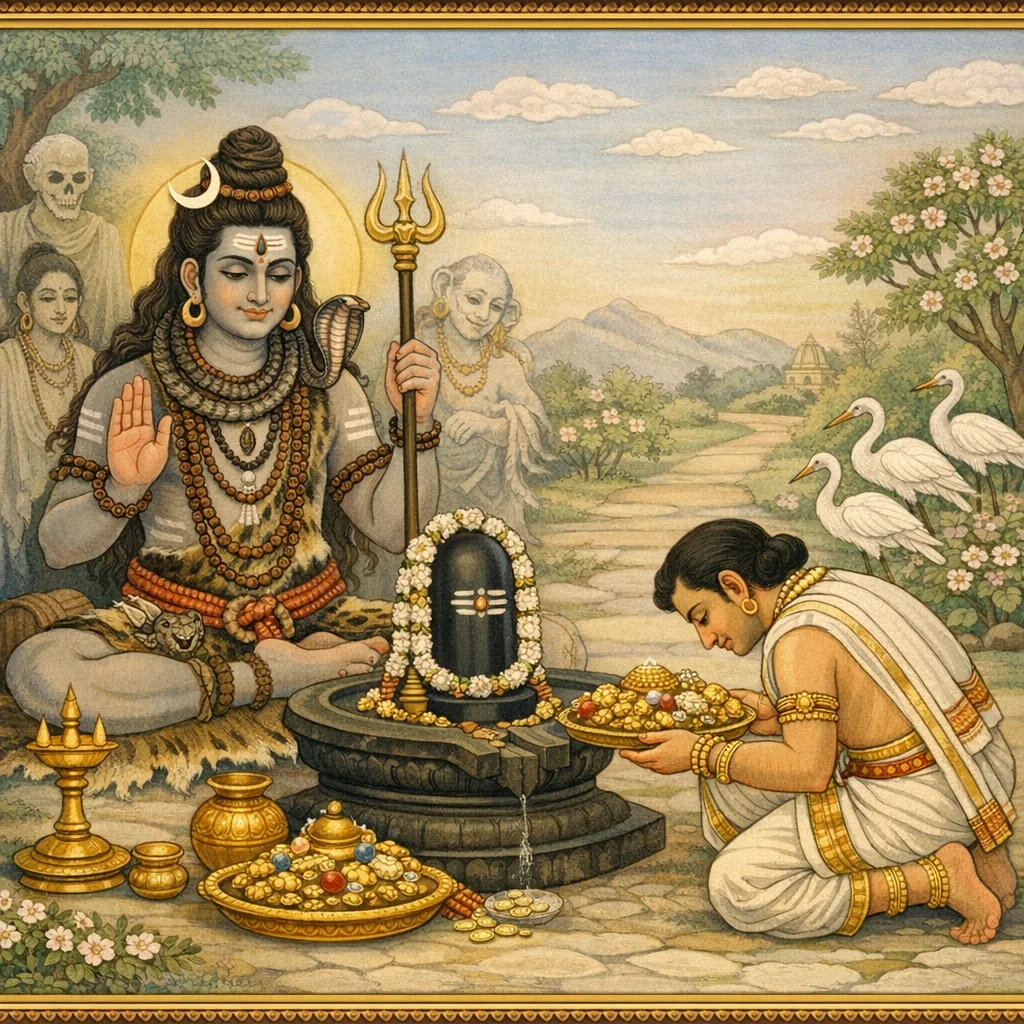
Chapter 214 is narrated by Mārkaṇḍeya as a theological account of the origin of a Śaiva sacred place. It begins with a phalāśruti: merely hearing this story frees one from all sins. Śiva appears in fearsome ascetic imagery—Kapālī/Kānthika—surrounded by piśācas, rākṣasas, bhūtas, ḍākinīs, and yoginīs, seated as Bhairava upon a preta-seat, yet granting fearlessness to the three worlds while performing immense tapas. When a famed “āṣāḍhī” observance occurs and Śiva’s kanthā (cloak) is released elsewhere, the deity becomes known as Kantheśvara, whose darśana yields merit like an Aśvamedha. The narrative then turns to Devamārga, teaching about desire and grace. Śiva meets a merchant and tests him by asking him to fill/raise the liṅga using “balāka” (understood as cranes/herons as ornament and/or a named implement or measure in local tradition). Driven by greed and confusion, the merchant exhausts his wealth; Śiva playfully fragments the liṅga and challenges the very notion of “completion,” then, upon confession and remorse, grants inexhaustible riches. The liṅga remains as a public proof (pratyaya) for the welfare of beings, adorned with balāka, and the place becomes renowned as Devamārga. The chapter closes with soteriological assurances: seeing or worshiping there removes sins; worship of Balākeśvara on Devamārga within a pañcāyatana setting leads to Rudraloka; and for the spiritually intent, death on Devamārga entails no return from Rudraloka.
Shlokas
Verse 1
श्रीमार्कण्डेय उवाच । चतुर्थं सम्प्रवक्ष्यामि देवस्य चरितं महत् । श्रुतमात्रेण येनैव सर्वपापैः प्रमुच्यते
Śrī Mārkaṇḍeya said: Now I shall proclaim the fourth great sacred episode of the Deva; by merely hearing it, one is freed from all sins.
Verse 2
कपाली कान्थिको भूत्वा यथा स व्यचरन्महीम् । पिशाचैर्राक्षसैर्भूतैर्डाकिनीयोगिनीवृतः
How He, becoming Kapālī and Kānthika, wandered upon the earth—surrounded by piśācas, rākṣasas, and bhūtas, attended by ḍākinīs and yoginīs.
Verse 3
भैरवं रूपमास्थाय प्रेतासनपरिग्रहः । त्रैलोक्यस्याभयं दत्त्वा चचार विपुलं तपः
Assuming the form of Bhairava, taking a seat upon a preta (spirit), He granted fearlessness to the three worlds and then undertook vast austerities.
Verse 4
आषाढी तु कृता तत्र ह्याषाढीनाम विश्रुतम् । कन्था मुक्ता ततोऽन्यत्र देवेन परमेष्ठिना
There an Āṣāḍhī was established, renowned by the name “Āṣāḍhī”; and then, elsewhere, the Lord Parameṣṭhin cast off the ragged mantle (kanthā).
Verse 5
तदाप्रभृति राजेन्द्र स कन्थेश्वर उच्यते । तस्य दर्शनमात्रेण ह्यश्वमेधफलं लभेत्
From that time onward, O king, He is called Kantheśvara; and by merely beholding Him, one obtains the fruit of the Aśvamedha sacrifice.
Verse 6
देवो मार्गे पुनस्तत्र भ्रमते च यदृच्छया । विक्रीणाति बलाकारो दृष्ट्वा चोक्तो हरेण तु
Again there, the Deva wandered along the road by chance. Seeing him, one of bull-like form was selling something, and Hara (Śiva) addressed him.
Verse 7
यदि भद्र न चेत्कोपं करोषि मयि साम्प्रतम् । बलाभिर्भर मे लिङ्गं ददामि बहु ते धनम्
“If, good sir, you are not angry with me just now, then carry my liṅga with your strength; I shall give you abundant wealth.”
Verse 8
एवमुक्तोऽथ देवेन स वणिग्लोभमोहितः । योजयामास बलका लिङ्गे चोत्तममध्यमान्
Thus addressed by the God, the merchant—deluded by greed—set about placing the balākā-birds upon the liṅga, arranging them in the best and middle positions.
Verse 9
तावद्यावत्क्षयं सर्वे गताः काले सुसंचिताः । स्थितं समुन्नतं लिङ्गं दृष्ट्वा शोकमुपागमत्
In due course, all that had been carefully accumulated was exhausted; and on seeing the liṅga still standing, lofty and unmoved, he fell into sorrow.
Verse 10
कृत्वा तु खण्डखण्डानि स देवः परमेश्वरः । उवाच प्रहसन्वाक्यं तं दृष्ट्वा गतसाध्वसम्
Then Parameśvara, the God, having broken it into pieces, spoke with a smile upon seeing him now free from fear.
Verse 11
न च मे पूरितं लिङ्गं यास्यामि यदि मन्यसे । ददामि तत्र वित्तं ते यदि लिङ्गं प्रपूरितम्
“If you think I will not depart until my liṅga is fully ‘filled’, then—once the liṅga is completely filled—I shall grant you wealth there.”
Verse 12
वणिगुवाच । अधन्यः कृतपुण्योऽहं निग्राह्यः परमेश्वर । तव प्रियमकुर्वाणः शोचिष्ये शाश्वतीः समाः
The merchant said: “Alas! Though I have gained merit, I am unfortunate and worthy of restraint, O Parameśvara. For not doing what is pleasing to You, I shall grieve for endless years.”
Verse 13
एतच्छ्रुत्वा वचस्तस्य वणिक्पुत्रस्य भारत । असंक्षयं धनं दत्त्वा स्थितस्तत्र महेश्वरः
O Bhārata, hearing these words of the merchant’s son, Maheśvara bestowed inexhaustible wealth and remained there.
Verse 14
तदा प्रभृति राजेन्द्र बलाकैरिव भूषितम् । प्रत्ययार्थं स्थितं लिङ्गं लोकानुग्रहकाम्यया
From that time onward, O king, the liṅga stood as though adorned with balākā-birds—set there as a sign, out of the wish to bestow favor upon the world.
Verse 15
देवेन रचितं पार्थ क्रीडया सुप्रतिष्ठितम् । देवमार्गमिति ख्यातं त्रिषु लोकेषु विश्रुतम् । पश्यन् प्रपूजयन् वापि सर्वपापैः प्रमुच्यते
O Pārtha, fashioned by the Deity and firmly established in playful līlā, it became known as “Devamārga”, famed in all three worlds. Whoever even beholds it—or worships it with reverence—is freed from all sins.
Verse 16
देवमार्गे तु यो गत्वा पूजयेद्बलाकेश्वरम् । पञ्चायतनमासाद्य रुद्रलोकं स गच्छति
But whoever goes to Devamārga and worships Balākeśvara—having reached the sacred pañcāyatana—attains Rudra’s world.
Verse 17
देवमार्गे मृतानां तु नराणां भावितात्मनाम् । न भवेत्पुनरावृत्ती रुद्रलोकात्कदाचन
For those people of cultivated soul who die at Devamārga, there is never any return (rebirth) from Rudraloka.
Verse 18
देवमार्गस्य माहात्म्यं भक्त्या श्रुत्वा नरोत्तम । मुच्यते सर्वपापेभ्यो नात्र कार्या विचारणा
O best of men, one who listens with devotion to the greatness of the Devamārga is freed from all sins—there is no need for any further doubt or deliberation about this.