Adhyaya 211
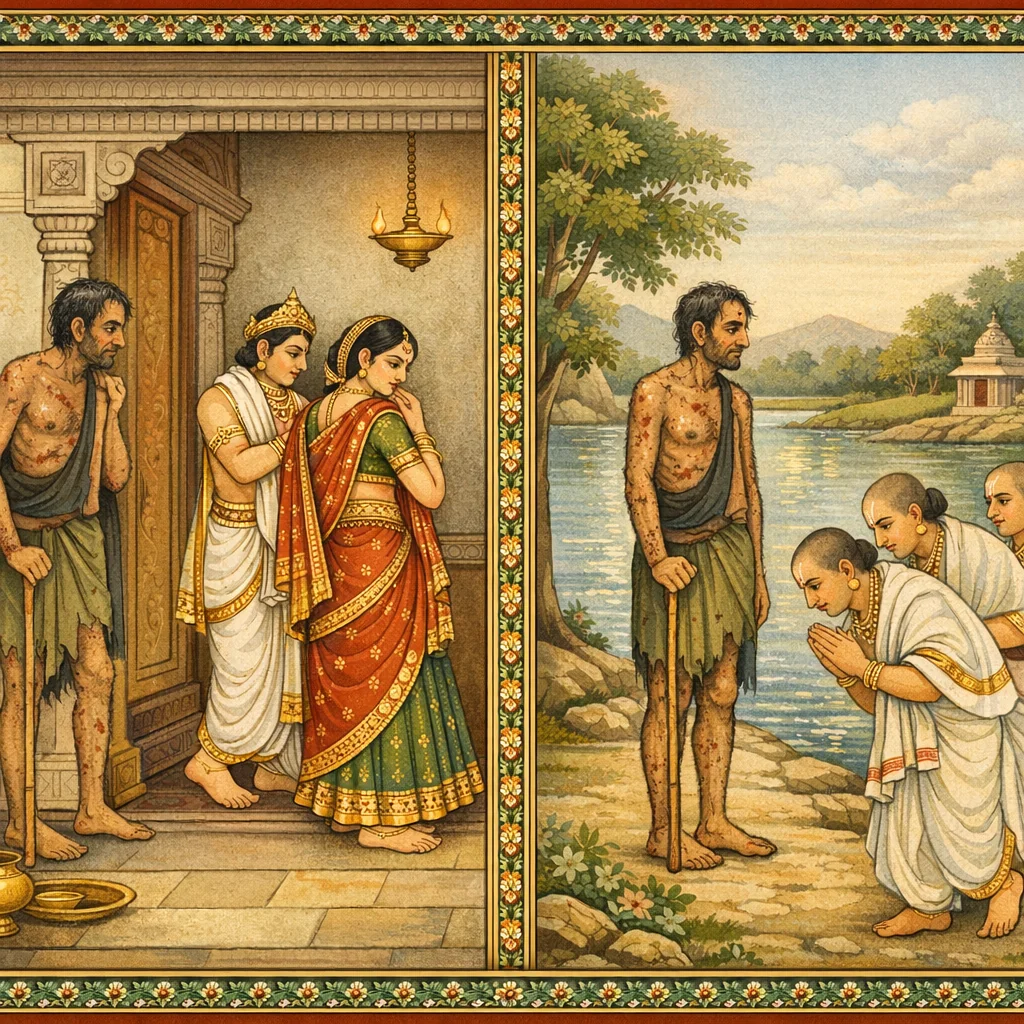
Mārkaṇḍeya recounts to Yudhiṣṭhira an incident on the bank of the Narmadā during the śrāddha season of feeding brāhmaṇas. Maheśvara, disguised as a foul-smelling brāhmaṇa afflicted with leprosy (kūṣṭhī), approaches a brāhmaṇa household and asks to dine with the assembled brāhmaṇas. The hosts and participants reject him with harsh words, deeming his appearance ritually polluting. After the disguised Lord departs, the meal is mysteriously ruined: worms appear in the food vessels, and all are astonished. A discerning brāhmaṇa explains this as vipāka—the consequence of insulting an atithi (guest)—and recognizes the visitor as the Supreme Lord testing their conduct. He reiterates the rule that an atithi must not be judged by beauty or ugliness, cleanliness or uncleanness, or outward social appearance; neglect during śrāddha invites destructive forces to consume the offering. The group searches and finds the figure standing motionless like a pillar, then offers supplication. Maheśvara responds with compassion, restores/provides the food, and instructs them to continue worship of his maṇḍala. The chapter concludes by praising the trident-bearing Lord’s shrine/āyatana called “Muṇḍināma,” auspicious and sin-destroying, especially efficacious in Kārttika and equal in merit to Gayā-tīrtha.
Shlokas
Verse 1
श्रीमार्कण्डेय उवाच । आश्चर्यभूतं लोकस्य देवदेवेन यत्कृतम् । तत्ते सर्वं प्रवक्ष्यामि नर्मदातटवासिनाम्
Śrī Mārkaṇḍeya said: I shall tell you in full the wondrous deed performed by the Lord of Lords—an event concerning the dwellers on the banks of the Narmadā.
Verse 2
द्विजान् सुकृत्पणान् देवः कुष्ठी भूत्वा ययाच ह । श्राद्धकाले तु सम्प्राप्ते रक्तगन्धानुलेपनः
The God, having assumed the form of a leper, begged from Brāhmaṇas who were merchants of merit—virtuous yet calculating. When the time for śrāddha arrived, he appeared smeared with red, fragrant unguents.
Verse 3
स्रवद्बुद्बुदगात्रस्तु मक्षिकाकृमिसंवृतः । दुश्चर्मा दुर्मुखो गन्धी प्रस्खलंश्च पदे पदे
His body oozed with blistering sores, covered with flies and worms; his skin was foul, his face hideous, reeking—and he stumbled at every step.
Verse 4
ब्राह्मणावसथं गत्वा स्खलन्द्वारेऽब्रवीदिदम् । भोभो गृहपते त्वद्य ब्राह्मणैः सह भोजनम्
Going to the Brāhmaṇas’ lodging and stumbling at the doorway, he said: ‘O householder, today I wish to dine together with the Brāhmaṇas.’
Verse 5
त्वद्गृहे कर्तुमिच्छामि ह्येभिः सह सुसंस्कृतम् । ततस्तं ब्रह्माणं दृष्ट्वा यजमानसमन्विताः
“I wish to prepare in your house a well-arranged meal, together with these.” Then, seeing that Brāhmaṇa, the householders, acting as yajamānas, responded accordingly.
Verse 6
स्रवन्तं सर्वगात्रेषु धिग्धिगित्येवमब्रुवन् । निर्गच्छस्वाशु दुर्गन्ध गृहाच्छीघ्रं द्विजाधम
Seeing him oozing from every limb, they cried, “Fie, fie!” and said: “Get out at once, you foul-smelling one—leave this house quickly, O lowest of the twice-born!”
Verse 7
अभोज्यमेतत्सर्वेषां दर्शनात्तव सत्कृतम् । एवमेव तथेत्युक्त्वा देवदेवो महेश्वरः
“This food is not fit to be eaten by anyone; by the very sight of you it has been made holy and duly honored.” Saying, “So be it—just so,” Mahādeva, the God of gods, spoke thus.
Verse 8
जगामाकाशममलं दृश्यमानो द्विजोत्तमैः । गते चादर्शनं देवे स्नात्वाभ्युक्ष्य समन्ततः
Then he went into the stainless sky, still visible to the best of the twice-born. And when the Lord had passed beyond sight, they bathed and then sprinkled the place on all sides.
Verse 9
भुञ्जतेऽस्म द्विजा राजन्यावत्पात्रे पृथक्पृथक् । यत्रयत्र च पश्यन्ति तत्रतत्र कृमिर्बहुः
The brāhmaṇas were eating there, O King, each in his own vessel. Yet wherever they looked, there and there they saw many worms.
Verse 10
दृष्ट्वा विस्मयमापन्नाः सर्वे किमिति चाब्रुवन् । ततः कश्चिदुवाचेदं ब्राह्मणो गुणवानजः
Seeing it, all were struck with wonder and asked, “What is this?” Then a certain brāhmaṇa—virtuous and elder—spoke these words.
Verse 11
योगीन्द्रः शङ्कया तत्र बहुविप्रसमागमे । योऽत्र पूर्वं समायातः स योगी परमेश्वरः
Suspecting the truth amid that great gathering of brāhmaṇas, he said: “The lord of yogins who came here earlier—he, that yogin, is Parameśvara Himself.”
Verse 12
तस्येदं क्रीडितं मन्ये भर्त्सितस्य विपाकजम् । फलं भवति नान्यस्य ह्यतिथेः शास्त्रनिश्चयात्
I think this is his divine play—the ripened consequence of having been insulted. For, by the settled rule of the scriptures, such a result comes from no one else but an (offended) guest.
Verse 13
सम्पूज्य परमात्मा वै ह्यतिथिश्च विशेषतः । श्राद्धकाले तु सम्प्राप्तमतिथिं यो न पूजयेत्
Indeed, the Supreme Self is to be worshiped—and, especially, the guest. But whoever, when the time of śrāddha has come, does not honor a guest who arrives then…
Verse 14
पिशाचा राक्षसास्तस्य तद्विलुम्पन्त्यसंशयम् । रूपान्वितं विरूपं वा मलिनं मलिनाम्बरम्
Piśācas and rākṣasas, without doubt, seize that from him—whether the guest is handsome or deformed, whether unsoiled or wearing soiled garments.
Verse 15
योगीन्द्रं श्वपचं वापि अतिथिं न विचारयेत् । तच्छ्रुत्वा वचनं तस्य यजमानपुरोगमाः
One should not discriminate against a guest—whether he be a lord among yogins or even a dog-cooker (an outcaste). Hearing his words, the sacrificers, led by the yajamāna…
Verse 16
ब्राह्मणा द्विजमन्वेष्टुं धाविताः सर्वतोदिशम् । तावत्कथंचित्केनापि गहनं वनमाश्रितः
The brāhmaṇas ran in every direction to search for the twice-born visitor. Meanwhile, somehow, he had taken refuge in a dense forest.
Verse 17
दृष्टो दृष्ट इति प्रोक्तं तेन ते सर्व आगताः । ततः पश्यन्ति तं विप्रं स्थाणुवन्निश्चलं स्थितम्
Hearing the cry, “Seen! Seen!”, they all hurried there. Then they beheld that brāhmaṇa standing motionless, steady like a pillar.
Verse 18
क्रन्दते न चलति स्पन्दते न च पश्यति । जल्पन्ति करुणं केचित्स्तुवन्ति च तथापरे
He neither wept nor moved, nor even stirred or looked. Some spoke compassionately, while others offered praises.
Verse 19
वाग्भिः सततमिष्टाभिः स्तूयमानस्त्रिलोचनः । क्षुधार्दितानां देवेश ब्राह्मणानां विशेषतः । विनष्टमन्नं सर्वेषां पुनः संकर्तुमर्हसि
As the Three-eyed Lord was continually praised with beloved words, they prayed: “O Devēśa, Lord of gods, especially for these brāhmaṇas afflicted by hunger—restore again the food that has been lost for all.”
Verse 20
श्रुत्वा तु वचनं तेषां ब्राह्मणानां युधिष्ठिर । परया कृपया देवः प्रसन्नस्तानुवाच ह
O Yudhiṣṭhira, hearing the words of those brāhmaṇas, the Lord—moved by supreme compassion and well pleased—spoke to them.
Verse 21
मया प्रसन्नेन महानुभावास्तदेव वोऽन्नं विहितं सुधेव । भुञ्जन्तु विप्राः सह बन्धुभृत्यैरर्चन्तु नित्यं मम मण्डलं च
“O noble ones, since I am pleased, that very food has been duly provided for you—excellent indeed. Let the brāhmaṇas eat together with their relatives and attendants, and let them daily worship my maṇḍala as well.”
Verse 22
ततश्चायतनं पार्थ देवदेवस्य शूलिनः । मुण्डिनामेति विख्यातं सर्वपापहरं शुभम् । कार्त्तिक्यां तु विशेषेण गयातीर्थेन तत्समम्
Then, O Pārtha, the sacred abode of Śūlin—the God of gods—became renowned as “Muṇḍinā”. Auspicious and removing all sins, it is especially meritorious in the month of Kārttika, being equal to the Gayā-tīrtha.
Verse 211
अध्यायः
Chapter (colophon marker).