Adhyaya 210
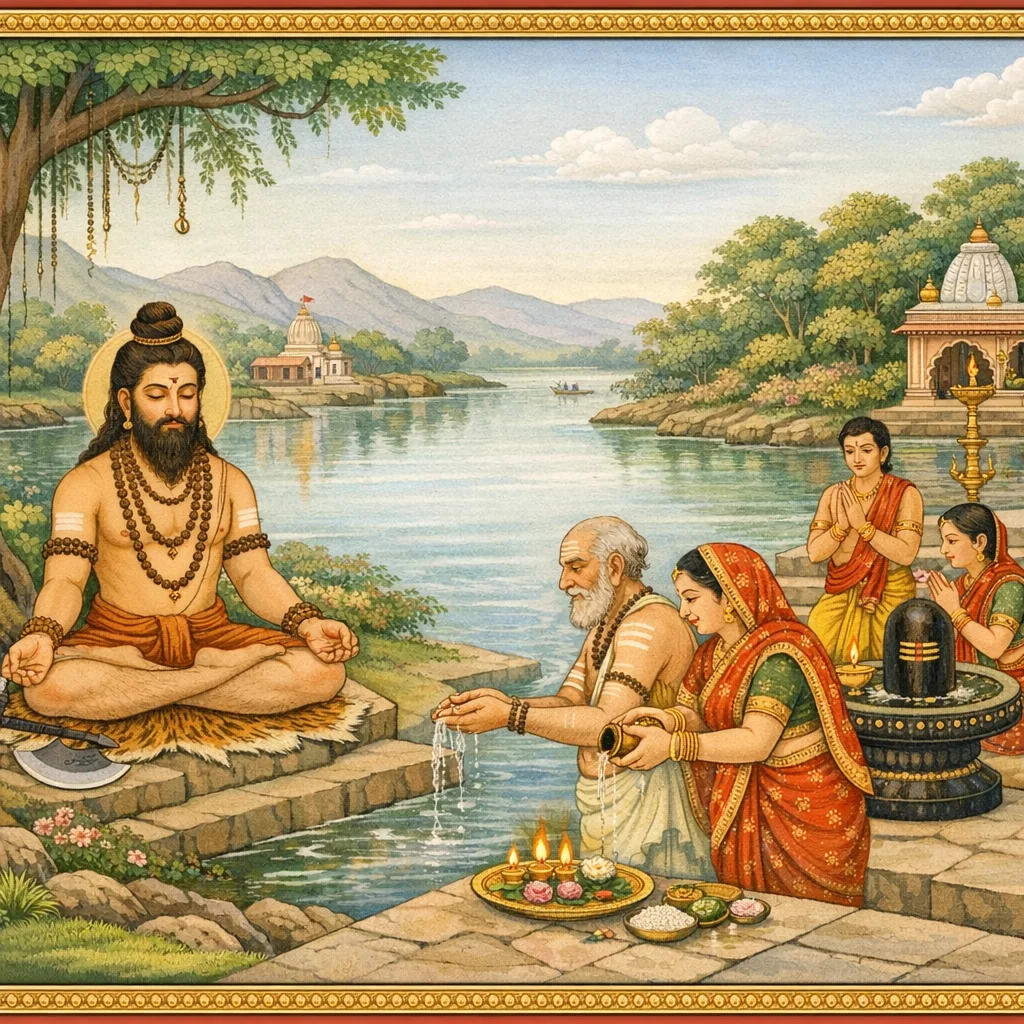
This adhyāya, spoken by Śrī Mārkaṇḍeya, introduces Puṅkha Tīrtha as an “excellent” place of pilgrimage and establishes its sanctity through exemplary precedent. It recalls an earlier attainment of siddhi connected with Puṅkha at this tīrtha, and then links the site’s renown to the tapas of Jāmadagnya (Paraśurāma), the mighty figure famed for ending kṣatriya dominance, who performed extensive austerities on the northern bank of the Narmadā. The chapter then sets out a structured phalaśruti: bathing at the tīrtha with worship of Parameśvara grants strength in this world and liberation in the next; honoring devas and pitṛs frees one from ancestral debt; giving up life (prāṇatyāga) there ensures an irreversible post-mortem course culminating in Rudra-loka. Bathing yields the fruit of an Aśvamedha; feeding brāhmaṇas multiplies merit immensely; and worship of Vṛṣabhadhvaja (Śiva, “bannered by the bull”) bestows the fruit of a Vājapeya sacrifice. Overall, the adhyāya serves as a devotional, place-based guide to high-yield ritual conduct within a Śaiva horizon.
Shlokas
Verse 1
श्रीमार्कण्डेय उवाच । तस्यैवानन्तरं तात पुङ्खिलं तीर्थमुत्तमम् । तत्र तीर्थे पुरा पुङ्खः पार्थ सिद्धिमुपागतः
Śrī Mārkaṇḍeya said: “Immediately after that, dear one, comes the excellent sacred ford called Puṅkhila. At that tīrtha long ago, Puṅkha, son of Pṛthā, attained spiritual accomplishment.”
Verse 2
जामदग्न्यो महातेजाः क्षत्रियान्तकरः प्रभुः । तपः कृत्वा सुविपुलं नर्मदोत्तरतीरभाक्
Jāmadagnya (Paraśurāma), of great splendor—the mighty chastiser of kṣatriyas—performed vast austerities, taking his seat on the northern bank of the Narmadā.
Verse 3
ततः प्रभृति विख्यातं पुङ्खतीर्थं नरेश्वर । तत्र तीर्थे तु यः स्नात्वा ह्याराध्य परमेश्वरम्
From that time onward, O lord of men, it became renowned as Puṅkha Tīrtha. Whoever bathes at that tīrtha and worships Parameśvara, the Supreme Lord…
Verse 4
इहलोके बलैर्युक्तः परे मोक्षमवाप्नुयात् । देवान्पित्ःन् समभ्यर्च्य पित्ःणामनृणी भवेत्
In this world he is endowed with strength, and in the next he attains liberation. By duly honoring the Devas and the ancestors, he becomes free of debt to the Pitṛs.
Verse 5
तत्र तीर्थे नरो यस्तु प्राणत्यागं करोति वै । अनिवर्तिका गतिस्तस्य रुद्रलोकादसंशयम्
And the man who, at that tīrtha, truly gives up his life—his destination is non-returning: he reaches Rudra’s world, without doubt.
Verse 6
तत्र तीर्थे नरः स्नात्वा हयमेधफलं लभेत्
At that tīrtha, a person who bathes attains the merit equal to that of the Aśvamedha (horse-sacrifice).
Verse 7
तत्र तीर्थे नरो यस्तु ब्राह्मणान् भोजयेन्नृप । एकस्मिन् भोजिते विप्रे कोटिर्भवति भोजिता
O King, at that tīrtha, whoever feeds Brāhmaṇas—when even one Brāhmaṇa is fed, it becomes as though a koṭi (ten million) have been fed.
Verse 8
तत्र तीर्थे तु यः कश्चित्पूजयेद्वृषभध्वजम् । वाजपेयस्य यज्ञस्य फलं प्राप्नोत्यसंशयम्
At that tīrtha, whoever worships the Bull-bannered Lord (Śiva) attains, without doubt, the fruit of the Vājapeya sacrifice.
Verse 210
अध्यायः
Chapter (heading/colophon).