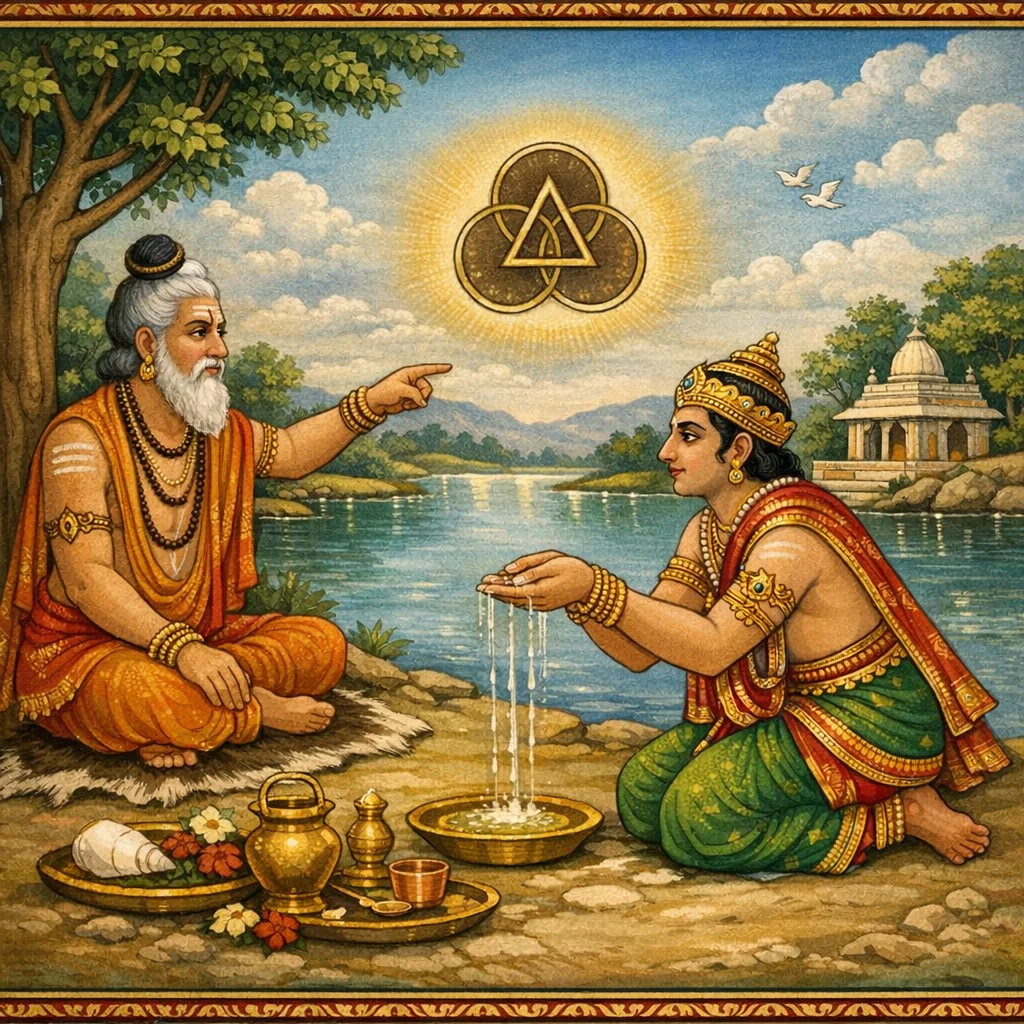
Adhyaya 208
This chapter records Mārkaṇḍeya’s instruction to a ruler concerning the famed tīrtha called “Pitṛ-ṛṇa-mocana,” renowned in the three worlds for releasing one from ancestral debt and obligation. It sets forth the proper ritual order: bathe according to vidhāna, satisfy the pitṛ-deities through tarpaṇa, and give dāna—by which one becomes anṛṇa, free of debt. The teaching then explains why progeny and ritual continuity are upheld: ancestors long for a son, for the son is regarded as the liberator from the “Puṇnāmā” hell, a standard Purāṇic basis for filial-ritual duty. Obligations are classified as the three debts (ṛṇa-traya): pitṛ-ṛṇa through piṇḍadāna and water offerings, deva-ṛṇa through agnihotra and yajñas, and human/social debt through promised gifts and duties toward brahmins, tīrthas, and temple works. The chapter ends with a phalaśruti, declaring that offerings made and teachers satisfied at this tīrtha yield inexhaustible merit benefiting the departed across seven births.
Shlokas
Verse 1
श्रीमार्कण्डेय उवाच । भूमिपाल ततो गच्छेत्तीर्थं परमशोभनम् । विख्यातं त्रिषु लोकेषु पित्ःणामृणमोचनम्
Śrī Mārkaṇḍeya said: O protector of the earth, then one should go to a supremely beautiful tīrtha, renowned in the three worlds, which releases one from the debt owed to the ancestors.
Verse 2
तत्र स्नात्वा विधानेन संतर्प्य पितृदेवताः । मनुष्यश्च नृपश्रेष्ठ दानं दत्त्वानृणो भवेत्
O best of kings, having bathed there according to proper rite, and having satisfied the ancestral deities with offerings, a person—by giving charity—becomes free from indebtedness.
Verse 3
इच्छन्ति पितरः सर्वे स्वार्थहेतोः सुतं यतः । पुन्नाम्नो नरकात्पुत्रोऽस्मानयं मोचयिष्यति
All the ancestors desire a son for their own welfare, because this son will deliver us from the hell called Punnāma.
Verse 4
पिण्डदानं जलं तात ऋणमुत्तममुच्यते । पित्ःणां तद्धि वै प्रोक्तमृणं दैवमतः परम्
O dear one, offering piṇḍas and water is called the highest repayment of debt; for that is indeed declared to be the divine debt owed to the ancestors, surpassing all else.
Verse 5
अग्निहोत्रं तथा यज्ञाः पशुबन्धास्तथेष्टयः । इति देवर्णं प्रोक्तं शृणु मानुष्यकं ततः
Agnihotra, sacrifices, animal-offerings, and other ritual performances—this is declared to be the “debt to the gods” (deva-ṛṇa). Now hear next about the human debt.
Verse 6
ब्राह्मणेषु च तीर्थेषु देवायतनकर्मसु । प्रतिश्रुत्य ददेत्तत्तद्व्यवहारः कृतो यथा
And with regard to Brahmins, sacred tīrthas, and works connected to temples of the gods—having promised, one should give accordingly, just as the agreed dealings were made.
Verse 7
ऋणत्रयमिदं प्रोक्तं पुत्राणां धर्मनन्दन । सत्पुत्रास्ते तु राजेन्द्र स्नाता य ऋणमोचने
This threefold debt is declared for sons, O delight of Dharma. And, O lord of kings, those are truly good sons who bathe at the place of release from debt.
Verse 8
ऋणत्रयाद्विमुच्यन्ते ह्यपुत्राः पुत्रिणस्तथा । तस्मात्तीर्थवरं प्राप्य पुत्रेण नियतात्मना । पितृभ्यस्तर्पणं कार्यं पिण्डदानं विशेषतः
Both the childless and those who have children can be released from the threefold debt. Therefore, having reached the best of tīrthas, the son—self-controlled—should perform tarpaṇa for the ancestors, and especially offer piṇḍas.
Verse 9
तत्र तीर्थे हुतं दत्तं गुरवस्तोषिता यदि । मृतानां सप्त जन्मानि फलमक्षयमश्नुते
If, at that tīrtha, oblations are offered, gifts are given, and the elders (gurus) are satisfied, then for the departed the reward is enjoyed as imperishable for seven births.
Verse 208
अध्यायः
Here concludes the sacred Chapter.