Adhyaya 203
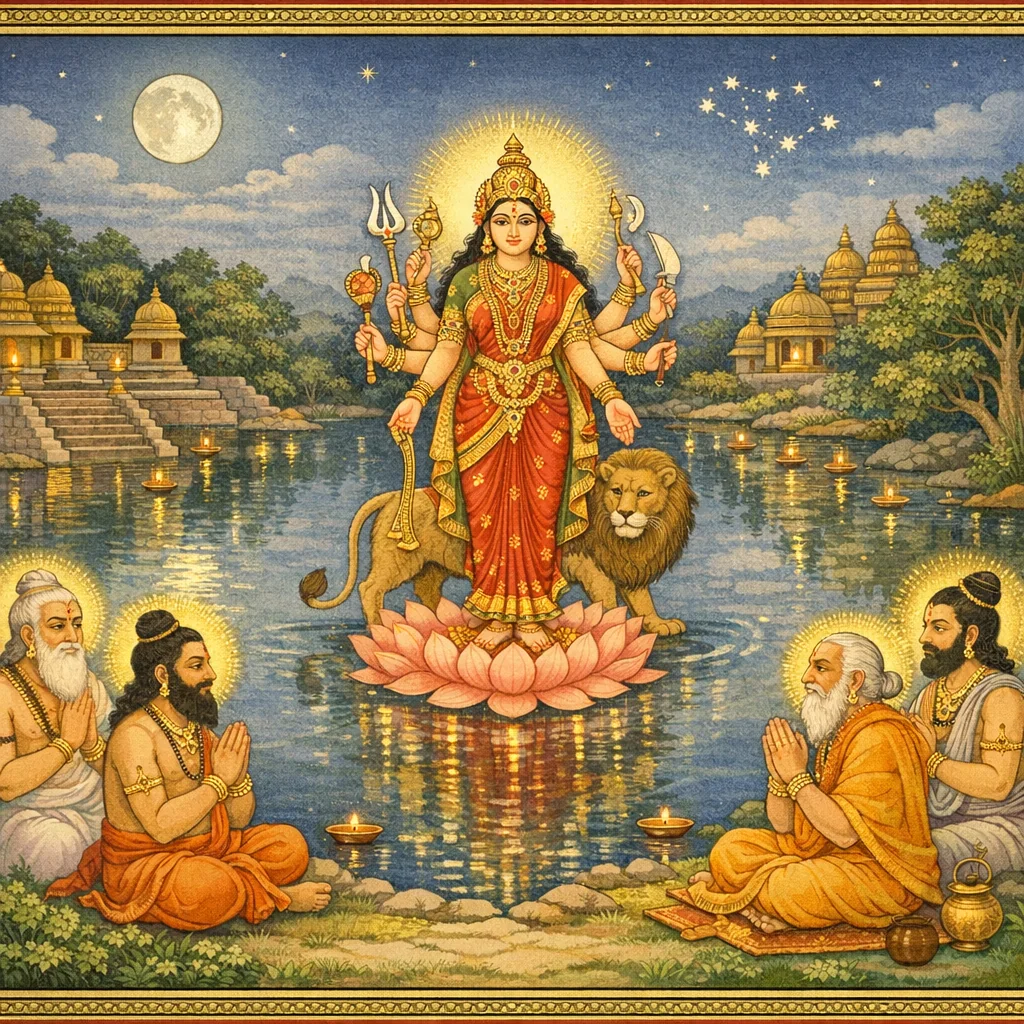
Mārkaṇḍeya proclaims Koṭitīrtha as an “unsurpassed” pilgrimage site, filled with the presence of many siddhas and thronged by great sages. Its authority is grounded in a founding account: after long tapas, the sages establish Śiva there, and also install the Devī as Koṭīśvarī and as Cāmuṇḍā (Mahīṣārdinī), revealing a sacred complex that unites Śaiva and Śākta sanctity. A precise ritual time is then prescribed: on the kṛṣṇa-pakṣa caturdaśī of Bhādrapada, when the Hasta nakṣatra prevails, this tīrtha is praised as universally sin-destroying. The chapter lists key rites—snāna at the tīrtha, offering tilodaka, and performing śrāddha—declaring powerful salvific results and benefits for ancestors, including swift uplift from naraka for a specified number of persons. Finally, it states a general rule of multiplied efficacy: bathing, gifting, japa, homa, svādhyāya, and deity-archana performed by the virtue of this tīrtha become “koṭi-guṇa,” increased a crore-fold, expressing a place-based doctrine of amplified religious merit.
Shlokas
Verse 1
श्रीमार्कण्डेय उवाच । ततो गच्छेद्धराधीश कोटितीर्थमनुत्तमम् । यत्र सिद्धा महाभागाः कोटिसंख्या महर्षयः
Śrī Mārkaṇḍeya said: “Then, O lord of the earth, one should go to the unsurpassed Koṭitīrtha, where dwell the greatly fortunate siddhas—great sages numbering in crores.”
Verse 2
तपः कृत्वा सुविपुलमृषिभिः स्थापितः शिवः । तथा कोटीश्वरी देवी चामुण्डा महिषार्दिनी
Having performed exceedingly great austerities, the sages established Śiva there; and likewise the goddess Koṭīśvarī—Cāmuṇḍā, the slayer of the Buffalo-demon (Mahiṣa).
Verse 3
कृष्णपक्षे चतुर्दश्यां मासि भाद्रपदे नृप । तीर्थकोटीः समाहूय मुनिभिः स्थापितः शिवः
O King, on the fourteenth lunar day (caturdaśī) of the dark fortnight in the month of Bhādrapada, the sages invoked crores of tīrthas and established Lord Śiva there.
Verse 4
तस्यां तिथौ च हस्तर्क्षं सर्वपापप्रणाशनम् । तत्र तीर्थे तदा गत्वा स्नानं कृत्वा समाहितः
On that very tithi, when the asterism Hasta prevails—destroyer of all sins—one should go to that tīrtha, bathe there, and become inwardly collected and focused.
Verse 5
नरकादुद्धरत्याशु पुरुषानेकविंशतिम् । तिलोदकप्रदानेन किमुत श्राद्धदो नरः
By offering tilodaka (sesame-water), a man quickly rescues twenty-one persons from hell—how much more, then, does one who performs śrāddha, the ancestral rites, bestow deliverance!
Verse 6
स्नानं दानं जपो होमः स्वाध्यायो देवतार्चनम् । तस्य तीर्थस्य योगेन सर्वं कोटिगुणं भवेत्
Bathing, charity, mantra-recitation, fire-offering, Vedic study, and worship of the deities—by the sanctifying power of that tīrtha, all of these become multiplied ten millionfold.
Verse 203
अध्यायः
“Chapter.” (A closing marker indicating the end of the chapter/section.)