Adhyaya 200
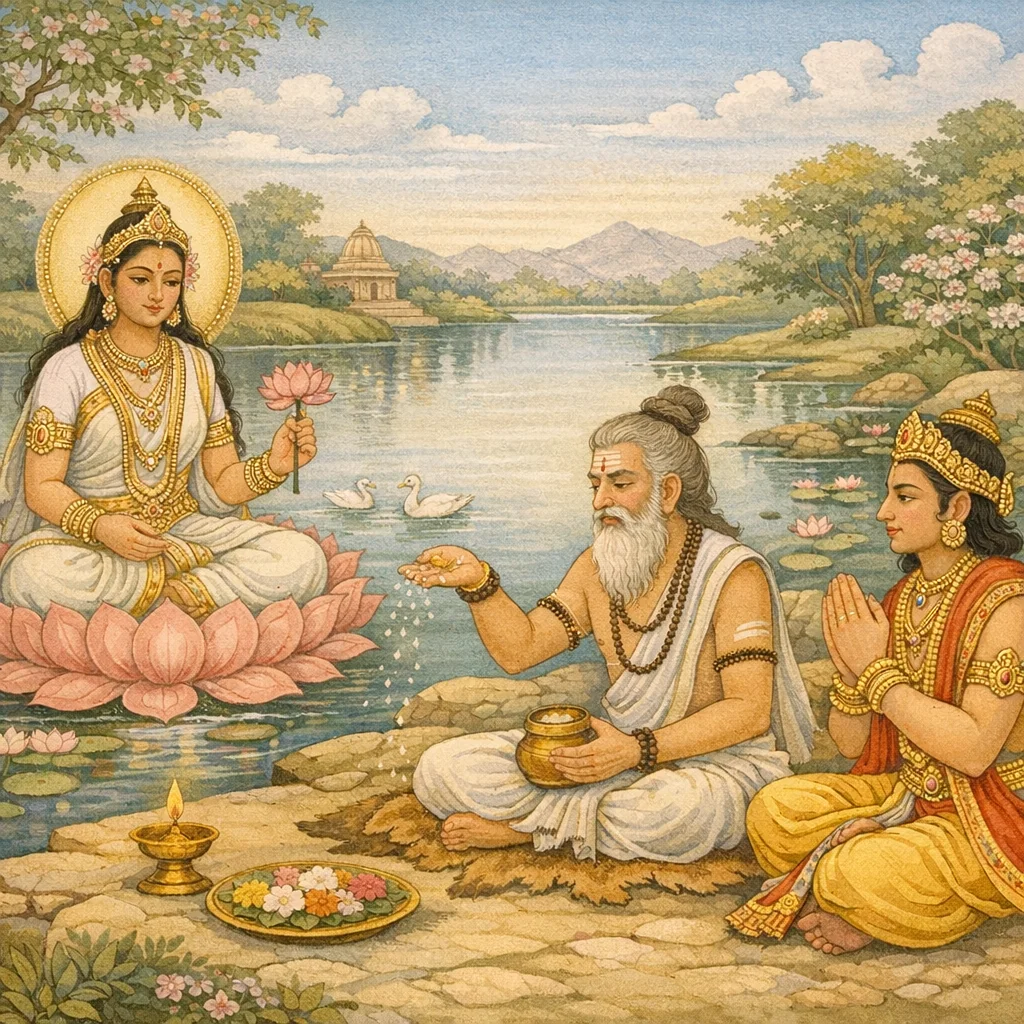
The chapter unfolds as a dialogue in which Mārkaṇḍeya proclaims Sāvitrī-tīrtha an eminent holy place and answers Yudhiṣṭhira’s questions about Sāvitrī—who she is, how her form is to be contemplated, and how she is to be worshipped. Sāvitrī is praised as Veda-mātṛ, the Mother of the Vedas, linked with lotus imagery and with meditative visualizations prescribed for the three sandhyā times—dawn, noon, and dusk—each with its own contemplation in accord with the ritual order of time. It then sets out a precise discipline of purification for pilgrims: bathing and ācamana, prāṇāyāma to burn away accumulated faults, sprinkling with the “Āpo hi ṣṭhā” mantra, and the use of Aghamarṣaṇa and other Vedic mantras for removing demerit. The text strongly emphasizes disciplined Gāyatrī-japa after sandhyā as a central practice, promising pāpa-kṣaya and attainment of higher worlds. Further fruits are declared for ancestral rites performed at the tīrtha and for final observances undertaken there, culminating in assurances of exalted post-mortem states and an auspicious rebirth thereafter.
Shlokas
Verse 1
श्रीमार्कण्डेय उवाच । तस्यैवानन्तरं पार्थ सावित्रीतीर्थमुत्तमम् । यत्र सिद्धा महाभागा सावित्री वेदमातृका
Śrī Mārkaṇḍeya said: Immediately after that, O Pārtha, comes the most excellent Sāvitrī Tīrtha—where the greatly fortunate Sāvitrī, the Mother of the Veda, attained perfection.
Verse 2
युधिष्ठिर उवाच । सावित्री का द्विजश्रेष्ठ कथं वाराध्यते बुधैः । प्रसन्ना वा वरं कं च ददाति कथयस्व मे
Yudhiṣṭhira said: Who is Sāvitrī, O best of the twice-born? How do the wise worship her? When she is pleased, what boon does she bestow? Tell me.
Verse 3
श्रीमार्कण्डेय उवाच । पद्मा पद्मासनस्थेनाधिष्ठिता पद्मयोगिनी । सावित्रतेजःसदृशी सावित्री तेन चोच्यते
Śrī Mārkaṇḍeya said: She is Padmā, the Lotus-Yoginī who presides, established by the One seated upon the lotus. Resembling the radiance of Savitṛ, she is therefore called Sāvitrī.
Verse 4
पद्मानना पद्मवर्णा पद्मपत्रनिभेक्षणा । ध्यातव्या ब्राह्मणैर्नित्यं क्षत्रवैश्यैर्यथाविधि
Lotus-faced, lotus-hued, with eyes like lotus-petals—she is to be meditated upon daily by Brāhmaṇas, and by Kṣatriyas and Vaiśyas according to the prescribed rule.
Verse 5
ब्रह्महत्याभयात्सा हि न तु शूद्रैः कदाचन । उच्चारणाद्धारणाद्वा नरके पतति ध्रुवम्
Out of fear of the grave sin of brahma-hatyā, it is never to be taken up by Śūdras; by uttering it, or even by bearing it, one certainly falls into hell.
Verse 6
वेदोच्चारणमात्रेण क्षत्रियैर्धर्मपालकैः । जिह्वाछेदोऽस्य कर्तव्यः शूद्रस्येति विनिश्चयः
If a Śūdra merely utters the Veda, then the Kṣatriyas—protectors of dharma—are to cut off his tongue; such is the settled determination stated here.
Verse 7
बाला बालेन्दुसदृशी रक्तवस्त्रानुलेपना । उषःकाले तु ध्यातव्या सन्ध्या सन्धान उत्तमे
At dawn, Sandhyā is to be meditated upon as a young maiden, like the tender moon, adorned with red garments and fragrant unguents—this is the excellent mode of Sandhyā-observance.
Verse 8
उत्तुङ्गपीवरकुचा सुमुखी शुभदर्शना । सर्वाभरणसम्पन्ना श्वेतमाल्यानुलेपना
She has lofty, full breasts, a beautiful face, and an auspicious appearance; adorned with every ornament, she bears white garlands and unguents.
Verse 9
श्वेतवस्त्रपरिच्छन्ना श्वेतयज्ञोपवीतिनी । मध्याह्नसन्ध्या ध्यातव्या तरुणा भुक्तिमुक्तिदा
Clad in white garments, wearing a white sacred thread—at midday Sandhyā is to be meditated upon as youthful, bestowing both worldly enjoyment and liberation.
Verse 10
प्रदोषे तु पुनः पार्थ श्वेता पाण्डुरमूर्धजा । सुमृता तु दुर्गकान्तारे मातृवत्परिरक्षति
Again, at twilight (pradoṣa), O Pārtha, she is white, with pale-colored hair. When well remembered, in difficult wilderness tracts she protects like a mother.
Verse 11
विशेषेण तु राजेन्द्र सावित्रीतीर्थमुत्तमम् । स्नात्वाचम्य विधानेन मनोवाक्कायकर्मभिः
And in particular, O best of kings, the supreme Sāvitrī-tīrtha: having bathed there and performed ācamana according to rule—purifying oneself in thought, speech, and bodily action.
Verse 12
प्राणायामैर्दहेद्दोषान् सप्तजन्मार्जितान्बहून् । आपोहिष्ठेति मन्त्रेण प्रोक्षयेदात्मनस्तनुम्
By prāṇāyāma one should burn away the many faults amassed over seven births; and with the mantra beginning “Āpo hi ṣṭhā…”, one should sprinkle one’s own body for purification.
Verse 13
नवषट्च तथा तिस्रस्तत्र तीर्थे नृपोत्तम । आपोहिष्ठेति त्रिरावृत्य प्रतिग्राहैर्न लिप्यते
There at that tīrtha, O best of kings, one should perform the counts of nine, six, and also three; by repeating “Āpo hi ṣṭhā…” three times, one is not tainted by accepting gifts (pratigraha).
Verse 14
अघमर्षणं त्र्यृचं तोयं यथावेदमथापि वा । उपपापैर्न लिप्येत पद्मपत्रमिवाम्भसा
Whether one performs the Aghamarṣaṇa rite with the three ṛcs in the prescribed Vedic manner—or even more simply with water—one is not stained by minor sins, just as a lotus leaf is not wetted by water.
Verse 15
त्र्यापं हि कुरुते विप्र उल्लेखत्रयमाचरेत् । चतुर्थं कारयेद्यस्तु ब्रह्महत्यां व्यपोहति
A brāhmaṇa should perform the threefold water-rite and carry out the threefold practice of marking/recitation; but one who performs it a fourth time drives away even the sin of brahma-hatyā, the gravest killing.
Verse 16
द्रुपदाख्यश्च यो मन्त्रो वेदे वाजसनेयके । अन्तर्जले सकृज्जप्तः सर्वपापक्षयंकरः
That mantra known as “Drupada” in the Vājasaneyi Veda—when recited even once while standing in water—brings about the destruction of all sins.
Verse 17
उदुत्यमिति मन्त्रेण पूजयित्वा दिवाकरम् । गायत्रीं च जपेद्देवीं पवित्रां वेदमातरम्
Having worshipped the Sun with the mantra beginning “Ud u tyam…”, one should then recite the goddess Gāyatrī—the purifier, the Mother of the Vedas.
Verse 18
गायत्रीं तु जपेद्देवीं यः सन्ध्यानन्तरं द्विजः । सर्वपापविनिर्मुक्तो ब्रह्मलोकं स गच्छति
That twice-born who recites the goddess Gāyatrī after the Sandhyā rite becomes freed from all sins and attains Brahma-loka.
Verse 19
दशभिर्जन्मभिर्लब्धं शतेन तु पुराकृतम् । त्रियुगं तु सहस्रेण गायत्री हन्ति किल्बिषम्
The sins accumulated over ten births, those committed long ago over a hundred measures of time, and even those spanning three yugas—Gāyatrī destroys them through sufficient repetition, even by the thousand.
Verse 20
गायत्रीसारमात्रोऽपि वरं विप्रः सुयन्त्रितः । नायन्त्रितश्चतुर्वेदी सर्वाशी सर्वविक्रयी
Better is a disciplined brāhmaṇa who knows even only the essence of Gāyatrī than an undisciplined knower of all four Vedas—one who eats anything and sells anything.
Verse 21
सन्ध्याहीनोऽशुचिर्नित्यमनर्हः सर्वकर्मसु । यदन्यत्कुरुते किंचिन्न तस्य फलभाग्भवेत्
One who neglects Sandhyā is ever impure and unfit for all rites; whatever else he may do, he does not become a sharer in its fruit.
Verse 22
सन्ध्यां नोपासते यस्तु ब्राह्मणो मन्दबुद्धिमान् । स जीवन्नेव शूद्रः स्यान्मृतः श्वा सम्प्रजायते
That dull-witted brāhmaṇa who does not worship Sandhyā becomes, while living, as one fallen to the status of a śūdra; and after death he is said to be born as a dog.
Verse 23
सावित्रीतीर्थमासाद्य सावित्रीं यो जपेद्द्विजः । त्रैविद्यं तु फलं तस्य जायते नात्र संशयः
Having reached Sāvitrī-tīrtha, the twice-born who recites Sāvitrī (Gāyatrī) gains the fruit of the threefold Vedic learning—of this there is no doubt.
Verse 24
पित्ःनुद्दिश्य यः स्नात्वा पिण्डनिर्वपणं नृप । कुरुते द्वादशाब्दानि तृप्यन्ति तत्पितामहाः
O King, whoever bathes (at this sacred place) and, dedicating the rite to the ancestors, offers piṇḍa-oblations—if he performs this for twelve years, his forefathers (especially the grandfathers in the ancestral line) become fully satisfied.
Verse 25
सावित्रीतीर्थमासाद्य यः कुर्यात्प्राणसंक्षयम् । ब्रह्मलोकं वसेत्तावद्यावदाभूतसम्प्लवम्
Whoever reaches Sāvitrī Tīrtha and there gives up the body (ends his life), dwells in Brahmā’s world until the cosmic dissolution that ends the cycle of beings.
Verse 26
पूर्णे चैव ततः काल इह मानुष्यतां गतः । चतुर्वेदो द्विजो राजञ्जायते विमले कुले
When that (heavenly) term is completed, returning here to human existence, O King, he is born as a twice-born who knows the four Vedas, in a pure and blameless family.
Verse 27
धनधान्यचयोपेतः पुत्रपौत्रसमन्वितः । व्याधिशोकविनिर्मुक्तो जीवेच्च शरदां शतम्
Endowed with abundant wealth and grain, blessed with sons and grandsons, freed from disease and sorrow, he lives for a hundred autumns—a full and long life.
Verse 200
अध्याय
“Chapter” (end-of-chapter marker).