Adhyaya 195
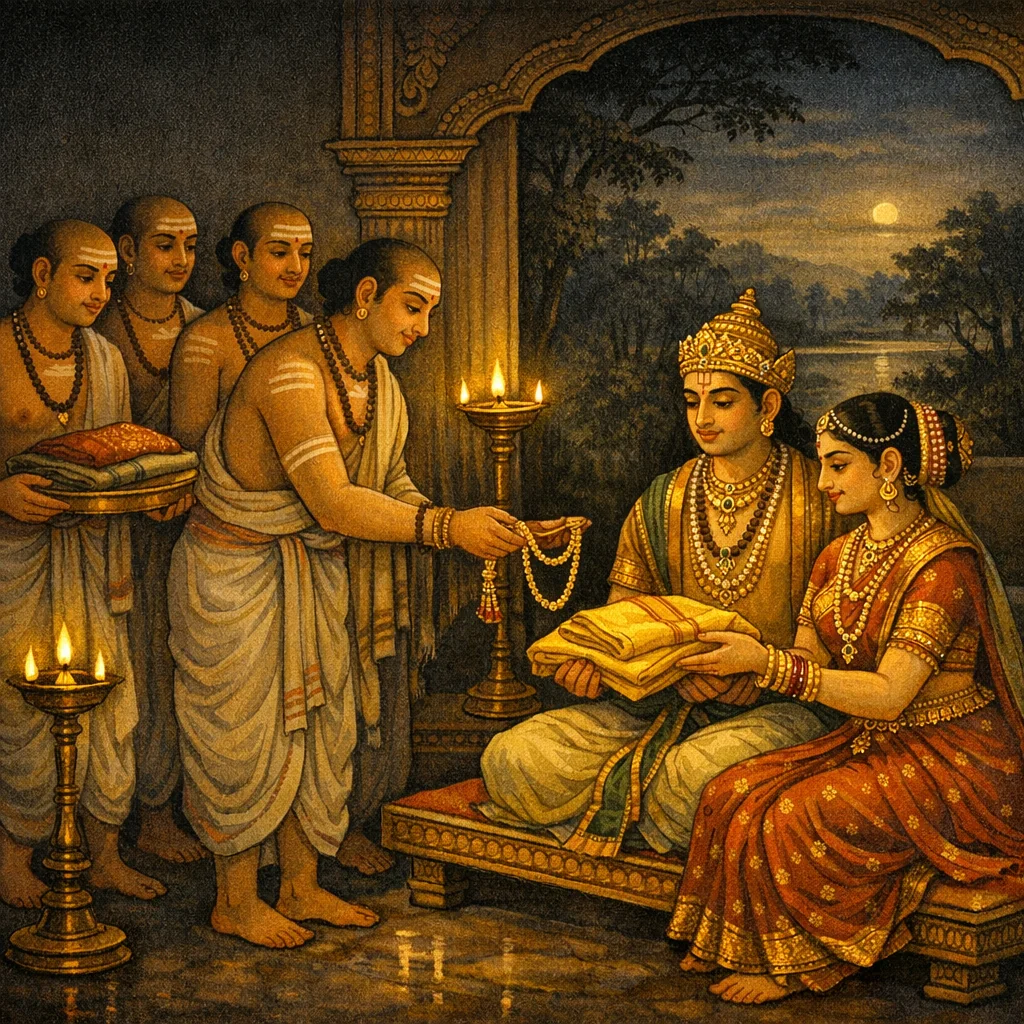
This adhyāya opens with Yudhiṣṭhira asking the name, greatness (māhātmya), and the fruits of bathing and giving gifts at Devatīrtha, after which Mārkaṇḍeya offers a theological exposition. He declares that all tīrthas revered by devas and sages are contemplated by Viṣṇu and become unified there, establishing Devatīrtha as a preeminent Vaiṣṇava pilgrimage-center. Hence, bathing at Devatīrtha is proclaimed equal to bathing in all tīrthas and is said to be incomparable. A section on ritual merit follows: acts performed during a grahaṇa (eclipse) yield “ananta,” infinite fruit. Many forms of dāna—gold, land, cow, and more—are listed with deva-linked valuations, culminating in the teaching that any śraddhā-filled gift at Devatīrtha becomes inexhaustible in result. The chapter then prescribes Ekādaśī-centered devotion: bathing (including with Narmadā water), fasting, worship of Śrīpati, an all-night vigil, and lamp-awakening with ghee; on the next day (Dvādaśī) morning, one honors Brahmins and couples with garments, ornaments, betel, flowers, incense, and unguents. It further details pūjā materials (milk products, tīrtha-water, fine cloth, fragrances, naivedya, lamps) and describes the devotee’s post-mortem ascent to Viṣṇuloka with Vaiṣṇava emblems. The closing phalaśruti praises daily nīrājana for protection and health, the use of the lamp’s remainder for the eyes, and the merit of hearing/reciting the māhātmya—also affirming ancestral satisfaction when it is recited in śrāddha rites.
Shlokas
Verse 1
युधिष्ठिर उवाच । देवतीर्थे तु किं नाम माहात्म्यं समुदाहृतम् । फलं किं स्नानदानादिकारिणां जायते मुने
Yudhiṣṭhira said: “What, indeed, is the proclaimed greatness of Devātīrtha? And what fruit arises, O sage, for those who perform bathing, charity, and the other rites there?”
Verse 2
मार्कण्डेय उवाच । पृथिव्यां यानि तीर्थानि देवैर्मुनिगणैरपि । सेवितानि महाबाहो तानि ध्यातानि विष्णुना
Mārkaṇḍeya said: “Whatever sacred fords exist upon the earth—served even by the gods and hosts of sages—those very tīrthas, O mighty-armed one, are contemplated by Viṣṇu.”
Verse 3
समागतान्येकतां वै तत्र तीर्थे युधिष्ठिर । तत्तीर्थं वैष्णवं पुण्यं देवतीर्थमिति श्रुतम्
“There, at that tīrtha, O Yudhiṣṭhira, the powers of the tīrthas have indeed come together into oneness. That sacred ford is a Vaiṣṇava holy place, and it is heard of as ‘Devātīrtha.’”
Verse 4
कुरुक्षेत्रं भुवि परमन्तरिक्षे त्रिपुष्करम् । पुरुषोत्तमं दिवि परं देवतीर्थं परात्परम्
“On earth, Kurukṣetra is supreme; in the mid-region, Tripuṣkara is supreme; in heaven, Puruṣottama is supreme—yet Devātīrtha is higher than the highest.”
Verse 5
देवतीर्थसमं नास्ति तीर्थमत्र परत्र च । यत्प्राप्य मनुजस्तप्येन्न कदाचिद्युधिष्ठिर
“No sacred place equals Devātīrtha—neither in this world nor the next. Having reached it, a person never again suffers torment, O Yudhiṣṭhira.”
Verse 6
देवैरुक्तानि तीर्थानि योऽत्र स्नानं समाचरेत् । देवतीर्थे स सर्वत्र स्नातो भवति मानवः
Whoever bathes here in the tīrtha spoken of by the gods—by bathing at Devātīrtha, that person is deemed to have bathed at all sacred places.
Verse 7
एवमस्त्विति तैरुक्ता देवा ऋषिगणा अपि । संतुष्टाः श्रीशमभ्यर्च्य स्वं स्वं स्थानं तु भेजिरे
“So be it,” thus they spoke; the gods and the hosts of sages as well—being satisfied, they worshipped Śrīśa (the Lord) and then returned each to their own abode.
Verse 8
सूर्यग्रहेऽत्र वै क्षेत्रे स्नात्वा यत्फलमश्नुते । स्नात्वा श्रीशं समभ्यर्च्य समुपोष्य यथाविधि
At the time of a solar eclipse, whatever merit one gains by bathing in this holy field—having bathed here, duly worshipped Śrīśa (Viṣṇu) and observed the prescribed fast—one partakes of that very fruit.
Verse 9
यद्ददाति हिरण्यानि दानानि विधिवन्नृप । तदनन्तफलं सर्वं सूर्यस्य ग्रहणे यथा
O King, whatever gifts of gold one gives in due manner—at the time of the Sun’s eclipse, all of that becomes of endless fruit.
Verse 10
भूमिदानं धेनुदानं स्वर्णदानमनन्तकम् । वज्रदानमनन्तं च फलं प्राह शतक्रतुः
The gift of land, the gift of a cow, and the gift of gold are of endless merit; and the gift of a vajra (precious gem) too bears infinite fruit—so declared Śatakratu (Indra).
Verse 11
सोमो वै वस्त्रदानेन मौक्तिकानां च भार्गवः । सुवर्णस्य रविर्दानं धर्मराजो ह्यनन्तकम्
Soma is pleased by the gift of garments; Bhārgava (Śukra) by the gift of pearls. For gold, Ravi (the Sun) is the presiding deity; and of dāna itself, Dharma-rāja (Yama) declares the fruit to be endless.
Verse 12
देवतीर्थे तु यद्दानं श्रद्धायुक्तेन दीयते । तदनन्तफलं प्राह बृहस्पतिरुदारधीः
But whatever gift is given at Devatīrtha with faith—Bṛhaspati, of noble understanding, declared it to yield infinite fruit.
Verse 13
देवतीर्थे भृगुक्षेत्रे सर्वतीर्थाधिक नृप । देवतीर्थे नरः स्नात्वा श्रीपतिं योऽनुपश्यति
O King, in the Bhṛgu-kṣetra called Devatīrtha—surpassing all other tīrthas—whoever bathes at Devatīrtha and beholds Śrīpati (Viṣṇu)…
Verse 14
सोमग्रहे कुलशतं स समुद्धृत्य नाकभाक् । दानानि द्विजमुख्येभ्यो देवतीर्थे नराधिप
O Lord of men, at the time of a lunar eclipse, he uplifts a hundred generations of his lineage and becomes a sharer of heaven—by giving gifts to the foremost of Brahmins at Devatīrtha.
Verse 15
यैर्दत्तानि नरैर्भोगभागिनः प्रेत्य चेह ते । देवतीर्थे विप्रभोज्यं हरिमुद्दिश्य यश्चरेत्
Those men by whom gifts are given become enjoyers of blessings both here and after death. And whoever, at Devatīrtha, provides a feeding for Brahmins, dedicating it to Hari (Viṣṇu)…
Verse 16
स सर्वाह्लादमाप्नोति स्वर्गलोके युधिष्ठिर । देवतीर्थे नरो नारी स्नात्वा नियतमानसौ
O Yudhiṣṭhira, he attains complete bliss in the heavenly world. At Devatīrtha, whether man or woman, having bathed with a disciplined mind…
Verse 17
उपोष्यैकादशीं भक्त्या पूजयेद्यः श्रियः पतिम् । रात्रौ जागरणं कृत्वा घृतेनोद्बोध्य दीपकम्
Whoever, fasting on Ekādaśī with devotion, worships the Lord of Śrī (Viṣṇu), and keeping vigil at night, kindles a lamp with ghee…
Verse 18
द्वादश्यां प्रातरुत्थाय तथा वै नर्मदाजले । विप्रदाम्पत्यमभ्यर्च्य विधिवत्कुरुनन्दन
On the Dvādaśī day, rising early and bathing in the waters of the Narmadā, one should duly worship a brāhmaṇa couple according to proper rite, O delight of the Kurus.
Verse 19
वस्त्राभरणताम्बूलपुष्पधूपविलेपनैः । अक्षये विष्णुलोकेऽसौ मोदते चरितव्रतः
With offerings of garments, ornaments, betel, flowers, incense, and unguents, that observer—having duly performed the vow—rejoices in the imperishable realm of Viṣṇu.
Verse 20
यः सदैकादशीतिथौ स्नात्वोपोष्यार्चयेद्धरिम् । रात्रौ जागरणं कुर्याद्वेदशास्त्रविधानतः
Whoever, on every Ekādaśī, bathes, fasts, and worships Hari, and keeps vigil at night according to the ordinances of the Vedas and the śāstras—
Verse 21
धर्मराजकृतां पापां न स पश्यति यातनाम् । पञ्चरात्रविधानेन श्रीपतिं योऽर्चयिष्यति
He does not behold the torments appointed by Dharmarāja for sins—whoever worships Śrīpati in accordance with the Pañcarātra injunctions.
Verse 22
दीक्षामवाप्य विधिवद्वैष्णवीं पापनाशिनीम् । स्वर्गमोक्षप्रदां पुण्यां भोगदां वित्तदामथ
Having duly received the Vaiṣṇava initiation (dīkṣā), the destroyer of sin, it is holy—bestowing heaven and liberation, granting enjoyments, and even granting wealth.
Verse 23
राज्यदां वा महाभाग पुत्रदां भाग्यदामथ । सुकलत्रप्रदां वापि विष्णोर्भक्तिप्रदामिति
It may grant sovereignty, O fortunate one; it may grant sons and good fortune; it may grant an excellent spouse—and it grants devotion to Viṣṇu.
Verse 24
तरिष्यति भवाम्भोधिं स नरः कुरुनन्दन । योऽर्चयिष्यति तत्रैव देवतीर्थे श्रियः पतिम्
That man will cross the ocean of worldly existence, O delight of the Kurus—whoever worships the Lord of Śrī (Viṣṇu) right there at Devatīrtha.
Verse 25
विश्वरूपमथो सम्यङ्मूलश्रीपतिमेव वा । नारायणगिरिं वापि गृहे वैकादशीतिथौ
Or else, on the Ekādaśī day—at home—one may properly worship Viśvarūpa, or indeed the primordial Śrīpati, or even Nārāyaṇa-giri.
Verse 26
भक्तिमाञ्छ्रद्धया युक्तः क्षीरैस्तीर्थोदकैरपि । सुसूक्ष्मैरहतैर्वस्त्रैर्महाकौशेयकैर्नृप
Endowed with devotion and faith, O king, he should worship with milk and also with the sacred waters of the tīrthas, and with very fine, new, uncut garments—rich silken cloths as well.
Verse 27
विचित्रैर्नेत्रजैर्वापि धूपैरगुरुचन्दनैः । गुग्गुलैर्घृतमिश्रैश्च नैवेद्यैर्विविधैरपि
He should worship with various fragrant incenses, fine and choice, made of aguru and sandal; with guggulu mixed with ghee; and also with many kinds of naivedya offerings.
Verse 28
पायसाद्यैर्मनुष्येन्द्र पयसा वा युधिष्ठिर । पिष्टदीपैः सुविमलैर्वर्धमानैर्मनोहरैः
O lord among men, O Yudhiṣṭhira, worship Hari with offerings such as sweet rice (pāyasa) or with milk, and with pure, spotless dough-lamps, ever-increasing and delightful to behold.
Verse 29
पूजयित्वा नरो याति यथा तच्छृणु भारत । शङ्खी चक्री गदी पद्मी भूत्वासौ गरुडध्वजः
Hear, O Bhārata, how a man departs after such worship: he becomes like an attendant of the Garuḍa-bannered Lord, bearing conch, discus, mace, and lotus.
Verse 30
देवलोकानतिक्रम्य विष्णुलोकं प्रपद्यते । यस्तु वै परया भक्त्या श्रीपतेः पादपङ्कजम्
Passing beyond the worlds of the gods, he reaches Viṣṇu’s own realm—he who, with supreme devotion, worships the lotus-feet of Śrī’s Lord (Śrīpati).
Verse 31
चतुर्धाधिष्ठितं पश्येच्छ्रियं त्रैलोक्यमातरम् । नृत्यगीतविनोदेन मुच्यते पातकर्ध्रुवम्
He beholds Śrī—the Mother of the three worlds—established in fourfold manner; and through rejoicing in dance and song (before the Lord), he is surely freed from sin.
Verse 32
नीराजने तु देवस्य प्रातर्मध्ये दिने तथा । सायं च नियतो नित्यं यः पश्येत्पूजयेद्धरिम्
But at the Lord’s nīrājana—at dawn, at midday, and likewise in the evening—he who, disciplined and daily, beholds and worships Hari reaps the stated merit.
Verse 33
स तीर्त्वा ह्यापदं दुर्गां नैवार्तिं समवाप्नुयात् । आयुःश्रीवर्धनं पुंसां चक्षुषामपि पूरकम्
Having crossed over difficult calamity, he does not fall into distress. This nīrājana-worship increases a man’s lifespan and prosperity, and it also nourishes the eyes, granting fullness of sight.
Verse 34
उपपापहरं चैव सदा नीराजनं हरेः । तदा नीराजनाकाले यो हरेः पठति स्तवम्
Hari’s nīrājana ever removes even minor sins. And at the time of nīrājana, he who recites a hymn (stava) to Hari gains special merit.
Verse 35
स धन्यो देवदेवस्य प्रसन्नेनान्तरात्मना । हरेर्नीराजनाशेषं पाणिभ्यां यः प्रयच्छति
Blessed indeed is he—whose inner self is gladdened by the gracious Lord of gods—who with his hands receives and applies the remainder of Hari’s nīrājana, the sanctified ārati-blessing.
Verse 36
संगृह्य चक्षुषी तेन योजयेन्मार्जयन्मुखम् । तिमिरादीनक्षिरोगान्नाशयेद्दीप्तिमन्मुखम्
Having gathered that nīrājana blessing, one should apply it to the eyes and then wipe the face; it destroys eye-diseases such as dimness (timira) and makes the face radiant.
Verse 37
भवत्यशेषदुष्टानां नाशायालं नरोत्तम । दीपप्रज्वलनं यस्य नित्यमग्रे श्रियः पतेः
O best of men, for him whose lamp is kindled daily before Śrī’s Lord, it becomes fully sufficient for the destruction of all wicked forces.
Verse 38
स्नात्वा रेवाजले पुण्ये प्रदद्यादधिकं व्रती । सप्तद्वीपवती तेन ससागरवनापगा
After bathing in the sacred waters of the Revā, a vow-observing devotee should give abundant charity. By that act, the entire earth—together with the seven continents, the oceans, forests, and rivers—is as though duly worshipped and satisfied.
Verse 39
प्रदक्षिणीकृता स्याद्वै धरणी शङ्करोऽब्रवीत् । इदं यः पठ्यमानं तु शृणुयात्पठतेऽपि वा
Śaṅkara declared: ‘By this, the earth itself is truly circumambulated (as an act of worship). And whoever listens to this being recited—or recites it as well—gains its merit.’
Verse 40
स्मरणं सोऽतसमये विपाप्मा प्राप्नुयाद्धरेः । इदं यशस्यमायुष्यं स्वर्ग्यं पितृगुणप्रियम्
Even at an improper time, by merely remembering this, one becomes free from sin and attains Hari. This māhātmya bestows fame and longevity, grants heaven, and is pleasing to the virtues of the ancestors (pitṛs).
Verse 41
माहात्म्यं श्रावयेद्विप्राञ्छ्रीपतेः श्राद्धकर्मणि । घृतेन मधुना तेन तर्पिताः स्युः पितामहाः
During the śrāddha rite for Śrīpati (Viṣṇu), one should have brāhmaṇas hear this māhātmya. By that very act, the forefathers are satisfied, as though with offerings of ghee and honey.
Verse 195
अध्याय
“Chapter” (a colophon/section marker indicating the chapter boundary).