Adhyaya 194
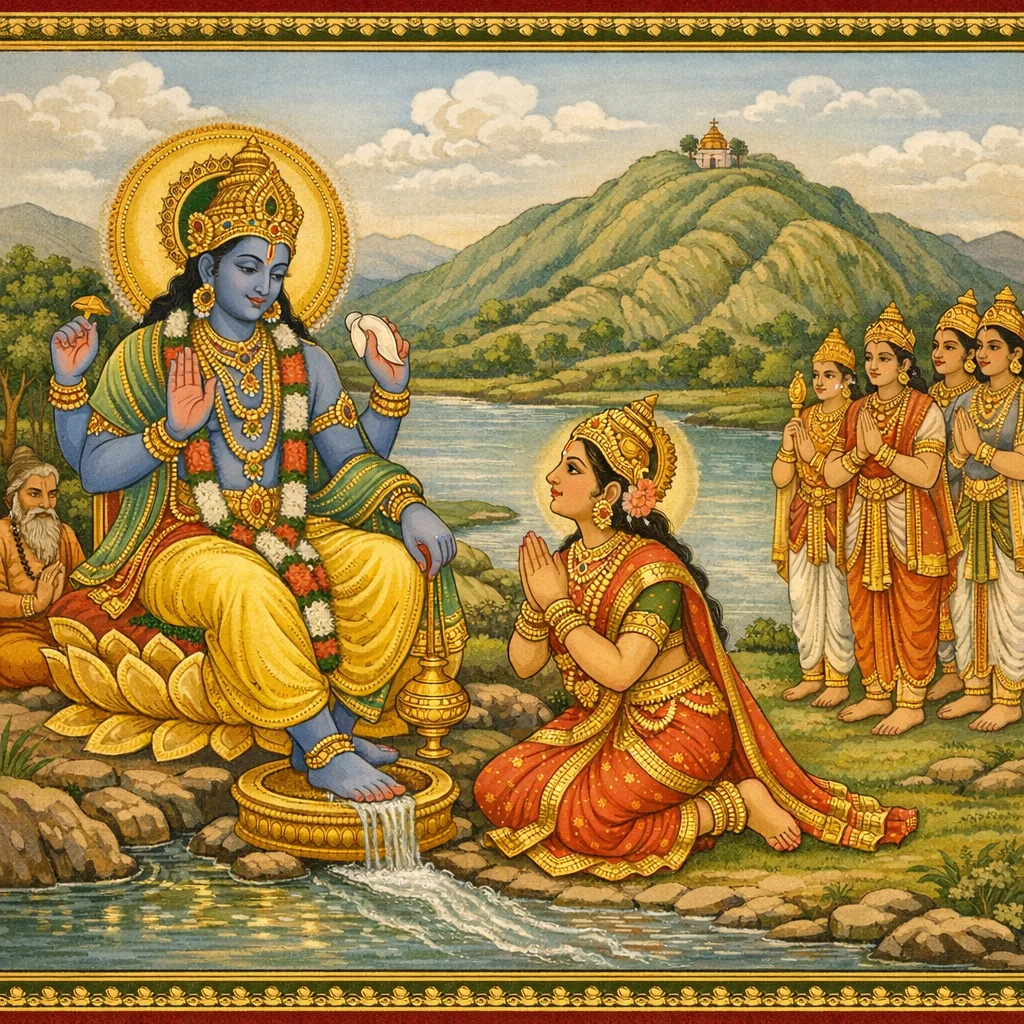
Markaṇḍeya tells Yudhiṣṭhira of events in which the devas are struck with wonder at the proclamation of a Vaiṣṇava viśvarūpa (cosmic form) and at the appearance of Urvaśī. Śrī (Lakṣmī), born in Bhṛgu’s lineage, resolves to gain Nārāyaṇa as her Lord through rigorous tapas, weighing vows, gifts, discipline, and service; she performs severe austerities on the ocean’s shore for a thousand divine years. Unable to reveal the viśvarūpa themselves, the devas report to Nārāyaṇa. Viṣṇu comes to Śrī, grants her request, and displays the cosmic form, then teaches worship in a Pañcarātra-like mode of devotion: daily worship brings prosperity and honor, while brahmacarya is praised as a foundational austerity. The deity is linked with the epithet “Mūlaśrīpati,” and bathing in Revā’s waters with restrained conduct is said to yield desired results and multiply the merit of dāna. Śrī asks for a dharmic orientation toward the household āśrama; Nārāyaṇa establishes the place-name “Nārāyaṇagiri,” explaining the saving power of remembering it. A divine wedding-sacrifice follows—Brahmā and sages officiate, oceans offer treasures, Kubera supplies wealth, and Viśvakarmā builds jewel-like dwellings—ending with the arising of a tīrtha for avabhṛtha bathing: from Viṣṇu’s foot-water a pure stream reaches the Revā, called Devatīrtha, lauded as supremely purifying, with merit declared to surpass many aśvamedha avabhṛthas.
Shlokas
Verse 1
श्रीमार्कण्डेय उवाच । तच्छ्रुत्वानान्तदेवेन विश्वरूपमुदाहृतम् । देवराजस्तथा देवाः परं विस्मयमागताः
Śrī Mārkaṇḍeya said: Hearing that the Infinite God had declared His universal form, Indra—the king of the gods—and the other deities were seized by the greatest wonder.
Verse 2
दृष्ट्वा चाप्सरसं पुण्यामुर्वशीं कमलाननाम् । संत्रस्तो विस्मितश्चाभूदिन्द्रो राजश्रिया वृतः
Seeing the holy apsaras Urvaśī, lotus-faced, Indra—though encompassed by royal splendor—was shaken with fear and filled with amazement.
Verse 3
न किंचिदुत्तरं वाक्यमुक्तवाञ्जोषमास्थितः । इति वृत्तान्तभूतं हि नारायणविचेष्टितम्
He uttered no reply at all and remained silent. Such indeed was the wondrous course of Nārāyaṇa’s divine action, now become a matter of account.
Verse 4
भृगोः खात्यां समुत्पन्ना लक्ष्मीः श्रुत्वा तु वै नृप । वैश्वरूपं परं रूपं विस्मिताचिन्तयत्तदा
O king, Lakṣmī—born of Bhṛgu’s daughter Khāti—on hearing of that supreme, universal form, was astonished and then pondered deeply.
Verse 5
केनोपायेन स स्यान्मे भर्ता नारायणः प्रभुः । व्रतेन तपसा वापि दानेन नियमेन च
“By what means may that Lord Nārāyaṇa become my husband—by a vow, by austerity, by charity, or by observances?”
Verse 6
वृद्धानां सेवनेनाथ देवताराधनेन वा । इति चिन्तापरां कन्यां सती ज्ञात्वा युधिष्ठिर
“Or by serving the aged, or by worship of the deities?” Thus, O Yudhiṣṭhira, understanding that maiden to be absorbed in such anxious thought, the virtuous Satī recognized her state.
Verse 7
प्राह प्राप्तो मया भर्ता शङ्करस्तपसा किल । प्रजापतिश्च गायत्र्या ह्यन्याभिरभिवाञ्छिताः
She said: “Truly, by austerity (tapas) I attained Śaṅkara as my husband; and Prajāpati is attained by the Gāyatrī—so too are other desired ends attained by other disciplines.”
Verse 8
तपसैव हि ते प्राप्यस्तस्मात्तच्चर सुव्रते । तपस्त्वं हि महच्चोग्रं सर्ववाञ्छितदायकम्
“Therefore he is to be attained by austerity alone; so practice that, O lady of noble vows. Austerity—great and intense—indeed grants all that is desired.”
Verse 9
मार्कण्डेय उवाच । सागरान्तं समासाद्य लक्ष्मीः परपुरंजय । चचार विपुलं कालं तपः परमदुश्चरम्
Mārkaṇḍeya said: Reaching the ocean’s farthest shore, Lakṣmī—O conqueror of enemy cities—performed for a long time a supreme austerity, exceedingly hard to undertake.
Verse 10
स्थाणुवत्संस्थिता साभूद्दिव्यं वर्षसहस्रकम् । तत इन्द्रादयो देवाः शङ्खचक्रगदाधराः
She stood unmoving like a pillar for a thousand divine years. Then Indra and the other gods, bearing conch, discus, and mace, came there.
Verse 11
भूत्वा जग्मुस्तदर्थं ते सा तु पृष्टवती सुरान् । विश्वरूपं वैष्णवं यत्तद्दर्शयत माचिरम्
Assuming that form and going there for that purpose, the gods arrived. But she questioned the gods: “Show me without delay that Vaiṣṇava universal form, the Viśvarūpa.”
Verse 12
विलक्षा व्रीडिता देवा गत्वा नारायणं तदा । अब्रुवन् वैश्वरूपं नो शक्ता दर्शयितुं वयम्
Perplexed and ashamed, the gods then went to Nārāyaṇa and said, “We are not able to reveal the Universal Form (Vaiśvarūpa).”
Verse 13
ततो यथेष्टं ते जग्मुः स च विष्णुरचिन्तयत् । उग्ररूपा स्थिता देवी देहं दहति भार्गवी
Then they departed as they wished. And Viṣṇu reflected: “The goddess Bhārgavī stands there in a fierce form, burning her own body with the heat of austerity (tapas).”
Verse 14
तां तस्मात्तत्र गत्वाहं वरं दत्त्वा तु वाञ्छितम् । पुनस्तपः करिष्यामि दर्शयिष्यामि वा पुनः । वैष्णवं विश्वरूपं यद्दुर्दश्यं देवदानवैः
“Therefore I shall go to her there and grant the boon she desires. Then I shall again undertake austerity and once more reveal that Vaiṣṇava Universal Form—so hard to behold even for gods and dānavas.”
Verse 15
मार्कण्डेय उवाच । ततो गत्वा हृषीकेशः सागरान्तस्थितां श्रियम् । प्राह तुष्टोऽस्मि ते देवि वरं वृणु यथेप्सितम्
Mārkaṇḍeya said: Then Hṛṣīkeśa went to Śrī, who was staying at the ocean’s edge, and said, “I am pleased with you, O goddess. Choose a boon as you desire.”
Verse 16
श्रीरुवाच । यदि तुष्टोऽसि मे देव प्रपन्नाया जनार्दन । तदा दर्शय यद्दृष्टमप्सरोभिस्तवानघ
Śrī said: “If you are pleased with me, O Lord—since I have taken refuge in you, O Janārdana—then show me that (form) which was beheld by the Apsarases, O sinless one.”
Verse 17
विश्वरूपमनन्तं च भूतभावन केशव । गन्धमादनमासाद्य कृतं यच्च तपस्त्वया
“Show me the Universal Form and the Endless Form, O Keśava, nurturer of beings—that vision bound to the austerity you performed after reaching Gandhamādana.”
Verse 18
तद्वदस्व विभो विष्णो न मिथ्या यदि केशव । श्रद्दधामि न चैवाहं रूपस्यास्य कथंचन
“Therefore tell me, O all-pervading Viṣṇu—if it is not false, O Keśava. I have faith, yet I cannot truly comprehend this form in any way.”
Verse 19
बहुभिर्यक्षरक्षोभिर्मायाचारिप्रचारिभिः । छन्दिता मम जानद्भिर्भावमन्तर्गतं हरौ
“I was deceived by many Yakṣas and Rākṣasas—wandering about through sorcery and illusion—though they knew well that my true devotion was inwardly fixed upon Hari (Viṣṇu).”
Verse 20
भूत्वा विष्णुस्वरूपास्ते चक्रिणश्च चतुर्भुजाः । सुव्रीडिता गताः सर्वे विश्वरूपो सहायतः
“Assuming forms like Viṣṇu—bearing the discus and four arms—they all departed in great shame, while Viśvarūpa, Lord of the cosmic form, stood as protector and helper.”
Verse 21
मार्कण्डेय उवाच । नारायणोऽथ भगवाञ्छङ्खचक्रगदाभृतम् । तया तथोक्तस्तद्रूपं मुक्त्वा वै सुरपूजितम्
Mārkaṇḍeya said: “Then the Blessed Nārāyaṇa—bearing conch, discus, and mace—being addressed by her in that manner, set aside that form which is worshipped by the gods.”
Verse 22
रूपं परं यथोक्तं वै विश्वरूपमदर्शयत् । दर्शयित्वा वचः प्राह पञ्चरात्रविधानतः
He revealed the supreme form—the cosmic Viśvarūpa—just as requested; and after showing it, He spoke words in accordance with the Pañcarātra discipline.
Verse 23
योऽर्चयिष्यति मां नित्यं स पूज्यः स च पूजितः । धनधान्यसमायुक्तः सर्वभोगसमन्वितः
Whoever worships Me daily—he becomes worthy of honor and is honored; endowed with wealth and grain, he enjoys every proper comfort and blessing.
Verse 24
मूलं हि सर्वधर्माणां ब्रह्मचर्यं परं तपः । तेनाहं तत्र स्थास्यामि मूलश्रीपतिसंज्ञितः
Brahmacarya is indeed the root of all dharmas; it is the highest austerity. Therefore, I shall abide there, renowned by the name Mūlaśrīpati.
Verse 25
मूलश्रीः प्रोच्यते ब्राह्मी ब्रह्मचर्यस्वरूपिणी । सर्वयोगमयी पुण्या सर्वपापहरी शुभा
Mūlaśrī is spoken of as Brāhmī—brahmacarya embodied—filled with all yogic power; holy, auspicious, and the remover of all sins.
Verse 26
पतिस्तस्याः प्रभुरहं वरदः प्राणिनां प्रिये । रेवाजले नरः स्नात्वा योऽर्चयेन्मां यतव्रतः
I am her Lord and husband, the giver of boons to beings, O beloved. Any man who bathes in the waters of Revā and then worships Me with restrained vows—
Verse 27
मूलश्रीपतिनामानं वाञ्छिते प्राप्नुयात्फलम् । दानानि तत्र यो दद्यान्महादानानि च प्रिये
—Through the Name “Mūlaśrīpati” one attains the desired fruit. And whoever gives gifts there—great acts of dāna as well, O beloved—
Verse 28
सहस्रगुणितं पुण्यमन्यस्थानादवाप्यते । दृष्टं त्वया तत्र देशे सम्यक्चैवावधारितम् । तदर्चित्वा परान् कामानाप्स्यसि त्वं न संशयः
Merit gained there becomes a thousandfold greater than that obtained elsewhere. You have seen that place and understood it rightly. By worshipping Him there, you will attain supreme desires—of this there is no doubt.
Verse 29
वरं वृणीष्व देवेशि वाञ्छितं दुर्लभं सुरैः । दुर्गसंसारकान्तारपतितैः परमेश्वरि
O Goddess, sovereign of the gods—choose a boon, the desired one, even such as is hard to obtain for the devas. O Supreme Lady, for those who have fallen into the perilous wilderness of worldly existence, (grant that saving grace).
Verse 30
श्रीरुवाच । नारायण जगद्धातर्नारायण जगत्पते । नारायण परब्रह्म नारायणपरायण
Śrī said: O Nārāyaṇa, supporter of the world; O Nārāyaṇa, lord of the universe; O Nārāyaṇa, the Supreme Brahman—Nārāyaṇa alone is my refuge.
Verse 31
प्रसीद पाहि मां भक्त्या सम्यक्सर्गे नियोजय । प्रियो ह्यसि प्रियाहं ते यथा स्यां तत्तथा कुरु
Be gracious; protect me through devotion, and appoint me fittingly within the order of creation. For you are dear to me and I am dear to you—so arrange it that I may be as I ought to be.
Verse 32
गृहं धर्मार्थकामानां कारणं देव संमतम् । तदास्थायाश्रमं पुण्यं मां श्रेयसि नियोजय
The household is acknowledged by the Lord as a cause of dharma, artha, and kāma. Therefore, establishing that sacred āśrama, appoint me in what leads to the highest good.
Verse 33
नारायण उवाच । नारायणगिरा देवि विज्ञप्तोऽस्मि यतस्त्वया । नारायणगिरिर्नाम तेन मेऽत्र भविष्यति
Nārāyaṇa said: O Goddess, since you have petitioned me with the utterance “Nārāyaṇa,” I have been entreated by you; therefore here there shall be a mountain bearing my name—Nārāyaṇagiri.
Verse 34
नारायणस्मृतौ याति दुरितं जन्मकोटिजम् । यस्माद्गिरति तस्माच्च गिरिरित्येव शब्दितम्
By remembrance of Nārāyaṇa, the sin accumulated over millions of births departs. And because it “swallows up” (girati) that evil, it is therefore called “giri” (mountain).
Verse 35
तस्मात्सर्वाश्रयो देवि गिरिः पर्वतराङ्भवेत् । सुरासुरमनुष्याणां यथाहमपि चाश्रयः
Therefore, O Goddess, this mountain shall become a refuge for all, preeminent among mountains—just as I too am a refuge for devas, asuras, and human beings.
Verse 36
य एतत्पूजयिष्यन्ति मण्डलस्थं परं मम । नारायणगिरिर्नाम देवरूपं शुभेक्षणे
Those who shall worship this supreme form of mine, abiding in the sacred maṇḍala—this divine-formed tīrtha named Nārāyaṇagiri, O fair-eyed one—
Verse 37
ते दिव्यज्ञानसम्पन्ना दिव्यदेहविचेष्टिताः । दिव्यं लोकमवाप्स्यन्ति दिव्यभोगसमन्विताः
They, endowed with divine knowledge and possessing the powers and capacities of a divine body, shall attain a divine world—accompanied by celestial enjoyments.
Verse 38
मार्कण्डेय उवाच । तयोरेवं संवदतोर्देवा इन्द्रपुरोगमाः । समागता वनोद्देशं सागरान्ते महर्षयः
Mārkaṇḍeya said: While the two were thus conversing, the gods—led by Indra—arrived, O great sages, at a forest-region on the ocean’s shore.
Verse 39
ततो भृगुं देवराजो नारायणविचिन्तितम् । वव्रे ज्ञात्वा तु तत्कन्यां धर्मात्मा स ददौ च ताम्
Then the king of the gods chose Bhṛgu—one contemplated and approved by Nārāyaṇa. Knowing this, that righteous one gave his daughter to him in marriage.
Verse 40
धर्मोऽपि विधिवद्वत्स विवाहं समकारयत् । देवदेवस्य राजर्षे देवतार्थे समाहितः
And Dharma too, dear one, duly conducted the marriage—O royal sage—steadfastly intent upon the purpose of the gods and the Lord of gods.
Verse 41
युधिष्ठिर उवाच । धर्मो विवाहमकरोद्विधिवद्यत्त्वयोदितम् । को विधिस्तत्र का दत्ता दक्षिणा भृगुणापि च
Yudhiṣṭhira said: You have said that Dharma performed the marriage according to rule. What was the procedure there, and what priestly fee (dakṣiṇā) was given—also by Bhṛgu?
Verse 42
विवाहयज्ञे समभूत्स्रुक्स्रुवग्रहणे च कः । ऋत्विजः के सदस्याश्च तस्यासन् द्विजसत्तम
In that marriage-sacrifice, who officiated in taking up the sacred ladles, sruk and sruva? Who were the ṛtvij priests, and who were the learned assembly members (sadasya), O best of the twice-born?
Verse 43
किं तस्यावभृथं त्वासीत्तत्सर्वं वद विस्तरात् । त्वद्वाक्यामृतपानेन तृप्तिर्मम न विद्यते
What was the avabhṛtha, the concluding bath of that rite? Tell all of it in detail. Though I drink the nectar of your words, my satisfaction is still not attained.
Verse 44
मार्कण्डेय उवाच । नारायणविवाहस्य यज्ञस्य च युधिष्ठिर । तपसस्तस्य देवस्य सम्यगाचरणस्य च
Mārkaṇḍeya said: O Yudhiṣṭhira, regarding the marriage of Nārāyaṇa and that sacrifice—along with the austerity (tapas) and the flawless observance of that divine one—
Verse 45
वक्तुं समर्थो न गुणान्ब्रह्मापि परमेश्वरः । तथाप्युद्देशतो वच्मि शृणु भूत्वा समाहितः
Even Brahmā, the supreme Lord, is not able to describe its excellences in full. Yet I shall speak of them in outline—listen with a collected mind.
Verse 46
ब्रह्मा सप्तर्षयस्तत्र स्रुक्स्रुवग्रहणे रताः । अग्नीञ्जुहुविरे राजन्वेदिर्धात्री ससागरा
There, Brahmā and the Seven Ṛṣis were engaged in handling the sacred ladles, sruk and sruva. O king, they poured offerings into the holy fires; the very earth, with her oceans, served as the altar.
Verse 47
ददुः समुद्रा रत्नानि ब्रह्मर्षिभ्यो नृपोत्तम । धनदोऽपि ददौ वित्तं सर्वब्राह्मणवाञ्छितम्
O best of kings, the oceans bestowed jewels upon the brahmarṣis; and Dhanada (Kubera) too granted wealth—everything desired by the brāhmaṇas.
Verse 48
विश्वकर्माऽपि देवानां ब्रह्मर्षीणां परंतप । वेश्मानि सुविचित्राणि सर्वरत्नमयानि च
And Viśvakarmā as well, O subduer of foes, made for the gods and the brahmarṣis wondrous mansions, fashioned of every kind of jewel.
Verse 49
कृत्वा प्रदर्शयामास देवेन्द्राय यशस्विने । शतक्रतुस्ततो विप्रान्कापिष्ठलपुरोगमान्
Having done so, he displayed it to the glorious lord of the gods, Indra. Then Śatakratu (Indra) showed it to the brāhmaṇa sages, led by Kāpiṣṭhala.
Verse 50
शौनकादींश्च पप्रच्छ बष्कलाञ्छागलानपि । आत्रेयानपि राजेन्द्र वृणुध्वमभिवाञ्छितम्
He questioned Śaunaka and the others, and also the Baṣkalas and the Chāgalas; and likewise the Ātreyas, O best of kings—“Choose whatever you desire.”
Verse 51
दृष्ट्वा ते चित्ररत्नानि प्राहुः सर्वेश्वरेश्वरम् । देवानां च ऋषीणां च सङ्गमोऽयं सुपुण्यकृत्
Seeing those wondrous jewels, they said to the Lord of lords: “This gathering of gods and ṛṣis is a supremely merit-producing, most holy convergence.”
Verse 52
अस्मिन्पुण्ये सुरेशान वस्तुं वाञ्छामहे सदा । शतक्रतुः प्राह पुनर्वासो वात्र भविष्यति । सत्यधर्मरता यूयं यावत्कालं भविष्यथ
“In this holy place, O Lord of the gods, we long to dwell forever.” Śatakratu replied: “Truly, you shall have residence here again and again—so long as you remain devoted to truth and dharma.”
Verse 53
मार्कण्डेय उवाच । पृष्टं यद्राजशार्दूल के मखे होत्रिणोऽभवन् । तत्प्रोच्यमानमधुना शृणु भूत्वा समाहितः
Mārkaṇḍeya said: “O tiger among kings, you asked who the officiating priests were in that sacrifice. Now listen attentively as I relate it.”
Verse 54
सनत्कुमारप्रमुखाः सदस्यास्तस्य चाभवन् । औद्गात्रमत्र्यङ्गिरसौ मरीचिश्च चकार ह
Sanatkumāra and others were members of the sacrificial assembly for that rite. The office of Udgātṛ was performed by Atri and Aṅgiras, and by Marīci as well.
Verse 55
हौत्रं धर्मवसिष्ठौ च ब्रह्मत्वं सनको मुनिः । षट्त्रिंशद्ग्रामसाहस्रं प्रादात्तेभ्यः शतक्रतुः
Dharma and Vasiṣṭha served as Hotṛ priests, and the sage Sanaka held the office of Brahman, the chief overseer of the rite. Śatakratu (Indra) granted them thirty-six thousand villages.
Verse 56
लक्ष्मीर्भर्त्रा च संयुक्ताभवत्तत्कृतवान्प्रभुः । ब्रह्मणो जुह्वतो वह्निं यावद्देशस्थितैः सुरैः
By that act the Lord brought it to fulfillment: Lakṣmī became united with her consort. And as Brahmā poured the oblations, the sacred fire was attended and witnessed by the gods stationed throughout the region.
Verse 57
दृष्टं ललाटं देशोऽसौ ललाट इति संज्ञितः । स देशः श्रीपतेः क्षेत्रपुण्यं देवर्षिसेवितम्
That region was beheld as a “forehead” (lalāṭa), and thus it came to be called Lalāṭa. That land is the sacred, merit-bestowing kṣetra of Śrīpati, visited and served by gods and sages.
Verse 58
सर्वाश्चर्यमयं दिव्यं दिव्यसिद्धिसमन्वितम् । ब्राह्मणानां ततः पङ्क्तिं निवेशयितुमुद्यता
Everything there was filled with wonder—divine and endowed with celestial perfections (siddhis). Then they prepared to seat the brāhmaṇas in rows, to honor and feed them.
Verse 59
लक्ष्मीः श्रीपतिनामानमाह देवं वचस्तदा श्रीरुवाच । य एते ब्राह्मणाः शिष्या भृग्वादीनां यतव्रताः
Lakṣmī, addressing the Lord known as Śrīpati, then spoke: “These brāhmaṇas here—disciples of Bhṛgu and the other ṛṣis—are steadfast in vows of restraint.”
Verse 60
तान्निवेशयितुमिच्छामि त्वत्प्रसादादधोक्षज । मरीच्यादयः सुरेन्द्रेण स्थापिता गरुडध्वज
“By your grace, O Adhokṣaja, I wish to settle them here. Marīci and the other sages were established in their stations by the lord of the gods, O Garuḍa-bannered One.”
Verse 61
नैष्ठिकव्रतिनो विप्रा बहवोऽत्र यतव्रताः । प्राजापत्ये व्रते ब्राह्मे केचिदत्र व्यवस्थिताः । तानहं स्थापयिष्यामि त्वत्प्रसादादधोक्षज
“Many brāhmaṇas here are steadfast in lifelong vows and self-restraint. Some are established in the Prajāpatya vow, others in the Brahmā-vow. By your grace, O Adhokṣaja, I shall settle them properly here.”
Verse 62
मार्कण्डेय उवाच । ततः कौतूहलधरो भगवान्वृषभध्वजः । पप्रच्छ व्रतिनः सर्वान्वृत्तिभेदे व्यवस्थितान्
Mārkaṇḍeya said: Then the Blessed Lord, the Bull-bannered One, stirred by curiosity, questioned all the keepers of vows, each established in differing ways of livelihood and conduct.
Verse 63
नारदोऽपि महादेवमुपेत्य च सतीपतिम् । प्राह कृष्णाजिनधरो नैष्ठिका ब्राह्मणा ह्यमी
Nārada too approached Mahādeva, the Lord of Satī, and said, clad in a black antelope-skin: “These Brāhmaṇas indeed are naiṣṭhikas—steadfast in lifelong vows.”
Verse 64
अमी कार्याः सुवस्त्रेण छन्नगुह्या द्विजोत्तमाः । प्राजापत्याश्चतुर्विंशसहस्राणि नरेश्वर
“These best of the twice-born should be given fine garments, with their private parts properly covered. Of those who follow the Prajāpatya discipline, they are twenty-four thousand, O lord of men.”
Verse 65
ब्रह्मचर्यव्रतस्थानां व्रतब्रह्मविचारिणाम् । द्वादशैषां सहस्राणि सन्ति वै वृषभध्वज
“And of those established in the vow of brahmacarya—those who contemplate the sacred discipline and Brahman—there are indeed twelve thousand, O Bull-bannered Lord.”
Verse 66
नारदस्य वचः श्रुत्वा देवा देवर्षयोऽपि च । साधु साध्वित्यमन्यन्त नोचुः केचन किंचन
Hearing Nārada’s words, the gods and the divine seers too approved, thinking, “Well said, well said,” and none spoke any objection at all.
Verse 67
समाह्वयत्ततो लक्ष्मीस्तान् विप्रान् भक्तिसंयुता । उवाच चरणान्गृह्य प्रसादः क्रियतां मयि
Then Lakṣmī, filled with devotion, summoned those Brāhmaṇas and, taking hold of their feet, said: “Be gracious to me; grant me your kindly acceptance.”
Verse 68
षट्त्रिंशच्च सहस्राणि वेश्मनामत्र संस्थितिः । विश्वकर्मकृतानां तु तेषु तिष्ठन्तु वोऽखिलाः
“Here there is lodging in thirty-six thousand dwellings. Let all of you reside in those houses fashioned by Viśvakarman.”
Verse 69
ते तथेति प्रतिज्ञाय स्थिताः संप्रीतमानसाः । धनधान्यसमृद्धाश्च वाञ्छितप्राप्तिलक्षणाः । सर्वकामसमृद्धाश्च ह्यनारम्भेषु कर्मणाम्
Saying, “So be it,” they assented and remained there with delighted hearts—abounding in wealth and grain, marked by the attainment of their desired aims, and fulfilled in every wish, even without undertaking arduous labors.
Verse 70
इति संस्थाप्य तान् विप्रान् सा स्थिता पर्यपालयत् । चतुर्धा तु स्थितो विष्णुः श्रिया देव्याः प्रिये रतः
Thus, having duly established those Brāhmaṇas, she remained and continued to care for them. And Viṣṇu, for his part, abided there in fourfold form, delighting in the beloved presence of the Goddess Śrī.
Verse 71
एवं वैवाहिकमखे निवृत्ते ऋषयस्तु तम् । ऊचुश्चावभृथस्नानं कुत्र कुर्मो जनार्दन
When the wedding-sacrifice had thus concluded, the sages said to him: “O Janārdana, where shall we perform the avabhṛtha bath, the concluding ceremonial bath?”
Verse 72
इति श्रुत्वा तु वचनं श्रीपतिः पादपङ्कजात् । मुमोच जाह्नवीतोयं रेवामध्यगमं शुचि
Hearing these words, Śrīpati released from his lotus-feet the pure and sacred waters of the Jāhnavī (Gaṅgā), and they flowed into the midst of the Revā.
Verse 73
हरेः पादोदकं दृष्ट्वा निःसृतं मुनयस्तु ते । विस्मिताः समपद्यन्त जानन्तस्तस्य गौरवम्
Seeing the water that had issued forth as Hari’s foot-water, those sages were struck with wonder, for they knew its majesty and sanctifying power.
Verse 74
रुद्रेण सहिताः सर्वे देवता ऋषयस्तथा । संकथा विस्मिताश्चक्रुर्विधुन्वन्तः शिरांसि च
All the deities and the sages too, together with Rudra, began to speak among themselves in astonishment, shaking their heads in wonder.
Verse 75
ऋषय ऊचुः । ब्रूहि शम्भो किमत्रायं अकस्माद्वारिसम्भवः । विष्णोः पादाम्बुजोत्थश्च सम्मोहकरणः परः
The sages said: “Tell us, O Śambhu—what is this sudden arising of water here? And how is it that it has issued from Viṣṇu’s lotus-feet, astonishing all and casting a holy bewilderment?”
Verse 76
ईश्वर उवाच । पादोदकमिदं विष्णोरहं जानामि वै सुराः । दशाश्वमेधावभृथैः स्नानमत्रातिरिच्यते
Īśvara said: “O gods, I know that this is indeed Viṣṇu’s foot-water. Bathing here surpasses the merit of the avabhṛtha baths of ten Aśvamedha sacrifices.”
Verse 77
युष्माभिः श्रीपतिः पूज्यः स्नानं चावभृथं कुतः । भविष्यतीति तेनाशु इदं वोऽर्थे विनिर्मितम्
“Since you are to worship Śrīpati, what need is there of a separate avabhṛtha bath? Knowing it would be required, he swiftly brought this into being for your sake.”
Verse 78
स्नात्वात्र त्रिदशेशाना यत्फलं सम्प्रपद्यते । वक्तुं न केनचिद्याति ततः किमुत्तरं वचः
“O lords of the gods, the fruit attained by bathing here cannot be adequately expressed by anyone; if it is beyond speech, what more can be said?”
Verse 79
मार्कण्डेय उवाच । एवमुक्त्वा तु ते सर्वे स्नानं कृत्वा यथागतम् । जग्मुर्देवा महेशानपुरोगा भरतर्षभ
Mārkaṇḍeya said: “Having spoken thus, all of them bathed, and then—just as they had come—departed again, O best of the Bhāratas, with the gods led in front by Maheśāna (Śiva).”
Verse 80
ब्राह्मणाश्च ततः सर्वे स्ववेश्मान्येव भेजिरे । देवतीर्थे महाराज सर्वपापप्रणाशने
“Then all the brāhmaṇas likewise returned to their own homes, O great king—(after being) at Devātīrtha, the destroyer of all sins.”
Verse 194
अध्याय
“Chapter.” (A textual heading/marker.)