Adhyaya 190
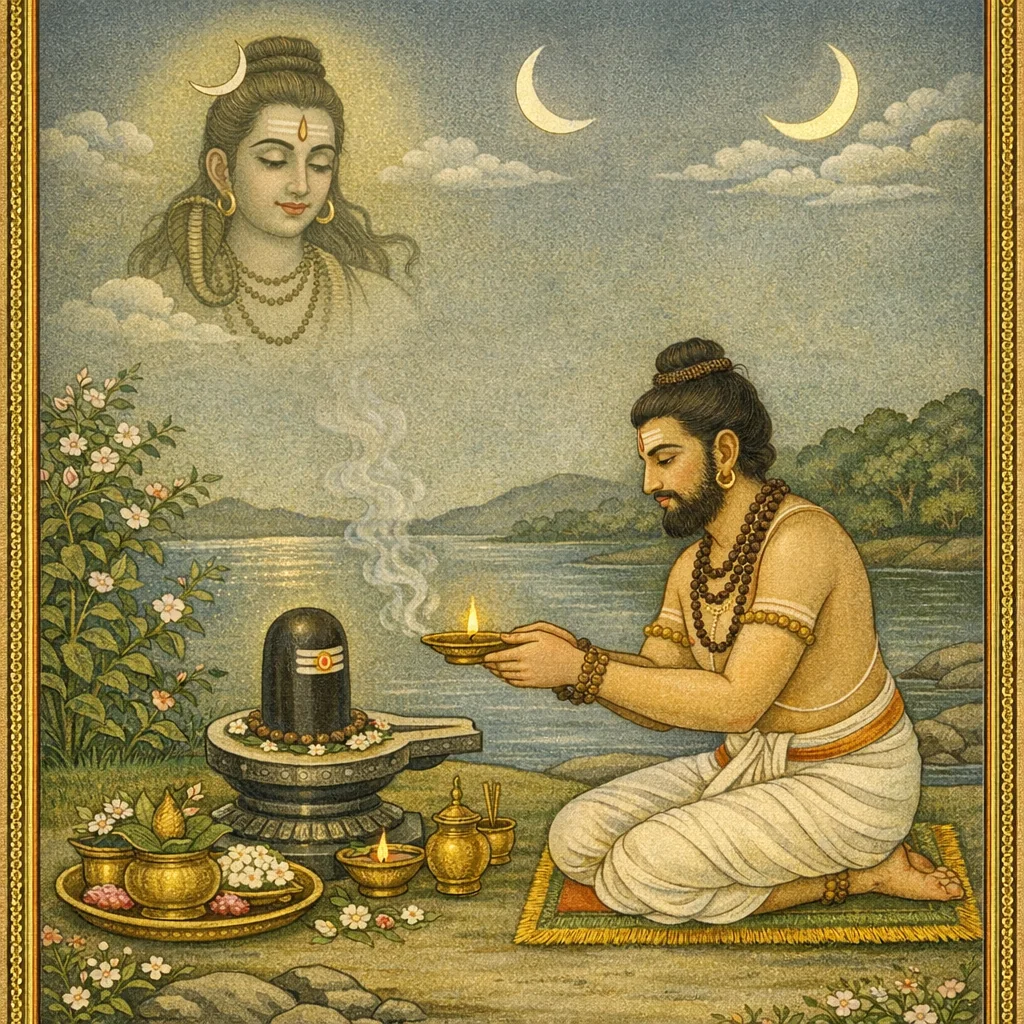
This chapter unfolds as a dialogue: Yudhiṣṭhira asks Mārkaṇḍeya how Soma (the lunar deity and king) attained the highest success (siddhi) at Somatīrtha, also called Chandra-hāsa, a tīrtha revered by all the gods. Mārkaṇḍeya relates the origin-story: Dakṣa curses Soma with a wasting disease (kṣaya-roga) for neglecting conjugal duty, and the teaching expands into an ethical account of household dharma and the karmic results of negligence. The narrative then turns to pilgrimage and discipline. Soma wanders through many tīrthas, reaches the Narmadā, and for twelve years practices fasting, gifts (dāna), vows (vrata), and restraint, until he is freed from affliction. Soma installs Mahādeva (Śiva) as the remover of great sins and returns to an exalted realm, with the chapter affirming that deity-installation and worship yield enduring merit. Finally, it gives ritual prescriptions and phala statements for bathing and worship at Chandra-hāsa/Somatīrtha—especially on lunar dates, Mondays, and during eclipses—promising purification, well-being, and release from faults and defilements.
Shlokas
Verse 1
श्रीमार्कण्डेय उवाच । ततो गच्छेन्महीपाल सोमतीर्थमनुत्तमम् । चन्द्रहासेति विख्यातं सर्वदैवतपूजितम्
Śrī Mārkaṇḍeya said: Then, O protector of the earth (king), one should go to the unsurpassed Somatīrtha, famed as Candrahāsa, worshipped by all the gods.
Verse 2
यत्र सिद्धिं परां प्राप्तः सोमो राजा सुरोत्तमः
There, King Soma—the best among the gods—attained the highest perfection.
Verse 3
युधिष्ठिर उवाच । कथं सिद्धिमनुप्राप्तः सोमो राजा जगत्पतिः । तत्सर्वं श्रोतुमिच्छामि कथयस्व ममानघ
Yudhiṣṭhira said: How did King Soma, lord of the world, attain that perfection? I wish to hear it all—tell me, O sinless one.
Verse 4
मार्कण्डेय उवाच । पुरा शप्तो मुनीन्द्रेण दक्षेण किल भारत । असेवनाद्धि दाराणां क्षयरोगी भविष्यसि
Mārkaṇḍeya said: Long ago, O Bhārata, Soma was indeed cursed by the great sage Dakṣa: “Since you do not duly consort with your wives, you shall become afflicted with consumption, the wasting disease.”
Verse 5
उद्वाहितानां पत्नीनां ये न कुर्वन्ति सेवनम् । या निष्ठा जायते तेषां तां शृणुष्व नरोत्तम
Those who do not duly attend to their wedded wives—hear from me, O best of men, what settled consequence arises for them.
Verse 6
ऋतुकाले तु नारीणां सेवनाज्जायते सुतः । सुतात्स्वर्गश्च मोक्षश्च हीत्येवं श्रुतिनोदना
Union with a woman in her proper season brings forth a son; and through a son, heaven and even liberation (mokṣa) are attained—such is the urging of sacred tradition.
Verse 7
तत्कालोचितधर्मेण ये न सेवन्ति तां नराः । तेषां ब्रह्मघ्नजं पापं जायते नात्र संशयः
Those men who, against the dharma appropriate to that time, do not approach her—upon them arises sin akin to brahma-slaying (brahmahatyā); of this there is no doubt.
Verse 8
तेन पापेन घोरेण वेष्टतो रौरवे पतेत् । तस्य तद्रुधिरं पापाः पिबन्ते कालमीप्सितम्
Ensnared by that dreadful sin, he falls into the hell called Raurava; there the wicked drink his very blood for the span of time allotted to him.
Verse 9
ततोऽवतीर्णकालेन यां यां योनिं प्रयास्यति । तस्यां तस्यां स दुष्टात्मा दुर्भगो जायते सदा
When the time of rebirth arrives, whatever womb he enters, in that very birth he is ever born ill-fated, for his soul has become corrupted.
Verse 10
नारीणां तु सदा कामो ह्यधिकः परिवर्तते । विशेषेण ऋतोः काले भिद्यते कामसायकैः
For women, desire is said to be ever stronger and recurring; and especially in the season of fertility it is stirred, as though pierced by the arrows of love.
Verse 11
परिभूता हि सा भर्त्रा ध्यायतेऽन्यं पतिं ततः । तस्याः पुत्रः समुत्पन्नो ह्यटते कुलमुत्तमम्
If she is dishonored by her husband, she then begins to think of another man as husband; and the son born of that state brings disgrace and disturbance upon an otherwise noble lineage.
Verse 12
स्वर्गस्थास्तेन पितरः पूर्वं जाता महीपते । पतन्ति जातमात्रेण कुलटस्तेन चोच्यते
O king, because of him the forefathers who had previously attained heaven fall down the very moment such a child is born; therefore he is called ‘kulaṭa’, a corrupter of the lineage.
Verse 13
तेन कर्मविपाकेन क्षयरोगी शशी ह्यभूत् । त्यक्त्वा लोकं सुरेन्द्राणां मर्त्यलोकमुपागतः
By the ripening of that karma, Śaśī became afflicted with consumption; abandoning the world of the lords of the gods, he came down to the mortal realm.
Verse 14
तत्र तीर्थान्यनेकानि पुण्यान्यायतनानि च । भ्रमित्वा नर्मदां प्राप्तः सर्वपापप्रणाशिनीम्
There he wandered through many sacred fords and holy shrines; and at last he reached the Narmadā, the destroyer of all sins.
Verse 15
उपवासस्तु दानानि व्रतानि नियमाश्च ये । चचार द्वादशाब्दानि ततो मुक्तः स किल्बिषैः
He undertook fasting, charitable gifts, vows, and disciplines; practicing them for twelve years, he was then freed from his sins.
Verse 16
स्थापयित्वा महादेवं सर्वपातकनाशनम् । जगाम प्रभया पूर्णः सोमलोकमनुत्तमम्
Having installed Mahādeva, the destroyer of all sins, he—filled with radiant splendor—departed to the unsurpassed world of Soma (the Moon).
Verse 17
येनैव स्थापितो देवः पूज्यते वर्षसंख्यया । तावद्युगसहस्राणि तस्य लोकं समश्नुते
For as many years as the deity installed by him continues to be worshipped, for that many thousands of yugas he attains and enjoys that deity’s world.
Verse 18
तेन देवान् विधानोक्तान् स्थापयन्ति नरा भुवि । अक्षयं चाव्ययं यस्मात्फलं भवति नान्यथा
Therefore people on earth install deities according to the scriptural ordinances—because the fruit that arises from it is imperishable and unfailing, and not otherwise.
Verse 19
सोमतीर्थे तु यः स्नात्वा पूजयेद्देवमीश्वरम् । जायते स नरो भूत्वा सोमवित्प्रियदर्शनः
Whoever bathes at Soma-tīrtha and worships the Lord Īśvara is reborn as a man who knows Soma and is pleasing to behold.
Verse 20
चन्द्रप्रभासे यो गत्वा स्नानं विधिवदाचरेत् । व्याधिना नाभिभूतः स्यात्क्षयरोगेण वा युतः
One who goes to Candraprabhāsa and performs the bath according to due rite will not be overpowered by disease, nor afflicted with consumption (kṣaya-roga).
Verse 21
चन्द्रहास्ये नरः स्नात्वा द्वादश्यां तु नरेश्वर । चतुर्दश्यामुपोष्यैव क्षीरस्य जुहुयाच्चरुम्
O king, after bathing at Candrahāsya on the twelfth lunar day, and then fasting on the fourteenth, one should offer an oblation of milk-rice (caru) into the fire.
Verse 22
मन्त्रैः पञ्चभिरीशानं पुरुषस्त्र्यम्बकं यजेत् । हविःशेषं स्वयं प्राश्य चन्द्रहास्येशमीक्षयेत्
With five mantras one should worship Īśāna—Puruṣa, the three-eyed Lord; then, having oneself consumed the remainder of the offering, one should behold Candrahāsyeśa, the Lord of Candrahāsya.
Verse 23
अनेन विधिना राजंस्तुष्टो देवो महेश्वरः । विधिना तीर्थयोगेन क्षयरोगाद्विमुच्यते
O king, by this procedure Maheśvara becomes pleased; and through this ordained union with the tīrtha, one is freed from consumption (kṣaya-roga).
Verse 24
सप्तभिः सोमवारैर्यः स्नानं तत्र समाचरेत् । स वै कर्णकृताद्रोगान्मुच्यते पूजयञ्छिवम्
Whoever bathes there on seven Mondays is freed from ailments arising in the ear, while worshipping Śiva.
Verse 25
अक्षिरोगस्तथा राजंश्चन्द्रहास्ये विनश्यति । चन्द्रहास्ये तु यो गत्वा ग्रहणे चन्द्रसूर्ययोः । स्नानं समाचरेद्भक्त्या मुच्यते सर्वपातकैः
So too, O king, eye-disease is destroyed at Candrahāsya. And whoever goes to Candrahāsya and, during an eclipse of the Moon or the Sun, bathes there with devotion is released from all sins.
Verse 26
तत्र स्नानं च दानं च चन्द्रहास्ये शुभशुभम् । कृतं नृपवरश्रेष्ठ सर्वं भवति चाक्षयम्
O best of kings, at Candrahāsya, whatever is done there—auspicious or inauspicious—through bathing and charity becomes wholly inexhaustible in its result.
Verse 27
ते धन्यास्ते महात्मानस्तेषां जन्म सुजीवितम् । चन्द्रहास्ये तु ये स्नात्वा पश्यन्ति ग्रहणं नराः
Blessed indeed are they, the great-souled, whose birth is truly well-lived: those who bathe at Candrahāsya and then behold the eclipse.
Verse 28
वाचिकं मानसं पापं कर्मजं यत्पुरा कृतम् । स्नानमात्रात्तु राजेन्द्र तत्र तीर्थे प्रणश्यति
O lord of kings, whatever sin was formerly committed—by speech, by mind, or through bodily action—perishes there at that tīrtha by bathing alone.
Verse 29
बहवस्तन्न जानन्ति महामोहसमन्विताः । देहस्थ इव सर्वेषां परमात्मेव संस्थितम्
Many, overcome by great delusion, do not know it—though it abides in all, as if dwelling within the body, like the Supreme Self (Paramātman) itself.
Verse 30
पश्चिमे सागरे गत्वा सोमतीर्थे तु यत्फलम् । तत्समग्रमवाप्नोति चन्द्रहास्ये न संशयः
Whatever fruit is gained by going to the western ocean and to Soma-tīrtha, that entire fruit is attained at Candrahāsya, without doubt.
Verse 31
संक्रान्तौ च व्यतीपाते विषुवे चायने तथा । चन्द्रहास्ये नरः स्नात्वा सर्वपापैः प्रमुच्यते
At Saṅkrānti, at Vyatīpāta, at the equinox, and likewise at the solstice—having bathed at Candrahāsya, a person is freed from all sins.
Verse 32
ते मूढास्ते दुराचारास्तेषां जन्म निरर्थकम् । चन्द्रहास्यं न जानन्ति नर्मदायां व्यवस्थितम्
Foolish are they, of evil conduct; their birth is purposeless—those who do not know Candrahāsya established upon the Narmadā.
Verse 33
चन्द्रहास्ये तु यः कश्चित्संन्यासं कुरुते नृप । अनिवर्तिका गतिस्तस्य सोमलोकात्कदाचन
O king, whoever undertakes renunciation (saṃnyāsa) at Candrahāsya—his course becomes irreversible; he never returns from the world of Soma (Soma-loka).
Verse 190
अध्याय
Chapter (marker).