Adhyaya 187
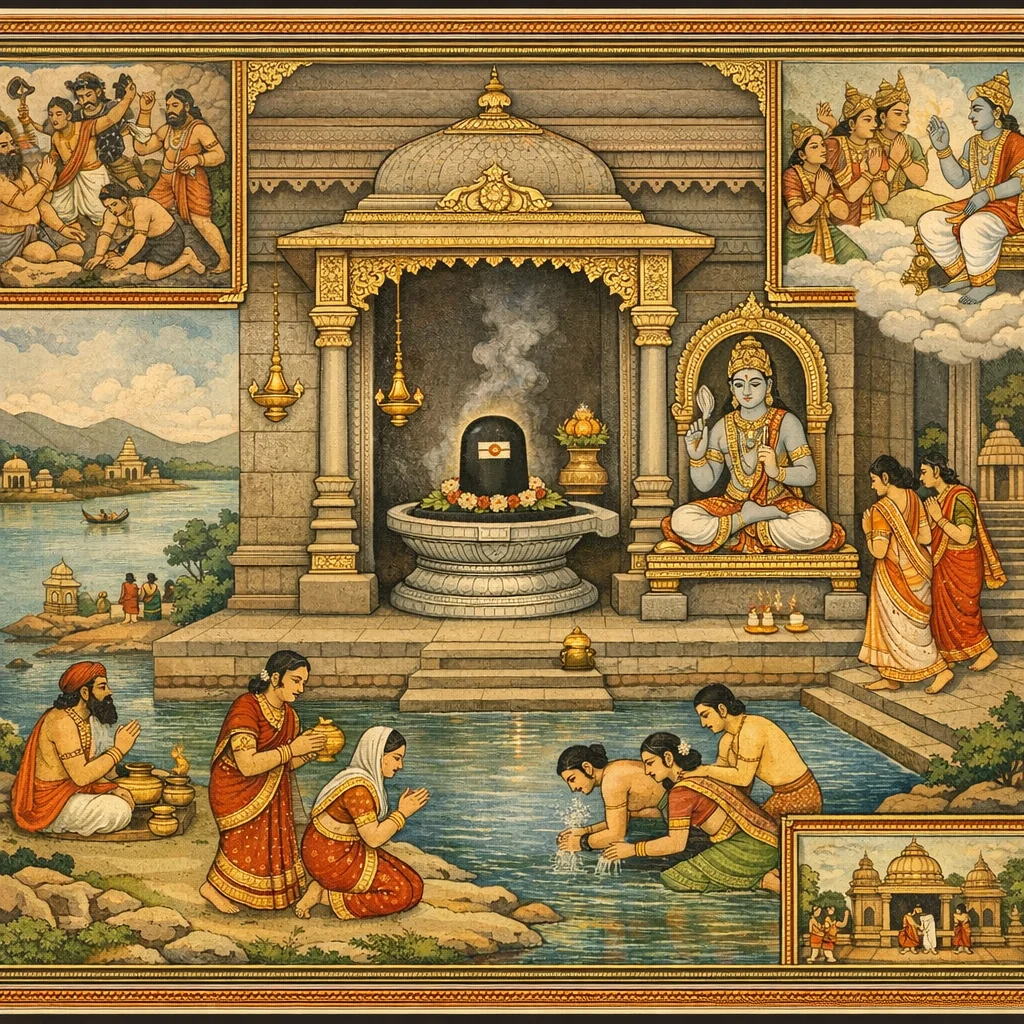
This adhyāya is cast as Mārkaṇḍeya’s instruction to a king, outlining a pilgrimage sequence and the theological greatness of a famed liṅga. The pilgrim is directed to Jāleśvara at Bhṛgukaccha, declared to be an ancient self-manifest (svayambhū) liṅga known as Kālāgnirudra. The site is praised as a compassionate, remedial sacred center that pacifies sins and dissolves afflictions, specifically removing “kṣetra-pāpa” (defilements bound to a place). A mythic account places its arising in a former kalpa, when asuras overwhelmed the three worlds and Vedic rites and dharma declined. From Kālāgnirudra issues primordial smoke (dhūma), and from that smoke the liṅga manifests, piercing the seven nether regions and establishing itself with a southern avata (pit). The chapter also notes associated hydro-ritual features: a flame-born kuṇḍa (jvālā-origin kuṇḍa) linked to Śiva’s burning of a city/pura, and a whirlpool-like formation called dhūmāvarta. Enjoined practices include bathing at the tīrtha and in Narmadā’s waters, performing śrāddha for ancestors, worshiping Trilocana (Śiva), and reciting Kālāgnirudra’s names, with the promise of paramā gati (the supreme destination). It further states the tīrtha’s potency: desire-driven rites, apotropaic/abhicāra acts, aims of diminishing enemies, and lineage-related intentions performed here are said to succeed swiftly—presented as a claim of sacred efficacy rather than an ethical endorsement of every use.
Shlokas
Verse 1
श्रीमार्कण्डेय उवाच । जालेश्वरं ततो गच्छेल्लिङ्गमाद्यं स्वयम्भुवः । कालाग्निरुद्रं विख्यातं भृगुकच्छे व्यवस्थितम्
Śrī Mārkaṇḍeya said: “Thereafter one should go to Jāleśvara—the primeval self-manifest liṅga—renowned as Kālāgnirudra, situated at Bhṛgukaccha.”
Verse 2
सर्वपापप्रशमनं सर्वोपद्रवनाशनम् । क्षेत्रपापविनाशाय कृपया च समुत्थितम्
It pacifies all sins and destroys every affliction. Out of compassion it has arisen to eradicate the sins connected with the sacred region (kṣetra).
Verse 3
पुरा कल्पेऽसुरगणैराक्रान्ते भुवनत्रये । वेदोक्तकर्मनाशे च धर्मे च विलयं गते
In a former kalpa, when hosts of asuras had overrun the three worlds, when the Veda-enjoined rites were being destroyed, and when Dharma itself had fallen into decline and dissolution—
Verse 4
देवर्षिमुनिसिद्धेषु विश्वासपरमेषु च । कालाग्निरुद्रादुत्पन्नो धूमः कालोद्भवोद्भवः
Even among the devarṣis, sages, and siddhas—those established in the highest trust—there arose a smoke, born from Kālāgnirudra, a dread manifestation sprung from Time itself.
Verse 5
धूमात्समुत्थितं लिङ्गं भित्त्वा पातालसप्तकम् । अवटं दक्षिणे कृत्वा लिङ्गं तत्रैव तिष्ठति
From that smoke arose a Śiva-liṅga; piercing through the seven nether realms, it formed a pit to the south—and the liṅga abides there even now.
Verse 6
तत्र तीर्थे नृपश्रेष्ठ कुण्डं ज्वालासमुद्भवम् । यत्र सा पतिता ज्वाला शिवस्य दहतः पुरम्
There, at that tīrtha, O best of kings, is a pond born of flame—the very place where the blazing fire fell as Śiva was burning the (demonic) city.
Verse 7
तत्रावटं समुद्भूतं धूमावर्तस्ततोऽभवत् । तस्मिन्कुण्डे तु यः स्नानं कृत्वा वै नर्मदाजले
There a pit came into being, and from it arose the ‘Dhūmāvarta’ (whirlpool of smoke). Whoever bathes in that pond, in the waters of the Narmadā—
Verse 8
कुर्याच्छ्राद्धं पितृभ्यो वै पूजयेच्च त्रिलोचनम् । कालाग्निरुद्रनामानि स गच्छेत्परमां गतिम्
—and there performs śrāddha for the ancestors, and worships the Three-eyed Lord; and recites the names of Kālāgnirudra—such a person attains the supreme state.
Verse 9
यत्किंचित्कामिकं कर्म ह्याभिचारिकमेव वा । रिपुसंक्षयकृद्वापि सांतानिकमथापि वा । अत्र तीर्थे कृतं सर्वमचिरात्सिध्यते नृप
Whatever rite one undertakes—whether for desired aims, or even for acts of incantatory compulsion, or for the destruction of enemies, or for securing progeny—whatever is performed at this tīrtha swiftly attains fulfillment, O king.
Verse 187
अध्याय
Chapter (marker).