Adhyaya 185
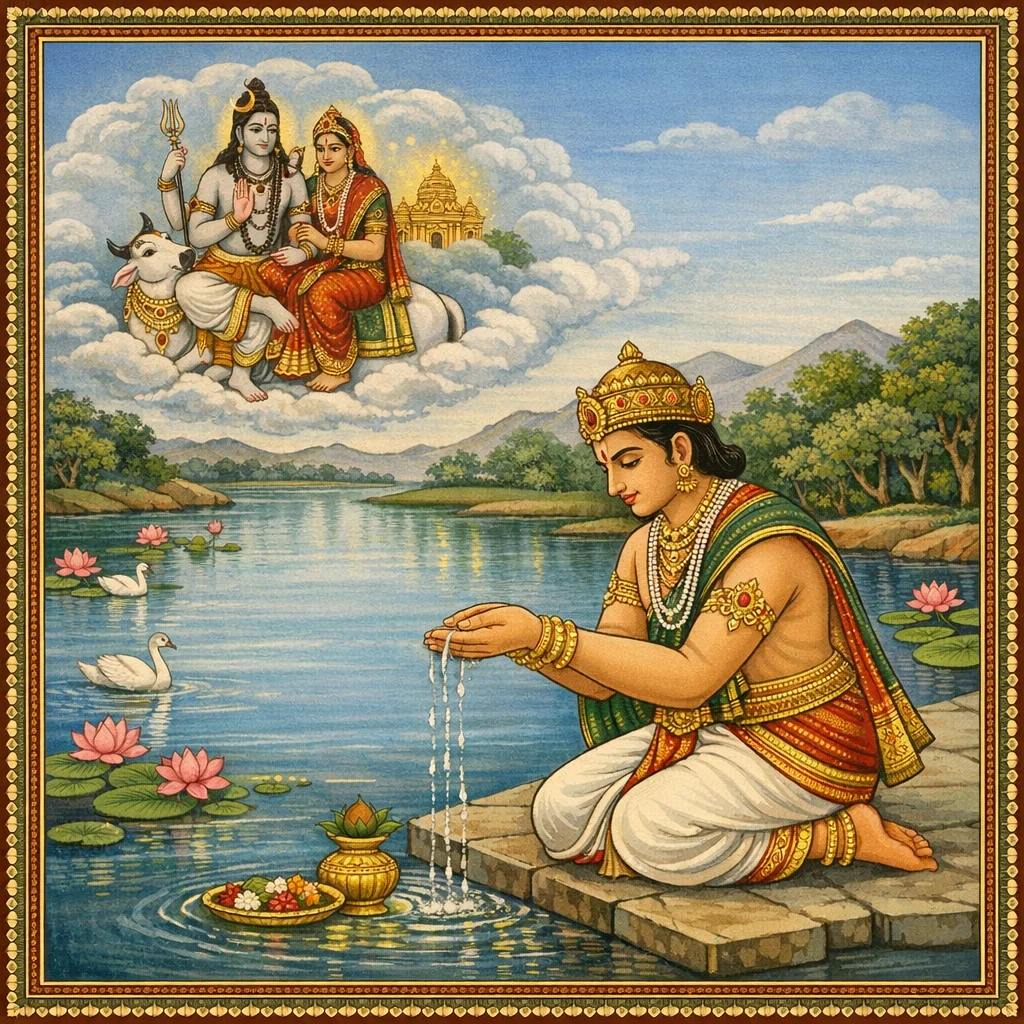
In this adhyāya, Śrī Mārkaṇḍeya gives a concise theological and ritual instruction to a ruler (mahīpāla). He directs the king to go to the revered Ēraṇḍī-tīrtha, declaring that mere bathing there is a supremely powerful act of purification, capable of removing even extreme demerit. He then prescribes a calendrical observance: in the month of Āśvayuja, on the bright-fortnight fourteenth lunar day (śukla-pakṣa caturdaśī), one should fast (upavāsa), bathe with disciplined intent (prayataḥ snātaḥ), and perform tarpaṇa offerings to the pitṛs and the deities. The phalaśruti promises layered fruits—worldly flourishing (a son endowed with prosperity and beauty, and long life) and, after death, attainment of Śivaloka—ending with an emphatic assurance that these results are beyond doubt.
Shlokas
Verse 1
श्रीमार्कण्डेय उवाच । ततो गच्छेन्महीपाल एरण्डीतीर्थमुत्तमम् । स्नानमात्रेण तत्रैव ब्रह्महत्या प्रणश्यति
Śrī Mārkaṇḍeya said: Then, O king, one should go to the supremely excellent Eraṇḍī Tīrtha; by bathing there alone, the sin of brahma-slaughter is destroyed.
Verse 2
मासि चाश्वयुजे तत्र शुक्लपक्षे चतुर्दशीम् । उपोष्य प्रयतः स्नातस्तर्पयेत्पितृदेवताः
And there, in the month of Āśvayuja, on the fourteenth day of the bright fortnight, having fasted and bathed with purity, one should offer tarpaṇa to the Pitṛs and the deities.
Verse 3
पुत्रर्द्धिरूपसम्पन्नो जीवेच्च शरदां शतम् । शिवलोकं मृतो याति नात्र कार्या विचारणा
Endowed with sons, prosperity, and beauty, he lives for a hundred autumns; and when he dies, he goes to Śiva’s world—of this there is no doubt to be entertained.
Verse 185
अध्याय
Chapter (heading/colophon marker).