Adhyaya 184
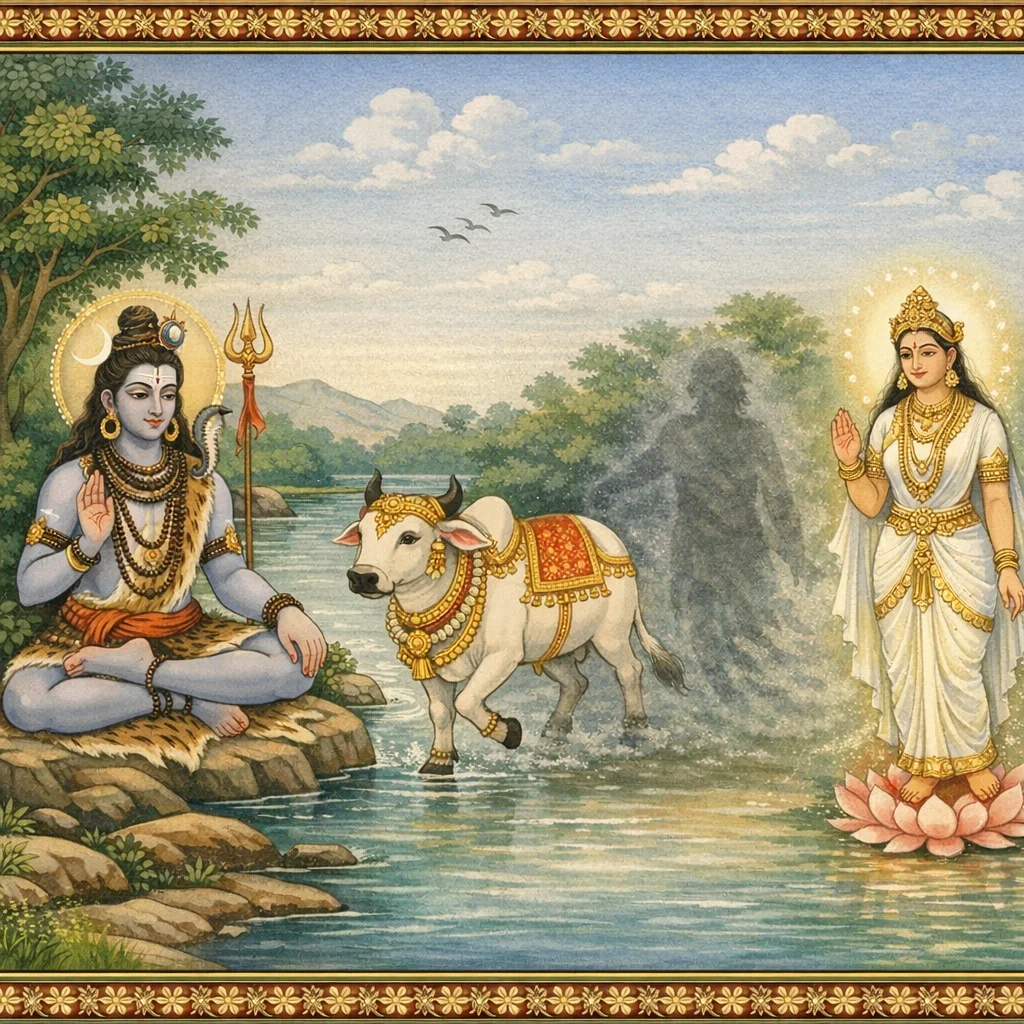
Chapter 184 delivers a tīrtha-māhātmya centered on Dhoutapāpa (also called Vidhoutapāpa) near Bhṛgu-tīrtha on the northern bank of the Narmadā. Mārkaṇḍeya praises the place as famed for washing away sin and says that Śiva abides there to honor the sage Bhṛgu. Bathing at this tīrtha is said to free one from sins even when the intention is flawed; when done properly—ritual bath, worship of Śiva, and offerings to the devas and the pitṛs—its purification becomes complete. Yudhiṣṭhira asks how brahmahatyā, the gravest impurity, can fail to enter or be destroyed there. Mārkaṇḍeya answers with a cosmogonic legend: Śiva incurs brahmahatyā after severing one head of Brahmā; the taint follows him until it is “shaken off” by Dharma embodied as a bull (vṛṣa), and the goddess Dhauteśvarī is established as a brahmahatyā-destroying power. Brahmahatyā is personified as fearful and kept at a distance from the tīrtha. The chapter also prescribes observance on Āśvayuja śukla navamī, with a three-day period beginning from saptamī, along with fasting, Vedic recitation (Ṛg/Yajus/Sāman), and Gāyatrī-japa as expiatory disciplines. Its phalaśruti promises release from severe transgressions, boons concerning progeny, and ascent after death; it further records the extraordinary claim, within the text’s tīrtha theology, that a self-chosen death at the site leads to celestial attainment.
Shlokas
Verse 1
श्रीमार्कण्डेय उवाच । धौतपापं ततो गच्छेद्भृगुतीर्थसमीपतः । वृषेण तु भृगुस्तत्र भूयोभूयो धुतस्ततः
Śrī Mārkaṇḍeya said: “From there one should proceed to (the tīrtha called) Dhauta-pāpa, near Bhṛgu-tīrtha. There, Bhṛgu was again and again washed (purified) by a bull.”
Verse 2
धौतपापं तु तत्तेन नाम्ना लोकेषु विश्रुतम् । तत्र स्थितो महादेवस्तुष्ट्यर्थं भृगुसत्तमे
For that reason it is renowned in the worlds by the name “Dhauta-pāpa” (“Washed of sin”). There Mahādeva abides, for the satisfaction and blessing of the best of the Bhṛgus, Sage Bhṛgu.
Verse 3
तत्र तीर्थे तु यः स्नात्वा शाठ्येनापि नरेश्वर । मुच्यते सर्वपापेभ्यो नात्र कार्या विचारणा
O lord of men, whoever bathes at that tīrtha—even with duplicity—is freed from all sins; no deliberation is needed here.
Verse 4
यस्तु सम्यग्विधानेन तत्र स्नात्वार्चयेच्छिवम् । देवान्पितॄन्समभ्यर्च्य मुच्यते सर्वपातकैः
But whoever, following the proper procedure, bathes there and worships Śiva—also duly honoring the Gods and the Ancestors—becomes freed from all grave sins.
Verse 5
ब्रह्महत्या गवां वध्या तत्र तीर्थे युधिष्ठिर । प्रविशेन्न सदा भीता प्रविष्टापि क्षयं व्रजेत्
O Yudhiṣṭhira, the sin of brahmin-slaying—and likewise the sin of killing cows—would not enter that tīrtha, always remaining afraid; and even if it were to enter, it would be destroyed.
Verse 6
युधिष्ठिर उवाच । आश्चर्यभूतं लोकेऽस्मिन्कथयस्व द्विजोत्तम । प्रविशेन्न ब्रह्महत्या यथा वै धौतपाप्मनि
Yudhiṣṭhira said: O best of the twice-born, tell me this wonder in the world—how it is that brahmin-slaying does not enter Dhauta-pāpa.
Verse 7
ब्रह्महत्यासमं पापं भविता नेह किंचन । कथं वा धौतपापे तु प्रविष्टं नश्यते द्विज । एतद्विस्तरतः सर्वं पृच्छामि वद कौतुकात्
Nothing in this world equals the sin of brahmin-slaying. O brāhmaṇa, how is it destroyed if it enters Dhauta-pāpa? Out of earnest curiosity I ask you to explain all this in detail.
Verse 8
मार्कण्डेय उवाच । आदिसर्गे पुरा शम्भुर्ब्रह्मणः परमेष्ठिनः । विकारं पञ्चमं दृष्ट्वा शिरोऽश्वमुखसन्निभम्
Mārkaṇḍeya said: “In the primordial creation long ago, Śambhu beheld the fifth manifestation of Brahmā, the Supreme Lord—a head resembling the face of a horse.”
Verse 9
अङ्गुष्ठाङ्गुलियोगेन तच्छिरस्तेन कृन्तितम् । कृत्तमात्रे तु शिरसि ब्रह्महत्याऽभवत्तदा
By the joining of thumb and finger, that head was severed. But the moment the head was cut off, the sin of brahmin-slaying arose then.
Verse 10
ब्रह्महत्यायुतश्चासीदुत्तरे नर्मदातटे । धुनितं तु यतो राजन्वृषेण धर्ममूर्तिना
O King, on the northern bank of the Narmadā there once existed a great burden of brahma-hatyā; but there it was shaken off and driven away by the Bull, the very embodiment of Dharma.
Verse 11
तत्र धौतेश्वरीं देवीं स्थापितां वृषभेण तु । ददर्श भगवाञ्छम्भुः सर्वदैवतपूजिताम्
There Lord Śambhu beheld the Goddess Dhauteśvarī, established by Vṛṣabha, and worshipped by all the gods.
Verse 12
दृष्ट्वा धौतेश्वरीं दुर्गां ब्रह्महत्याविनाशिनीम् । तत्र विश्रममाणश्च शङ्करस्त्रिपुरान्तकः
Having seen Dhauteśvarī Durgā, the destroyer of brahma-hatyā, Śaṅkara—slayer of Tripura—rested there.
Verse 13
स शङ्करो ब्रह्महत्याविहीनं मेने त्मानं तस्य तीर्थस्य भावात् । सुविस्मितो देवदेवो वरेण्यो दृष्ट्वा दूरे ब्रह्महत्यां च तीर्थात्
By the very power of that tīrtha, Śaṅkara deemed himself free from brahma-hatyā. The excellent Lord of gods, greatly astonished, saw brahma-hatyā standing far away from the sacred ford.
Verse 14
विधौतपापं महितं धर्मशक्त्या विशेन्न हत्या देवीभयात्प्रभीता । रक्ताम्बरा रक्तमाल्योपयुक्ता कृष्णा नारी रक्तदामप्रसक्ता
Into the revered Vidhautapāpa, empowered by Dharma, the sin called ‘Hatyā’ could not enter, terrified of the Goddess. She appeared as a dark woman, clad in red, adorned with red garlands, and bound to a red wreath or cord.
Verse 15
मां वाञ्छन्ती स्कन्धदेशं रहस्ये दूरे स्थिता तीर्थवर्यप्रभावात् । संचिन्त्य देवो मनसा स्मरारिर्वासाय बुद्धिं तत्र तीर्थे चकार
Though desiring me, she remained far away in secret in the region of Skanda, due to the power of that most excellent tīrtha. Reflecting on this, the God—the foe of Smara—resolved in his mind to dwell at that very sacred ford.
Verse 16
विमृश्य देवो बहुशः स्थितः स्वयं विधौतपापः प्रथितः पृथिव्याम् । बभूव तत्रैव निवासकारी विधूतपापनिकटप्रदेशे
After pondering again and again, the God himself remained there; and that place became renowned on earth as Vidhautapāpa. He made his abode right there, in the region close to where sin is cast off.
Verse 17
तदाप्रभृति राजेन्द्र ब्रह्महत्याविनाशनम् । विधौतपापं तत्तीर्थं नर्मदायां व्यवस्थितम्
From that time onward, O best of kings, that tīrtha on the Narmadā has stood established as Vidhautapāpa, the destroyer of brahma-hatyā.
Verse 18
आश्वयुक्शुक्लनवमी तत्र तीर्थे विशिष्यते । दिनत्रयं तु राजेन्द्र सप्तम्यादिविशेषतः
At that tīrtha, the ninth day of the bright fortnight of Āśvayuja is especially exalted; indeed, O king, a three-day observance—from the seventh day onward—is held to be most distinguished.
Verse 19
समुपोष्याष्टमीं भक्त्या साङ्गं वेदं पठेत्तु यः । अहोरात्रेण चैकेन ऋग्यजुःसामसंज्ञकम्
Whoever, with devotion, fasts on the eighth day and recites the Veda together with its auxiliaries—known as Ṛg, Yajus, and Sāman—within a single day and night,
Verse 20
अभ्यसन्ब्रह्महत्याया मुच्यते नात्र संशयः । वृषलीगमनं चैव यश्च गुर्वङ्गनागमः
By undertaking this observance, one is freed from the sin of brahmin-slaying—of this there is no doubt. Likewise are absolved the offenses of consorting with a low-born woman and of approaching the wife of one’s teacher.
Verse 21
स्नात्वा ब्रह्मरसोत्कृष्टे कुम्भेनैव प्रमुच्यते । वन्ध्या स्त्रीजननी या तु काकवन्ध्या मृतप्रजा
By bathing there—at that place exalted with the very essence of Brahman—with only a single water-pot, one is wholly released. Even a woman who is barren, or who bears only stillborn children—‘barren like a crow’ or whose offspring die—is freed from that misfortune.
Verse 22
सापि कुम्भोदकैः स्नाता जीवत्पुत्रा प्रजावती । अपठस्तु नरोपोष्य ऋग्यजुःसामसम्भवाम्
She too, having bathed with the water from the pot, becomes a mother of living sons and is blessed with progeny. And even a man unlearned, by fasting and self-restraint, and by resorting to the rite born of the Ṛg, Yajus, and Sāman—Vedic prayer—attains merit.
Verse 23
ऋचमेकां जपन्विप्रस्तथा पर्वणि यो नृप । अनृचोपोष्य गायत्रीं जपेद्वै वेदमातरम्
O King, a brāhmaṇa who, on the sacred parvan days, repeats even a single ṛc (Vedic stanza) is blessed. And one who cannot recite ṛcs, having observed a fast, should indeed repeat the Gāyatrī, revered as the Mother of the Vedas.
Verse 24
जपन्नवम्यां विप्रेन्द्रो मुच्यते पापसञ्चयात् । एवं तु कथितं तात पुराणोक्तं महर्षिभिः
The best of brāhmaṇas, chanting on the ninth lunar day (navamī), is freed from accumulated sin. Thus, dear one, it has been declared—this is the purāṇic teaching as spoken by the great seers.
Verse 25
धौतपापं महापुण्यं शिवेन कथितं मम । प्राणत्यागं तु यः कुर्याज्जले वाग्नौ स्थलेऽपि वा
This Dhautapāpa, of great merit and washing away sin, has been described to me by Śiva. And whoever relinquishes life there—whether in water, in fire, or even upon the ground—(attains an exalted end).
Verse 26
स गच्छति विमानेन ज्वलनार्कसमप्रभः । हंसबर्हिप्रयुक्तेन सेव्यमानोऽप्सरोगणैः
He goes forth in a celestial car (vimāna), radiant like fire and the sun, drawn by swans and peacocks, attended and honored by hosts of apsarases.
Verse 27
शिवस्य परमं स्थानं यत्सुरैरपि दुर्लभम् । क्रीडते स्वेच्छया तत्र यावच्चन्द्रार्कतारकम्
He reaches Śiva’s supreme abode—difficult to attain even for the gods—and dwells there in freedom and delight for as long as the moon, sun, and stars endure.
Verse 28
धौतपापे तु या नारी कुरुते प्राणसंक्षयम् । तत्क्षणादेव सा पार्थ पुरुषत्वमवाप्नुयात्
But, O son of Pṛthā, if a woman meets death at Dhautapāpa, then in that very moment she is said to attain the state of a man.
Verse 29
अथ किं बहुनोक्तेन शुभं वा यदि वाशुभम् । तदक्षयफलं सर्वं धौतपापे कृतं नृप
But what need is there to say more, O King? Whether an act be auspicious or inauspicious, all that is done at Dhautapāpa yields imperishable fruit.
Verse 30
संन्यसेन्नियमेनान्नं संन्यसेद्विषयादिकम् । फलमूलादिकं चैव जलमेकं न संत्यजेत्
With disciplined restraint one should renounce cooked food and abandon sense-indulgences and the like; one may subsist on fruits, roots, and such—yet one should not give up the single essential, water.
Verse 31
एवं यः कुरुते पार्थ रुद्रलोकं स गच्छति । तत्र भुक्त्वाखिलान्भोगाञ्जायते भुवि भूपतिः
O Pārtha, whoever acts in this manner goes to Rudra’s world; having enjoyed there every delight, he is then born on earth as a king.
Verse 184
अध्याय
Chapter (heading).