Adhyaya 181
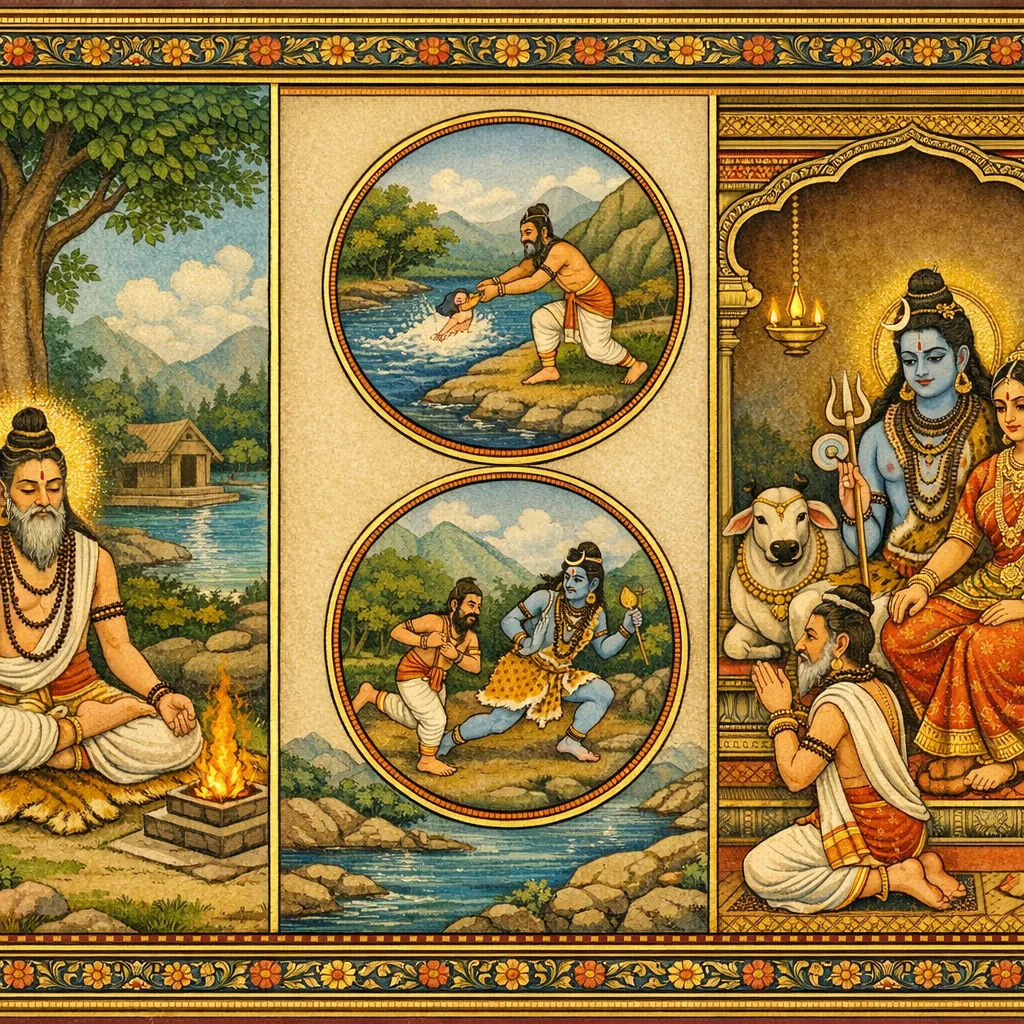
The chapter unfolds as a dialogue: Mārkaṇḍeya answers Yudhiṣṭhira’s question about a renowned tīrtha near the Narmadā, mentioning the place-name “Vṛṣakhāta” and Bhṛgu’s presence at Bhṛgukaccha. He recounts Bhṛgu’s fierce austerities and introduces a divine scene in which Śiva and Umā observe the sage. When Umā asks why no boon is granted, Śiva teaches that anger undermines tapas and obstructs spiritual attainment. To demonstrate, Śiva manifests/sends a bull-form agent (vṛṣa) to provoke Bhṛgu; the bull hurls him into the Narmadā, igniting Bhṛgu’s wrath and a relentless pursuit. The fleeing vṛṣa ranges through cosmic realms—continents, netherworlds, and higher worlds—revealing the far-reaching consequences of uncontrolled anger. At last the vṛṣa takes refuge with Śiva, and Umā requests that a boon be given before the sage’s anger subsides. Śiva declares the spot a “krodha-sthāna,” a place marked by anger. Bhṛgu then offers an extended stotra, including the hymn named “Karuṇābhyudaya,” and Śiva grants boons. Bhṛgu asks that the site become a siddhi-kṣetra bearing his name and endowed with divine presence; the narrative concludes with his further consultation with Śrī (Lakṣmī) on establishing an auspicious sacred place, rooting the tīrtha’s identity in devotional practice and the theology of place-making.
Shlokas
Verse 1
श्रीमार्कण्डेय उवाच । अतः परं प्रवक्ष्यामि भृगुतीर्थस्य विस्तरम् । यं श्रुत्वा ब्रह्महा गोघ्नो मुच्यते सर्वपातकैः
Śrī Mārkaṇḍeya said: Now, next, I shall expound in detail the greatness of Bhṛgu-tīrtha. Hearing it, even a slayer of a brāhmaṇa or a killer of a cow is freed from all grievous sins.
Verse 2
तत्र तीर्थे तु विख्यातं वृषखातमिति श्रुतम् । भृगुणा तत्र राजेन्द्र तपस्तप्तं पुरा किल
At that sacred ford there is also a renowned place, heard of as ‘Vṛṣakhāta’. There, long ago indeed, Bhṛgu performed austerities, O lord of kings.
Verse 3
युधिष्ठिर उवाच । भृगुकच्छे स विप्रेन्द्रो निवसन् केन हेतुना । तपस्तप्त्वा सुविपुलं परां सिद्धिमुपागतः
Yudhiṣṭhira said: For what reason did that foremost brāhmaṇa dwell at Bhṛgukaccha? And having performed exceedingly great austerity, how did he attain the supreme accomplishment?
Verse 4
को वा वृष इति प्रोक्तस्तत्खातं येन खानितम् । एतत्सर्वं यथान्यायं कथयस्व ममानघ
And who is the one called ‘Vṛṣa’? By whom was that ‘Khāta’—the excavated place—dug? Tell me all of this properly and in due order, O sinless one.
Verse 5
श्रीमार्कण्डेय उवाच । एष प्रश्नो महाराज यस्त्वया परिपृच्छितः । तत्सर्वं कथयिष्यामि शृणुष्वैकमना नृप
Śrī Mārkaṇḍeya said: O great king, this question that you have asked—I shall tell you all of it. Listen, O ruler, with a single-pointed mind.
Verse 6
षष्ठस्तु ब्रह्मणः पुत्रो मानसो भृगुसत्तमः । तपश्चचार विपुलं श्रीवृते क्षेत्र उत्तमे
Bhṛgu, best of sages—Brahmā’s sixth son, mind-born—performed immense austerities in the excellent sacred field called Śrīvṛta.
Verse 7
दिव्यं वर्षसहस्रं तु संशुष्को मुनिसत्तमः । निराहारो निरानन्दः काष्ठपाषाणवत्स्थितः
For a thousand divine years, the best of sages remained dried and emaciated, without food and without worldly delight—standing motionless like wood or stone.
Verse 8
ततः कदाचिद्देवेशो विमानवरमास्थितः । उमया सहितः श्रीमांस्तेन मार्गेण चागतः
Then, at a certain time, the Lord of the Gods—glorious, seated upon an excellent heavenly vimāna—came along that very path, accompanied by Umā.
Verse 9
दृष्ट्वा तत्र महाभागं भृगुं वल्मीकवत्स्थितम् । उवाच देवी देवेशं किमिदं दृश्यते प्रभो
Seeing there the illustrious Bhṛgu seated as though lodged within an anthill, the Goddess said to the Lord of the gods: “O Master, what wondrous sight is this that is being seen?”
Verse 10
ईश्वर उवाच । भृगुर्नाम महादेवि तपस्तप्त्वा सुदारुणम् । दिव्यं वर्षसहस्रं तु मम ध्यानपरायणः
Īśvara said: “O Great Goddess, this is Bhṛgu. Having undertaken a most severe austerity, for a divine thousand years he has been wholly devoted to meditation upon Me.”
Verse 11
जलबिन्दु कुशाग्रेण मासे मासे पिबेच्च सः । संवत्सरशतं साग्रं तिष्ठते च वरानने
“Month after month he would sip only a single drop of water from the tip of a kuśa blade; and thus, O fair-faced one, he has maintained this discipline for a little more than a hundred years.”
Verse 12
तच्छ्रुत्वा वचनं गौरी क्रोधसंवर्तितेक्षणा । उवाच देवी देवेशं शूलपाणिं महेश्वरम्
Hearing those words, Gaurī—her eyes inflamed with anger—spoke to the Lord of gods, to Maheśvara who bears the trident in His hand.
Verse 13
सत्यमुग्रोऽसि लोके त्वं ख्यापितो वृषभध्वज । निष्कारुण्यो दुराराध्यः सर्वभूतभयंकरः
“Truly, in this world you are proclaimed to be fierce, O Bull-bannered Lord—without compassion, hard to propitiate, a cause of fear to all beings.”
Verse 14
दिव्यं वर्षसहस्रं तु ध्यायमानस्य शङ्करम् । ब्राह्मणस्य वरं कस्मान्न प्रयच्छसि शंस मे
“For a divine thousand years that brāhmaṇa has meditated upon you, O Śaṅkara. Why do you not grant him a boon? Tell me.”
Verse 15
एवमुक्तोऽथ देवेशः प्रहस्य गिरिनन्दिनीम् । उवाच नरशार्दूल मेघगम्भीरया गिरा
Thus addressed, the Lord of gods smiled and then spoke to Girinandinī in a voice deep as thunderclouds, O tiger among men.
Verse 16
स्त्री विनश्यति गर्वेण तपः क्रोधेन नश्यति । गावो दूरप्रचारेण शूद्रान्नेन द्विजोत्तमाः
“A woman is ruined by pride; austerity is destroyed by anger. Cows are harmed by wandering far afield; and the best of twice-born lose their excellence by eating food associated with śūdras.”
Verse 17
क्रोधान्वितो द्विजो गौरी तेन सिद्धिर्न विद्यते । वर्षायुतैस्तथा लक्षैर्न किंचित्कारणं प्रिये
“O Gaurī, when a twice-born is possessed by anger, no siddhi—no spiritual attainment—arises from it. Even tens of thousands and lakhs of years become no true cause of success, my beloved.”
Verse 18
एवम्भूतस्य तस्यापि क्रोधस्य चरितं महत् । एवमुक्त्वा ततः शम्भुर्वृषं दध्यौ च तत्क्षणे
“Such indeed is the great power and consequence of anger.” Having spoken thus, Śambhu then contemplated his Bull at that very moment.
Verse 19
वृषो हि भगवन्ब्रह्मा वृषरूपी महेश्वरः । ध्यानप्राप्तः क्षणादेव गर्जयन् वै मुहुर्मुहुः
That Bull indeed was the venerable Brahmā; and Maheśvara himself, taking the form of a bull, was instantly reached through meditation—roaring again and again.
Verse 20
किं करोमि सुरश्रेष्ठ ध्यातः केनैव हेतुना । करोमि कस्य निधनमकाले परमेश्वर
“What shall I do, O best of the gods? For what reason have I been summoned by meditation? Whose untimely death am I to cause, O Parameśvara?”
Verse 21
ईश्वर उवाच । कोपयस्व द्विजश्रेष्ठं गत्वा त्वं भृगुसत्तमम् । येन मे श्रद्दधत्येषा गौरी लोकैकसुन्दरी
Īśvara said: “Go and provoke the foremost of the twice-born—Bhṛgu, the best of ṛṣis—so that Gaurī, the peerless beauty of the worlds, may place her trust in me.”
Verse 22
एतच्छ्रुत्वा वृषो गत्वा धर्षणार्थं द्विजोत्तमम् । नर्मदायास्तटे रम्ये समीपे चाश्रमे भृगुः
Hearing this, the Bull went forth to affront the foremost brāhmaṇa. Upon the fair bank of the Narmadā, near Bhṛgu’s hermitage, he arrived.
Verse 23
ततः शृङ्गैर्गृहीत्वा तु प्रक्षिप्तो नर्मदाजले । ततः क्रुद्धो भृगुस्तत्र दण्डहस्तो महामुनिः
Then, seizing him with his horns, he was hurled into the waters of the Narmadā. Thereupon Bhṛgu, the great sage, grew wrathful and stood with staff in hand.
Verse 24
पशुवत्ते वधिष्यामि दण्डघातेन मस्तके । शिखायज्ञोपवीते च परिधानं वरासने
“Like a beast I shall strike you down, with a blow of my staff upon your head—(I, who bear) the śikhā and the sacred thread, properly clad, seated upon a noble seat.”
Verse 25
सुसंवृतं कृतं तेन धावन्वै पृष्ठतो ब्रवीत्
Thus composing himself, he ran after him and spoke from behind.
Verse 26
भृगुरुवाच । पापकर्मन्दुराचार कथं यास्यसि मे वृष । अवमानं समुत्पाद्य कृत्वा गर्तं खुरैस्तथा
Bhṛgu said: “O doer of sin, wicked of conduct—how will you escape me, O bull, after bringing about this insult and gouging a pit with your hooves?”
Verse 27
गर्जयित्वा महानादं ततो विप्रमपातयत् । आत्मानं पातितं ज्ञात्वा वृषेण परमेष्ठिना
After roaring with a mighty sound, he then struck down the brāhmaṇa. Realizing that he himself had been felled by the Bull—by Parameṣṭhin—
Verse 28
भृगुः क्रोधेन जज्वाल हुताहुतिरिवानलः । करे गृह्य महादण्डं ब्रह्मदण्डमिवापरम्
Bhṛgu blazed with anger like fire fed by oblations. Taking in his hand a great staff—like another ‘Brahma-staff’—
Verse 29
हन्तुकामो वृषं विप्रोऽभ्यधावत युधिष्ठिर । धावमानं ततो दृष्ट्वा स वृषः पूर्वसागरे
O Yudhiṣṭhira, desiring to kill the bull, the brāhmaṇa ran after it. Seeing him pursuing, that bull fled toward the Eastern Ocean.
Verse 30
जम्बूद्वीपं कुशां क्रौञ्चं शाल्मलिं शाकमेव च । गोमेदं पुष्करं प्राप्तः पूर्वतो दक्षिणापथम्
He reached Jambūdvīpa, Kuśa, Krauñca, Śālmali, and Śāka; also Gomeda and Puṣkara—moving from the east toward the southern course.
Verse 31
उत्तरं पश्चिमं चैव द्वीपाद्द्वीपं नरेश्वर । पातालं सुतलं पश्चाद्वितलं च तलातलम्
O lord of men, he went north and west as well, from continent to continent; then he went on to Pātāla and Sutala, and afterward to Vitala and Talātala.
Verse 32
तामिस्रमन्धतामिस्रं पातालं सप्तमं ययौ । ततो जगाम भूर्लोकं प्राणार्थी स वृषोत्तमः
He went to Tāmisra and Andhatāmisra, down to the seventh Pātāla. Then, yearning for his very life, that excellent bull returned to Bhūrloka, the earthly realm.
Verse 33
भुवः स्वश्चैव च महस्तपः सत्यं जनस्तथा । अनुगम्यमानो विप्रेण न शर्म लभते क्वचित्
He passed through Bhuvar, Svar, Mahas, Tapas, Satya, and also Jana-loka; yet, pursued by the brāhmaṇa, he found peace nowhere.
Verse 34
पापं कृत्वैव पुरुषः कामक्रोधबलार्दितः । ततो जगाम शरणं ब्रह्माणं विष्णुमेव च
Having committed sin, a man tormented by the force of desire and anger then sought refuge—at Brahmā and also at Viṣṇu.
Verse 35
इन्द्रं चन्द्रं तथादित्यैर्याम्यवारुणमारुतैः । यदा सर्वैः परित्यक्तो लोकालोकैः सुरेश्वरैः
He turned to Indra, to Candra, and to the Ādityas; to the lords of Yama, Varuṇa, and the Maruts—yet when he was forsaken by them all, by the divine rulers of the worlds and the regions...
Verse 36
तदा देवं नमस्कृत्वा रक्ष रक्षस्व चाब्रवीत् । वध्यमानं महादेवो भृगुणा परमेष्ठिना
Then, bowing to the God, he cried, “Protect me—save me!” As he was being slain, Mahādeva (Śiva) beheld him, pursued by Bhṛgu, the supreme lord (Parameṣṭhin).
Verse 37
सर्वलोकैः परित्यक्तमनाथमिव तं प्रभो । दृष्ट्वा श्रान्तं वृषं देवः पतितं चरणाग्रतः
O Lord, seeing that weary bull—abandoned by all worlds as though without refuge—fallen at the fore of His feet, the God was moved to respond.
Verse 38
ततः प्रोवाच भगवान् स्मितपूर्वमिदं वचः
Then the Blessed Lord, smiling first, spoke these words.
Verse 39
ईश्वर उवाच । पश्य देवि महाभागे शमं विप्रस्य सुन्दरि
Īśvara said: “Behold, O auspicious and beautiful Goddess—observe the calmness of this brāhmaṇa.”
Verse 40
पार्वत्युवाच । यावद्विप्रो न चास्माकं कुप्यते परमेश्वर । तावद्वरं प्रयच्छाशु यदि चेच्छसि मत्प्रियम्
Pārvatī said: “So long as the brāhmaṇa does not become angry with us, O Parameśvara—grant him a boon quickly, if you wish to do what is pleasing to me.”
Verse 41
ततो भस्मी जटी शूली चन्द्रार्धकृतशेखरः । उमार्द्धदेहो भगवान्भूत्वा विप्रमुवाच ह
Then the Blessed Lord—besmeared with sacred ash, matted-haired, bearing the trident, crowned with the crescent moon, and sharing half His body with Umā—addressed the brāhmaṇa.
Verse 42
भोभो द्विजवरश्रेष्ठ क्रोधस्ते न शमं गतः । यस्मात्तस्मादिदं तात क्रोधस्थानं भविष्यति
“O best of the excellent twice-born! Your anger has not subsided. Therefore, dear one, this place shall become known as ‘Krodhasthāna’—the Abode of Wrath.”
Verse 43
ततो दृष्ट्वा च तं शम्भुं भृगुः श्रेष्ठं त्रिलोचनम् । जानुभ्यामवनिं गत्वा इदं स्तोत्रमुदैरयत्
Then, seeing Śambhu—the exalted Three-Eyed Lord—Bhṛgu fell to the ground upon his knees and uttered this hymn of praise.
Verse 44
भृगुरुवाच । प्रणिपत्य भूतनाथं भवोद्भवं भूतिदं भयातीतम् । भवभीतो भुवनपते विज्ञप्तुं किंचिदिच्छामि
Bhṛgu said: “Having bowed to the Lord of beings—source of existence, bestower of prosperity, and one beyond fear—I, frightened by worldly becoming, O Lord of the worlds, wish to submit a small petition.”
Verse 45
त्वद्गुणनिकरान्वक्तुं का शक्तिर्मानुषस्यास्य । वासुकिरपि न तावद्वक्तुं वदनसहस्रं भवेद्यस्य
“What power does this mere human have to describe the multitude of your qualities? Even Vāsuki could not fully speak them—though he might possess a thousand mouths.”
Verse 46
भक्त्या तथापि शङ्कर शशिधर करजालधवलिताशेष । स्तुतिमुखरस्य महेश्वर प्रसीद तव चरणनिरतस्य
“Yet, out of devotion, O Śaṅkara—O Moon-bearer whose rays whiten all—O Maheśvara, be gracious to me, whose mouth resounds with praise and who is devoted to your feet.”
Verse 47
सत्त्वं रजस्तमस्त्वं स्थित्युत्पत्तिविनाशनं देव । भवभीतो भुवनपते भुवनेश शरणनिरतस्य
You are sattva, rajas, and tamas; You are the divine power of preservation, creation, and dissolution. O Lord of the worlds, O Ruler of the universe—be gracious to me who has taken refuge, fearful of saṃsāra.
Verse 48
यमनियमयज्ञदानं वेदाभ्यासश्च धारणायोगः । त्वद्भक्तेः सर्वमिदं नार्हन्ति वै कलासहस्रांशम्
Yama and niyama, sacrifice and charity, Vedic study, and the yoga of concentration—none of these, indeed, equal even a thousandth part of devotion to You.
Verse 49
उत्कृष्टरसरसायनखड्गां जनविवरपादुकासिद्धिः । चिह्नं हि तव नतानां दृश्यत इह जन्मनि प्रकटम्
The marks of Your grace upon those who bow to You become manifest in this very life—excellent elixirs and rejuvenating essences, a victorious sword, and even wondrous attainments such as moving unhindered among people and gaining the power of the sacred sandals (swift, protected passage).
Verse 50
शाठ्येन यदि प्रणमति वितरसि तस्यापि भूतिमिच्छया देव । भवति भवच्छेदकरी भक्तिर्मोक्षाय निर्मिता नाथ
O Deva, even if someone bows with deceit—seeking only worldly prosperity—you still bestow it. Yet devotion, O Lord, is fashioned for liberation: it becomes the cutter of saṃsāra, the severer of worldly becoming.
Verse 51
परदारपरस्वरतं परपरिभवदुःखशोकसंतप्तम् । परवदनवीक्षणपरं परमेश्वर मां परित्राहि
I am drawn to another’s spouse and another’s wealth; I am scorched by the pain and grief of humiliations inflicted by others; I am addicted to staring at others’ faces. O Parameśvara—save me.
Verse 52
अधिकाभिमानमुदितं क्षणभङ्गुरविभवविलसन्तम् । क्रूरं कुपथाभिमुखं शङ्कर शरणागतं परित्राहि
Excessive pride rises within me; I glitter with power whose splendor shatters in a moment. I am cruel and turned toward the wrong path. O Śaṅkara, save me who has come seeking refuge.
Verse 53
दीनं द्विजं वरार्थे बन्धुजने नैव पूरिता ह्याशा । छिन्द्धि महेश्वर तृष्णां किं मूढं मां विडम्बयसि
I am a poor brāhmaṇa seeking boons; even among my own kin my hopes have not been fulfilled. O Maheśvara, cut off my craving—why do You let desire mock me, the deluded one?
Verse 54
तृष्णां हरस्व शीघ्रं लक्ष्मीं दद हृदयवासिनीं नित्यम् । छिन्द्धि मदमोहपाशं मामुत्तारय भवाच्च देवेश
Swiftly remove my craving; grant me Lakṣmī—enduring prosperity that ever dwells within the heart. Cut the noose of arrogance and delusion, O Lord of gods, and ferry me across, out of saṃsāra.
Verse 55
करुणाभ्युदयं नाम स्तोत्रमिदं सर्वसिद्धिदं दिव्यम् । यः पठति भृगुं स्मरति च शिवलोकमसौ प्रयाति देहान्ते
This divine hymn, called “Karuṇābhyudaya” (The Rising of Compassion), bestows every attainment. Whoever recites it and remembers Bhṛgu, at the body’s end, goes to Śiva’s world.
Verse 56
एतच्छ्रुत्वा महादेवः स्तोत्रं च भृगुभाषितम् । उवाच वरदोऽस्मीति देव्या सह वरोत्तमम्
Hearing this hymn spoken by Bhṛgu, Mahādeva said, “I am the giver of boons,” and, together with the Goddess, (prepared to grant) the highest boon.
Verse 57
भृगुरुवाच । प्रसन्नो देवदेवेश यदि देयो वरो मम । सिद्धिक्षेत्रमिदं सर्वं भविता मम नामतः
Bhṛgu said: O Lord of the gods, if You are pleased and a boon is to be granted to me, let this entire region become a siddhi-kṣetra, renowned by my name.
Verse 58
भवद्भिः सन्निधानेन स्थातव्यं हि सहोमया । देवक्षेत्रमिदं पुण्यं येन सर्वं भविष्यति
By Your abiding presence, remain here together with Umā. Thus this holy place will become a devakṣetra, a sacred field of the gods, through which all auspicious good will come to be.
Verse 59
अत्र स्थाने महास्थानं करोमि जगदीश्वर । तव प्रसादाद्देवेश पूर्यन्तां मे मनोरथाः
O Lord of the world, at this very spot I shall establish a great sacred seat. By Your grace, O Lord of the gods, may my cherished aims be fulfilled.
Verse 60
ईश्वर उवाच । श्रिया कृतमिदं पूर्वं किं न ज्ञातं त्वया द्विज । अनुमान्य श्रियं देवीं यदीयं मन्यते भवान्
Īśvara said: “This was accomplished earlier by Śrī—did you not know it, O Brāhmaṇa? Therefore, duly honor the goddess Śrī, if this is what you deem proper.”
Verse 61
कुरुष्व यदभिप्रेतं त्वत्कृतं नः तदन्यथा । एवमुक्त्वा गते देवे स्नात्वा गत्वा भृगुः श्रियम्
“Do exactly what you intend; what is done by you shall not be otherwise—it shall not fail.” Having said this, when the Lord departed, Bhṛgu bathed and went to Śrī.
Verse 62
कृत्वा च पारणं तत्र वसन्विप्रस्तया सह । श्रिया च सहितः काल इदं वचनमब्रवीत्
And after completing the pāraṇa there, while residing with the Brāhmaṇa’s wife, Kāla—accompanied by Śrī—spoke these words.
Verse 63
भृगुरुवाच । यदि ते रोचते भद्रे दुःखासीनं च ते यदि । त्वया वृते महाक्षेत्रे स्वीयं स्थानं करोम्यहम्
Bhṛgu said: “If it pleases you, O auspicious lady—and if you wish relief from sorrow—then in this great sacred field chosen by you, I shall establish my own holy seat.”
Verse 64
श्रीरुवाच । मम नाम्ना तु विप्रर्षे तव नाम्ना तु शोभनम् । स्थानं कुरुष्वाभिप्रेतमविरोधेन मे मतिः
Śrī said: “O best of Brāhmaṇas, let the place be named with my name, and also with your name—this will be fitting. Establish the sacred seat as you desire; my intention is without opposition.”
Verse 65
भृगुरुवाच । कच्छपाधिष्ठितं ह्येतत्तस्य पृष्ठिगतं रमे । संमन्त्र्य सहितं तेन शोभनं भवती कुरु
Bhṛgu said: “O Ramā, this place rests upon the Turtle and lies upon his back. Therefore, after consulting with him and in harmony with him, you should arrange what is auspicious.”