Adhyaya 180
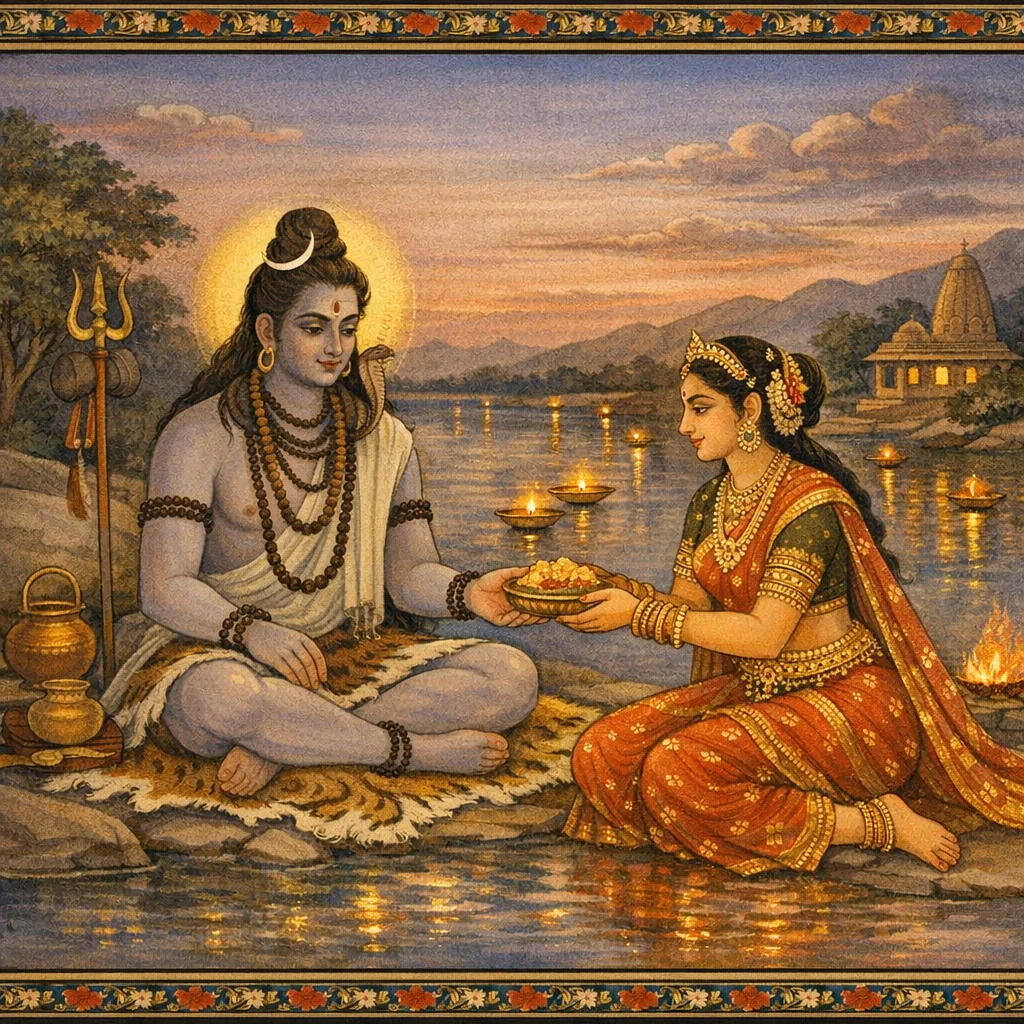
Chapter 180 unfolds as a theological and ethical inquiry in the dialogue between King Yudhiṣṭhira and the sage Mārkaṇḍeya. Mārkaṇḍeya points out the Daśāśvamedhika tīrtha on the Narmadā, declaring that disciplined observance there yields merit equal to ten Aśvamedha sacrifices. Yudhiṣṭhira raises a methodological doubt: since the Aśvamedha is costly and generally beyond ordinary people, how can its fruit be gained by common practitioners? Mārkaṇḍeya answers with an illustrative episode: Śiva and Pārvatī come to the tīrtha; Śiva, disguised as a hungry ascetic-brāhmaṇa, tests people’s social and ritual conduct. Many dismiss him or fail to grasp the Purāṇic intent, but a learned brāhmaṇa, trusting Veda–Smṛti–Purāṇa testimony, performs the prescribed acts—snāna, japa, śrāddha, dāna, and the gift of a kapilā cow—and hospitably receives the hidden Śiva. Śiva then grants a boon, and the brāhmaṇa asks for Śiva’s perpetual presence at the tīrtha, establishing its sacral authority. The chapter next gives procedural guidance centered on Āśvina śukla daśamī: fasting, worship of Śiva as Tripurāntaka, honoring Sarasvatī’s presence at the site, circumambulations, gifting a cow, night vigil with lamps, recitation and music, and feeding brāhmaṇas and Śiva-devotees. Phala statements list purification, attainment of Rudraloka, auspicious rebirth, and various post-mortem destinations for those who die there under differing conditions, all contingent upon āstikya (affirmative faith) and correct observance.
Shlokas
Verse 1
श्रीमार्कण्डेय उवाच । ततो गच्छेन्महीपाल दशाश्वमेधिकं परम् । तीर्थं सर्वगुणोपेतं महापातकनाशनम्
Śrī Mārkaṇḍeya said: “Then, O king, one should go to the supreme Daśāśvamedhika Tīrtha—endowed with every excellence—destroyer of great sins.”
Verse 2
यत्र गत्वा महाराज स्नात्वा सम्पूज्य चेश्वरम् । दशानामश्वमेधानां फलं प्राप्नोति मानवः
O great king, having gone there—having bathed and duly worshipped the Lord—a person attains the fruit of ten Aśvamedha sacrifices.
Verse 3
युधिष्ठिर उवाच । अश्वमेधो महायज्ञो बहुसम्भारदक्षिणः । अशक्यः प्राकृतैः कर्तुं कथं तेषां फलं लभेत्
Yudhiṣṭhira said: “The Aśvamedha is a great yajña, demanding vast provisions and priestly dakṣiṇā; ordinary people cannot perform it. How, then, may they obtain its fruits?”
Verse 4
अत्याश्चर्यमिदं तत्त्वं त्वयोक्तं वदता सता । यथा मे जायते श्रद्धा दीर्घायुस्त्वं तथा वद
O truthful sage, this principle you have spoken is exceedingly wondrous. Explain it in such a way that faith arises in me, O long-lived one.
Verse 5
मार्कण्डेय उवाच । इदमाश्चर्यभूतं हि गौर्या पृष्टस्त्रियम्बकः । तत्तेऽहं सम्प्रवक्ष्यामि पृच्छते निपुणाय वै
Mārkaṇḍeya said: “Indeed, this wondrous matter was once asked by Gaurī of Tryambaka (Śiva). I shall now explain it fully to you, since you inquire with discernment.”
Verse 6
पुरा वृषस्थो देवेश ह्युमया सह शङ्करः । कदाचित्पर्यटन्पृथिवीं नर्मदातटमाश्रितः
In former times, Śaṅkara—the Lord of the gods—seated upon the bull and accompanied by Umā, once wandered the earth and came to rest upon the bank of the Narmadā.
Verse 7
दशाश्वमेधिकं तीर्थं दृष्ट्वा देवो महेश्वरः । तीर्थं प्रत्यञ्जलिं बद्ध्वा नमश्चक्रे त्रिलोचनः
Seeing the Daśāśvamedhika Tīrtha, the god Maheśvara—three-eyed—joined his palms toward the tīrtha and bowed in reverence.
Verse 8
कृताञ्जलिपुटं देवं दृष्ट्वा देवीदमब्रवीत्
Seeing the God with palms joined in reverence, the Goddess spoke these words.
Verse 9
देव्युवाच । किमेतद्देवदेवेश चराचरनमस्कृत । प्रह्वनम्राञ्जलिं बद्ध्वा भक्त्या परमया युतः
The Goddess said: “What is this, O God of gods, revered by all moving and unmoving beings, that you stand bowed with joined palms, filled with supreme devotion?”
Verse 10
एतदाश्चर्यमतुलं सर्वं कथय मे प्रभो
O Lord, please tell me in full about this incomparable wonder.
Verse 11
ईश्वर उवाच । प्रत्यक्षं पश्य तीर्थस्य फलं मा विस्मिता भव । वियत्स्था मे भुविस्थस्य क्षणं देवि स्थिरा भव
Īśvara said: “See with your own eyes the fruit of this holy ford; do not be astonished. Though you are in the sky while I stand on the earth, O Devī, remain steady for a moment.”
Verse 12
एवमुक्त्वा तु देवेशो गौरवर्णो द्विजोऽभवत् । क्षुत्क्षामकण्ठो जटिलः शुष्को धमनिसंततः
Having spoken thus, the Lord of the gods became a fair-complexioned brāhmaṇa. His throat was parched from hunger; he was matted-haired, dried up, with his veins standing out.
Verse 13
उपविश्य भुवः पृष्ठे सुस्वरं मन्त्रमुच्चरन् । क्रमप्रियो महादेवो माधुर्येण प्रमोदयन्
Seated upon the earth, Mahādeva—fond of proper order—chanted a mantra in a beautiful tone, delighting all by its sweetness.
Verse 14
श्रुत्वा तां मधुरां वाणीं स्वयं देवेन निर्मिताम् । संभ्रान्ता ब्राह्मणाः सर्वे स्नातुं ये तत्र चागताः
Hearing that sweet voice, fashioned by the God Himself, all the brāhmaṇas who had come there to bathe became astonished and stirred.
Verse 15
नित्यक्रिया च सर्वेषां विस्मृता श्रुतिविभ्रमात् । तं दृष्ट्वा पठमानं तु क्षुत्पिपासाभिपीडितम्
Because their hearing was bewitched, everyone forgot their daily rites. Seeing him reciting—afflicted by hunger and thirst—
Verse 16
द्विजोऽन्यमन्त्रयत्कश्चिद्भक्त्या तं भोजनाय वै । प्रसादः क्रियतां ब्रह्मन्भोजनाय गृहे मम
Then a certain brāhmaṇa, with devotion, invited him for a meal: “O Brahman, please accept my hospitality—come to my home for food.”
Verse 17
अद्य मे सफलं जन्म ह्यद्य मे सफलाः क्रियाः । सर्वान्कामान्प्रदास्यन्ति प्रीता मेऽद्य पितामहाः
“Today my birth is fruitful; today my religious acts are fulfilled. Pleased today, my forefathers will grant me all desired aims.”
Verse 18
त्वयि भुक्ते द्विजश्रेष्ठ प्रसीद त्वं ध्रुवं मम । एवमुक्तो महादेवो द्विजरूपधरस्तदा
“When you have eaten, O best of brāhmaṇas, you will surely be gracious to me.” Thus addressed, Mahādeva—then bearing the form of a brāhmaṇa—
Verse 19
प्रहस्य प्रत्युवाचेदं ब्राह्मणं श्लक्ष्णया गिरा । मया वर्षसहस्रं तु निराहारं तपः कृतम्
Smiling, he replied to that brāhmaṇa in a gentle voice: “For a thousand years I performed austerity without food.”
Verse 20
इदानीं तु गृहे तस्य करिष्ये द्विजसत्तम । दशभिर्वाजिमेधैश्च येनेष्टं पारणं तथा
“Now then, O best of brāhmaṇas, I shall perform it in his house—an observance accompanied by ten Aśvamedha sacrifices—by which the proper concluding rite (pāraṇa) is duly accomplished.”
Verse 21
इत्युक्तो देवदेवेन ब्राह्मणो विस्मयान्वितः । उत्तमाङ्गं विधुन्वन्वै जगाम स्वगृहं प्रति
Thus addressed by the God of gods, the brāhmaṇa—filled with astonishment—shook his head and went back toward his own home.
Verse 22
एवं ते बहवो विप्राः प्रत्याख्याते निमन्त्रणे । पुराणार्थमजानन्तो नास्तिका बहवो गताः
Thus, when the invitation was declined, many brāhmaṇas—ignorant of the Purāṇic intent—went away, and many among them fell into a nāstika, sceptical attitude.
Verse 23
अथ कश्चिद्द्विजो विद्वान्पुराणार्थस्य तत्त्ववित् । देवं निमन्त्रयामास द्विजरूपधरं शिवम्
Then a certain learned twice-born, who knew the true purport of the Purāṇas, invited the Lord—Śiva who had assumed the form of a brāhmaṇa.
Verse 24
तथैव सोऽपि देवेन प्रोक्तः स प्राह तं पुनः । मनसा चिन्तयित्वा तु पुराणोक्तं द्विजोत्तमः
He too was addressed by the Lord in the same manner; and that best of brāhmaṇas, having reflected in his mind upon what the Purāṇa teaches, spoke to Him again.
Verse 25
स्मृतिवेदपुराणेषु यदुक्तं तत्तथा भवेत् । इति निश्चित्य तं विप्रमुवाच प्रहसन्निव
“What is stated in the Smṛtis, the Vedas, and the Purāṇas must indeed be so.” Having concluded thus, He spoke to that brāhmaṇa, as though smiling.
Verse 26
भोभो विप्र प्रतीक्षस्व यावदागमनं पुनः । इत्युक्त्वा तु द्विजो गत्वा दशाश्वमेधिकं परम्
“O brāhmaṇa, wait—until I return again.” Having said this, the twice-born went to that supreme place famed for the merit of ten Aśvamedhas.
Verse 27
स्नानं महालम्भनादि कृतं तेन द्विजन्मना । जपं श्राद्धं तथा दानं कृत्वा धर्मानुसारतः
That twice-born performed ritual bathing, beginning with the great rite of Mahālambhana; and, in accordance with dharma, he also carried out japa, śrāddha, and charitable giving.
Verse 28
संकल्प्य कपिलां तत्र पुराणोक्तविधानतः । समायात्त्वरितं तत्र यत्रासौ तिष्ठते द्विजः
Having made there the saṅkalpa to gift a tawny kapilā cow, according to the procedure taught in the Purāṇa, he quickly returned to the place where that brāhmaṇa was standing in wait.
Verse 29
अथागत्य द्विजं प्राह वाजिमेधः कृतो मया । उत्तिष्ठ मे गृहं रम्यं भोजनार्थं हि गम्यताम्
Then, returning, he said to the brāhmaṇa: “I have performed the Aśvamedha. Rise—let us go to my pleasant home, for the sake of taking food.”
Verse 30
इत्युक्तः शङ्करस्तेन ब्राह्मणेनातिविस्मितः । उवाच ब्राह्मणं देव इदानीं त्वमितो गतः
Thus addressed by that brāhmaṇa, Śaṅkara was greatly astonished. The Lord then said to the brāhmaṇa: “Now then—whence have you come to this place?”
Verse 31
द्विजवर्य कथं चेष्टा दश यज्ञा महाधनाः
“O best of brāhmaṇas, how was this accomplished—these ten great sacrifices (yajñas) that demand vast wealth?”
Verse 32
द्विज उवाच । न विचारस्त्वया कार्यः कृता यज्ञा न संशयः । यदि वेदाः प्रमाणं तं भुवि देवा द्विजास्तथा
The brāhmaṇa said: “You need not deliberate on this. The sacrifices (yajñas) have indeed been performed—there is no doubt. If the Vedas are the authority, then on earth both the devas and the brāhmaṇas stand as witnesses to that truth.”
Verse 33
दशाश्वमेधिकं तीर्थं तथा सत्यं द्विजोत्तम । यदि वेदपुराणोक्तं वाक्यं निःसंशयं भवेत्
O best of brāhmaṇas, it is true: this is the Daśāśvamedhika tīrtha, equal to ten Aśvamedha sacrifices, if the words spoken in the Vedas and Purāṇas are accepted as beyond doubt.
Verse 34
तदा प्राप्तं मया सर्वं नात्र कार्या विचारणा । एवमुक्तस्तु देवेश आस्तिक्यं तस्य चेतसः
“Then I have attained everything; there is no need for further scrutiny here.” Thus addressed, the Lord of gods perceived the steadfast faith within his heart.
Verse 35
विमृश्य बहुभिः किंचिदुत्तरं न प्रपद्यत । जगाम तद्गृहं रम्यं पठन्ब्रह्म सनातनम्
Reflecting in many ways, he found no reply to offer. Then he went to that brāhmaṇa’s lovely house, reciting the eternal Brahman—the sacred chant—as he walked.
Verse 36
सम्प्राप्तं तं द्विजं भक्त्या पाद्यार्घ्येण तमर्चयत् । षड्रसं भोजनं तेन दत्तं पश्चाद्यथाविधि
When that brāhmaṇa arrived, he worshipped him with devotion, offering water for the feet and arghya in honor. Afterwards, in due manner, he served him a meal of the six tastes.
Verse 37
ततो भुक्ते महादेवे सर्वदेवमये शिवे । पुष्पवृष्टिः पपाताशु गगनात्तस्य मूर्धनि । तस्यास्तिक्यं तु संलक्ष्य तुष्टः प्रोवाच शङ्करः
When Mahādeva—Śiva who embodies all the gods—had eaten, a swift shower of flowers fell from the sky upon that man’s head. Seeing his unwavering faith, Śaṅkara, pleased, spoke.
Verse 38
ईश्वर उवाच । किं तेऽद्य क्रियतां ब्रूहि वरदोऽहं द्विजोत्तम । अदेयमपि दास्यामि एकचित्तस्य ते ध्रुवम्
The Lord said: “Tell me what is to be done for you today, O best of brāhmaṇas. I am the giver of boons; even what is ordinarily deemed ‘not to be given’ I shall surely grant you, for your mind is single-pointed.”
Verse 39
ब्राह्मण उवाच । यदि प्रीतोऽसि मे देव यदि देयो वरो मम । अस्मिंस्तीर्थे महादेव स्थातव्यं सर्वदैव हि
The brāhmaṇa said: “If you are pleased with me, O Lord, and if my boon is to be granted, then, O Mahādeva, abide forever in this very tīrtha.”
Verse 40
उपकाराय देवेश एष मे वर उत्तमः । एवमुक्तस्तु देवेन आरुरोह द्विजोत्तमः
“O Lord of the gods, this supreme boon of mine is for the welfare of others.” Thus addressed by the Lord, the best of the twice-born ascended (the divine conveyance).
Verse 41
गन्धर्वाप्सरःसम्बाधं विमानं सार्वकामिकम् । पूज्यमानो गतस्तत्र यत्र लोका निरामयाः
A wish-fulfilling vimāna, thronged with Gandharvas and Apsarases, arrived. Honoured and worshipped, he went to that realm where beings are free from illness and affliction.
Verse 42
मार्कण्डेय उवाच । एतदाश्चर्यमतुलं दृष्ट्वा देवी सुविस्मिता । विस्मयोत्फुल्लनयना पुनः पप्रच्छ शङ्करम्
Mārkaṇḍeya said: Seeing this incomparable marvel, the Goddess was filled with wonder; with eyes widened in amazement, she again questioned Śaṅkara.
Verse 43
पार्वत्युवाच । कथमेतद्भवेत्सत्यं यत्रेदमसमञ्जसम् । स्नानं कुर्वन्ति बहवो लोका ह्यत्र महेश्वर
Pārvatī said: “How can this be true, when it appears so perplexing? Many people bathe here, O Maheśvara.”
Verse 44
तेषां तु स्वर्गगमनं यथैष स्वर्गतिं गतः । कथमेतत्समाचक्ष्व विस्मयः परमो मम
“Then how do those people attain heaven, just as this one has reached the heavenly state? Explain this to me—my astonishment is great.”
Verse 45
एतच्छ्रुत्वा तु देवेशः प्रहसन्प्रत्युवाच ताम् । वेदवाक्ये पुराणार्थे स्मृत्यर्थे द्विजभाषिते
Hearing this, the Lord of the gods, smiling, replied to her, in accord with the Vedic word, the purport of the Purāṇas, the intent of the Smṛtis, and the sayings of the learned twice-born.
Verse 46
विस्मयो हि न कर्तव्यो ह्यनुमानं हि तत्तथा । असंभाव्यं हि लोकानां पुराणे यत्प्रगीयते
“Wonder should not be indulged in, for reasoning too accords with this. What is proclaimed in the Purāṇas often seems impossible to ordinary people.”
Verse 47
यदि पक्षं पुरस्कृत्य लोकाः कुर्वन्ति पार्वति । तस्मान्न सिद्धिरेतेषां भवत्येको न विस्मयः
“If people act by taking up partisan views, O Pārvatī, then spiritual success does not arise for them—there is no need to be surprised at that.”
Verse 48
नास्तिका भिन्नमर्यादा ये निश्चयबहिष्कृताः । तेषां सिद्धिर्न विद्येत आस्तिक्याद्भवते ध्रुवम्
Those who are nāstikas, who have broken the proper bounds of conduct and are cast out from firm conviction—no siddhi is found for them. From āstikya, faith that affirms dharma, success surely arises.
Verse 49
श्रुत्वाख्यानमिदं देवी ववन्दे तीर्थमुत्तमम् । सर्वपापहरं पुण्यं नर्मदायां व्यवस्थितम्
Having heard this account, the Goddess bowed to that supreme tīrtha—holy and meritorious, the remover of all sins—situated upon the Narmadā.
Verse 50
मार्कण्डेय उवाच । दशाश्वमेधं राजेन्द्र सर्वतीर्थोत्तमोत्तमम् । तीर्थं सर्वगुणोपेतं महापातकनाशनम्
Mārkaṇḍeya said: O king, Daśāśvamedha is the best of the best among all tīrthas—a sacred ford endowed with every excellence, and a destroyer of the gravest sins.
Verse 51
तत्रागता महाभागा स्नातुकामा सरस्वती । पुण्यानां परमा पुण्या नदीनामुत्तमा नदी
There the most fortunate Sarasvatī arrives, desiring to bathe—supremely holy among holy things, the highest of rivers among rivers.
Verse 52
नाममात्रेण यस्यास्तु सर्वपापैः प्रमुच्यते । स्नातास्तत्र दिवं यान्ति ये मृतास्तेऽपुनर्भवाः
By her name alone one is released from all sins. Those who bathe there go to heaven; and those who die there do not return again, freed from rebirth.
Verse 53
दशाश्वमेधे सा राजन्नियता ब्रह्मचारिणी । आराधयित्वा देवेशं परं निर्वाणमागतीः
At Daśāśvamedha, O king, she—disciplined and steadfast in sacred brahmacarya—worshipped the Lord of the gods and attained the supreme nirvāṇa.
Verse 54
कालुष्यं ब्रह्मसम्भूता संवत्सरसमुद्भवम् । प्रक्षालयितुमायाति दशम्यामाश्विनस्य च
Born from Brahmā, she comes on the tenth day of Āśvina to wash away the defilement that has accumulated over the course of the year.
Verse 55
उपोष्य रजनीं तां तु सम्पूज्य त्रिपुरान्तकम् । राजन्निष्कल्मषा यान्ति श्वोभूते शाश्वतं पदम्
But having fasted through that night and duly worshipped Tripurāntaka, O king, they become stainless and, when the next day dawns, attain the eternal abode.
Verse 56
युधिष्ठिर उवाच । सरस्वती महापुण्या नदीनामुत्तमा नदी श्रीमार्कण्डेय उवाच । राजन्नाश्वयुजे मासि दशम्यां तद्विशिष्यते । पार्थिवेषु च तीर्थे तु सर्वेष्वेव न संशयः
Yudhiṣṭhira said: Sarasvatī is greatly holy, the best river among rivers. Mārkaṇḍeya said: O king, that tīrtha-observance becomes especially distinguished on the tenth day in the month of Āśvayuja—indeed, among all earthly tīrthas, without doubt.
Verse 57
दशाश्वमेधिके राजन्नित्यं हि दशमी शुभा । विशेषादाश्विने शुक्ला महापातकनाशिनी
At Daśāśvamedha, O king, the tenth lunar day is always auspicious; and especially the bright-fortnight Daśamī in Āśvina destroys the gravest sins.
Verse 58
तस्या स्नात्वार्चयेद्देवानुपवासपरायणः । श्राद्धं कृत्वा विधानेन पश्चात्सम्पूजयेच्छिवम्
After bathing in her sacred waters, devoted to fasting, one should worship the gods; then, having performed śrāddha according to rule, one should afterwards offer full worship to Śiva.
Verse 59
तत्रस्थां पूजयेद्देवीं स्नातुकामां सरस्वतीम् । नमो नमस्ते देवेशि ब्रह्मदेहसमुद्भवे
There one should worship the goddess Sarasvatī who abides in that place, desiring to bathe, saying: “Homage, homage to you, O Devī, Lady of divine sovereignty, arisen from the body of Brahmā.”
Verse 60
कुरु पापक्षयं देवि संसारान्मां समुद्धर । गन्धधूपैश्च सम्पूज्य ह्यर्चयित्वा पुनःपुनः
“O Devī, destroy my sins and lift me out of saṃsāra. Having offered full worship with fragrance and incense, one should adore and venerate again and again.”
Verse 61
दश प्रदक्षिणा दत्त्वा सूत्रेण परिवेष्टयेत् । कपिलां तु ततो विप्रे दद्याद्विगतमत्सरः
“Having performed ten pradakṣiṇā (circumambulations), one should then bind it with the sacred thread. Thereafter, free from envy, one should donate a tawny kapilā cow to a brāhmaṇa.”
Verse 62
सर्वलक्षणसम्पन्नां सर्वोपस्करसंयुताम् । दत्त्वा विप्राय कपिलां न शोचति कृताकृते
“Having given to a brāhmaṇa a tawny kapilā cow endowed with all auspicious marks and furnished with all necessary accessories, one does not grieve over what has been done or left undone.”
Verse 63
पश्चाज्जागरणं कुर्याद्घृतेनाज्वाल्य दीपकम् । पुराणपठनेनैव नृत्यगीतविवादनैः
Afterwards one should keep the night-vigil, kindling a lamp with ghee, and pass the vigil through Purāṇa recitation, as well as through devotional dance, song, and instrumental music.
Verse 64
वेदोक्तैश्चैव पूजयेच्छशिशेखरम् । प्रभाते विमले पश्चात्स्नात्वा वै नर्मदाजले
And with Vedic rites one should worship Śaśiśekhara (Śiva, the Moon-crested). Then, in the pure morning, after bathing in the waters of the Narmadā…
Verse 65
ब्राह्मणान् भोजयेद्भक्त्या शिवभक्तांश्च योगिनः । एवं कृते ततो राजन् सम्यक्तीर्थफलं लभेत्
With devotion one should feed brāhmaṇas and also yogins who are devotees of Śiva. When this is done, O King, one truly obtains the full fruit of the pilgrimage.
Verse 66
तत्र तीर्थे तु यः स्नात्वा पूजयेच्छङ्करं नरः । दशाश्वमेधावभृथं लभते पुण्यमुत्तमम्
At that sacred ford, the man who bathes and worships Śaṅkara obtains the supreme merit equal to the concluding bath of ten Aśvamedha sacrifices.
Verse 67
पूतात्मा तेन पुण्येन रुद्रलोकं स गच्छति । आरूढः परमं यानं कामगं च सुशोभनम्
Purified by that merit, he goes to Rudra’s world, mounted upon a supremely splendid celestial vehicle that moves according to desire.
Verse 68
तत्र दिव्याप्सरोभिस्तु वीज्यमानोऽथ चामरैः । क्रीडते सुचिरं कालं जयशब्दादिमङ्गलैः
There, fanned by divine apsarases with yak-tail chamaras, he sports for a very long time amid auspicious celebrations beginning with cries of “Victory!”.
Verse 69
ततोऽवतीर्णः कालेन इह राजा भवेद्ध्रुवम् । हस्त्यश्वरथसम्पन्नो महाभोगी परंतपः
Then, after descending again in due course, he certainly becomes a king here—endowed with elephants, horses, and chariots; a great enjoyer of prosperity, a subduer of foes.
Verse 70
दशाश्वमेधे यद्दानं दीयते शिवयोगिनाम् । दशाश्वमेधसदृशं भवेत्तन्नात्र संशयः
Whatever gift is bestowed upon Śiva’s yogins at the Daśāśvamedha tīrtha, that charity becomes equal in merit to the fruit of an Aśvamedha sacrifice—of this there is no doubt.
Verse 71
सर्वेषामेव यज्ञानामश्वमेधो विशिष्यते । दुर्लभः स्वल्पवित्तानां भूरिशः पापकर्मणाम्
Among all sacrifices, the Aśvamedha is pre-eminent. Yet it is hard to obtain for those of little wealth, and its full performance is greatly obstructed for those burdened with sinful deeds.
Verse 72
तत्र तीर्थे तु राजेन्द्र दुर्लभोऽपि सुरासुरैः । प्राप्यते स्नानदानेन इत्येवं शङ्करोऽब्रवीत्
“O king, at that tīrtha, even what is difficult to attain for gods and demons is obtained through bathing and charitable giving”—thus spoke Śaṅkara.
Verse 73
अकामो वा सकामो वा मृतस्तत्र नरेश्वर । देवत्वं प्राप्नुयात्सोऽपि नात्र कार्या विचारणा
Whether desireless or filled with desires, O lord of men—whoever dies there attains divine status; in this there is no need for further deliberation.
Verse 74
अग्निप्रवेशं यः कुर्यात्तत्र तीर्थे नरोत्तम । अग्निलोके वसेत्तावद्यावदाभूतसम्प्लवम्
O best of men, whoever enters fire at that tīrtha will dwell in the world of Agni for as long as the cosmic dissolution of beings.
Verse 75
जलप्रवेशं यः कुर्यात्तत्र तीर्थे नराधिप । ध्यायमानो महादेवं वारुणं लोकमाप्नुयात्
O king, whoever enters the waters at that tīrtha—meditating upon Mahādeva—attains Varuṇa’s world.
Verse 76
दशाश्वमेधे यः कश्चिच्छूरवृत्त्या तनुं त्यजेत् । अक्षया नु गतिस्तस्य इत्येवं श्रुतिनोदना
Whoever, at Daśāśvamedha, relinquishes his body with a hero’s resolve—his destiny is indeed imperishable; thus is the urging of the Śruti.
Verse 77
न तां गतिं यान्ति भृगुप्रपातिनो न दण्डिनो नैव च सांख्ययोगिनः । ध्वजाकुले दुन्दुभिशङ्खनादिते क्षणेन यां यान्ति महाहवे मृताः
They do not reach that destiny—neither those who fall at Bhṛgu’s precipice, nor staff-bearing ascetics, nor even Sāṅkhya-yogins—which those slain in a great battle, amid fluttering banners and the roar of drums and conches, attain in an instant.
Verse 78
यत्र तत्र हतः शूरः शत्रुभिः परिवेष्टितः । अक्षयांल्लभते लोकान्यदि क्लीबं न भाषते
A hero, slain anywhere while surrounded by enemies, attains imperishable worlds—provided he does not utter cowardly words.
Verse 79
दशाश्वमेधे संन्यासं यः करोति विधानतः । अनिवर्तिका गतिस्तस्य रुद्रलोकात्कदाचन
Whoever undertakes renunciation (saṃnyāsa) at Daśāśvamedha according to due rule—his course is irreversible; never does he return from Rudra’s world.
Verse 80
दशाश्वमेधे यत्पुण्यं संक्षेपेण युधिष्ठिर । कथितं परया भक्त्या सर्वपापप्रणाशनम्
O Yudhiṣṭhira, the merit gained from ten Aśvamedha sacrifices is stated here in brief—with supreme devotion—and it becomes the destroyer of all sins.
Verse 180
अध्याय
“Chapter.”