Adhyaya 18
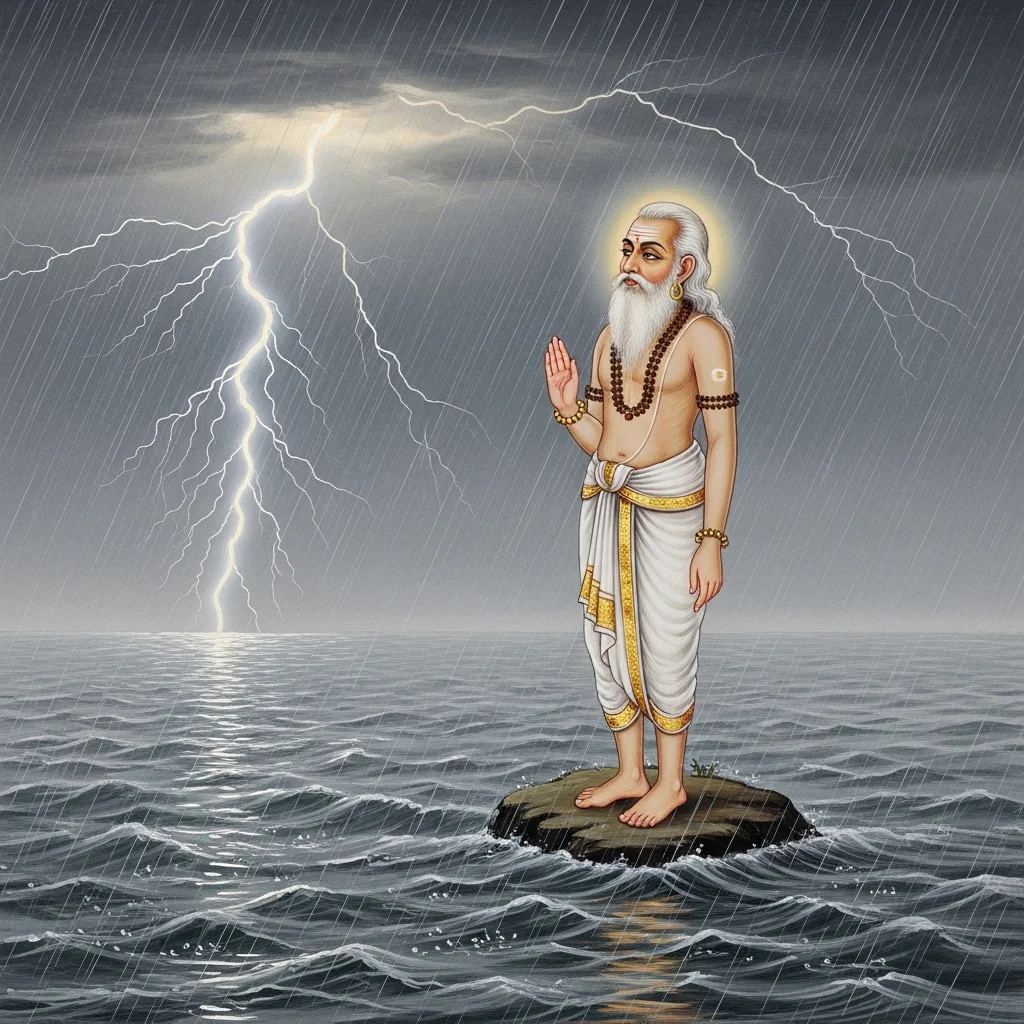
Chapter 18, spoken by Śrī Mārkaṇḍeya, unfolds a vision of cosmic dissolution. The world is first scorched by solar power, then the Saṃvartaka clouds arise from a divine source—many-hued and immense, shaped like mountains, elephants, and fortresses, with lightning and thunder. Their rain becomes all-filling, until oceans, islands, rivers, and the earth-spheres merge into a single boundless expanse of water (ekārṇava). With visibility gone, sun, moon, and stars do not appear; darkness and windless stillness prevail, marking cosmic disorientation. Amid the flood, the narrator offers praise and reflects on where true refuge lies, turning inward to disciplined remembrance, meditation, and devotion to the protecting Lord (śaraṇya). By divine grace the mind becomes steady and gains the power to cross the waters, teaching that when outer supports vanish, contemplative refuge and faithful recollection are the rightful spiritual response.
Shlokas
Verse 1
श्रीमार्कण्डेय उवाच । निर्दग्धेऽस्मिंस्ततो लोके सूर्यैरीश्वरसम्भवैः । सप्तभिश्चार्णवैः शुष्कैर्द्वीपैः सप्तभिरेव च
Śrī Markaṇḍeya said: When this world had been burned up by the suns born of the Lord’s power, and when the seven oceans were dried up—along with the seven continents—
Verse 2
ततो मुखात्तस्य घना महोल्बणा निश्चेरुरिन्द्रायुधतुल्यरूपाः । घोराः पयोदा जगदन्धकारं कुर्वन्त ईशानवरप्रयुक्ताः
Then, from his mouth, massive and terrifying clouds emerged, bearing forms like Indra’s bow. Those dreadful rain-clouds, impelled by the boon of Īśāna, spread darkness over the universe.
Verse 3
नीलोत्पलाभाः क्वचिदंजनाभा गोक्षीरकुन्देन्दुनिभाश्च केचित् । मयूरचन्द्राकृतयस्तथाऽन्ये केचिद्विधूमानलसप्रभाश्च
Some were like blue lotuses; some were dark like anjana collyrium. Some shone like cow’s milk, jasmine, or the moon. Others took forms like peacocks and crescents, and some blazed with the radiance of smokeless fire.
Verse 4
केचिन्महापर्वतकल्परूपाः केचिन्महामीनकुलोपमाश्च । केचिद्गजेन्द्राकृतयः सुरूपाः केचिन्महाकूटनिभाः पयोदाः
Some rain-clouds had forms like enormous mountains; some resembled vast shoals of great fish. Some took the shape of lordly elephants, splendid in appearance; and some clouds looked like towering peaks and crags.
Verse 5
चलत्तरङ्गोर्मिसमानरूपा महापुरोधाननिभाश्च केचित् । सगोपुराट्टालकसंनिकाशाः सविद्युदुल्काशनिमण्डितान्ताः
Some had forms like moving waves and surging billows; some looked like the faces of great priests. Some appeared like city-gate towers and lofty ramparts, their extremities adorned with lightning, meteors, and thunderbolts.
Verse 6
समावृताङ्गः स बभूव देवः संवर्तकोनाम गणः स रौद्रः । प्रवर्षमाणो जगदप्रमाणमेकार्णवं सर्वमिदं चकार
That deity became wholly enveloped—he, the fierce host called Saṃvartaka. Pouring down rains beyond all measure, he turned this entire universe into a single ocean.
Verse 7
ततो महामेघविवर्धमानमीशानमिन्द्राशनिभिर्वृताङ्गम् । ददर्श नाहं भयविह्वलाङ्गो गङ्गाजलौघैश्च समावृताङ्गः
Then I saw Īśāna, growing amid immense clouds, his body encircled by Indra’s thunderbolts. I, shaken with fear, beheld him also covered over by torrents of Gaṅgā’s waters.
Verse 8
गजाः पुनश्चैव पुनः पिबन्तो जगत्समन्तात्परिदह्यमानम् । आपूरितं चैव जगत्समन्तात्सर्वैश्च तैर्जग्मुरदर्शनं च ते
The elephants, drinking again and again, moved about while the world on every side was being scorched. And when the world became filled on all sides with waters, all those elephants vanished from sight.
Verse 9
महार्णवाः सप्त सरांसि द्वीपा नद्योऽथ सर्वा अथ भूर्भुवश्च । आपूर्यमाणाः सलिलौघजालैरेकार्णवं सर्वमिदं बभूव
The seven great oceans, the lakes, the continents, all the rivers, and even the realms of Bhūr and Bhuvaḥ—being filled by networks of rushing torrents—this entire expanse became one single ocean.
Verse 10
न दृश्यते किंचिदहो चराचरं निरग्निचन्द्रार्कमयेऽपि लोके । प्रणष्टनक्षत्रतमोऽन्धकारे प्रशान्तवातास्तमितैकनीडेः
Alas, nothing whatsoever—moving or unmoving—could be seen in that world, though it once held fire, moon, and sun. In a darkness where even the stars had vanished, the winds fell silent, and every resting-place seemed stilled into a single, mute nest.
Verse 11
महाजलौघेऽस्य विशुद्धसत्त्वा स्तुतिर्मया भूप कृता तदानीम् । ततोऽहमित्येव विचिन्तयानः शरण्यमेकं क्व नु यामि शान्तम्
O King, amid that immense rush of waters, with mind made pure, I then offered praise. Yet thinking only, ‘I—what will become of me?’, I sought: where indeed shall I go—to the one peaceful Refuge worthy of surrender?
Verse 12
स्मरामि देवं हृदि चिन्तयित्वा प्रभुं शरण्यं जलसंनिविष्टः । नमामि देवं शरणं प्रपद्ये ध्यानं च तस्येति कृतं मया च
Immersed in the waters, I remembered the Lord—pondering Him within my heart, the Master who is true refuge. I bowed to that God; I surrendered for shelter; and I fixed my meditation upon Him—thus did I act.
Verse 13
ध्यात्वा ततोऽहं सलिलं ततार तस्य प्रसादादविमूढचेताः । ग्लानिः श्रमश्चैव मम प्रणष्टौ देव्याः प्रसादेन नरेन्द्रपुत्र
Having meditated thus, I then crossed over the waters, my mind no longer bewildered by His grace. My weariness and exhaustion vanished—by the Goddess’s favor, O prince of kings.
Verse 18
। अध्याय
Here concludes the Sacred Chapter.