Adhyaya 179
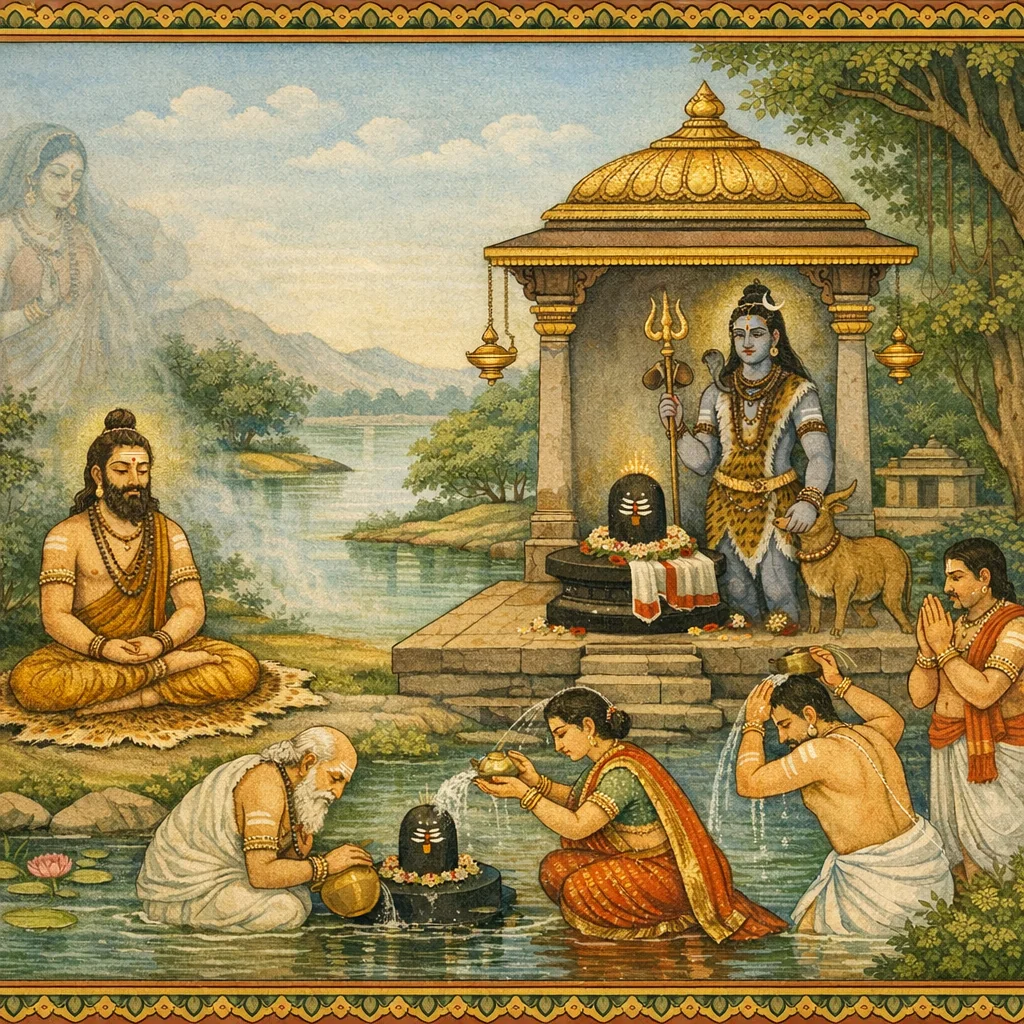
Mārkaṇḍeya instructs Yudhiṣṭhira to proceed to the famed Gautameśvara tīrtha, celebrated as a powerful purifier of sins. The sanctity of the place is traced to the long tapas of the sage Gautama; pleased thereby, Maheśvara is installed there, and thus the deity is known as Gautameśvara. The account then turns from origin to practice: devas, gandharvas, ṛṣis, and pitṛ-associated divinities are said to have gained superior attainment by worshiping Parameśvara at this site. Bathing at the tīrtha, honoring the pitṛ-devatās, and performing Śiva-pūjā are prescribed as means to be released from pāpa. Though many remain unaware, deluded by Viṣṇu-māyā, Śiva is declared to be present there. Special disciplines are praised: brahmacarya together with snāna and arcana yields merit like an Aśvamedha; dāna to a dvijātiya bears inexhaustible fruit. Calendar rites are specified—on Aśvayuja kṛṣṇa caturdaśī, the gifting of a hundred lamps; on Kārttika aṣṭamī and caturdaśī, fasting and abhiṣeka with ghee, pañcagavya, honey, curd, or cool water. Offerings of flowers and leaves, especially unbroken bilva leaves, are commended; continuous worship for six months is said to fulfill desires and culminate in reaching Śiva’s realm.
Shlokas
Verse 1
मार्कण्डेय उवाच । ततो गच्छेत्तु राजेन्द्र गौतमेश्वरमुत्तमम् । सर्वपापहरं तीर्थं त्रिषु लोकेषु विश्रुतम्
Mārkaṇḍeya said: “Then, O lord of kings, one should go to the excellent Gautameśvara—a tīrtha renowned in the three worlds, which removes all sins.”
Verse 2
गौतमेन तपस्तप्तं तत्र तीर्थे युधिष्ठिर । दिव्यं वर्षसहस्रं तु ततस्तुष्टो महेश्वरः
At that tīrtha, O Yudhiṣṭhira, Gautama performed austerities—indeed for a thousand divine years. Thereafter, Maheśvara became pleased.
Verse 3
प्रणम्य शिरसा तत्र स्थापितः परमेश्वरः । स्थापितो गौतमेनेशो गौतमेश्वर उच्यते
There, having bowed with his head, Gautama installed Parameśvara. Because the Lord was installed by Gautama, he is called ‘Gautameśvara’.
Verse 4
तत्र देवैश्च गन्धर्वैरृषिभिः पितृदैवतैः । सम्प्राप्ता ह्युत्तमा सिद्धिराराध्य परमेश्वरम्
There, by gods, gandharvas, sages, and the deities of the Pitṛs, the highest success was attained—by worshipping Parameśvara.
Verse 5
तत्र तीर्थे तु यः स्नात्वा पूजयेत्पितृदेवताः । पूजयेत्परमीशानं सर्वपापैः प्रमुच्यते
Whoever bathes at that tīrtha and worships the deities of the ancestors, and worships the Supreme Lord (Śiva), is freed from all sins.
Verse 6
बहवस्तन्न जानन्ति विष्णुमायाविमोहिताः । तत्र संनिहितं देवं शूलपाणिं महेश्वरम्
Many do not know this, deluded by Viṣṇu’s māyā: that the God—Maheśvara, the wielder of the trident—is present there in close nearness.
Verse 7
ब्रह्मचारी तु यो भूत्वा तत्र तीर्थे नरेश्वर । स्नात्वार्चयेन्महादेवं सोऽश्वमेधफलं लभेत्
O lord of men, whoever, living as a brahmacārin, bathes at that sacred ford and worships Mahādeva there, attains the merit equal to that of the Aśvamedha sacrifice.
Verse 8
ब्रह्मचारी तु यो भूत्वा तर्पयेत्पितृदेवताः । पूजयेत्परमीशानं सर्वपापैः प्रमुच्यते
Whoever, observing brahmacarya, offers tarpaṇa to the ancestral deities and worships the Supreme Lord (Paramīśāna), is completely released from all sins.
Verse 9
तत्र तीर्थे तु यो दानं भक्त्या दद्याद्द्विजातये । तदक्षयफलं सर्वं नात्र कार्या विचारणा
At that tīrtha, whatever gift a person gives with devotion to a twice-born recipient yields imperishable fruit in full—of this there is no doubt or need for further deliberation.
Verse 10
मासे चाश्वयुजे राजन् कृष्णपक्षे चतुर्दशीम् । स्नात्वा तत्र विधानेन दीपकानां शतं ददेत्
O king, in the month of Āśvayuja, on the fourteenth lunar day of the dark fortnight, having bathed there according to the prescribed rite, one should offer a hundred lamps.
Verse 11
पूजयित्वा महादेवं गन्धपुष्पादिभिर्नरः । मुच्यते सर्वपापेभ्यो मृतः शिवपुरं व्रजेत्
Having worshipped Mahādeva with fragrances, flowers, and the like, a person is freed from all sins; and after death, he goes to Śiva’s abode.
Verse 12
अष्टम्यां च चतुर्दश्यां कार्त्तिक्यां तु विशेषतः । उपोष्य प्रयतो भूत्वा घृतेन स्नापयेच्छिवम्
On the eighth and the fourteenth lunar days—especially in the month of Kārttika—having fasted and become disciplined and pure, one should bathe Śiva with ghee.
Verse 13
पञ्चगव्येन मधुना दध्ना वा शीतवारिणा । स च सर्वस्य यज्ञस्य फलं प्राप्नोति मानवः
Bathing (the Lord) with pañcagavya, or with honey, or with curd, or with cool water—by such worship a person obtains the fruit of all sacrifices (yajñas).
Verse 14
भक्त्या तु पूजयेत्पश्चात्स लभेत्फलमुत्तमम् । बिल्वपत्रैरखण्डैश्च पुष्पैरुन्मत्तकोद्भवैः
Then one should worship with devotion (bhakti); he attains the highest fruit—offering unbroken bilva leaves and flowers, such as those born from the dhattūra (unmatta) plant.
Verse 15
कुशापामार्गसहितैः कदम्बद्रोणजैरपि । मल्लिकाकरवीरैश्च रक्तपीतैः सितासितैः
With kuśa and apāmārga as well, and also with kadamba and droṇa flowers; and with jasmine and karavīra (oleander) too—red and yellow, white and dark—thus should Śiva be worshipped.
Verse 16
पुष्पैरन्यैर्यथालाभं यो नरः पूजयेच्छिवम् । नैरन्तर्येण षण्मासं योऽर्चयेद्गौतमेश्वरम् । सर्वान्कामानवाप्नोति मृतः शिवपुरं व्रजेत्
With whatever other flowers are available, if a person worships Śiva—and if, without interruption for six months, he worships Gautameśvara—he attains all desired aims; and after death he goes to Śiva’s abode.
Verse 179
अध्याय
Chapter (Adhyāya).