Adhyaya 178
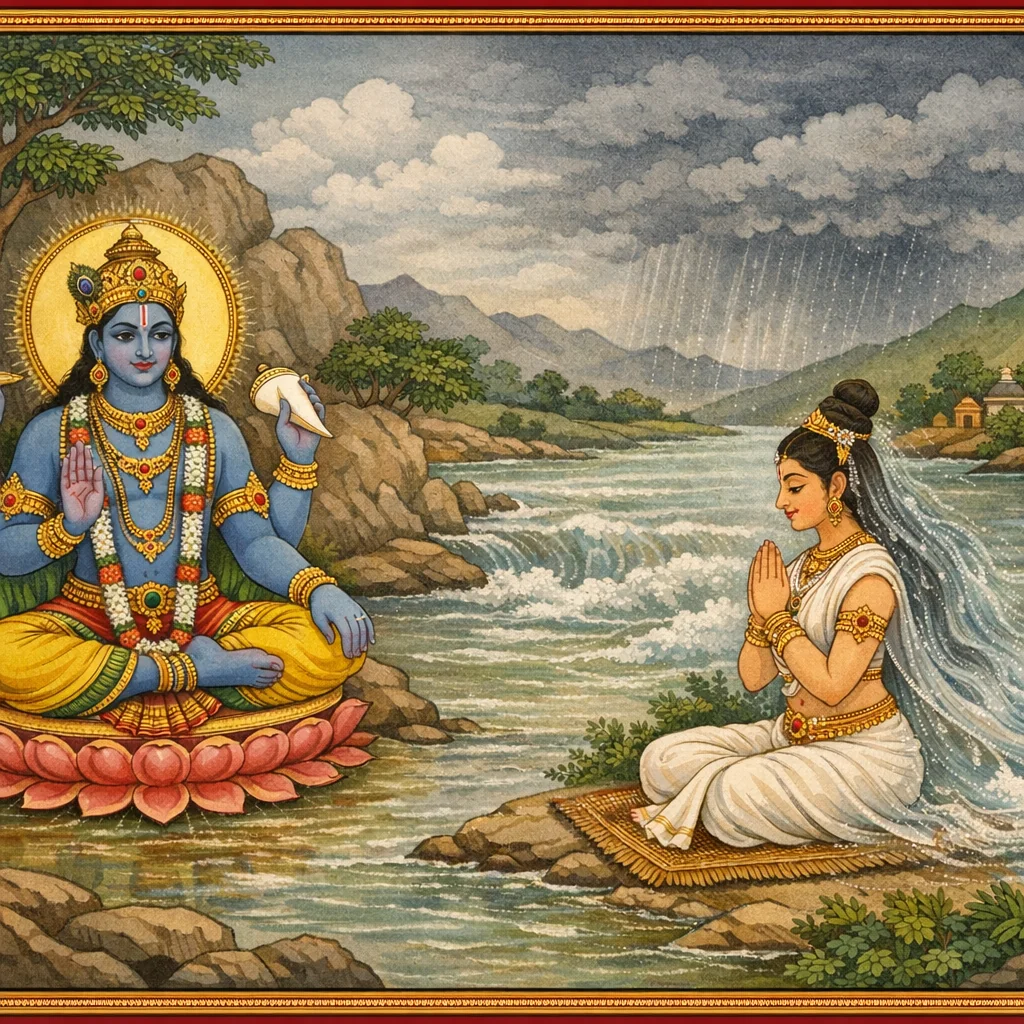
Mārkaṇḍeya points to an eminent tīrtha named Gaṅgāvāhaka on the Narmadā/Revā, near Bhṛgutīrtha. The chapter unfolds a theological dialogue: Gaṅgā performs long austerities and addresses Viṣṇu (Janārdana/Nārāyaṇa), recounting her descent and the social-ritual fact that many heavily burdened by sin seek purification in her waters; she grieves that, as purifier, she is symbolically “heated” by accumulated demerit. Viṣṇu answers by establishing a localized sacred order: he declares his presence there (with Gaṅgādhara as helper) and instructs Gaṅgā to enter the Revā in embodied form, creating the sanctity of mixed waters. A special parvan is defined in connection with monsoon swelling and Viṣṇu’s conch motif, exalted above ordinary calendrical junctions. The chapter prescribes rites—snāna in the mixed waters, tarpaṇa and śrāddha at the tīrtha, worship of Bāla-Keśava, and night vigil—and states their fruits: the ending of sin-aggregates, enduring satisfaction of the ancestors, and an irreversible auspicious post-mortem course for devoted persons who die at the site.
Shlokas
Verse 1
। श्रीमार्कण्डेय उवाच । ततो गच्छेत्तु राजेन्द्र गङ्गावाहकमुत्तमम् । नर्मदायां महापुण्यं भृगुतीर्थसमीपतः
Śrī Mārkaṇḍeya said: “Then, O king, one should go to the excellent Gaṅgāvāhaka tīrtha—supremely meritorious on the Narmadā—near Bhṛgu-tīrtha.”
Verse 2
तत्र गङ्गा महापुण्या चचार विपुलं तपः । पुरा वर्षशतं साग्रं परमं व्रतमास्थिता
There, the supremely meritorious Gaṅgā performed abundant austerities. In former times, for a full hundred years and more, she undertook the highest vow.
Verse 3
ध्यात्वा देवं जगद्योनिं नारायणमकल्मषम् । आत्मानं परमं धाम सरित्सा जगतीपते
Meditating upon the God—Nārāyaṇa, the stainless source of the universe—and upon her own self as the supreme abode, the river contemplated the Lord of the worlds.
Verse 4
ततो जनार्दनो देव आगत्येदमुवाच ह
Then the god Janārdana arrived and spoke these words.
Verse 5
विष्णुरुवाच । तपसा तव तुष्टोऽहं मत्पादाम्बुजसम्भवे । मत्तः किमिच्छसे देवि ब्रूहि किं करवाणि ते
Viṣṇu said: “I am pleased by your austerity, O one born from the lotus of my feet. What do you desire from me, O Goddess? Speak—what shall I do for you?”
Verse 6
गङ्गोवाच । त्वत्पादकमलाद्भ्रष्टा गङ्गा सहचरा विभो । यदृच्छया त्रिलोकेश वन्द्यमाना दिवौकसैः
Gaṅgā said: “Fallen from your lotus-feet, I—Gaṅgā—your attendant, O Lord, have come here by circumstance, O ruler of the three worlds, revered by the dwellers of heaven.”
Verse 7
नृपो भगीरथस्तस्मात्तपः कृत्वा सुदुष्करम् । समाराध्य जगन्नाथं शङ्करं लोकशङ्करम्
Therefore King Bhagīratha, having performed exceedingly difficult austerities, fully propitiated Śaṅkara—the Lord of the universe, the benefactor of the worlds.
Verse 8
अवतारयामास हि मां पृथिव्यां धरणीधर । मया वै युवयोर्वाक्यादवतारः कृतो भुवि
He indeed caused me to descend to the earth, O Sustainer of the Earth. Truly, by the word of you both, my descent upon the world was accomplished.
Verse 9
वैष्णवीमिति मां मत्वा जनः सर्वाप्लुतो मयि । ये वै ब्रह्मणो लोके ये च वै गुरुतल्पगाः
Thinking of me as ‘Vaiṣṇavī’, people all immerse themselves in me—(even) those in the world who are brahma-killers, and those who violate the teacher’s bed.
Verse 10
त्यागिनः पितृमातृभ्यां ये च स्वर्णहरा नराः । गोघ्ना ये मनुजा लोके तथा ये प्राणिहिंसकाः
Those who forsake father and mother, and men who steal gold; those in the world who slay cows, and those who harm living beings—(even they bathe in me, trusting in my sanctity).
Verse 11
अगम्यागामिनो ये च ह्यभक्ष्यस्य च भक्षकाः । ये चानृतप्रवक्तारो ये च विश्वासघातकाः
Those who go to the forbidden (women), those who eat what must not be eaten; those who speak falsehood, and those who betray trust—(even such people immerse themselves in me, believing in my sanctity).
Verse 12
देवब्राह्मणवित्तानां हर्तारो ये नराधमाः । देवब्रह्मगुरुस्त्रीणां ये च निन्दाकरा नराः
Even those vile men who steal the wealth dedicated to the Devas and to brāhmaṇas, and those who speak ill of the Devas, of Brahmā, of one’s guru, and of women—(all such sinners are included here).
Verse 13
ब्रह्मशापप्रदग्धा ये ये चैवात्महनो द्विजाः । भ्रष्टानशनसंन्यासनियतव्रतचारिणः
Those who are scorched by Brahmā’s curse, and even brāhmaṇas who destroy themselves, and those who have fallen from the disciplines of fasting, renunciation, and prescribed vows—(all are encompassed here).
Verse 14
तथैवापेयपेयाश्च ये च स्वगुरुनिन्दकाः । निषेधका ये दानानां पात्रदानपराङ्मुखाः
Likewise, those who drink what should not be drunk, those who revile their own guru, those who obstruct acts of charity, and those who turn away from giving to worthy recipients—(all are included).
Verse 15
ऋतुघ्ना ये स्वपत्नीनां पित्रोः सेहपरा न हि । बान्धवेषु च दीनेषु करुणा यस्य नास्ति वै
Those who violate the proper season with their own wives, those who show no affection and devoted care toward their parents, and those in whom compassion is absent toward suffering relatives and the helpless—(even they are counted).
Verse 16
क्षेत्रसेतुविभेदी च पूर्वमार्गप्रलोपकः । नास्तिकः शास्त्रहीनस्तु विप्रः सन्ध्याविवर्जितः
The destroyer of field-boundaries and embankments, the one who erases ancient pathways, the atheist, the scriptureless brāhmaṇa, and the brāhmaṇa who abandons the sandhyā-prayers—(all are included).
Verse 17
अहुताशी ह्यसंतुष्टः सर्वाशी सर्वविक्रयी । कदर्या नास्तिकाः क्रूराः कृतघ्ना ये द्विजायः
Those who eat without offering to the sacred, who are ever discontent, who eat anything, who sell anything, and who are miserly, atheistic, cruel, and ungrateful—such are the fallen twice-born.
Verse 18
पैशुन्या रसविक्रेयाः सर्वकालविनाकृताः । स्वगोत्रां परगोत्रां वा ये भुञ्जन्ति द्विजाधमाः
Slanderers, sellers of pleasures (or delicacies), those who are ever engaged in wrongdoing at all times, and those base brāhmaṇas who ‘enjoy’ women of their own gotra or another gotra—(all are included).
Verse 19
ते मां प्राप्य विमुच्यन्ते पापसङ्घैः सुसंचितैः । तत्पापक्षारतप्ताया न शर्म मम विद्यते
Reaching me, they are released from heaps of sins accumulated well and long. Yet, scorched by the caustic burden of their sins, I find no peace.
Verse 20
तथा कुरु जगन्नाथ यथाहं शर्म चाप्नुयाम् । एवमुक्तस्तु देवेशस्तुष्टः प्रोवाच जाह्नवीम्
“So act, O Lord of the world, that I too may attain peace.” Thus addressed, the Lord of the gods, pleased, spoke to Jāhnavī.
Verse 21
विष्णुरुवाच । अहमत्र वसिष्यामि गङ्गाधरसहायवान् । प्रविशस्व सदा रेवां त्वमत्रैव च मूर्तिना
Viṣṇu said: “Here I shall dwell, aided by the bearer of Gaṅgā (Śiva). Enter Revā forever; remain here indeed, in embodied form.”
Verse 22
मम पादतलं प्राप्य वह त्रिपथगामिनि । यदा बहूदककाले नर्मदाजलसंभृता
“O river who moves in the three paths, after reaching the sole of My foot, flow onward. When the season of abundant waters comes, you will be filled with the waters of the Narmadā.”
Verse 23
प्रावृट्कालं समासाद्य भविष्यति जलाकुला । प्लाव्योभयतटं देवी प्राप्य मामुत्तरस्थितम्
“When the rainy season arrives, she will become brimming with waters. Having reached Me on the northern side, the Goddess will flood both banks.”
Verse 24
प्लावयिष्यति तोयेन यदा शङ्खं करे स्थितम् । तदा पर्वशतोद्युक्तं वैष्णवं पर्वसंज्ञितम्
“When she inundates with water the conch (śaṅkha) that rests in the hand, then that occasion is proclaimed a Vaiṣṇava holy observance—an event equal to a hundred sacred festivals.”
Verse 25
न तेन सदृशं किंचिद्व्यतीपातादिसंक्रमम् । अयने द्वे च न तथा पुण्यात्पुण्यतरं यथा
No astrological junction—such as Vyatīpāta and the rest—nor even the two solstices is comparable to it; for this is more meritorious than ordinary merit itself.
Verse 26
तस्मिन्पर्वणि देवेशि शङ्खं संस्पृश्य मानवः । स्नानमाचरते तोये मिश्रे गाङ्गेयनार्मदे
O Goddess, on that sacred occasion, a person should touch the conch and perform bathing in the waters where Gaṅgā’s current and Narmadā’s waters are mingled.
Verse 27
पुण्यं त्वशेषपुण्यानां मङ्गलानां च मङ्गलम् । विष्णुना विधृतो येन तस्माच्छान्तिः प्रचक्रमे
It is the merit of all merits, the auspiciousness of all auspicious things. Because it is upheld by Viṣṇu, peace and well-being proceed from it.
Verse 28
तत्रान्तं पापसङ्घस्य ध्रुवमाप्नोति मानवः । शङ्खोद्धारे नरः स्नात्वा तर्पयेत्पितृदेवताः
There, a person surely reaches the end of accumulated sins. After bathing at Śaṅkhoddhāra, one should offer libations (tarpaṇa) to the Pitṛs and the deities.
Verse 29
तृप्तास्ते द्वादशाब्दानि सिद्धिं च सार्वकामिकीम् । गङ्गावहे तु यः श्राद्धं शङ्खोद्धारे प्रदास्यति
They (the ancestors) remain satisfied for twelve years, and one gains the fulfillment of all desires. Indeed, whoever offers a śrāddha at Śaṅkhoddhāra in the stream of Gaṅgā attains this.
Verse 30
तेन पिण्डप्रदानेन नृत्यन्ति पितरस्तथा । शङ्खोद्धारे नरः स्नात्वा पूजयेद्बलकेशवौ
By that offering of piṇḍas the ancestors rejoice as though dancing. Having bathed at Śaṅkhoddhāra, one should worship Bala and Keśava.
Verse 31
रात्रौ जागरणं कृत्वा शुद्धो भवति जाह्नवि । यत्त्वं लोककृतं कर्म मन्यसे भुवि दुःसहम्
O Jāhnavī (Gaṅgā), by keeping vigil at night one becomes purified. That deed which you consider, in the world, to be difficult to bear…
Verse 32
तस्मिन्पर्वणि तत्सर्वं तत्र स्नात्वा व्यपोहय । एवमुक्त्वा नरश्रेष्ठ विष्णुश्चान्तरधीयत
On that sacred lunar occasion, bathe there and wash away all of that (sin and impurity). Having spoken thus, O best of men, Viṣṇu disappeared from sight.
Verse 33
तदाप्रभृति तत्तीर्थं गङ्गावाहकमुत्तमम् । ब्रह्माद्यैरृषिभिस्तात पारम्पर्यक्रमागतैः
From that time onward, that supremely excellent ford came to be known as ‘Gaṅgāvāhaka’. There, O dear one, sages beginning with Brahmā—coming in the succession of tradition—honoured and frequented it.
Verse 34
तत्र तीर्थे तु यः स्नात्वा भक्तिभावेन भारत । गङ्गातीर्थे तु स स्नातः समस्तेषु न संशयः
Whoever bathes at that tīrtha with a heart of devotion, O Bhārata, is to be regarded as having bathed at the Gaṅgā’s holy fords—indeed at all tīrthas; of this there is no doubt.
Verse 35
तत्र तीर्थे मृतानां तु नराणां भावितात्मनाम् । अनिवर्तिका गतिस्तेषां विष्णुलोकात्कदाचन
At that tīrtha, for men of purified and disciplined spirit who die there, their course is irreversible: they never return from Viṣṇu’s world.