Adhyaya 176
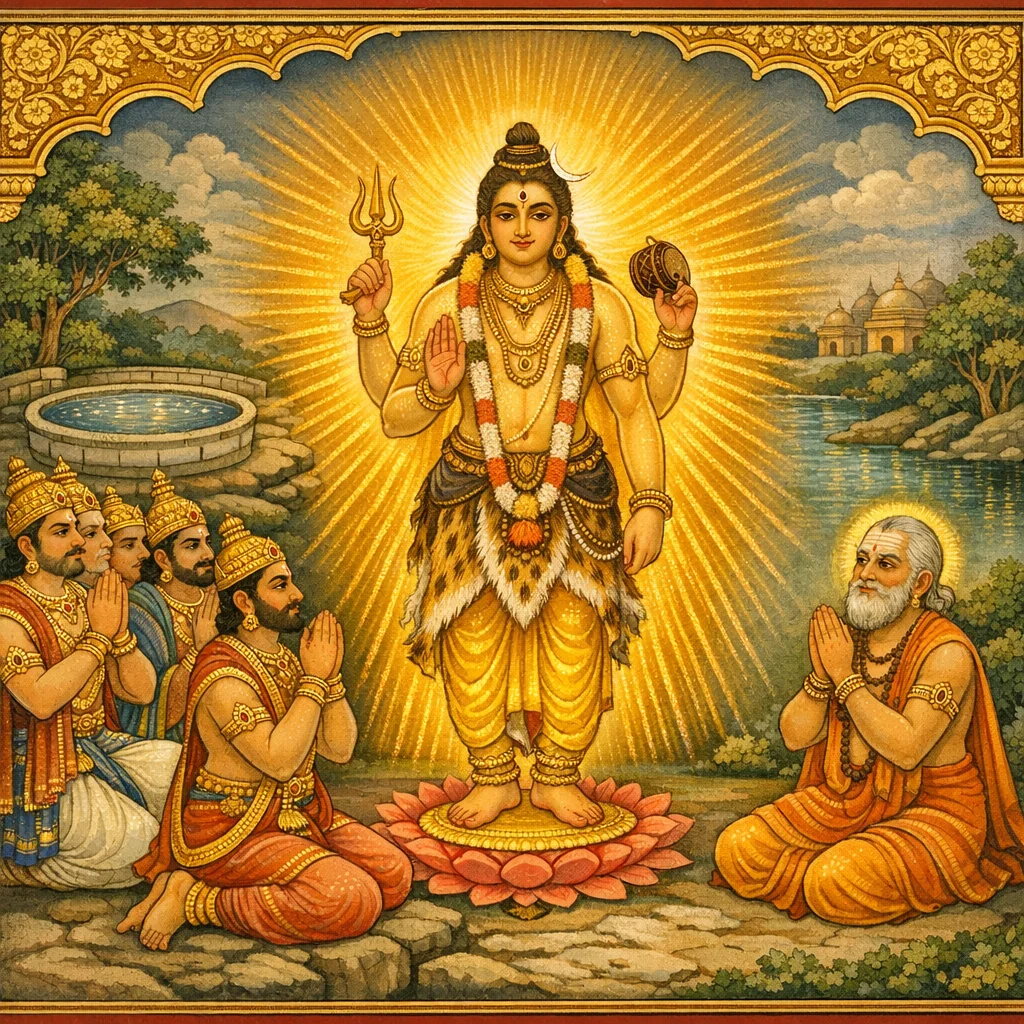
Mārkaṇḍeya instructs the king to go to auspicious Piṅgalāvarta, a rare tīrtha upon the earth, where drawing near to Piṅgaleśvara dissolves sins born of speech, mind, and deed. He declares that bathing and gifting (dāna) in Devakhāta yield imperishable fruit, and then, answering Yudhiṣṭhira’s questions, explains the origin of that sacred basin. In an embedded tale, Rudra (Śiva), bearing a kamaṇḍalu, roams with the devas to purify his trident. The devas bathe at many tīrthas and gather the waters into a vessel; once the trident is purified, they reach Bhṛgukaccha and meet Agni and Piṅgala—tawny-eyed and diseased—performing fierce austerity and meditation on Maheśvara. At the devas’ request Śiva restores Piṅgala’s health, appearing in an Āditya-like radiance and removing the illness so his body is renewed. Piṅgala then begs Śiva to remain for the welfare of beings—pacifying diseases, destroying sins, and increasing well-being. Śiva commands the devas to dig a divine basin to his north and pour in the collected tīrtha-waters, which become universally purificatory and disease-destroying. The chapter sets forth observances—Sunday bathing, bathing with Narmadā water, śrāddha and dāna, and worship of Piṅgeśa—promising heavenly abode, and it lists specific therapeutic and expiatory benefits (fevers, skin disorders, leprosy-like ailments), including repeated Sunday baths and gifting a sesame-vessel to a twice-born. It concludes by praising Devakhāta bathing as supreme and declaring that worship of Piṅgaleśvara after ancestral offerings yields merit equal to great soma sacrifices such as the Aśvamedha and Vājapeya.
Shlokas
Verse 1
श्रीमार्कण्डेय उवाच । ततो गच्छेन्महीपाल पिङ्गलावर्तमुत्तमम् । तीर्थं सर्वगुणोपेतं कामिकं भुवि दुर्लभम्
Śrī Mārkaṇḍeya said: Then, O king, one should go to the excellent Piṅgalāvarta—a tīrtha endowed with every virtue, a wish-fulfilling holy place, rare upon the earth.
Verse 2
वाचिकं मानसं पापं कर्मजं यत्पुरा कृतम् । पिङ्गलेश्वरमासाद्य तत्सर्वं विलयं व्रजेत्
Whatever sin was previously committed—by speech, by mind, or through deeds—on reaching Piṅgaleśvara, all of it is dissolved and comes to destruction.
Verse 3
तत्र स्नानं च दानं च देवखाते कृतं नृप । अक्षयं तद्भवेत्सर्वमित्येवं शङ्करोऽब्रवीत्
O king, bathing and charity performed there—at Devakhāta—become imperishable in their fruit; thus did Śaṅkara (Śiva) declare.
Verse 4
पृथिव्यां सर्वतीर्थेषु समुद्धृत्य शुभोदकम् । मुक्तं तत्र सुरैः खात्वा देवखातं ततोऽभवत्
Gathering the auspicious waters from all tīrthas upon the earth, the gods released them there; and having excavated a basin, it became known thereafter as Devakhāta.
Verse 5
युधिष्ठिर उवाच । कथं तु देवखातं तत्संजातं द्विजसत्तम । सुराः सर्वे कथं तत्र मुमुचुर्वारि तीर्थजम् । सर्वं कथय मे विप्र श्रवणे लम्पटं मनः
Yudhiṣṭhira said: “O best of the twice-born, how did that sacred place called Devakhāta come into being? And how did all the gods pour there the water born of the tīrthas? Tell me everything, O brāhmaṇa—my mind is eager and absorbed in listening.”
Verse 6
श्रीमार्कण्डेय उवाच । यदा तु शूलशुद्ध्यर्थं रुद्रो देवगणैः सह । बभ्राम पृथिवीं सर्वां कमण्डलुधरः शुभाम्
Śrī Mārkaṇḍeya said: “Once, for the purification of his trident, Rudra—bearing a sacred water-pot and accompanied by hosts of gods—wandered over the entire auspicious earth.”
Verse 7
प्रभासाद्येषु तीर्थेषु स्नानं चक्रुः सुरास्तदा । सर्वतीर्थोत्थितं तोयं पात्रे वै निहितं तु तैः
Then the gods bathed at the tīrthas beginning with Prabhāsa; and the water arising from all those holy places they collected and placed into a vessel.
Verse 8
शूलभेदमनुप्राप्य शूलं शुद्धं तु शूलिनः । तत्रोत्थमुदकं गृह्य आगता भृगुकच्छके
Having reached Śūlabheda, where the Trident-bearer’s (Śiva’s) trident was purified, they took the water that arose there and came to Bhṛgukaccha.
Verse 9
तत्रापश्यंस्ततो ह्यग्निं च पिङ्गलाक्षं च रोगिणम् । तपस्युग्रे व्यवसितं ध्यायमानं महेश्वरम्
There they saw Agni, the tawny-eyed one, afflicted with illness—steadfast in severe austerity, meditating upon Maheśvara.
Verse 10
हविर्भागैस्तु विप्राणां राज्ञां चैवामयाविनाम् । दृष्ट्वा तु बहुरोगार्तमग्निं देवमुखं सुराः । प्राहुस्ते सहिता देवं शङ्करं लोकशङ्करम्
Seeing Agni—the “mouth of the gods”—tormented by many diseases, and observing that the oblation-portions of brāhmaṇas and even of kings were affected through the impaired sacrifice, the gods together addressed Śaṅkara, the benefactor of the worlds.
Verse 11
देवा ऊचुः । प्रसादः क्रियतां शम्भो पिङ्गलस्यामयाविनः । यथा हि नीरुजः कायो हविषां ग्रहणक्षमः । पुनर्भवति पिङ्गस्तु तथा कुरु महेश्वर
The gods said: “O Śambhu, show your grace to Piṅgala who is afflicted with illness, so that his body becomes free from disease and fit to receive the oblations once again. O Maheśvara, restore Piṅga as before.”
Verse 12
ईश्वर उवाच । भोभोः सुरा हि तपसा तुष्टोऽहं वो विशेषतः । वचनाच्च विशेषेण ददाम्यभिमतं वरम्
Īśvara said: “O gods, I am especially pleased with you because of your austerity (tapas); and even more because of your words of prayer. I grant the boon you desire.”
Verse 13
पिङ्गल उवाच । यदि तुष्टोऽसि देवेश दीयते देव चेप्सितम् । चन्द्रादित्यौ च नयने कृत्वात्र कलया स्थितः
Piṅgala said: “If you are pleased, O Lord of the gods, grant what is desired. Having established the Moon and the Sun here as my two eyes, remain present in this place through your divine portion.”
Verse 14
तथा पुनर्नवः कायो भवेद्वै मम शङ्कर । तथा कुरु विरूपाक्ष नमस्तुभ्यं पुनः पुनः
“And, O Śaṅkara, let my body be renewed once more. Do it thus, O Virūpākṣa; I bow to you again and again.”
Verse 15
मार्कण्डेय उवाच । ततः स भगवाञ्छम्भुर्मूर्तिमादित्यरूपिणीम् । कृत्वा तु तस्य तद्रोगमपानुदत शङ्करः
Mārkaṇḍeya said: Then the Blessed Lord Śambhu, assuming a form like the Sun, drove away that man’s affliction; thus did Śaṅkara remove his disease.
Verse 16
ततः पुनर्नवीभूतः पुनः प्रोवाच शङ्करम् । अत्रैव स्थीयतां शम्भो तथैव भास्करः स्वयम्
Then, renewed again, he spoke once more to Śaṅkara: “O Śambhu, remain right here; and likewise may Bhāskara—the Sun himself—stay here.”
Verse 17
प्राणिनामुपकाराय रोगाणामुपशान्तये । पापानां ध्वंसनार्थाय श्रेयसां चैव वृद्धये
—for the benefit of living beings, for the pacification of diseases, for the destruction of sins, and for the increase of auspicious welfare.
Verse 18
एवमुक्तस्तु भगवान्पिङ्गलेन महात्मना । अवतारं च कृतवान् गीर्वाणानिदमब्रवीत्
Thus addressed by the great-souled Piṅgala, the Lord consented to manifest there and spoke these words to the gods.
Verse 19
ईश्वर उवाच । मुञ्चध्वमुदकं देवास्तीर्थेभ्यो यत्समाहृतम् । मम चोत्तरतः कृत्वा खातं देवमयं शुभम्
Īśvara said: “O gods, pour out the water you have gathered from the tīrthas. And to my north, make a blessed excavation, wrought by divine power.”
Verse 20
तत्र निक्षिप्यतां वारि सर्वरोगविनाशनम् । सर्वपापहरं दिव्यं सर्वैरपि सुरादिभिः
“Let the water be placed there—divine, destroying all diseases and removing all sins—by all of you, beginning with the gods.”
Verse 21
एवमुक्ताः सुराः सर्वे खातं कृत्वा तथोत्तरे । वयस्त्रिंशत्कोटिगणैर्मुक्तं तत्तीर्थजं जलम्
Thus instructed, all the gods made that excavation to the north; and the water born of the tīrthas was released there by hosts numbering thirty crores.
Verse 22
प्रोचुस्ते सहिताः सर्वे विरूपाक्षपुरोगमाः । यः कश्चिद्देवखातेऽस्मिन्मृदालम्भनपूर्वकम्
Then they all proclaimed together, led by Virūpākṣa: “Whoever, in this Devakhāta, first takes up the sacred earth as the rite’s beginning…”
Verse 23
स्नानं कृत्वा रविदिने संस्नाय नर्मदाजले । श्राद्धं कृत्वा पितृभ्यो वै दानं दत्त्वा स्वशक्तितः
Having bathed on a Sunday, and having duly bathed in the waters of the Narmadā; having performed śrāddha for the ancestors, and having given charity according to one’s capacity…
Verse 24
पूजयिष्यति पिङ्गेशं तस्य वासस्त्रिविष्टपे । भविष्यति सुरैरुक्तं शृणोति सकलं जगत्
And he will worship Piṅgeśa; for him there will be a dwelling in Triviṣṭapa (heaven). Thus spoken by the gods, the whole world hears this proclamation.
Verse 25
आमया भुवि मर्त्यानां क्षयरोगविचर्चिकाः । व्याधयो विकृताकाराः कासश्वासज्वरोद्भवाः
On earth, among mortals, diseases arise—consumption and skin eruptions, and many afflictions that distort the body—together with cough, breathlessness, and fevers.
Verse 26
एकद्वित्रिचतुर्थाहा ये ज्वरा भूतसम्भवाः । ये चान्ये विकृता दोषा दद्रुश्च कामलं तथा
Fevers that last one, two, three, or four days—even those said to arise from malignant spirits—and other deranged disorders too, as well as ringworm and jaundice: all these are spoken of here.
Verse 27
दिनैस्ते सप्तभिर्यान्ति नाशं स्नानैर्रवेर्दिने । शतभेदप्रभिन्ना ये कुष्ठा बहुविधास्तथा
Within seven days they go to destruction through baths performed on Sundays. Even the many kinds of leprosy—distinguished into a hundred varieties—are likewise overcome.
Verse 28
शतमादित्यवाराणां स्नायादष्टोत्तरं तु यः । सम्पूज्य शङ्करं दद्यात्तिलपात्रं द्विजातये
Whoever bathes on one hundred and eight Sundays and, after duly worshipping Śaṅkara, gives a vessel of sesame to a twice-born brāhmaṇa, attains the promised merit.
Verse 29
नश्यन्ति तस्य कुष्ठानि गरुडेनेव पन्नगाः । एवमुक्त्वा गताः सर्वे त्रिदशास्त्रिदशालयम्
For him, leprosy vanishes—like serpents before Garuḍa. Having spoken thus, all the gods departed to their own divine abode.
Verse 30
मार्कण्डेय उवाच । नदीषु देवखातेषु तडागेषु सरित्सु च । स्नानं समाचरेन्नित्यं नरः पापैः प्रमुच्यते
Mārkaṇḍeya said: In rivers, in the Devakhāta pools, in tanks, and in streams, a man should regularly perform bathing; he is released from sins.
Verse 31
षष्टितीर्थसहस्रेषु षष्टितीर्थशतेषु च । यत्फलं स्नानदानेषु देवखाते ततोऽधिकम्
Whatever fruit is gained by bathing and giving gifts at sixty thousand, and even at six thousand tīrthas, Devakhāta grants more than that.
Verse 32
देवखातेषु यः स्नात्वा तर्पयित्वा पितॄन्नृप । पूजयेद्देवदेवेशं पिङ्गलेश्वरमुत्तमम्
O King, whoever bathes at Devakhāta, then satisfies the Pitṛs with offerings, and worships the supreme Piṅgaleśvara—the Lord of lords—attains great merit.
Verse 33
सोऽश्वमेधस्य यज्ञस्य वाजपेयस्य भारत । द्वयोः पुण्यमवाप्नोति नात्र कार्या विचारणा
O Bhārata, he attains the merit of both the Aśvamedha sacrifice and the Vājapeya sacrifice; here there is no need for doubt or deliberation.
Verse 176
अध्यायः
Chapter (heading/colophon marker).