Adhyaya 175
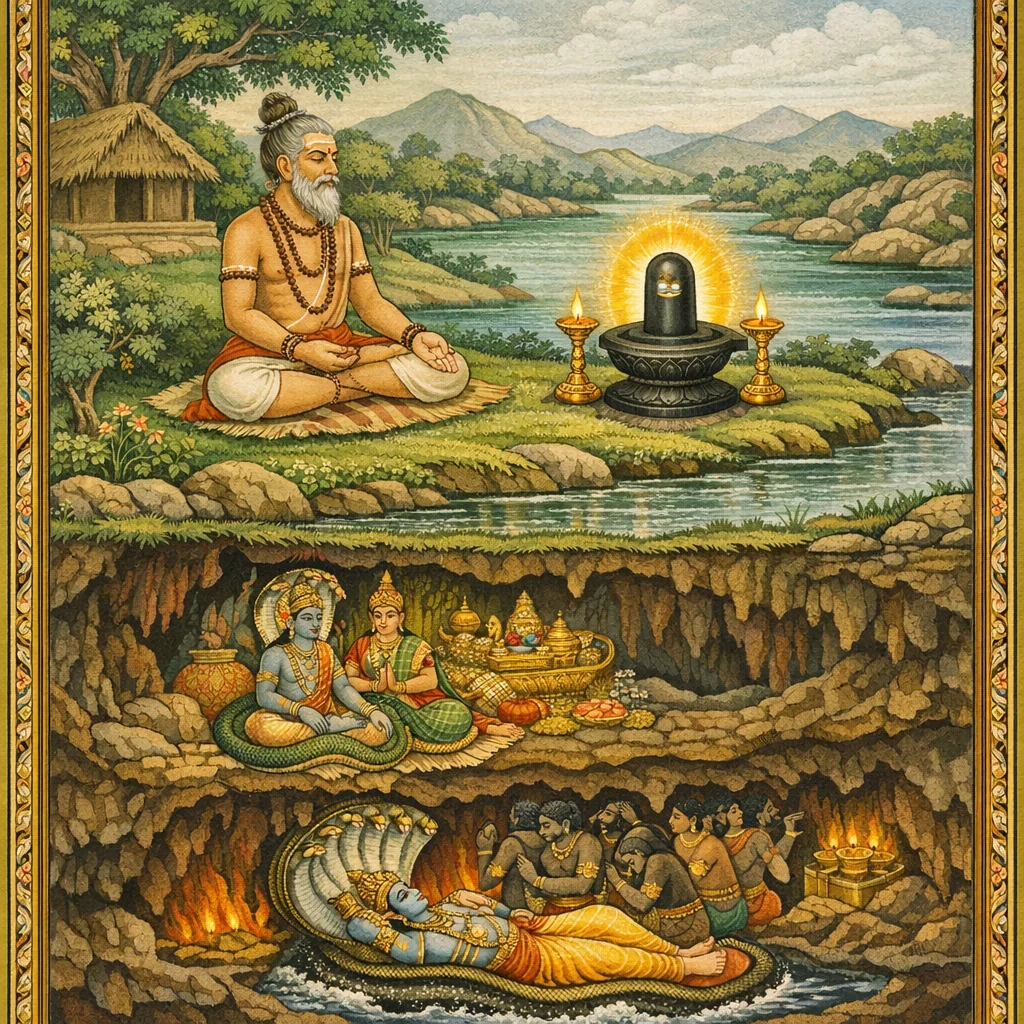
Mārkaṇḍeya points out Kapileśvara—on the northern bank of the Narmadā amid Bhṛgu-kṣetra—as an eminent tīrtha for pāpa-nāśana, the removal of sin. He presents Kapila as a manifestation of Vāsudeva/Jagannātha and situates the deity within a cosmic descent through subterranean realms, culminating in the great seventh Pātāla where the ancient Parameśvara abides. The narrative recalls the sudden destruction of Sagara’s sons in Kapila’s presence, followed by Kapila’s grief and moral reflection. With a mind turned toward renunciation, he deems such mass destruction “inappropriate” and seeks expiation through the Kapila tīrtha. He then performs intense tapas on the Narmadā bank, worships the imperishable Rudra, and attains a supreme, nirvāṇa-like state. Ritual observances and their merits are enumerated: bathing and worship grant the fruit of “a thousand cows”; gifts made on the bright fourteenth of Jyeṣṭha become inexhaustible when given to a worthy brāhmaṇa. Fasting and bathing on specified lunar days (including Aṅgāraka-related observances) promise beauty, prosperity, and benefits to one’s lineage across many births. Offerings to ancestors on full and new moon satisfy them for twelve years and lead them to heavenly realms; lamp-offering bestows bodily radiance. Those who die at this tīrtha are said to take a path of no return, directed toward Śiva’s abode.
Shlokas
Verse 1
श्रीमार्कण्डेय उवाच । उत्तरे नर्मदाकूले भृगुक्षेत्रस्य मध्यतः । कपिलेश्वरं तु विख्यातं विशेषात्पापनाशनम्
Śrī Mārkaṇḍeya said: On the northern bank of the Narmadā, in the very midst of Bhṛgu’s sacred region, Kapileśvara is renowned—preeminently—as a destroyer of sins.
Verse 2
योऽसौ सनातनो देवः पुराणे परिपठ्यते । वासुदेवो जगन्नाथः कपिलत्वमुपागतः
That eternal Deity who is recited in the Purāṇas—Vāsudeva, Lord of the universe—assumed the identity of Kapila.
Verse 3
पातालं सुतलं नाम तस्यैव नितलं ह्यधः । गभस्तिगं च तस्याधो ह्यन्धतामिस्रमेव च
Pātāla is called Sutala; beneath it indeed lies Nitala. Below that are Gabhastiga, and deeper still, Andha-tāmisra.
Verse 4
पातालं सप्तमं यच्च ह्यधस्तात्संस्थितं महत् । वसते तत्र वै देवः पुराणः परमेश्वरः
And the great seventh Pātāla, established far below—there indeed dwells the ancient God, the Supreme Lord.
Verse 5
स ब्रह्मा स महादेवः स देवो गरुडध्वजः । पूज्यमानः सुरैः सिद्धैस्तिष्ठते ब्रह्मवादिभिः
He is Brahmā; he is Mahādeva; he is also the Lord whose banner bears Garuḍa. Worshipped by the gods and the Siddhas, he abides among the knowers and proclaimers of Brahman.
Verse 6
वसतस्तस्य राजेन्द्र कपिलस्य जगद्गुरोः । विनाशं चाग्रतः प्राप्ताः क्षणेन सगरात्मजाः
O king of kings, while Kapila—the guru of the world—was dwelling there, the sons of Sagara met destruction before his very presence, in a single moment.
Verse 7
भस्मीभूतांस्तु तान्दृष्ट्वा कपिलो मुनिसत्तमः । जगाम परमं शोकं चिन्त्यमानोऽथ किल्बिषम्
Seeing them reduced to ashes, Kapila—the best of sages—fell into deep sorrow, reflecting then upon the fault that had occurred.
Verse 8
सर्वसङ्गपरित्यागे चित्ते निर्विषयीकृते । अयुक्तं षष्टिसहस्राणां कर्तं मम विनाशनम्
When my mind has renounced all attachments and been freed from sense-objects, it is not fitting that I should be the agent of the destruction of sixty thousand.
Verse 9
कृतस्य करणं नास्ति तस्मात्पापविनाशनम् । गत्वा तु कापिलं तीर्थं मोचयाम्यघमात्मनः
What has been done cannot be undone; therefore, for the destruction of sin, I shall go to Kāpila-tīrtha and free myself from inner taint.
Verse 10
पातालं तु ततो मुक्त्वा कपिलो मुनिसत्तमः । तपश्चचार सुमहन्नर्मदातटमास्थितः
Then Kapila, the foremost of sages, departing from Pātāla, performed mighty austerities while staying upon the bank of the Narmadā.
Verse 11
व्रतोपवासैर्विविधैः स्नानदानजपादिकैः । परं निर्वाणमापन्नः पूजयन्रुद्रमव्ययम्
By many kinds of vows and fasts—by bathing, charity, japa, and the like—worshipping the imperishable Rudra, he attained the supreme liberation.
Verse 12
तत्र तीर्थे तु यः स्नात्वा पूजयेत्परमेश्वरम् । गोसहस्रफलं तस्य लभते नात्र संशयः
Whoever bathes at that tīrtha and worships the Supreme Lord gains the merit equal to gifting a thousand cows—of this there is no doubt.
Verse 13
ज्येष्ठमासे तु सम्प्राप्ते शुक्लपक्षे चतुर्दशी । तत्र स्नात्वा विधानेन भक्त्या दानं प्रयच्छति
When the month of Jyeṣṭha arrives, on the fourteenth day of the bright fortnight, having bathed there according to the prescribed rite, one should bestow charity with devotion.
Verse 14
पात्रभूताय विप्राय स्वल्पं वा यदि वा बहु । अक्षयं तत्फलं प्रोक्तं शिवेन परमेष्ठिना
Whether the gift be small or great, when given to a worthy brāhmaṇa, its fruit is declared imperishable—so has Śiva, the Supreme Lord, proclaimed.
Verse 15
अङ्गारकदिने प्राप्ते चतुर्थ्यां नवमीषु च । स्नानं करोति पुरुषो भक्त्योपोष्य वराङ्गना
O noble lady, when the day of Aṅgāraka (Tuesday) arrives—and on the fourth and ninth lunar days—if a man, fasting with devotion, performs the ritual bath, he gains the merit taught for such observances.
Verse 16
रूपमैश्वर्यमतुलं सौभाग्यं संततिं पराम् । लभते सप्तजन्मानि नित्यं नित्यं पुनः पुनः
He attains incomparable beauty and prosperity, good fortune, and excellent progeny—again and again, continually—through seven births.
Verse 17
पौर्णमास्याममावास्यां स्नात्वा पिण्डं प्रयच्छति । तस्य ते द्वादशाब्दानि तृप्ता यान्ति सुरालयम्
On the full-moon and new-moon days, having bathed, if one offers piṇḍa (ancestral oblation), then one’s departed ones remain satisfied for twelve years and proceed to the heavenly abode.
Verse 18
तत्र तीर्थे तु यो भक्त्या दद्याद्दीपं सुशोभनम् । जायते तस्य राजेन्द्र महादीप्तिः शारीरजा
O king, whoever at that tīrtha, with devotion, offers a beautiful lamp, in him arises a great radiance of the body—an inner splendor made manifest.
Verse 19
तत्र तीर्थे मृतानां तु जन्तूनां सर्वदा किल । अनिवर्तिका भवेत्तेषां गतिस्तु शिवमन्दिरात्
Indeed, for beings who die at that tīrtha, their course is said to be irreversible: their destiny goes onward from Śiva’s abode, without return to lower states.
Verse 175
अध्याय
Chapter (heading/colophon marker).