Adhyaya 173
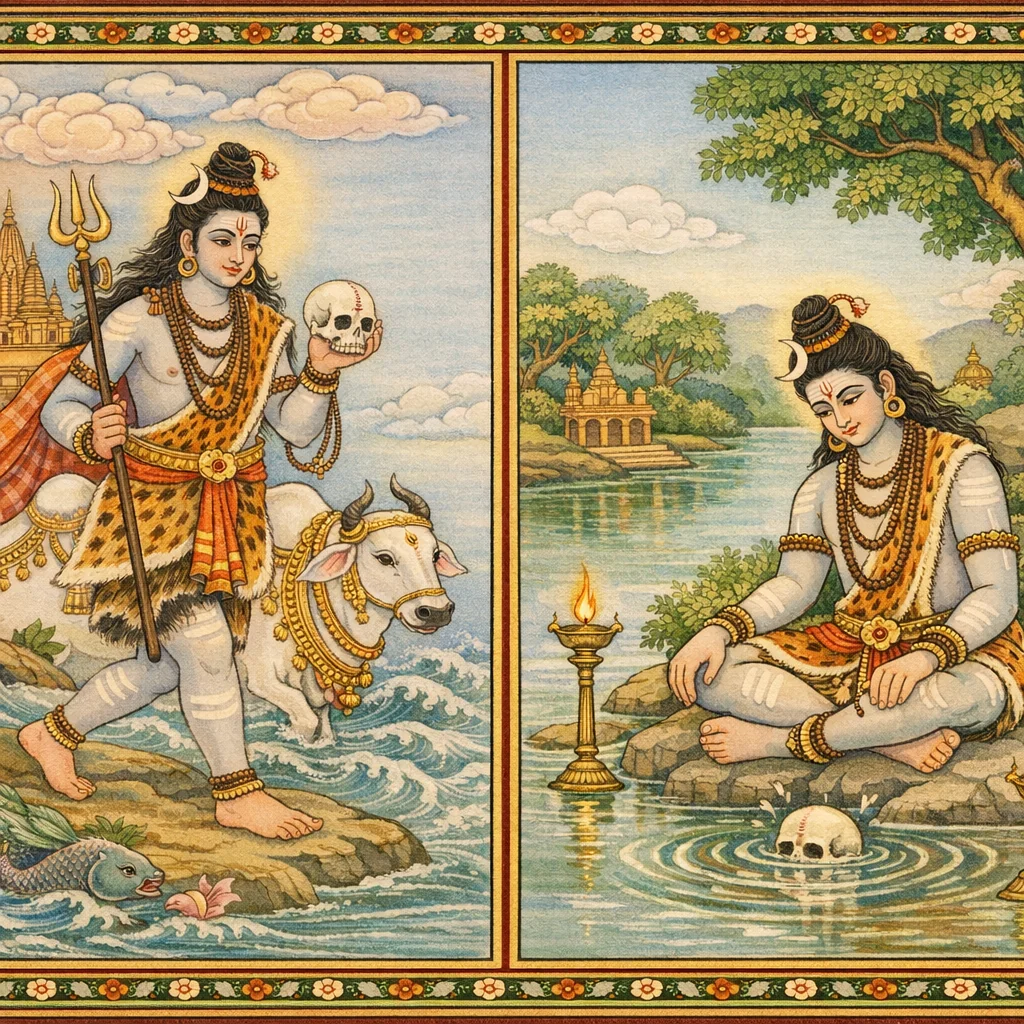
Mārkaṇḍeya instructs the king about a supremely auspicious tīrtha on the southern bank of the Narmadā, praised as a destroyer of all sins, even grave transgressions. The chapter explains its origin: Śiva (Triśūladhṛk, bearer of the trident) incurs the burden of brahmahatyā after severing Brahmā’s head in a mythic episode connected with Brahmā’s untruthful speech. The skull clings to Śiva’s hand and will not fall away, despite extensive pilgrimages—to Vārāṇasī, to the ocean in every direction, and to many other tīrthas. Only when Śiva reaches this Narmadā tīrtha near Kulakoṭi does he perform expiation and become free from impurity. Thereafter the place is famed as Śuddharudra, renowned in the three worlds as the supreme remover of brahmahatyā. The chapter prescribes a recurring observance: on each amāvāsyā (new-moon day) in the bright fortnight, one should bathe there according to rule, offer tarpaṇa to the pitṛs and the deities, and present piṇḍa with inwardly consecrated intention. Worship of Parameśvara with fragrance, incense, and lamps is commended; the deity is called Śuddheśvara and is honored in Śiva-loka. The concluding phala declares that those who follow this discipline and remember the tīrtha are released from all sins and attain Rudra-loka.
Shlokas
Verse 1
श्रीमार्कण्डेय उवाच । ततो गच्छेत्तु राजेन्द्र तीर्थं परमशोभनम् । नर्मदादक्षिणे कूले सर्वपापप्रणाशनम्
Śrī Mārkaṇḍeya said: Then, O lord of kings, one should go to a supremely beautiful tīrtha on the southern bank of the Narmadā, a destroyer of all sins.
Verse 2
सिद्धेश्वरमिति ख्यातं महापातकनाशनम् । यत्र शुद्धिं परां प्राप्तो देवदेवो महेश्वरः । पुरा हत्यायुतः पार्थ देवदेवस्त्रिशूलधृक्
It is famed as Siddheśvara, the destroyer of great sins. There the God of gods, Maheśvara, attained supreme purification—formerly, O prince, the divine Lord bearing the trident had become burdened with sin.
Verse 3
पुरा पञ्चशिरा आसीद्ब्रह्मा लोकपितामहः । तेनानृतं वचश्चोक्तं कस्मिंश्चित्कारणान्तरे
In former times Brahmā, the grandsire of the worlds, had five heads. On one occasion, due to a certain circumstance, he spoke a falsehood.
Verse 4
तच्छ्रुत्वा सहसा तस्मै चुकोप परमेश्वरः । छेदयामास भगवान्मूर्धानं करजैस्तदा
Hearing that, the Supreme Lord at once grew wrathful toward him, and then the Blessed One severed (one) head with His fingernails.
Verse 5
तस्य तत्करसंलग्नं च्यवते न कदाचन । ततो हि देवदेवेशः पर्यटन् पृथिवीमिमाम्
But that (severed head), stuck to His hand, would not fall away at any time. Therefore the Lord of the gods set out, wandering over this earth.
Verse 6
ततो वाराणसीं प्राप्तस्तस्यां तदपतच्छिरः । पतिते तु कपाले च ब्रह्महत्या न मुञ्चति
Then, upon reaching Vārāṇasī, that head fell there. Yet even when the skull had fallen, the sin of brahma-hatyā did not leave him.
Verse 7
ततस्तु सागरे गत्वा पूर्वे च दक्षिणे तथा । पश्चिमे चोत्तरे पार्थ देवदेवो महेश्वरः
Thereafter, O Pārtha, Devadeva Maheśvara went to the ocean, and likewise traversed the east and the south, the west and the north.
Verse 8
पर्यटन्सर्वतीर्थेषु ब्रह्महत्या न मुञ्चति । नर्मदादक्षिणे कूले सुतीर्थं प्राप्तवान् प्रभुः
Though he wandered to all the sacred tīrthas, brahma-hatyā did not leave him. Then the Lord reached the excellent tīrtha on the southern bank of the Narmadā.
Verse 9
कुलकोटिं समासाद्य प्रार्थयामास चात्मवान् । प्रायश्चित्तं ततः कृत्वा बभूव गतकल्मषः
Reaching Kulakoṭi, the self-possessed Lord offered his prayer. Then, having performed the expiation (prāyaścitta), he became free from impurity.
Verse 10
ततो निष्कल्मषो जातो देवदेवो महेश्वरः । हत्वा सुरेभ्यस्तत्स्थानं ततश्चान्तर्दधे प्रभुः
Then Devadeva Maheśvara became stainless. Having secured that place for the gods, the Lord thereafter disappeared from sight.
Verse 11
तदाप्रभृति तत्तीर्थं शुद्धरुद्रेति कीर्तितम् । विख्यातं त्रिषु लोके ब्रह्महत्याहरं परम्
From that time onward, that sacred ford has been celebrated as “Śuddharudra.” It is renowned in the three worlds as the supreme remover of brahma-hatyā.
Verse 12
मासे मासे सिते पक्षेऽमावास्यायां युधिष्ठिर । स्नात्वा तत्र विधानेन तर्पयेत्पितृदेवताः
Month after month, on the new-moon day in the bright fortnight, O Yudhiṣṭhira, having bathed there according to rule, one should offer tarpaṇa to the Pitṛs and the deities.
Verse 13
दद्यात्पिण्डं पित्ःणां तु भावितेनान्तरात्मना । तस्य ते द्वादशाब्दानि सुतृप्ताः पितरो नृप
O king, one should offer the piṇḍa to the Pitṛs with an inwardly recollected and faith-filled mind. By that act, his ancestors remain fully satisfied for twelve years.
Verse 14
गन्धधूपप्रदीपाद्यैरभ्यर्च्य परमेश्वरम् । शुद्धेश्वराभिधानं तु शिवलोके महीयते
Having worshipped the Supreme Lord with fragrance, incense, lamps, and the like, the devotee is honored in Śiva’s world under the celebrated name “Śuddheśvara”.
Verse 15
एतत्ते कथितं राजञ्छुद्धरुद्रमनुत्तमम् । मया श्रुतं यथा देवसकाशाच्छूलपाणिनः । मुच्यते सर्वपापेभ्यो रुद्रलोकं स गच्छति
O king, I have thus told you of the unsurpassed Śuddharudra—exactly as I heard it from the god, the Trident-bearer, Śūlapāṇi. One who approaches it with faith is freed from all sins and goes to Rudra’s world.
Verse 173
अध्याय
Chapter marker: “Adhyāya” — the sacred indication of a chapter division/colophon in the manuscript tradition.