Adhyaya 172
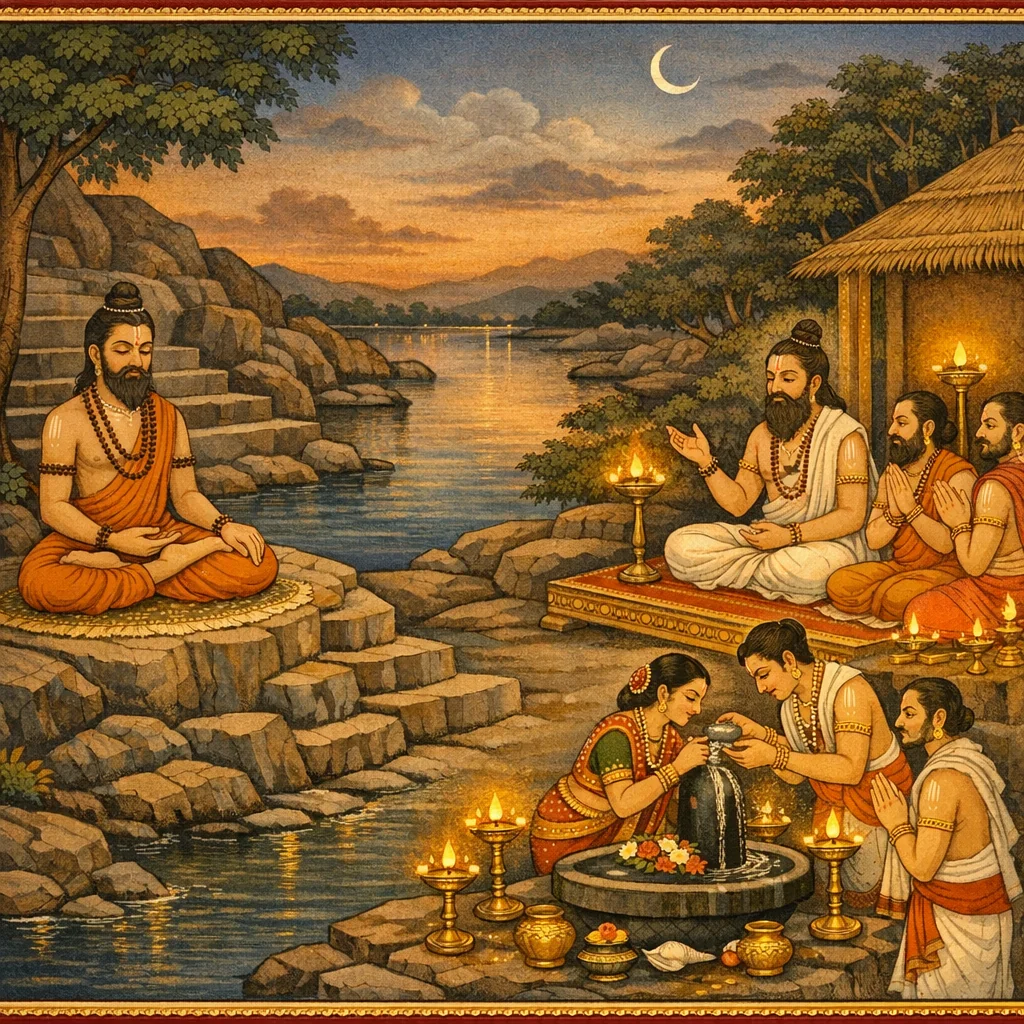
This adhyāya unfolds in two movements. First, devas and ṛṣis gather at the holy āśrama of Māṇḍavya on the bank of the Narmadā, praising his tapas and affirming the siddhi born of austerity, and granting him boons. An ensuing episode turns on a rākṣasa-linked curse motif and the offering of a maiden to Māṇḍavya, culminating in marriage, communal exchanges of honor, and royal patronage with gifts. Second, it sets forth the tīrtha-māhātmya and ritual phalaśruti of Māṇḍavyeśvara/Māṇḍavya-Nārāyaṇa and associated sites such as Devakhāta, prescribing bathing, abhiṣeka, worship, lamp-lighting (dīpa), circumambulation, feeding brāhmaṇas, śrāddha timings, and vrata observances—especially the caturdaśī night vigil. Merit is measured through equivalences to great yajñas and famed tīrthas, and the chapter closes by assuring release from pāpa and auspicious post-mortem destinies for those who hear and practice.
Shlokas
Verse 1
श्रीमार्कण्डेय उवाच । अथ ते ऋषयः सर्वे देवाश्चेन्द्रपुरोगमाः । माण्डव्यस्याश्रमे पुण्ये समीयुर्नर्मदातटे
Śrī Mārkaṇḍeya said: “Then all those sages, and the gods led by Indra, assembled together at the holy hermitage of Māṇḍavya on the bank of the Narmadā.”
Verse 2
शङ्खदुन्दुभिनादेन दीपिकाज्वलनेन च । अप्सरोगीतनादेन नृत्यन्त्यो वारयोषितः
With the blare of conches and kettledrums, with lamps blazing, and with the sound of apsarases singing, the celestial women danced.
Verse 3
कथानकैः स्तुवत्यन्ये तस्य शूलाग्रधारिणः । अष्टाशीतिसहस्राणि स्नातकानां तपस्विनाम्
Others praised Him—the Bearer of the trident’s tip—with sacred tales. There were eighty-eight thousand snātakas, ascetics disciplined in sacred learning, present.
Verse 4
समाजे त्रिदशैः सार्द्धं तत्र ते च दिदृक्षया । ब्रह्मविष्णुमहेशानास्तत्र हर्षात्समागताः
In that sacred assembly, together with the Thirty-three gods, they too came, eager to behold it. Out of joy, Brahmā, Viṣṇu, and Maheśa (Śiva) arrived there.
Verse 5
मातरो मल्लिकाद्याश्च क्षेत्रपाला विनायकाः । दिक्पाला लोकपालाश्च गङ्गाद्याश्च सरिद्वराः
The Divine Mothers—beginning with Mallikā—came; so too the guardians of the sacred precincts, the Vināyakas, the guardians of the directions and worlds, and the foremost rivers beginning with the Gaṅgā.
Verse 6
ऋषिदेवसमाजे तु नित्यं हर्षप्रमोदने । तत्र राजा समायातः पौरजानपदैः सह
In that assembly of sages and gods, ever filled with joy and celebration, the king arrived there along with the townspeople and the people of the countryside.
Verse 7
दृष्ट्वा कौतूहलं तत्र व्याकुलीकृतमानसम् । वित्रस्तमनसो भूत्वा भयात्सर्वे समास्थिताः
Seeing the strange commotion there, their minds grew unsettled; and, frightened at heart by fear, everyone stood still in place.
Verse 8
तस्मिन्समागमे दिव्ये ब्रह्मविष्ण्वीशमब्रुवन् । भो माण्डव्य महासत्त्व वरदास्तेऽमरैः सह
In that divine gathering, Brahmā, Viṣṇu, and Īśa spoke: “O Māṇḍavya, great-souled one—together with the immortals, we are here to grant you boons.”
Verse 9
अनेककष्टतपसा तव सिद्धिर्भविष्यति । प्रार्थयस्व यथाकामं यस्ते मनसि रोचते
Through your austerity, endured amid many hardships, your spiritual attainment will be fulfilled. Ask, according to your desire, whatever is pleasing in your heart.
Verse 10
अनादित्यमयं लोकं निर्वषट्कारमाकुलम् । नष्टधर्मं विजानीहि प्रकृतिस्थं कुरुष्व च । अनुग्रहं तु शाण्डिल्याः प्रार्थयाम द्विजोत्तम
“Know this world to be without the sun, confused and bereft of the sacred vaṣaṭ-calls; dharma has declined—restore it to its natural order. And, O best of the twice-born, we ask you to show favor to Śāṇḍilyā.”
Verse 11
एष ते कष्टदो राजा समायातस्तवाग्रतः । संभूषयस्व विप्रर्षे जनं देवासुरं गणम्
“Here before you has come the king who has caused you hardship. O brāhmaṇa-sage, now honor and receive this assembly—companies of gods and asuras alike.”
Verse 12
माण्डव्य उवाच । यदि प्रसन्ना मे देवाः समायाताः सुरैः सह । त्रिकालमत्र तीर्थे च स्थातव्यमृषिभिः सह
Māṇḍavya said: “If the gods are pleased with me and have come here together with the devas, then at this tīrtha remain for the three times of the day, along with the sages.”
Verse 13
भवतां तु प्रसादेन रुजा मे शाम्यतां सदा । एवमस्त्विति देवेशा यावज्जल्पन्ति पाण्डव
“And by your gracious favor, may my pain be forever pacified.” The lords of the gods replied, “So be it,” as they continued speaking, O Pāṇḍava.
Verse 14
तावद्रक्षो गृहीत्वाऽग्रे कन्यां कामप्रमोदिनीम् । उवाच भगवञ्छापं पुरा दत्त्वोर्वशी मम
Just then the rākṣasa seized the maiden—delighting in amorous play—held her before him, and spoke: “O Blessed One, long ago Urvaśī bestowed a curse upon me.”
Verse 15
यदा कन्यां हरे रक्षःशापान्तस्ते भविष्यति । तेन मे गर्हितं कर्म शापेनाकृतबुद्धिना
“When the rākṣasa carries off the maiden, your curse will come to its end. Because of that curse my mind was distorted, and I have been driven into this blameworthy deed.”
Verse 16
क्षन्तव्यमिति चोक्त्वा च गतश्चादर्शनं पुनः । गते चैव तु सा कन्या दृष्ट्वा पद्मदलेक्षणा
Having said, “It should be forgiven,” he again vanished from sight. And when he had gone, that lotus-petaled-eyed maiden, seeing what had occurred…
Verse 17
मन्त्रयित्वा सुरैः सर्वैर्दत्ता माण्डव्यधीमते । तां वज्रशूलिकां प्लाव्य पवित्रैर्नर्मदोदकैः
After consulting with all the gods, she was bestowed upon the wise Māṇḍavya. Then that Vajraśūlikā was bathed with the sanctifying, pure waters of the Narmadā.
Verse 18
माण्डव्यमृषिमुत्तार्य जयशब्दादिमङ्गलैः । विवाहयित्वा तां कन्यां माण्डव्यर्षिपुंगवः
Escorted with auspicious rites beginning with cries of “Victory!”, Māṇḍavya—the bull among sages—duly took that maiden in marriage.
Verse 19
अभिवाद्य च तान् सर्वान् दानसन्मानगौरवैः । अथ राजा समीपस्थो रत्नैश्च विविधैरपि
After paying homage to them all with gifts, honors, and reverent respect, the king who stood nearby also honored them with various jewels.
Verse 20
धिग्वादैर्निन्दितः सर्वैस्तैर्जनैर्भूषितः पुनः । राज्ञा च ब्राह्मणाः सर्वे भूषणाच्छादनाशनैः
Though he had been condemned by all those people with cries of “Shame!”, he was honored again. The king, too, honored all the brāhmaṇas with ornaments, garments, and food.
Verse 21
सुवर्णकोटिदानेन तुष्टान्कृत्वा क्षमापिताः । वृत्ते विवाह आहूय शाण्डिलीं तामथाब्रवीत्
By gifting ten million pieces of gold, he satisfied them and obtained their forgiveness. When the wedding was completed, he summoned that Śāṇḍilī and then said to her:
Verse 22
मानयस्व इमान् विप्रान्मोचयस्व दिवाकरम् । अपहृत्य तमो येन कृपा सद्यः प्रवर्तते
Honor these brāhmaṇas; release the Sun. By removing the darkness, let mercy at once come into effect.
Verse 23
ऋषीणां वचनं श्रुत्वा शाण्डिली दुःखिताब्रवीत् । उदितेऽर्के तु मे भर्ता मृत्युं यास्यति भो द्विजाः
Hearing the sages’ words, Śāṇḍilī spoke in sorrow: “O twice-born ones, when the Sun rises, my husband will indeed go to death.”
Verse 24
तं कथं मोचयामीह ह्यात्मनोऽनिष्टसिद्धये । क्रियाप्रवर्तनाच्चाद्य किं कार्यं मे महर्षयः
“How can I free him here, without bringing about an undesired outcome for myself? And since it is by action (rite) that things are set in motion—tell me, O great sages, what should I do now?”
Verse 25
निःपुंसी स्त्री ह्यनाथाहं भवामि भवतो मतम् । तिष्ठ त्वमन्धकारे तु नेच्छामि रविणोदयम्
“If my husband is lost, I become a helpless woman—without a protector; so runs your own judgment. Therefore remain in darkness; I do not wish for the sun to rise.”
Verse 26
तेन वाक्येन ते सर्वे देवासुरमहर्षयः । शिरःसंचालनाः सर्वे साधु साध्विति चाब्रुवन्
At those words, all of them—devas, asuras, and great sages—nodded their heads in assent and exclaimed, “Well said! Well said!”
Verse 27
पतिव्रते महाभागे शृणु वाक्यं तपोधने । मन्यसे यदि नः सर्वान्कुरुष्व वचनं च यत्
O devoted wife, O greatly blessed one, O treasure of austerity—hear our words. If you accept us all, then do what we ask.
Verse 28
शाण्डिल्युवाच । येन मे न मरेद्भर्ता येन सत्यं मुनेर्वचः । तत्कुरुध्वं विचार्याशु येन संवर्धते सुखम्
Śāṇḍilyā said: “Do—after swift deliberation—that by which my husband will not die, and by which the sage’s word remains true; do what increases well-being.”
Verse 29
तस्यास्तद्वचनं श्रुत्वा स्वप्नावस्थाकृतो हृषिः । अन्तर्हितो मुहूर्तं च शाण्डिल्याश्च प्रपश्य ताम्
Hearing her words, the sage—like one set in a dream-state—was filled with delight; and for a moment he vanished from sight, while Śāṇḍilyā looked on.
Verse 30
पुनरादाय ते सर्वे कृत्वा निर्व्रणसत्तनुं स्नापितो नर्मदातोये शाण्डिल्यायै समर्पितः
Then all of them took him up again, restored his body to a sound, uninjured state, bathed him in the waters of the Narmadā, and handed him back to Śāṇḍilyā.
Verse 31
ततः सा हृष्टमनसा पतिं दृष्ट्वा तु तैजसम् । प्रणम्य तानृषीन् देवान् विमलार्कं जगत्कृतम्
Then she, her heart filled with joy, beheld her husband radiant with splendor. Bowing to those sages and gods—and to the pure Sun, the maker and sustainer of the world—she offered reverence.
Verse 32
क्रियाप्रवर्तिताः सर्वे देवगन्धर्वमानुषाः । हृष्टतुष्टा गताः सर्वे स्वमाश्रमपदं महत्
Thus set into motion by the rite, all—gods, gandharvas, and humans—departed, joyful and satisfied, each returning to their own great hermitage-abode.
Verse 33
पतिव्रता स्वभर्त्रा सा मासमेवाश्रमे स्थिता । माण्डव्येनाप्यनुज्ञाता ययौ नत्वा स्वमाश्रमम्
That devoted wife remained in the hermitage with her husband for a full month. Then, permitted also by Māṇḍavya, she bowed and departed for her own hermitage.
Verse 34
गतेषु तेषु सर्वेषु स्थापयामास चाच्युतम् । माण्डव्येश्वरनामानं नारायण इति स्मृतम्
When all of them had departed, he installed Acyuta (the Unfailing Lord) there—(the deity) remembered as Nārāyaṇa, famed by the name Māṇḍavyeśvara.
Verse 35
दिव्यं वर्षसहस्रं तु पूजयामास भारत । गतोऽसावृषिसङ्घैश्च सहितोऽमरपर्वतम्
For a divine thousand years, O Bhārata, he worshipped there. Then he departed, accompanied by hosts of sages, to the mountain of the immortals.
Verse 36
तपस्तपन्तौ तौ तत्र ह्यद्यापि किल भारत । भ्रातरौ संयतात्मानौ ध्यायतः परमं पदम्
Those two brothers, practicing austerities there, are said to remain even today, O Bhārata—self-restrained, meditating upon the supreme state.
Verse 37
तत्र तीर्थे तु यः स्नात्वा तर्पयेत्पितृदेवताः । पितरस्तस्य तृप्यन्ति पिण्डदानाद्दशाब्दिकम्
Whoever bathes at that sacred ford and then offers tarpaṇa to the Pitṛ-deities—his ancestors are satisfied, as though he had performed piṇḍa-offerings for ten years.
Verse 38
देवगृहे तु पक्षादौ यः करोति विलेपनम् । गोदानशतसाहस्रे दत्ते भवति यत्फलम्
Whoever, at the beginning of a fortnight, applies a sacred plaster or anointing in the Lord’s temple gains the same fruit as one who has donated a hundred thousand cows.
Verse 39
उपलेपनेन द्विगुणमर्चने तु चतुर्गुणम् । दीपप्रज्वलने पुण्यमष्टधा परिकीर्तितम्
By plastering the shrine the merit becomes double; by worship (arcana) it becomes fourfold; and by lighting a lamp the merit is proclaimed to be eightfold.
Verse 40
दिव्यनेत्रधरो भूत्वा त्रैलोक्ये सचराचरे । दध्ना मधुघृतैर्देवं पयसा नर्मदोदकैः
Endowed with divine sight across the three worlds, moving and unmoving, the devotee bathes the Lord with curd, honey and ghee, with milk, and with the waters of the Narmadā.
Verse 41
स्नपनं ये प्रकुर्वन्ति पुष्पमालाविलेपनैः । येऽर्चयन्ति विरूपाक्षं देवं नारायणं हरिम्
Those who perform the Lord’s ritual bathing with flower garlands and sacred unguents, and those who worship the deity—Virūpākṣa, Nārāyaṇa, Hari—
Verse 42
तेऽपि दिव्यविमानेन क्रीडन्ते कल्पसंख्यया । दीपाष्टकं तु यः कुर्यादष्टमीं च चतुर्दशीम्
They too sport in a divine aerial chariot for the span of many kalpas. And whoever offers eight lamps on the eighth tithi and on the fourteenth—
Verse 43
एकादश्यां तु कृष्णस्य न पश्यन्ति यमं तु ते । फलैर्नानाविधैः शुभ्रैर्यः कुर्याल्लिङ्गपूरणम्
On Kṛṣṇa’s Ekādaśī, they do not behold Yama. And whoever performs the complete offering to the liṅga with many kinds of pure fruits—
Verse 44
तेऽपि यान्ति विमानेन सिद्धचारणसेविताः । घण्टा चैव पताका च विमाने पुष्पमालिका
They too depart in a celestial chariot attended by Siddhas and Cāraṇas; upon that aerial car are bells and banners, and garlands of flowers—
Verse 45
वादित्राणि यथार्हाणि प्रान्ते च गच्छते शिवम् । देवालयं तु यः कुर्याद्वैष्णवं माण्डवेश्वरम्
With fitting music and instruments, at life’s end one goes to Śiva. And whoever establishes a temple—a Vaiṣṇava shrine—at Māṇḍaveśvara—
Verse 46
स्वर्गे वसति धर्मात्मा यावदाभूतसम्प्लवम् । माण्डव्यनारायणाख्ये विप्रान् भोजयतेऽग्रतः
That righteous soul dwells in heaven until the cosmic dissolution. At the sacred place known as Māṇḍavya-Nārāyaṇa, he feeds brāhmaṇas first and foremost, placing dharma and hospitality at the head of worship.
Verse 47
एकस्मिन् भोजिते विप्रे कोटिर्भवति भोजिता । आश्विने मासि सम्प्राप्ते शुक्लपक्षे चतुर्दशीम्
When even a single brāhmaṇa is fed, it is as though a crore have been fed. When the month of Āśvina arrives, on the fourteenth day of the bright fortnight, this time is proclaimed supremely potent for such merit.
Verse 48
कृतोपवासनियमो रात्रौ जागरणेन च । दीपमालां चतुर्दिक्षु पूजां कृत्वा तु शक्तितः
Having undertaken the discipline of fasting and keeping vigil through the night, one should set rows of lamps in the four directions and perform pūjā according to one’s capacity.
Verse 49
नारी वा पुरुषो वापि नृत्यगीतप्रवादनैः । प्रभाते विमले सूर्ये स्नानादिकविधिं नृप
Whether woman or man, with dancing, singing, and instrumental music; then at dawn, when the sun is pure and clear, one should perform the rites beginning with bathing, O King.
Verse 50
अभिनिर्वर्त्य मौनेन पश्यते देवमीदृशम् । सर्वपापविनिर्मुक्तो रुद्रलोके महीयते
Having completed the observance in silence, one beholds such a Deity; freed from all sins, one is honored in Rudra’s world.
Verse 51
अथवा मार्गशीर्षे च चैत्रवैशाखयोरपि । श्रावणे वा महाराज सर्वकालेऽथवापि च
Or else in Mārgaśīrṣa; likewise in Caitra and Vaiśākha; or in Śrāvaṇa, O great King—even at any time—this holy observance may be undertaken, for the greatness of the tīrtha does not fail.
Verse 52
शिवरात्रिसमं पुण्यमित्येवं शिवभाषितम् । वाजपेयाश्वमेधाभ्यां फलं भवति नान्यथा
“There is merit equal to Śivarātri”—thus has Śiva declared. Its fruit is comparable to that of the Vājapeya and Aśvamedha sacrifices; truly so, and not otherwise.
Verse 53
दुर्भगा दुःखिता वन्ध्या दरिद्रा च मृतप्रजा । स्नाति रुद्रघटैर्या स्त्री सर्वान्कामानवाप्नुयात्
A woman who is ill-fated, sorrow-stricken, barren, poor, or whose children have died—if she bathes with the Rudra-pots (Rudra-ghaṭas), she attains all desired aims.
Verse 54
कृमिकीटपतङ्गाश्च तस्मिंस्तीर्थे तु ये मृताः । स्वर्गं प्रयान्ति ते सर्वे दिव्यरूपधरा नृप
O King, even worms, insects, and flying creatures that die at that sacred tīrtha all go to heaven, each assuming a radiant, divine form.
Verse 55
अनाशके जलेऽग्नौ तु ये मृता व्याधिपीडिताः । अनिवर्तिका गतिस्तेषां रुद्रलोके ह्यसंशयम्
Those who, tormented by disease, die there—whether without food, in water, or in fire—have an irreversible destiny: they reach Rudra’s world, without doubt.
Verse 56
नित्यं नमति यो राज शिवनारायणावुभौ । गोदानफलमाप्नोति तस्य तीर्थप्रभावतः
O King, whoever daily bows to both Śiva and Nārāyaṇa attains the merit of gifting a cow—by the potent sanctity of that tīrtha.
Verse 57
देवालये तु राजेन्द्र यश्च कुर्यात्प्रदक्षिणाम् । प्रदक्षिणीकृता तेन ससागरधरा धरा
O lord of kings, whoever performs pradakṣiṇā in the temple thereby reverently circumambulates the whole earth together with its oceans.
Verse 58
सार्द्धं शतं च तीर्थानि मल्लिकाभवनाद्बहिः । तस्य तीर्थप्रमाणं तु विस्तरं राजसत्तम
O best of kings, outside the Mallikā-bhavana there are one hundred and fifty tīrthas; now hear in detail the extent and measure of that sacred ford.
Verse 59
सूत्रेण वेष्टयेत्क्षेत्रमथवा शिवमन्दिरम् । अथवा शिवलिङ्गं च तस्य पुण्यफलं शृणु
If one encircles with a thread the sacred area—or Śiva’s temple, or even a Śiva-liṅga—then hear the meritorious fruit that arises from that act.
Verse 60
जम्बूद्वीपश्च कृतस्नश्च शाल्मली कुशक्रौञ्चकौ । शाकपुष्करगोमेदैः सप्तद्वीपा वसुंधरा
Jambūdvīpa and Kṛtasna, Śālmalī, Kuśa and Krauñca, together with Śāka, Puṣkara, and Gomeda—thus the earth is formed of the seven dvīpas.
Verse 61
भूषिता तेन राजेन्द्र सशैलवनकानना । रेवायां दक्षिणे भागे शिवक्षेत्रात्समीपतः
O king of kings, thus is the earth adorned—with mountains, forests, and groves—on the southern stretch of the Revā, close to the holy Śiva-kṣetra.
Verse 62
देवखातं महापुण्यं निर्मितं त्रिदशैरपि । तस्मिन् यः कुरुते स्नानं मुच्यते सर्वपातकैः
There is a supremely meritorious Deva-khāta, fashioned even by the gods; whoever bathes there is freed from all sins.
Verse 63
पूर्णिमायाममावस्यां व्यतीपातेऽर्कसंक्रमे । श्राद्धं च संग्रहे कुर्यात्स गच्छेत्परमां गतिम्
On the full-moon day, on the new-moon day, at Vyatīpāta, and at the Sun’s transit, one should perform śrāddha at that sacred gathering-place; then one attains the supreme destination.
Verse 64
देवखाते त्रयो देवा ब्रह्मविष्णुमहेश्वराः । तिष्ठन्ति ऋषिभिः सार्द्धं पितृदेवगणैः सह
At Devakhāta abide the three great deities—Brahmā, Viṣṇu, and Maheśvara—together with the ṛṣis, and in the company of the hosts of Pitṛs and gods.
Verse 65
तत्र तीर्थेऽश्विने मासि चतुर्दश्यां विशेषतः । वायुमार्गे स्थितः शक्रस्तिष्ठते दैवतैः सह
At that tīrtha, especially on the fourteenth lunar day in the month of Āśvina, Śakra (Indra), stationed in the path of the winds (the mid-region), remains there along with the other gods.
Verse 66
पृथिव्यां यानि तीर्थानि सरितः सागरास्तथा । विंशति तानि सर्वाणि देवखाते दिनद्वयम्
Whatever sacred fords exist on earth—rivers and oceans as well—twenty of them, all together, are as it were present at Devakhāta for two days.
Verse 67
गयाशिरे च यत्पुण्यं प्रयागे मकरकण्टके । प्रयागे सोमतीर्थे च तत्पुण्यं माण्डवेश्वरे
Whatever merit is found at Gayāśiras, and at Prayāga’s Makarakaṇṭaka, and at Prayāga’s Soma-tīrtha—that very merit is obtained at Māṇḍaveśvara.
Verse 68
पट्टबन्धेन यत्पुण्यं मात्रायां लकुलेश्वरे । आश्विन्यामश्विनीयोगे तत्पुण्यं माण्डवेश्वरे
Whatever merit arises from the rite of paṭṭabandha at Lakulīśvara in Mātrā—and whatever merit comes in Āśvina when the Aśvinī-yoga prevails—that same merit is found at Māṇḍaveśvara.
Verse 69
उज्जयिन्यां महाकाले वाराणस्यां त्रिपुष्करे । संनिहत्यां रविग्रस्ते माण्डव्याख्ये सनातनम्
At Ujjayinī (at Mahākāla), at Vārāṇasī (at Tripuṣkara), and at Saṃnihatyā; at Ravigrasta; and at the eternal kṣetra known as Māṇḍavya—these holy powers are proclaimed.
Verse 70
इति ज्ञात्वा महाराज सर्वतीर्थेषु चोत्तमम् । पित्ःन्देवान् समभ्यर्च्य स्नानदानादिपूजनैः
Knowing thus, O great king, that it is the best among all tīrthas, one should duly worship the Pitṛs and the gods there through bathing, charitable gifts, and other acts of reverent offering.
Verse 71
चतुर्दश्यां निराहारः स्थितो भूत्वा शुचिव्रतः । पूजयेत्परया भक्त्या रात्रौ जागरणे शिवम्
On the fourteenth lunar day, fasting without food, steadfast and observing a vow of purity, one should worship Śiva with supreme devotion, keeping vigil through the night.
Verse 72
स्नानैश्च विविधैर्देवं पुष्पागरुविलेपनैः । प्रभाते पौर्णमास्यां तु स्नानादिविधितर्पणैः
With various sacred baths, and with offerings of flowers and fragrant agaru unguents, one should honor the Lord; and at dawn on the full-moon day, one should also bathe and perform the prescribed rites of tarpaṇa.
Verse 73
श्राद्धेन हव्यकव्येन शिवपूजार्चनेन च । अग्निष्टोमादियज्ञैश्च विधिवच्चाप्तदक्षिणैः
Through śrāddha with havya and kavya offerings, through Śiva’s worship and formal adoration, and through sacrifices such as the Agniṣṭoma—performed according to rule and completed with proper dakṣiṇā—one attains the intended merit.
Verse 74
धौतपापो विशुद्धात्मा फलते फलमुत्तमम् । गोसहस्रप्रदानेन दत्तं भवति भारत
With sins washed away and the inner self made pure, one attains the highest fruit; O Bhārata, it becomes as though one had bestowed the gift of a thousand cows.
Verse 75
स्नानाद्यैर्विधिवत्तत्र तद्दिने शिवसन्निधौ । हिरण्यं वृषभं धेनुं भूमिं गोमिथुनं हयम्
There, after bathing and performing the rites according to rule, on that very day in Śiva’s presence, one should give in charity gold, a bull, a cow, land, a pair of cattle, and a horse.
Verse 76
शिवमुद्दिश्य वै वस्त्रयुग्मे दद्यात्सुरूपिणे । पादुकोपानहौ छत्रं भाजनं रक्तवाससी
Intending it for Śiva, one should give a pair of garments to a worthy and well-formed recipient; also sandals and footwear, an umbrella, a vessel, and red clothing.
Verse 77
होमं जाप्यं तथा दानमक्षयं सर्वमेव तत् । ऋचमेकां तु ऋग्वेदे यजुर्वेदे यजुस्तथा
Oblation in the homa, japa-recitation, and charity—all of that becomes imperishable. From the Ṛgveda one should recite a single ṛc-verse, and likewise a single yajus-formula from the Yajurveda.
Verse 78
सामैकं सामवेदे तु जपेद्देवाग्रसंस्थितः । सम्यग्वेदफलं तस्य भवेद्वै नात्र संशयः
And one should recite a single sāman from the Sāmaveda while standing before the foremost of the gods; for him the complete fruit of the Veda arises—of this there is no doubt.
Verse 79
गायत्रीजाप्यमात्रस्तु वेदत्रयफलं लभेत् । कुलकोटिशतं साग्रं लभते तु शिवार्चनात्
By merely repeating the Gāyatrī, one gains the fruit of the three Vedas; and by worship of Śiva, one delivers and blesses a hundred crores of one’s lineage in full measure.
Verse 80
स्नाने दाने तथा श्राद्धे जागरे गीतवादिते । अनिवर्तिका गतिस्तस्य शिवलोकात्कदाचन
Through bathing, charity, śrāddha rites, night-vigil, and devotional singing with instruments, his onward course becomes irreversible—never does he return from Śiva’s world.
Verse 81
कालेन महताविष्टो मर्त्यलोके समाविशेत् । राजा भवति मेधावी सर्वव्याधिविवर्जितः
After a long passage of time, should he enter again the mortal world, he becomes a king—intelligent and free from every disease.
Verse 82
जीवेद्वर्षशतं साग्रं पुत्रपौत्रधनान्वितः । तच्च तीर्थं पुनः स्मृत्वा लीयमानो महेश्वरे
He lives a full hundred years and more, endowed with sons, grandsons, and wealth; and, remembering that tīrtha again, he dissolves into Maheśvara.
Verse 83
उपास्ते यस्तु वै सन्ध्यां तस्मिंस्तीर्थे च पर्वणि । साङ्गोपाङ्गैश्चतुर्वेदैर्लभते फलमुत्तमम्
But whoever performs the Sandhyā worship at that tīrtha on a sacred occasion (parvan), he attains the highest fruit—equal to mastering the four Vedas together with their auxiliaries and subsidiary disciplines.
Verse 84
तत्र सर्वं शिवक्षेत्राच्छरपातं समन्ततः । न संचरेद्भयोद्विग्ना ब्रह्महत्या नराधिप
There, all around the Śiva-field, for the distance of an arrow’s flight on every side, the sin of brahmahatyā—terrified with fear—does not move about, O king.
Verse 85
यत्र तत्र स्थितो वृक्षान् पश्यते तीर्थतत्परः । विविधैः पातकैर्मुक्तो मुच्यते नात्र संशयः
Wherever he may stand, the pilgrim devoted to the tīrtha, merely by beholding the trees there, becomes freed from diverse sins—of this there is no doubt.
Verse 86
श्वभ्री तत्र महाराज जलमध्ये प्रदृश्यते । कथानिका पुराणोक्ता वानरी तीर्थसेवनात्
There, O great king, a water-pit called Śvabhrī is seen in the midst of the waters. A tale is told in the Purāṇa: a she-monkey attained purification through service to the tīrtha.
Verse 87
तत्र कूपो महाराज तिष्ठते देवनिर्मितः । शिवस्य पश्चिमे भागे शिवक्षेत्रमनुत्तमम्
There, O great king, stands a well fashioned by the gods. On the western side of Śiva is an unsurpassed Śiva-kṣetra.
Verse 88
वृषोत्सर्गं तु यः कुर्यात्तस्मिंस्तीर्थे नराधिप । क्रीडन्ति पितरस्तस्य स्वर्गलोके यदृच्छया
But whoever performs vṛṣotsarga—the sacred gift of releasing a bull—at that tīrtha, O king, his ancestors sport at will in the world of heaven.
Verse 89
अगम्यागमने पापमयाज्ययाजने कृते । स्तेयाच्च ब्रह्मगोहत्यागुरुघाताच्च पातकम् । तत्सर्वं नश्यते पापं वृषोत्सर्गे कृते तु वै
The sin incurred by approaching the forbidden, by performing sacrifices for the unworthy, and the offences arising from theft, from slaying a brāhmaṇa or a cow, and from killing one’s guru—indeed all that sin is destroyed when vṛṣotsarga is performed.
Verse 90
माण्डव्यतीर्थमाहात्म्यं यः शृणोति समाधिना । मुच्यते सर्वपापेभ्यो नात्र कार्या विचारणा
Whoever listens with a focused mind to the greatness of Māṇḍavya-tīrtha is freed from all sins; there is no need for doubt or deliberation here.
Verse 172
अध्याय
“Adhyāya”: a chapter marker indicating the chapter transition/colophon in the manuscript tradition.