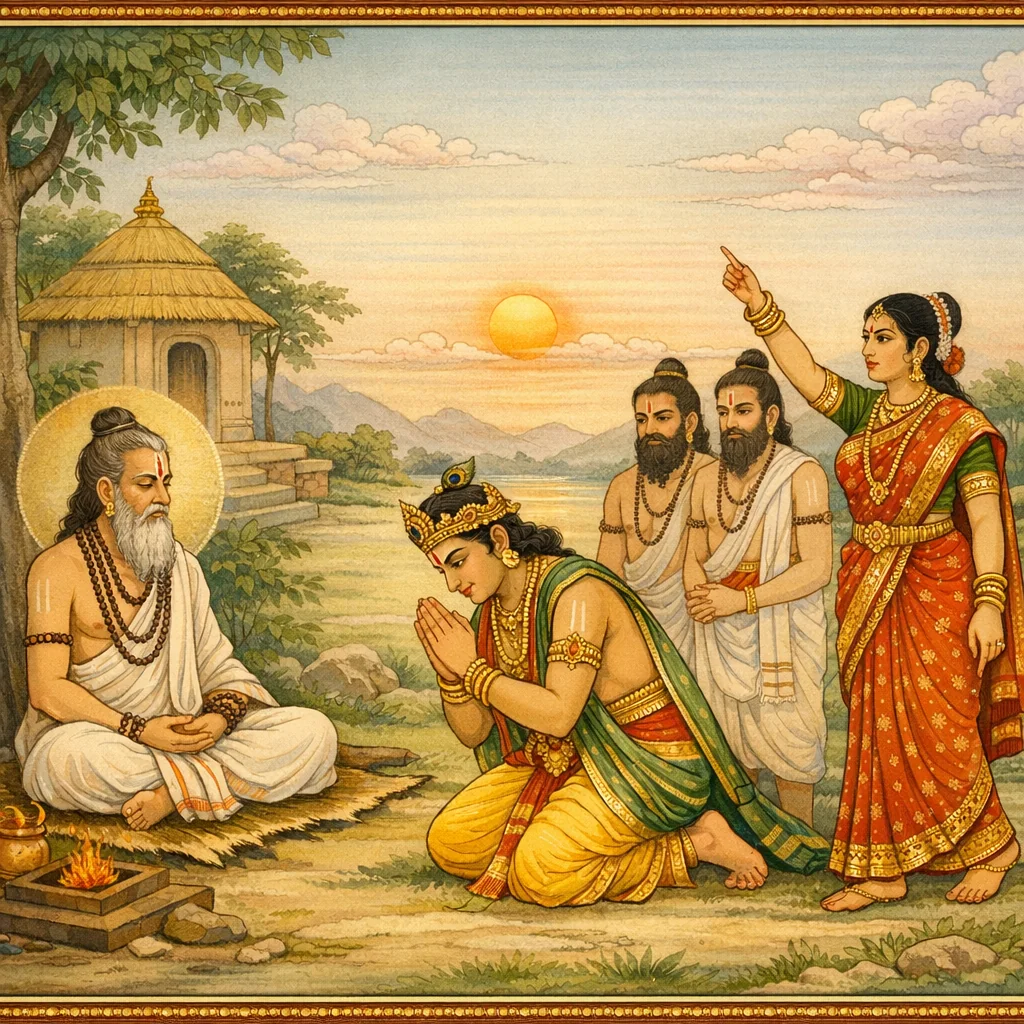
Adhyaya 171
This adhyāya unfolds as a multi-voiced theological discourse within Mārkaṇḍeya’s narration. A council of sages—Nārada, Vasiṣṭha, Jamadagni, Yājñavalkya, Bṛhaspati, Kaśyapa, Atri, Bharadvāja, Viśvāmitra, and others—approaches Nārāyaṇa after witnessing the ascetic Māṇḍavya impaled upon a stake (śūla). Though Nārāyaṇa turns toward punishing the king, Māṇḍavya restrains him and redirects the inquiry to karma-vipāka, the ripening of deeds. Māṇḍavya teaches that suffering arises from prior conduct and that each being experiences the results of one’s own actions, illustrated by analogies such as a calf finding its mother among many cows. He identifies the karmic seed of his present agony as a minor youthful act—placing a louse upon a thorn- or needle-like point—thereby affirming a rigorous ethic of accountability. The teaching expands into moral guidance: neglect of dāna, snāna, japa, homa, honoring guests, worship of the devas, and pitṛ-śrāddha is linked with degraded outcomes, while self-restraint, compassion, and purity of conduct lead to higher states. In the latter movement, Śāṇḍilī appears as a pativratā who inadvertently stumbles against the impaled sage while carrying her husband. Misunderstood and rebuked, she asserts her chastity and the dharma of hospitality, culminating in a vow-like declaration that if her husband is to die, the sun must not rise. Cosmic stasis follows, and ritual order—svāhā/svadhā, pañca-yajña, snāna, dāna, japa, and śrāddha-related offerings—is described as disrupted. The chapter thus juxtaposes karmic determinism with the Purāṇic power of vow, chastity, and ethical resolve, emphasizing moral causality and the sanctity of ritual sequence.
Shlokas
Verse 1
श्रीमार्कण्डेय उवाच । कथितं ब्राह्मणं द्रष्टुं शूले क्षिप्तं तपोधनैः । नारायणसमीपे तु गताः सर्वे महर्षयः
Śrī Mārkaṇḍeya said: Having heard of the brāhmaṇa who had been cast upon the stake, the sages—rich in austerity—went, all of them, into the presence of Nārāyaṇa to behold him.
Verse 2
नारदो देवलो रैभ्यो यमः शातातपोऽङ्गिराः । वसिष्ठो जमदग्निश्च याज्ञवल्क्यो बृहस्पतिः
Nārada, Devala, Raibhya, Yama, Śātātapa, Aṅgiras; Vasiṣṭha, Jamadagni, Yājñavalkya, and Bṛhaspati—
Verse 3
कश्यपोऽत्रिर्भरद्वाजो विश्वामित्रोऽरुणिर्मुनिः । वालखिल्यादयोऽन्ये च सर्वेऽप्यृषिगणान्वयाः
There were Kaśyapa, Atri, Bharadvāja, Viśvāmitra, and the sage Aruṇi; and others such as the Vālakhilyas—indeed, all the lineages and hosts of ṛṣis.
Verse 4
ददृशुः शूलमारूढं माण्डव्यमृषिपुंगवाः । प्रोचुर्नारायणं विप्रं किं कुर्मस्तव चेप्सितम्
Those foremost of sages saw Māṇḍavya raised upon the stake. They addressed Nārāyaṇa, the brāhmaṇa: “What shall we do—what is it that you desire?”
Verse 5
सर्वे ते तत्र सांनिध्यान्माण्डव्यस्य महात्मनः । संभ्रान्ता आगता ऊचुः किं मृतः किं नु जीवति
All of them, coming into the presence of the great-souled Māṇḍavya, arrived in alarm and asked, “Is he dead, or does he still live?”
Verse 6
अवस्थां तस्य ते दृष्ट्वा विषादमगमन्परम् । असहित्वा तु तद्दुःखं सर्वे ते मनसा द्विजाः
Seeing his condition, they fell into deep grief; unable to bear that suffering, all those twice-born sages were inwardly shaken.
Verse 7
पृच्छयतां यदि मन्येत राजानं भस्मसात्कुरु । तेषां तद्वचनं श्रुत्वा वाक्यं नारायणोऽब्रवीत्
As they questioned, they urged, “If you deem it right, reduce the king to ashes.” Hearing their words, Nārāyaṇa spoke in reply.
Verse 8
मयि जीवति मद्भ्राता ह्यवस्थामीदृशीं गतः । धिग्जीवितं च मे किंतु तपसो विद्यते फलम्
While I yet live, my brother has fallen into such a state! Fie upon my life—yet surely austerity (tapas) must bear its fruit.
Verse 9
दृष्ट्वा शूलस्थितं ज्येष्ठं मन्मनो नु विदीर्यते । परं किं तु करिष्यामि येन राष्ट्रं सराजकम्
Seeing my elder set upon a stake, my very mind is torn apart. Yet what can I do, by which the kingdom along with its king may be dealt with?
Verse 10
भस्मसाच्च करोम्यद्य भवद्भिः क्षम्यतामिह । एवमुक्त्वा गृहीत्वासौ करस्थमभिमन्त्रयेत्
Today I shall indeed reduce him to ashes—may you forgive me here. Having spoken thus, he took what was in his hand and began to consecrate it with a mantra.
Verse 11
क्रोधेन पश्यते यावत्तावद्धुंकारकोऽभवत् । तेन हुङ्कारशब्देन ऋषयो विस्मितास्तदा
As he looked on in anger, he became one who uttered a fierce hum-kāra; and by that “huṅkāra” sound, the sages were astonished.
Verse 12
माण्डव्यस्य समीपे तु ह्यपृच्छंस्ते द्विजोत्तमाः । निवारयसि किं विप्र शापं नृपजिघांसनम्
But near Māṇḍavya, those best of the twice-born asked, “O brāhmaṇa, why do you restrain the curse that would destroy the king?”
Verse 13
अपापस्य तु येनेह कृतमस्य जिघांसनम् । ऋषीणां वचनं श्रुत्वा कृच्छ्रान्माण्डव्यकोऽब्रवीत्
“By whom, indeed, has the attempt been made here to slay this sinless one?” Hearing the sages’ words, Māṇḍavya spoke with difficulty, constrained by pain.
Verse 14
अभिवन्दामि वो मूर्ध्ना स्वागतं ऋषयः सदा । अर्घ्यसन्मानपूजार्हाः सर्वेऽत्रोपविशन्तु ते
Māṇḍavya said: “I bow to you with my head. Welcome, O sages—ever worthy of arghya, honor, and worship. Be seated here, all of you.”
Verse 15
निविष्टैकाग्रमनसा सर्वान्माण्डव्यकोऽब्रवीत्
Seated, with his mind steadily gathered in one-pointed concentration, Māṇḍavya addressed them all.
Verse 16
प्राप्तं दुःखं मया घोरं पूर्वजन्मार्जितं फलम् । मा विषादं कुरुध्वं भोः कृतं पापं तु भुज्यते
This dreadful suffering that has come upon me is the fruit gathered from a former birth. Do not grieve, O revered ones—for the sin that has been done must indeed be endured as its consequence.
Verse 17
ऋषय ऊचुः । केन कर्मविपाकेन इह जात्यन्तरं व्रजेत् । दानधर्मफलेनैव केन स्वर्गं च गच्छति
The sages said: “By what ripening of karma does one pass here into another birth? And by what fruit of charity and dharma does one attain heaven?”
Verse 18
माण्डव्य उवाच । अदत्तदाना जायन्ते परभाग्योपजीविनः । न स्नानं न जपो होमो नातिथ्यं न सुरार्चनम्
Māṇḍavya said: “Those who give no charity are born dependent on the fortune of others. They perform no sacred bathing, no japa, no homa; neither hospitality to guests nor worship of the devas.”
Verse 19
न पर्वणि पितृश्राद्धं न दानं द्विजसत्तमाः । व्रजन्ति नरके घोरे यान्ति ते त्वन्त्यजां गतिम्
O best of the twice-born: those who offer no ancestral śrāddha on sacred occasions and give no charity fall into dreadful hell; they go to the condition of the outcaste.
Verse 20
पुनर्दरिद्राः पुनरेव पापाः पापप्रभावान्नरके वसन्ति । तेनैव संसरिणि मर्त्यलोके जीवादिभूते कृमयः पतङ्गाः
Again they become poor; again they become sinful. Through the force of sin they dwell in hell; and by that same cause, in this wandering mortal world, they are born among lower life-forms—worms and insects.
Verse 21
ये स्नानशीला द्विजदेवभक्ता जितेन्द्रिया जीवदयानुशीलाः । ते देवलोकेषु वसन्ति हृष्टा ये धर्मशीला जितमानरोषाः
Those devoted to sacred bathing, devoted to the twice-born and the devas, self-controlled, and practiced in compassion toward living beings—those dharma-abiding ones, having conquered pride and anger, dwell joyfully in the divine worlds.
Verse 22
विद्याविनीता न परोपतापिनः स्वदारतुष्टाः परदारवर्जिताः । तेषां न लोके भयमस्ति किंचित्स्वभावशुद्धा गतकल्मषा हि ते
Those disciplined by learning, who do not torment others, who are content with their own spouse and refrain from another’s spouse—such people have no fear anywhere in the world; for their nature is pure and their stains of sin are gone.
Verse 23
ऋषय ऊचुः । पूर्वजन्मनि विप्रेन्द्र किं त्वया दुष्कृतं कृतम् । येन कष्टमिदं प्राप्तं सन्धानं शूलगर्हितम्
The sages said: “O foremost of brāhmaṇas, what wrongful deed did you commit in a former birth, by which you have met this hardship—this grievous impalement upon the stake?”
Verse 24
शूलस्थं त्वां समालक्ष्य ह्यागताः सर्व एव हि । जीवन्तं त्वां प्रपश्याम त्वन्तरन्नवतारयन् । रुजासंतापजं दुःखं सोढ्वापि त्वमवेदनः
Seeing you fixed upon the stake, all of us have indeed come. We behold you still alive, even as the stake pierces and lowers through you. Though bearing the pain and burning agony, you appear untroubled—without complaint.
Verse 25
माण्डव्य उवाच । स्वयमेव कृतं कर्म स्वयमेवोपभुज्यते । सुकृतं दुष्कृतं पूर्वे नान्ये भुञ्जन्ति कर्हिचित्
Māṇḍavya said: “One alone must experience the results of one’s own deeds. Whether virtuous or sinful actions done before—no one else ever partakes of their fruit.”
Verse 26
यथा धेनुसहस्रेषु वत्सो विन्दति मातरम् । तथा पूर्वकृतं कर्म कर्तारमुपगच्छति
Just as, among thousands of cows, a calf finds its own mother, so too does previously performed karma inevitably reach its doer.
Verse 27
न माता न पिता भ्राता न भार्या न सुताः सुहृत् । न कस्य कर्मणां लेपः स्वयमेवोपभुज्यते
Not mother, not father, not brother, not wife, not sons, nor even a friend—no one can take on another’s karmic stain; one alone must undergo it.
Verse 28
श्रूयतां मम वाक्यं च भवद्भिः पृच्छितो ह्यहम् । पूर्वे वयसि भो विप्रा मलस्नानकृतक्षणः
Hear my words, for truly you have questioned me, O brāhmaṇas. In my earlier youth, at the moment when I was bathing to cleanse myself…
Verse 29
अज्ञानाद्बालभावेन यूका कण्टेऽधिरोपिता । तैलाभ्यक्तशिरोगात्रे मया यूका घृता न हि
Out of ignorance and childishness, I placed a louse upon another’s throat. Though my head and limbs were anointed with oil, I did not crush that louse—indeed, I did not.
Verse 30
कङ्कतीं रोप्य केशेषु सासा कण्टेऽधिरोपिता । तेषु पापं कृतं सद्यः फलमेतन्ममाभवत्
Fixing a comb in the hair, I caused it to be set upon the throat. The sin committed in that act—its fruit has now, indeed, come to me.
Verse 31
किंचित्कालं क्षपित्वाहं प्राप्स्ये मोक्षं निरामयम् । भवन्तस्त्विह सन्तापं मां कुरुध्वं महर्षयः
After enduring for a little while, I shall attain mokṣa—stainless and free from pain. Yet here, O great ṛṣis, do not cause me further distress.
Verse 32
इमामवस्थां भुक्त्वाहं कंचिच्छपे न चोच्चरे । अहनि कतिचिच्छूले क्षपयिष्यामि किल्बिषम्
Having undergone this condition, I shall curse no one and utter no harsh words. In a few days upon the stake, I will wear away my sin.
Verse 33
प्राक्तनं कर्म भुञ्जामि यन्मया संचितं द्विजाः । क्षन्तव्यमस्य राज्ञोऽथ कोपश्चैव विसर्ज्यताम्
O brāhmaṇas, I am only undergoing the former karma that I myself amassed. Therefore forgive the king, and cast away anger.
Verse 34
श्रुत्वा तु तस्य तद्वाक्यं माण्डव्यस्य महर्षयः । प्रहर्षमतुलं लब्ध्वा साधु साध्वित्यपूजयन्
Hearing those words of Māṇḍavya, the great sages—filled with immeasurable joy—honored him, exclaiming, “Well said! Well said!”
Verse 35
नारायण उवाच । इदं जलं मन्त्रपूतं कस्मिन्स्थाने क्षिपाम्यहम् । येन राजा भवेद्भस्म सराष्ट्रः सपुरोहितः
Nārāyaṇa said: “This water has been sanctified by mantras—into what place should I cast it, so that the king, together with his realm and even his royal priest, may be reduced to ashes?”
Verse 36
माण्डव्य उवाच । इदं जलं च रक्षस्व कालकूटविषोपमम् । समुद्रे क्षिपयिष्यामि देवकार्यं समुत्थितम्
Māṇḍavya said: “Guard this water—its potency is like the Kālakūṭa poison. I shall cast it into the ocean, for a divine purpose has arisen.”
Verse 37
अथ ते मुनयः सर्वे माण्डव्यं प्रणिपत्य च । आमन्त्रयित्वा हर्षाच्च कश्यपाद्या गृहान्ययुः
Then all those sages bowed to Māṇḍavya; and, taking leave of him with joy, Kaśyapa and the others departed for their hermitages.
Verse 38
गच्छमानास्तु ते चोक्ताः पञ्चमेऽहनि तापसाः । आगन्तव्यं भवद्भिश्च मत्सकाशं प्रतिज्ञया
As they were departing, the ascetic said to them: “On the fifth day you must return to me, by your solemn vow.”
Verse 39
तथेति ते प्रतिज्ञाय नारदाद्या अदर्शनम् । गतेषु विप्रमुख्येषु शाण्डिली च तपोधना
Saying, “So be it,” they made their vow; then Nārada and the others vanished from sight. When those foremost brāhmaṇas had departed, Śāṇḍilī—rich in austerity—remained.
Verse 40
द्वितीयेऽह्नि समायाता न तु बुद्ध्वाथ तं ऋषिम् । भर्तारं शिरसा धार्य रात्रौ पर्यटते स्म सा
On the second day she arrived, yet she did not find that sage. Bearing her husband upon her head, she wandered through the night.
Verse 41
न दृष्टः शूलके विप्रो भराक्रान्त्या युधिष्ठिर । स्खलिता तस्य जानुभ्यां शूलस्थस्य पतिव्रता
O Yudhiṣṭhira, because of the crushing burden she did not notice the brāhmaṇa upon the stake; the devoted wife stumbled against the knees of her husband, fixed upon the stake.
Verse 42
सर्वाङ्गेषु व्यथा जाता तस्याः प्रस्खलनान्मुनेः । ईदृशीं वर्तमानां च ह्यवस्थां पूर्वदैविकीम्
Because she stumbled against the muni, pain arose throughout her whole body—such was the state then unfolding, born of destiny shaped by earlier deeds.
Verse 43
पुनः पापफलं किंचिद्धा कष्टं मम वर्तते । व्यथितोऽहं त्वया पापे किमर्थं सूनकर्मणि
“Alas—once again the bitter fruit of sin has come upon me. I am pained because of you, O sinful one—why are you engaged in the work of a butcher?”
Verse 44
स्वैरिणीं त्वां प्रपश्यामि राक्षसी तस्करी नु किम् । एवमुक्त्वा क्षणं मोहात्क्रन्दमानो मुहुर्मुहुः
“I see you as a wanton woman—are you a rākṣasī, or perhaps a thief?” Saying this, and for a moment overcome by delusion, he wept again and again.
Verse 45
तपस्विनोऽथ ऋषयः सर्वे संत्रस्तमानसाः । पश्यमाना मुनेः कष्टं पृच्छन्ते ते युधिष्ठिर
Then all the ascetic sages, their minds shaken with alarm, seeing the suffering of that muni, questioned him—O Yudhiṣṭhira.
Verse 46
पर्यटसे किमर्थं त्वं निशीये वहनं नु किम् । क्षिप्तं तु झोलिकाभारं किंवागमनकारणम् । व्यथामुत्पाद्य ऋषये दुःखाद्दुःखविलासिनि
“For what purpose do you wander about at night? What is it that you are carrying? Why have you cast down the burden of your bundle? What is the reason for your coming here—after causing distress to a sage, O you who sport in sorrow upon sorrow?”
Verse 47
शाण्डिल्युवाच । नासुरीं न च गन्धर्वीं न पिशाचीं न राक्षसीम् । पतिव्रतां तु मां सर्वे जानन्तु तपसि स्थिताम्
Śāṇḍilī said: “Know me to be neither an asurī, nor a gandharvī, nor a piśācī, nor a rākṣasī. Let all of you understand me as a devoted wife, steadfast in tapas (austerity).”
Verse 48
न मे कामो न मे क्रोधो न वैरं न च मत्सरः । अज्ञानाद्दृष्टिमान्द्याच्च स्खलनं क्षन्तुमर्हथ
In me there is no desire, no anger, no enmity, and no jealousy. If any fault has occurred, it is from ignorance and dimness of perception—please forgive it.
Verse 49
वहनं भर्तृसौख्याय दिवा सम्पीड्यते रुजा । अयं भर्ता विजानीथ झोलिकासंस्थितः सदा
This carrying is for my husband’s comfort, though by day I am afflicted with pain. Know that this is my husband—ever resting within this bag.
Verse 50
भरणं पानं वस्त्रं च ददाम्येतस्य रोगिणः । ऋषिः शौनकमुख्योऽसौ शाण्डिलीं मां विजानत
I provide sustenance, drink, and clothing for him in his illness. He is a sage—foremost like Śaunaka; and know me to be Śāṇḍilī.
Verse 51
स्वभर्तृधर्मिणीं कोपं मा कुरुष्वातिथिं कुरु । सतां समीपं सम्प्राप्तां सर्वं मे क्षन्तुमर्हथ
Do not direct anger toward me, who am faithful to my husband’s dharma; instead, accept me as a guest. Since I have come into the presence of the virtuous, please forgive everything of mine.
Verse 52
ऋषय ऊचुः । परव्यथां न जानीषे व्यचरन्ती यदृच्छया । प्रभातेऽभ्युदिते सूर्ये तव भर्ता मरिष्यति
The sages said: “Wandering as you do at will, you do not understand another’s pain. At dawn, when the sun rises, your husband will die.”
Verse 53
आत्मदुःखात्परं दुःखं न जानासि कुलाधमे । तेन वाक्येन घोरेण शाण्डिली विमनाभवत्
“Beyond your own sorrow you recognize no greater sorrow, O disgrace of the family!” By those dreadful words, Śāṇḍilī became downcast.
Verse 54
परं विषादमापन्ना क्षणं ध्यात्वाब्रवीद्वचः । कोपात्संरक्तनयना निरीक्षन्ती मुनींस्तदा
Overcome with intense grief, she reflected for a moment and then spoke. Her eyes reddened with anger, she looked upon the sages at that time.
Verse 55
सतां गेहे किल प्राप्ता भवतां चापकारिणी । सामेनातिथिपूजायां शिष्टे च गृहमागते
“Indeed I have come into the house of the virtuous—yet I have acted as an offender toward you. Even though you received me with gentle courtesy, honoring me as a guest, and you are cultured householders, I have repaid you wrongly.”
Verse 56
भवद्भिरीदृगातिथ्यं कृतं चैव ममैव तु । स्वर्गापवर्गधर्मश्च भवद्भिर्न निरीक्षितम्
“You have shown me such hospitality; yet the dharma that leads to heaven and even liberation was not considered by you in dealing with me.”
Verse 57
प्राजापत्यामिमां दृष्ट्वा मां यथा प्राकृताः स्त्रियः । भवन्तः स्त्रीबलं मेऽद्य पश्यन्तु दिवि देवताः
“Seeing me in this prājāpatya condition, you have looked upon me as ordinary women do. Today, behold my womanly power—and let the gods in heaven behold it as well.”
Verse 58
मरिष्यति न मे भर्ता ह्यादित्यो नोदयिष्यति । अन्धकारं जगत्सर्वं क्षीयते नाद्य शर्वरी
My husband shall not die; the Sun shall not rise. Let the whole world be filled with darkness; and today, let the night not pass away.
Verse 59
एवमुक्ते तया वाक्ये स्तम्भितेऽर्के तमोमयम् । न च प्रजायते सर्वं निर्वषट्कारसत्क्रियम्
When she spoke thus, the Sun was arrested, and everything became darkness. And nothing functioned properly—there were no vaṣaṭ-cries, no sacred rites, no proper observances.
Verse 60
स्वाहाकारः स्वधाकारः पञ्चयज्ञविधिर्नहि । स्नानं दानं जपो नास्ति सन्ध्यालोपव्यतिक्रमः । षण्मासं च तदा पार्थ लुप्तपिण्डोदकक्रियम्
There was no svāhā-call, no svadhā-call, and no observance of the five great sacrifices. Bathing, charity, and japa were absent; the daily sandhyā rites were violated and lost. And then, O Pārtha, for six months the offerings of piṇḍa and water for the ancestors were interrupted.
Verse 171
अध्याय
Here concludes the Chapter.