Adhyaya 170
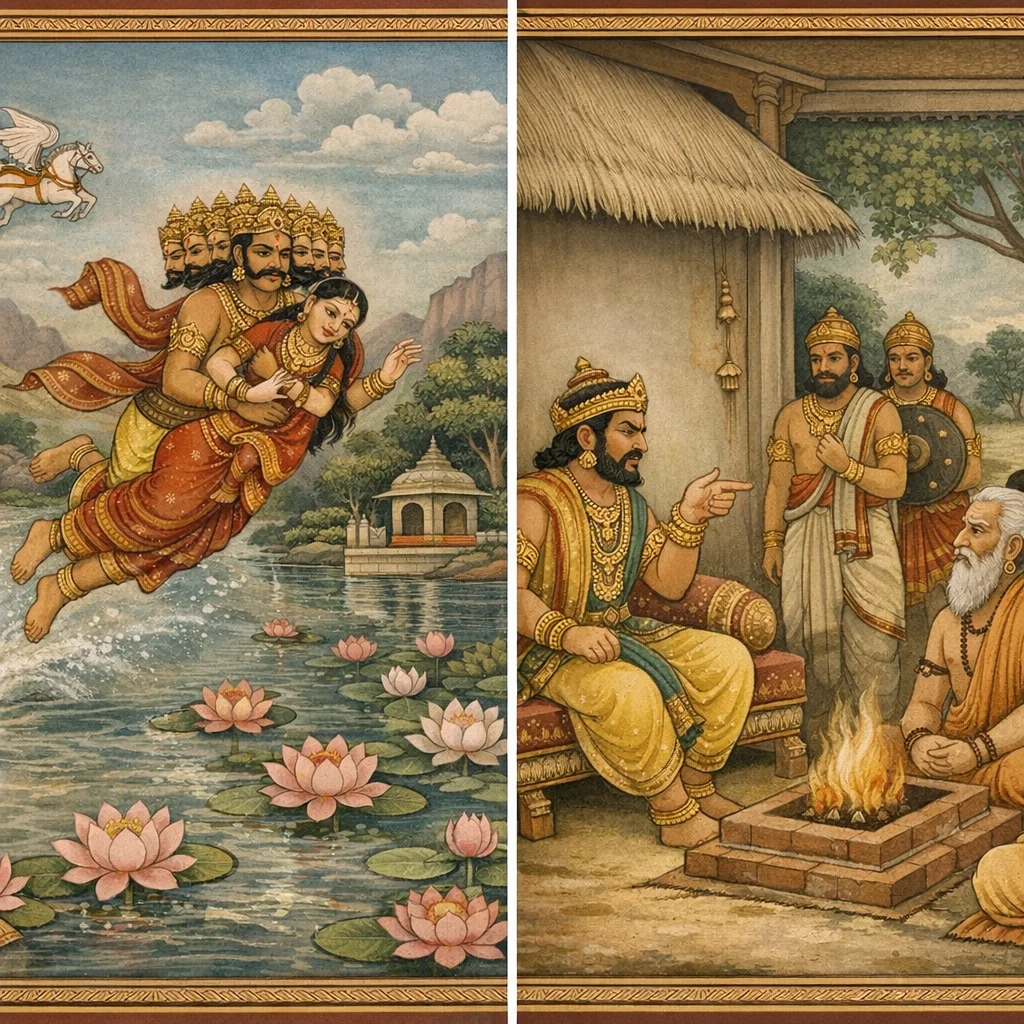
Mārkaṇḍeya recounts a crisis arising at a sacred water-site (tīrtha). Kāmapramodinī, sporting in a tank near a divine presence, is seized by a bird (a śyena) and carried away. Her companions report the abduction to the king and urge an immediate search. The king mobilizes a vast fourfold army, and the city churns with martial preparations. A city-guard then produces the abducted woman’s ornaments and says they were seen near the hermitage of the ascetic Māṇḍavya, amid tapasvins. Blinded by anger and misrecognition, the king takes the ascetic for a disguised thief who assumed bird-form to escape, and—without discerning what is proper and improper (kārya–akārya-viveka)—orders the brahmin-ascetic to be impaled. Citizens and villagers lament and protest that a brahmin, especially one devoted to austerity, must not be executed; at most, exile is fitting even under accusation. The chapter thus highlights rājadharma under strain: the peril of rash punishment, uncertain evidence, and the heightened duty to protect ascetic sanctity within the tīrtha landscape.
Shlokas
Verse 1
श्रीमार्कण्डेय उवाच । कामप्रमोदिनीसख्यो नीयमानां च तेन तु । दृष्ट्वा ताश्चुक्रुशुः सर्वा निःसृत्य जलमध्यतः
Śrī Mārkaṇḍeya said: Seeing Kāmapramodinī being carried away by him, all her friends cried out, emerging from the midst of the water.
Verse 2
गता राजगृहे सर्वाः कथयन्ति सुदुःखिताः । कामप्रमोदिनी राजन्हृता श्येनेन पक्षिणा
All of them went to the royal palace and, in great distress, reported: “O King, Kāmapramodinī has been carried off by a hawk-bird.”
Verse 3
क्रीडन्ती च जलस्थाने तडागे देवसन्निधौ । अन्वेष्या च त्वया राजंस्तस्य मार्गं विजानता
“She was playing at the water-spot, at the pond near the deity’s presence. O King—since you know the paths—she must be searched for by you.”
Verse 4
तासां तद्वचनं श्रुत्वा देवपन्नः सुदुःखितः । हाहेत्युक्त्वा समुत्थाय रुदमानो वरासनात्
Hearing their words, the king—struck by misfortune—became exceedingly sorrowful. Crying “Alas! Alas!”, he rose up weeping from his noble seat.
Verse 5
मन्त्रिभिः सहितस्तस्मिंस्तडागे जलसन्निधौ । न चिह्नं न च पन्थानं दृष्ट्वा दुःखान्मुमोह च
Accompanied by his ministers, he came to that pond by the waters. Seeing neither sign nor pathway, he fainted from grief.
Verse 6
तस्य राज्ञस्तु दुःखेन दुःखितो नागरो जनः । क्षणेनाश्वासितो राजा मन्त्रिभिः सपुरोहितैः
Because of that king’s sorrow, the townspeople too became sorrowful. Soon the king was consoled by his ministers and his priests.
Verse 7
किं कुर्म इत्युवाचेदमस्मिन्काले विधीयताम् । सर्वैस्तत्संविदं कृत्वा वाहिनीं चतुरङ्गिणीम्
He said, “What shall we do? Let what is proper for this time be done.” Then, after taking counsel with all, he prepared a fourfold army.
Verse 8
प्रेषयामि दिशः सर्वा हस्त्यश्वरथसंकुला । वादित्राणि च वाद्यन्ते व्याकुलीभूतसंकुले
“I will dispatch forces to all directions, crowded with elephants, horses, and chariots.” And instruments were sounded amid the agitated throng.
Verse 9
नाराचैस्तोमरैर्भल्लैः खड्गैः परश्वधादिभिः । राजा संनाहबद्धोऽभूद्गनं ग्रसते किल
With arrows, javelins, spears, swords, axes, and the like, the king was fully armed—indeed, as though he would swallow up the enemy host.
Verse 10
न देवो न च गन्धर्वो न दैत्यो न च राक्षसः । किं करिष्यति राजाद्य न जाने रोषनिष्कृतिम्
Neither god, nor gandharva, nor daitya, nor rākṣasa—what can anyone do against the king today? I cannot foresee the outcome of his wrath.
Verse 11
नागरोऽपि जनस्तत्र दृष्ट्वा चकितमानसः । चतुर्दशसहस्राणि दन्तिनां सृणिधारिणाम्
There the townspeople too, seeing it, were struck with astonishment—fourteen thousand elephants bearing goads.
Verse 12
अश्वारोहसहस्राणि ह्यशीतिः शस्त्रपाणिनाम् । रथानां त्रिसहस्राणि विंशतिर्भरतर्षभ
There were thousands of cavalrymen, and eighty warriors bearing weapons in their hands; and there were three thousand and twenty chariots, O bull among the Bharatas.
Verse 13
सङ्ग्रामभेरीनिनदैः खुररेणुर्नभोगता । एतस्मिन्नन्तरे तात रक्षको नगरस्य हि
With the roar of war-drums, the dust raised by hooves rose up into the sky. Meanwhile, dear one, the city’s guard indeed…
Verse 14
गृहीत्वाभरणं तस्यास्त्वङ्गप्रत्यङ्गिकं तथा । कुण्डलाङ्गदकेयूरहारनूपुरझल्लरीः
Having taken her ornaments as well—those for the body and the limbs—earrings, armlets, keyūras, necklaces, anklets, and jingling adornments…
Verse 15
निवेद्याकथयद्राज्ञे मया दृष्टं त्ववेक्षणात् । तापसानामाश्रमे तु माण्डव्यो यत्र तिष्ठति
After making his report, he told the king what I myself had seen upon careful observation: in the hermitage of the ascetics—where Māṇḍavya dwells.
Verse 16
तापसैर्वेष्टितो यत्र ददृशे तत्र सन्निधौ । दण्डवासिवचः श्रुत्वा प्रत्यक्षाङ्गविभूषणम्
There, in his very presence, I saw him surrounded by ascetics. Hearing the words of the staff-bearing guard, I beheld the bodily ornaments as direct evidence.
Verse 17
स क्रोधरक्तनयनो मन्त्रिणो वीक्ष्य नैगमान् । ईदृग्भूतसमाचारो ब्राह्मणो नगरे मम
He, with eyes reddened by anger, looked at the ministers and the townsmen and said: “How can a Brahmin of such conduct exist in my city?”
Verse 18
चौरचर्यां व्रतच्छन्नः परद्रव्यापहरकः । तेन कन्या हृता मेऽद्य तपस्विपापकर्मिणा
Concealing theft beneath the guise of a vow, stealing others’ property—by that ascetic of sinful deeds my daughter has today been carried off.
Verse 19
शाकुन्तं रूपमास्थाय जलस्थो गगनं ययौ । पाखण्डिनो विकर्मस्थान् बिडालव्रतिकाञ्छठान्
Assuming the form of a bird, though in the water, he went up into the sky. Such are the pakhāṇḍin—engaged in forbidden acts—hypocrites of the “cat-vow” and deceivers…
Verse 20
चाटुतस्करदुर्वृत्तान् हन्यान्नस्त्यस्य पातकम् । न द्रष्टव्यो मया पापः स्तेयी कन्यापहारकः
If one were to slay such flattering thieves of wicked conduct, there would be no sin in it. This sinner—thief and abductor of a maiden—should not even be looked upon by me.
Verse 21
शूलमारोप्यतां क्षिप्रं न विचारस्तु तस्य वै । स च वध्यो मया दुष्टो रक्षोरूपी तपोधनः
Let him be impaled on the stake at once—there is no deliberation to be made about him. That wicked one, a ‘treasure of austerity’ only in appearance, is in truth rakṣasa-like; he must be executed by me.
Verse 22
एवं ब्रुवंश्चलन्क्रोधादादिश्य दण्डवासिनम् । कार्याकार्यं न विज्ञाय शूलमारोपयद्द्विजम्
Speaking thus, and trembling with anger, the king commanded the officer of punishment; not discerning what ought and ought not to be done, he had the twice-born (brāhmaṇa) impaled upon a stake.
Verse 23
पौरा जानपदाः सर्वे अश्रुपूर्णमुखास्तदा । हाहेत्युक्त्वा रुदन्त्यन्ये वदन्ति च पृथक्पृथक्
Then all the townspeople and villagers, their faces filled with tears, cried out ‘Alas!’—some wept, while others spoke in different voices, each in their own way.
Verse 24
कुत्सितं च कृतं कर्म राज्ञा चण्डालचारिणा । ब्राह्मणो नैव वध्यो हि विशेषेण तपोवृतः
A hateful deed has been done by the king who behaves like an outcaste; for a brāhmaṇa is not to be slain—especially one devoted to austerity and sacred vows.
Verse 25
यदि रोषसमाचारो निर्वास्यो नगराद्बहिः । न जातु ब्राह्मणं हन्यात्सर्वपापेऽप्यवस्थितम्
If one’s conduct is ruled by anger, let him be banished beyond the city; yet one should never kill a brāhmaṇa, even if he stands entangled in every sin.
Verse 26
राष्ट्रादेनं बहिष्कुर्यात्समग्रधनमक्षतम् । नाश्नाति च गृहे राजन्नाग्निर्नगरवासिनाम् । सर्वेऽप्युद्विग्नमनसो गृहव्याप्तिविवर्जिताः
He should be expelled from the kingdom, with his wealth left intact and unharmed. And, O King, in the homes of the city-dwellers the sacred fire does not ‘eat’ (accept offerings); all are anxious at heart, deprived of the settled fullness of household life.
Verse 170
। अध्याय
Chapter marker: “Adhyāya” (end/heading indicator).