Adhyaya 169
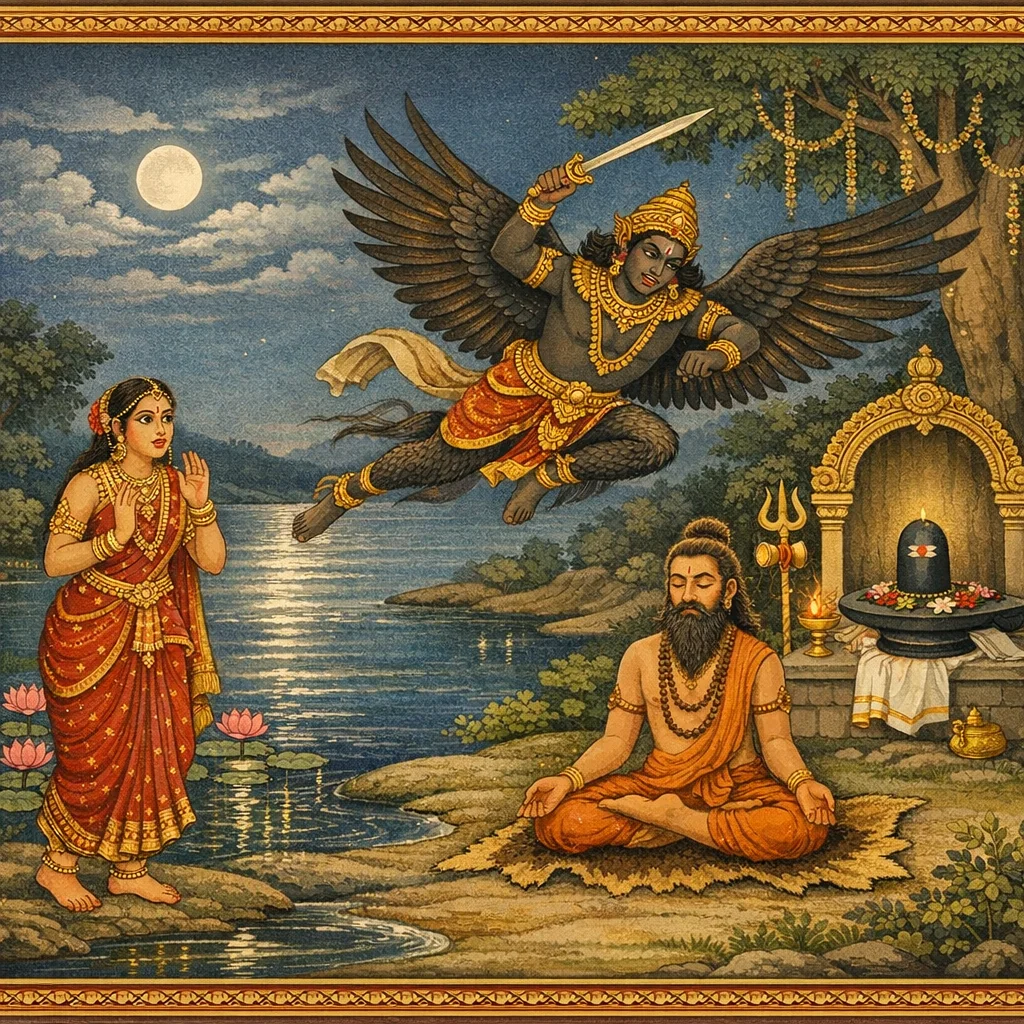
The chapter opens with Mārkaṇḍeya pointing to a tīrtha of supreme merit, praised as pāpa-pranāśana, the destroyer of sins, and connected with the sage Māṇḍavya and with Lord Nārāyaṇa. He recalls an earlier episode of devoted service (śuśrūṣā) to Nārāyaṇa while “on a stake” (śūla-stha), a striking detail that astonishes Yudhiṣṭhira and prompts him to request the full account. Mārkaṇḍeya then begins a retrospective legend from the Tretā-yuga. King Devapanna—righteous, generous, and a protector of his people—though prosperous, grieves for want of offspring. With his queen Dātyāyanī he undertakes twelve years of disciplines: ritual bathing, homa, fasting, and vows, hymning the goddess Cāmuṇḍā. She grants an audience but declares that progeny will come only through worship of the Yajñapuruṣa; the king performs the rite, and a radiant daughter is born, named Kāmapramodinī. As the princess matures, her beauty is described in detail. During a visit to worship the goddess, she and her companions sport in a pond; the rākṣasa Śambara, assuming a bird-form, abducts her and seizes her ornaments. As he departs, some ornaments fall into waters near the Narmadā bank where Māṇḍavya abides in deep ascetic absorption at a Maheśvara-sthāna aligned with Nārāyaṇa’s highest station; the chapter closes by noting Māṇḍavya’s brother/attendant engaged in service and meditation on Janārdana, setting the stage for the tīrtha’s ensuing sacred narrative.
Shlokas
Verse 1
श्रीमार्कण्डेय उवाच । ततो गच्छेत्परं तीर्थं पुण्यं पापप्रणाशनम् । माण्डव्यो यत्र संसिद्ध ऋषिर्नारायणस्तथा
Śrī Mārkaṇḍeya said: Then one should go on to another supreme tīrtha, holy and destructive of sins, where the sage Māṇḍavya attained perfection, and likewise the sage Nārāyaṇa.
Verse 2
नारायणेन शुश्रूषा शूलस्थेन कृता पुरा । तत्र स्नात्वा महाराज मुच्यते पापकञ्चुकात्
In former times, Nārāyaṇa performed devoted service there while remaining upon a stake. Bathing at that place, O great king, one is freed from the garment of sin.
Verse 3
युधिष्ठिर उवाच । आश्चर्यमेतल्लोकेषु यत्त्वया कथितं मुने । न दृष्टं न श्रुतं तात शूलस्थेन तपः कृतम्
Yudhiṣṭhira said: This is a marvel among the worlds, O sage, what you have recounted. Never have I seen or heard, revered sir, of austerity performed by one abiding upon a stake.
Verse 4
एतत्सर्वं कथय मे ऋषिभिः सहितस्य वै । अस्य तीर्थस्य माहात्म्यं माण्डव्यस्य कुतूहलात्
Tell me all of this in full, indeed, as I sit in the company of the ṛṣis—out of curiosity about Māṇḍavya and about the greatness of this sacred tīrtha.
Verse 5
श्रीमार्कण्डेय उवाच । शृणु राजन्यथावृत्तपुरा त्रेतायुगे क्षितौ । लोकपालोपमो राजा देवपन्नो महामतिः
Śrī Mārkaṇḍeya said: Listen, O king, to what occurred long ago on earth in the Tretā age. There was a great-minded ruler, like a guardian of the world, named Devapanna.
Verse 6
धर्मज्ञश्च कृतज्ञश्च यज्वा दानरतः सदा । प्रजा ररक्ष यत्नेन पिता पुत्रानिवौरसान्
He was a knower of dharma and grateful, a performer of yajñas, ever devoted to charity. With earnest effort he protected his subjects like a father his own sons.
Verse 7
दात्यायनी प्रिया भार्या तस्य राज्ञो वशानुगा । हारनूपुरघोषेण झङ्काररवनादिता
His beloved wife was Dātyāyanī, obedient to that king’s guidance; she resounded with the clear jingling of necklaces and anklets.
Verse 8
परस्परं तयोः प्रीतिर्वर्धतेऽनुदिनं नृप । वंशस्तम्बे स्थितो राजा संशास्ति पृथिवीमिमाम्
O king, their mutual affection increased day by day. Established as the pillar of his dynasty, the ruler governed this earth well.
Verse 9
हस्त्यश्वरथसम्पूर्णां धनवाहनसंयुताम् । अलंकृतो गुणैः सर्वैरनपत्यो महीपतिः
That lord of the earth possessed an army complete with elephants, horses, and chariots, and was furnished with wealth and conveyances. Adorned with every virtue, the king was yet without offspring.
Verse 10
दुःखेन महताविष्टः संतप्तः सन्ततिं विना । स्नानहोमरतो नित्यं द्वादशाब्दानि भारत
Overwhelmed by profound sorrow and scorched by grief for want of offspring, he remained ever engaged in ritual bathing and fire-offerings—steadfastly—for twelve years, O Bhārata.
Verse 11
व्रतोपवासनियमैः पत्नीभिः सह तस्थिवान् । आराधयद्भगवतीं चामुण्डां मुण्डमर्दिनीम्
Together with his queens, he remained firm in vows, fasts, and disciplines, worshipping the Blessed Goddess Cāmuṇḍā—the slayer of Muṇḍa.
Verse 12
स्तोत्रैरनेकैर्भक्त्या च पूजाविधिसमाधिना । जय वाराहि चामुण्डे जय देवि त्रिलोचने
With many hymns, with devotion, and with concentrated attention to the rites of worship, he praised her: “Victory to you, Vārāhī! Victory to you, Cāmuṇḍā! Victory to you, O Goddess of three eyes!”
Verse 13
ब्राह्मि रौद्रि च कौमारि कात्यायनि नमोऽस्तु ते । प्रचण्डे भैरवे रौद्रि योगिन्याकाशगामिनि
Salutations to You, O Brāhmī; O Raudrī; O Kaumārī; O Kātyāyanī. O Fierce One, O Bhairavī, O Raudrī—O Yoginī who moves through the sky!
Verse 14
नास्ति किंचित्त्वया हीनं त्रैलोक्ये सचराचरे । राज्ञा स्तुता च संतुष्टा देवी वचनमब्रवीत्
Nothing in the three worlds—moving or unmoving—lies beyond You. Thus praised by the king, the Goddess, pleased, spoke these words.
Verse 15
वरयस्व यथाकामं यस्ते मनसि वर्तते । आराधिता त्वया भक्त्या तुष्टा दास्यामि ते वरम्
Choose whatever you desire—whatever abides in your mind. Propitiated by your devotion, I am pleased; I shall grant you a boon.
Verse 16
देवपन्न उवाच । यदि तुष्टासि देवेशि वरार्हो यदि वाप्यहम् । पुत्रसन्तानरहितं संतप्तं मां समुद्धर
Devapanna said: “If You are pleased, O Lady of the gods, and if I am fit to receive a boon, then lift me up from this torment—me who am bereft of sons and progeny.”
Verse 17
सन्तानं नय मे वृद्धिं गोत्ररक्षां कुरुष्व मे । अपुत्रिणां गृहाणीह श्मशानसदृशानि हि
Cause my lineage to grow; protect my family line. For here, the homes of the sonless are indeed like cremation grounds.
Verse 18
पितरस्तस्य नाश्नन्ति देवता ऋषिभिः सह । क्रियमाणेऽप्यहरहः श्राद्धे मत्पितरः सदा
His ancestors do not partake, nor do the deities together with the ṛṣis, even though śrāddha is performed day after day; my own forefathers ever remain unsatisfied.
Verse 19
दर्शयन्ति सदात्मानं स्वप्ने क्षुत्पीडितं मम । इति राज्ञो वचः श्रुत्वा देवी ध्यानमुपागता
They continually appear to me in dreams—my own departed ones—tormented by hunger. Hearing these words of the king, the Goddess entered into contemplation.
Verse 20
दिव्येन चक्षुषा दृष्टं त्रैलोक्यं सचराचरम् । प्रसन्नवदना देवी राजानमिदमब्रवीत्
With her divine sight she beheld the three worlds, with all that moves and all that is still. Then the Goddess, her face serene, spoke these words to the king.
Verse 21
सन्तानं नास्ति ते राजंस्त्रैलोक्ये सचराचरे । यजस्व यज्ञपुरुषमपत्यं नास्ति तेऽन्यथा
O King, throughout the three worlds—among all moving and unmoving beings—there is no progeny destined for you. Therefore, worship the Yajña-Puruṣa, the Lord embodied in sacrifice; otherwise, you will have no child.
Verse 22
मया दृष्टं महीपाल त्रैलोक्यं दिव्यचक्षुषा । एवमुक्त्वा गता देवी राजा स्वगृहमागमत्
O protector of the earth, with divine sight I have seen the three worlds. Having spoken thus, the Goddess departed, and the king returned to his own home.
Verse 23
इयाज यज्ञपुरुषं संजाता कन्यका ततः । तेजस्विनी रूपवती सर्वलोकमनोहरा
He worshipped the Yajña-Puruṣa, and then a daughter was born. She was radiant, beautiful, and captivating to the hearts of all worlds.
Verse 24
देवगन्धर्वलोकेऽपि तादृशी नास्ति कामिनी । तस्या नाम कृतं पित्रा हर्षात्कामप्रमोदिनी
Even among the worlds of the gods and Gandharvas there was no woman like her. Out of joy, her father gave her the name ‘Kāma-pramodinī’—“she who delights desire.”
Verse 25
ततः कालेन ववृधे रूपेणास्तम्भयज्जगत् । हंसलीलागतिः सुभ्रूः स्तनभारावनामिता
In time she grew up, and by her beauty she seemed to astonish the world. Her gait was graceful like a swan’s play; her eyebrows were lovely; and she bent slightly beneath the weight of her breasts.
Verse 26
रक्तमाल्याम्बरधरा कुण्डलाभरणोज्ज्वला । दिव्यानुलेपनवती सखीभिः सा सुरक्षिता
She wore red garlands and garments, shone with earrings and ornaments, and was anointed with divine perfumes. She was carefully guarded by her companions.
Verse 27
कुचमध्यगतो हारो विद्युन्मालेव राजते । भ्रमराञ्चितकेशी सा बिम्बोष्ठी चारुहासिनी
A necklace resting between her breasts gleamed like a garland of lightning. Her hair was dark like bees; her lips were like the bimba fruit; and her smile was charming.
Verse 28
कर्णान्तप्राप्तनेत्राभ्यां पिबन्तीवाथ कामिनः । चन्द्रताम्बूलसौरभ्यैराकर्षन्तीव मन्मथम्
With eyes that seemed to reach her ears, she appeared to drink in the lovers with her glance; and with the moon-like fragrance of her betel, she seemed to draw even Manmatha toward her.
Verse 29
कम्बुग्रीवा चारुमध्या ताम्रपादाङ्गुलीनखा । निम्ननाभिः सुजघना रम्भोरू सुदती शुभा
Her neck was like a conch and her waist slender and fair; her feet, toes, and nails were tinged copper-red. With a deep navel, shapely hips, thighs like Rambhā’s, and lovely teeth, she was auspicious and beautiful.
Verse 30
मातापितृसुहृद्वर्गे क्रीडानन्दविवर्धिनी । एकस्मिन्दिवसे बाला सखीवृन्दसमन्विता
Beloved of her mother, her father, and the circle of well-wishers, ever increasing the joy of playful delight, the young maiden—accompanied by a company of sakhīs—set out one day.
Verse 31
चन्दनागरुतांबूलधूपसौमनसाञ्चिता । गृहीत्वा पुष्पधूपादि गता देवीप्रपूजने
Adorned with sandal, agaru, betel, incense, and fragrant blossoms, she took flowers, incense, and other offerings and went to perform worship of the Goddess.
Verse 32
तडागतट उत्सृज्य भूषणान्यङ्गवेष्टकान् । चक्रुः सरसिताः क्रीडां जलमध्यगतास्तदा
Leaving the bank of the pond and setting aside their ornaments and body-wrappings, they entered the lake; and, having gone into the midst of the water, they played there.
Verse 33
क्रीडन्तीं तामवेक्ष्याथ ससखीं विमले जले । राक्षसः शम्बरो नाम श्येनरूपेण चागमत्
Seeing her playing with her companions in the pure, clear water, a rākṣasa named Śambara came there, assuming the form of a hawk.
Verse 34
गृहीता जलमध्यस्था तेन सा काममोदिनी । खमुत्पपात दुष्टात्मा गृहीत्वाभरणान्यपि
While she was in the midst of the water, he seized Kāmapramodinī; and the wicked-souled one leapt into the sky, carrying off her ornaments as well.
Verse 35
वायुमार्गं गतः सोऽथ कामिन्या सह भारत । अपतन्कुण्डलादीनि यत्र तोये महामुनिः
Then he travelled by the path of the wind with the maiden, O Bhārata; and there, in the waters where the great sage was present, earrings and other ornaments fell down.
Verse 36
माण्डव्यो नर्मदातीरे काष्ठवत्संजितेन्द्रियः । लीनो माहेश्वरे स्थाने नारायणपदे परे
Māṇḍavya, on the bank of the Narmadā, with his senses restrained like a piece of wood, was absorbed in a holy place of Maheśvara, established in the supreme station of Nārāyaṇa.
Verse 37
तस्य चानुचरो भ्राता भ्रातुः शुश्रूषणे रतः । तपोजपकृशीभूतो दध्यौ देवं जनार्दनम्
And his brother, serving him as an attendant—devoted to his brother’s care—grown lean through austerity and japa, meditated upon the Lord Janārdana.
Verse 169
। अध्याय
“Chapter.” (A scribal/colophon marker indicating the chapter division.)