Adhyaya 168
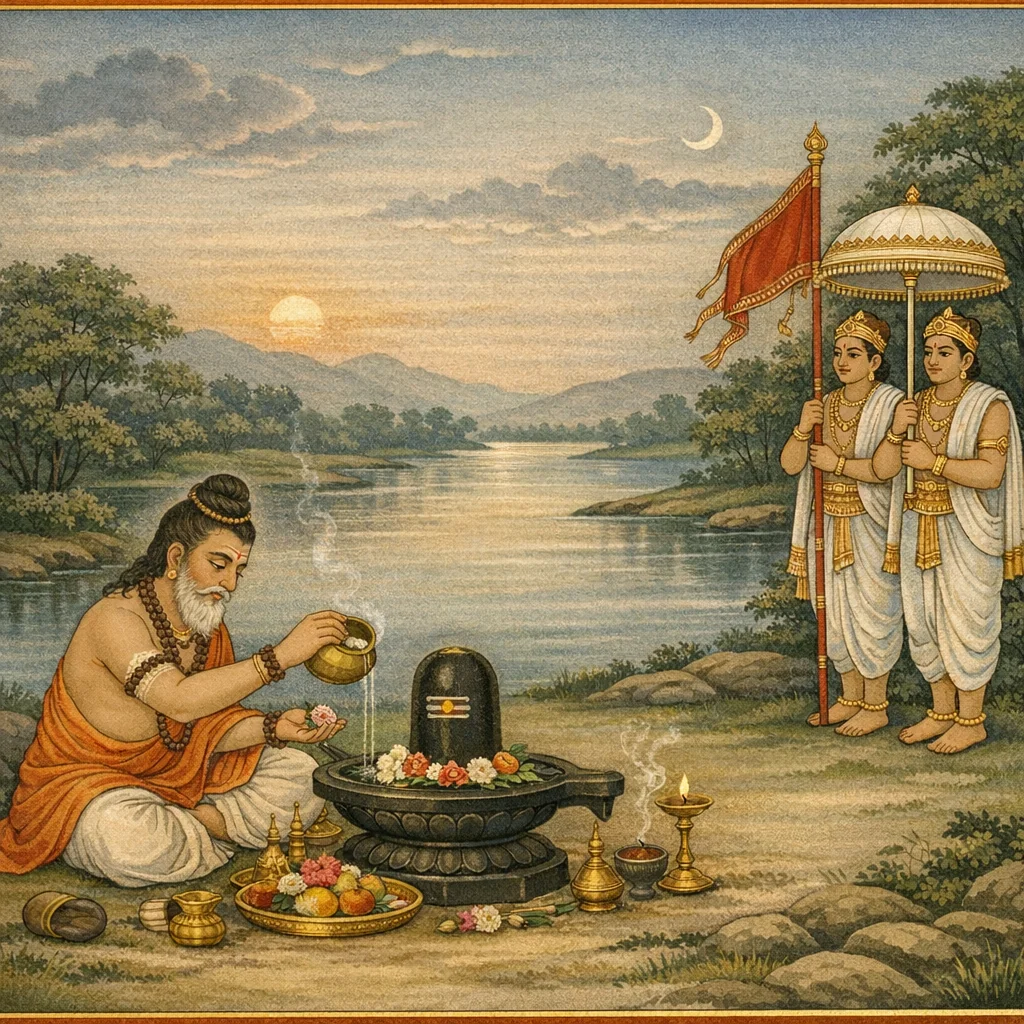
The chapter unfolds as a dialogue in which Mārkaṇḍeya points out a supreme tīrtha on the southern bank of the Narmadā—Aṅkūreśvara, famed in the three worlds. When Yudhiṣṭhira asks about the rākṣasa connected with the site, a lineage is narrated: from Pulastya and Viśravas to Vaiśravaṇa (Kubera), then to Kaikasī’s sons—Rāvaṇa, Kumbhakarṇa, Vibhīṣaṇa—on to Kumbhakarṇa’s descendants Kumbha and Vikumbha, and finally to Aṅkūra, son of Kumbha. Aṅkūra, aware of his birth and observing Vibhīṣaṇa’s dharmic bent, undertakes severe austerities in all directions and at last on the Narmadā. Śiva appears and offers a boon; Aṅkūra asks (1) the difficult gift of immortality and (2) Śiva’s abiding presence at the tīrtha under Aṅkūra’s name. Śiva grants conditional nearness, to last so long as Aṅkūra maintains conduct aligned with Vibhīṣaṇa’s dharmic stance. After Śiva departs, Aṅkūra ritually establishes the Aṅkūreśvara liṅga and performs grand worship with offerings, banners, umbrellas, and auspicious acclamations. The chapter then prescribes pilgrimage discipline: bathing, sandhyā, japa, tarpaṇa to ancestors/deities/humans, fasting on Aṣṭamī or Caturdaśī, and regulated silence. It declares graded fruits—worship equal to an Aśvamedha, inexhaustible merit from properly offered dāna, and multiplied results for homa, japa, upavāsa, and snāna—extending salvation even to non-human beings who die at the tīrtha. It closes with a phalaśruti promising access to Śiva’s realm for those who hear with faith.
Shlokas
Verse 1
श्रीमार्कण्डेय उवाच । नर्मदादक्षिणे रोधस्यङ्कूरेश्वरमुत्तमम् । तीर्थं सर्वगुणोपेतं त्रिषु लोकेषु विश्रुतम्
Śrī Mārkaṇḍeya said: On the southern bank of the Narmadā is the excellent Aṅkūreśvara—a tīrtha endowed with every virtue, renowned throughout the three worlds.
Verse 2
यत्र सिद्धं महारक्ष आराध्य तु महेश्वरम् । शङ्करं जगतः प्राणं स्मृतिमात्रावहारिणम्
There, a mighty rākṣasa attained success by worshipping Maheśvara—Śaṅkara, the very breath of the world, who bestows blessing by mere remembrance.
Verse 3
युधिष्ठिर उवाच । किं तद्रक्षो द्विजश्रेष्ठ किंनाम कस्य वान्वये । एतद्विस्तरतः सर्वं कथयस्व ममानघ
Yudhiṣṭhira said: O best of brāhmaṇas, who was that rākṣasa—what was his name, and of what lineage? Tell me all this in detail, O sinless one.
Verse 4
अज्ञानतिमिरान्धा ये पुमांसः पापकारिणः । युष्मद्विधैर्दीपभूतैः पश्यन्ति सचराचरम्
Men blinded by the darkness of ignorance and given to sin can behold the whole world—moving and unmoving—only because sages like you stand as lamps of illumination.
Verse 5
धर्मपुत्रवचः श्रुत्वा मार्कण्डेयो मुनीश्वरः । स्मितं कृत्वा बभाषे तां कथां पापप्रणाशनीम्
Having heard Dharmaputra’s words, the sage-lord Mārkaṇḍeya smiled and then spoke that sacred narrative which destroys sin.
Verse 6
मार्कण्डेय उवाच । मानसो ब्रह्मणः पुत्रः पुलस्त्यो नाम पार्थिव । वेदशास्त्रप्रवक्ता च साक्षाद्वेधा इवापरः
Mārkaṇḍeya said: O king, there was one named Pulastya—the mind-born son of Brahmā—an expounder of the Vedas and the śāstras, as though a second Creator himself.
Verse 7
तृणबिन्दुसुता तस्य भार्यासीत्परमेष्ठिनः । तस्य धर्मप्रसङ्गेन पुत्रो जातो महामनाः
His wife, O king, was the daughter of Tṛṇabindu. Through their righteous union in dharma, a great-souled son was born.
Verse 8
यस्माद्वेदेतिहासैश्च सषडङ्गपदक्रमाः । विश्रान्ता ब्रह्मणा दत्ता नाम विश्रवसेति च
Because the Vedas and the Itihāsas—together with the six auxiliaries and the ordered recitation of words—found repose in him and were bestowed upon him by Brahmā, he received the name “Viśravas”.
Verse 9
कस्मिंश्चिदथ काले च भरद्वाजो महामुनिः । स्वसुतां प्रददौ राजन्मुदा विश्रवसे नृप
Then, at a certain time, the great sage Bharadvāja joyfully gave his own daughter in marriage to Viśravas, O king.
Verse 10
स तया रमते सार्धं पौलोम्या मघवा इव । मुदा परमया राजन्ब्राह्मणो वेदवित्तमः
That brāhmaṇa, the best knower of the Veda, delighted with her in supreme joy, O king—like Maghavā (Indra) with Paulomī.
Verse 11
केनचित्त्वथ कालेन पुत्रः पुत्रगुणैर्युतः । जज्ञे विश्रवसो राजन्नाम्ना वैश्रवणः श्रुतः
After some time, O king, a son endowed with worthy qualities was born to Viśravas, renowned by the name Vaiśravaṇa.
Verse 12
सोऽपि मौनव्रतं कृत्वा बालभावाद्युधिष्ठिर । सर्वभूताभयं दत्त्वा चचार परमं व्रतम्
He too, O Yudhiṣṭhira, from childhood undertook the vow of silence; granting fearlessness to all beings, he observed that supreme vow.
Verse 13
तस्य तुष्टो महादेवो ब्रह्मा ब्रह्मर्षिभिः सह । सखित्वं चेश्वरो दत्त्वा धनदत्वं जगाम ह
Pleased with him, Mahādeva—and Brahmā together with the brahmarṣis—granted him friendship with the Lord; and he attained the station of ‘Dhanada’, giver and lord of wealth.
Verse 14
यमेन्द्रवरुणानां च चतुर्थस्त्वं भविष्यसि । ब्रह्माप्युक्त्वा जगामाशु लोकपालत्वमीप्सितम्
“Among Yama, Indra, and Varuṇa, you shall become the fourth.” Having spoken thus, Brahmā quickly departed, intent on the desired station of a Lokapāla, guardian of the world.
Verse 15
ततस्त्वनन्तरे काले कैकसी नाम राक्षसी । पातालं भूतलं त्यक्त्वा विश्रवं चकमे पतिम्
Then, after some time, a rākṣasī named Kaikasī—leaving Pātāla and the earthly realm—chose Viśravas as her husband.
Verse 16
पुत्रोऽथ रावणो जातस्तस्या भरतसत्तम । कुम्भकर्णो महारक्षो धर्मात्मा च विभीषणः
From her was born a son—Rāvaṇa, O best of the Bharatas. Also were born Kumbhakarṇa, the mighty rākṣasa, and Vibhīṣaṇa, righteous in nature.
Verse 17
कुम्भश्चैव विकुम्भश्च कुम्भकर्णसुतावुभौ । महाबलौ महावीर्यौ महान्तौ पुरुषोत्तम
Kumbha and Vikumbha—both sons of Kumbhakarṇa—were of great strength and great prowess, O Puruṣottama.
Verse 18
अङ्कूरो राक्षसश्रेष्ठः कुम्भस्य तनयो महान् । विभीषणं च गुणवद्दृष्ट्वैवं राक्षसोत्तमः
Aṅkūra, an excellent Rākṣasa, the illustrious son of Kumbha—seeing Vibhīṣaṇa endowed with virtues—became reflective, O foremost among Rākṣasas.
Verse 19
ततः स यौवनं प्राप्य ज्ञात्वा रक्षः पितामहम् । परं निर्वेदमापन्नश्चचार सुमहत्तपः
Then, upon reaching youth and learning of his Rākṣasa forefathers, he fell into deep dispassion and undertook exceedingly great austerities.
Verse 20
दक्षिणं पश्चिमं गत्वा सागरं पूर्वमुत्तरम् । नर्मदायां प्रसङ्गेन ह्यङ्कूरो राक्षसेश्वरः
Having gone to the south and the west, to the ocean, and likewise to the east and the north, Aṅkūra—the lord of Rākṣasas—came, by providential occasion, to the Narmadā (Revā).
Verse 21
तपश्चचार सुमहद्दिव्यं वर्षशतं किल । ततस्तुष्टो महादेवः साक्षात्परपुरंजयः
He performed exceedingly great, divine austerities for a hundred celestial years. Then Mahādeva—He who directly conquers the cities of foes—became pleased.
Verse 22
वरेण छन्दयामास राक्षसं वृषकेतनः । वरं वृणीष्व भद्रं ते तव दास्यामि सुव्रत
Vṛṣaketu (Śiva) sought to gladden the Rākṣasa with a boon: “Choose a boon—auspiciousness be yours; I shall grant it to you, O keeper of noble vows.”
Verse 23
प्रोवाच राक्षसो वाक्यं देवदेवं महेश्वरम् । वरदं सोऽग्रतो दृष्ट्वा प्रणम्य च पुनःपुनः
Then the Rākṣasa spoke to Maheśvara, the God of gods. Seeing the boon-giver before him, he bowed again and again and addressed Him.
Verse 24
यदि तुष्टो महादेव वरदोऽसि सुरेश्वर । दुर्लभं सर्वभूतानाममरत्वं प्रयच्छ मे
“If You are pleased, O Mahādeva—O Lord of the gods, bestower of boons—grant me immortality, exceedingly rare for all beings.”
Verse 25
मम नाम्ना स्थितोऽनेन वरेण त्रिपुरान्तक । सदा संनिहितोऽप्यत्र तीर्थे भवितुमर्हसि
“O Tripurāntaka, by this boon established in my name, be pleased to remain ever present here at this sacred tīrtha.”
Verse 26
ईश्वर उवाच । यावद्विभीषणमतं यावद्धर्मनिषेवणम् । करिष्यसि दृढात्मा त्वं तावदेतद्भविष्यति
Īśvara said: “So long as you, steadfast in spirit, uphold Vibhīṣaṇa’s resolve—so long as you practice and serve Dharma—so long shall this be fulfilled.”
Verse 27
एवमुक्त्वा ययौ देवः सर्वदैवतपूजितः । विमानेनार्कवर्णेन कैलासं धरणीधरम्
Thus having spoken, the God—worshipped by all the deities—departed in a sun-hued celestial vimāna to Kailāsa, the mountain that upholds the earth.
Verse 28
गते चादर्शनं देवे स्नात्वाचम्य विधानतः । स्थापयामास राजेन्द्र ह्यङ्कूरेश्वरमुत्तमम्
When the Lord had departed and was no longer visible, he bathed and performed ācamanā according to rule; then, O king, he established and consecrated the excellent Aṅkūreśvara.
Verse 29
गन्धपुष्पैस्तथा धूपैर्वस्त्रालङ्कारभूषणैः । पताकैश्चामरैश्छत्रैर्जयशब्दादिमंगलैः
With perfumes and flowers, with incense, with garments and ornaments; with banners, yak-tail fans, and parasols, and with auspicious rites beginning with cries of victory—(he worshipped).
Verse 30
पूजयित्वा सुरेशानं स्तोत्रैर्हृद्यैः सुपुष्कलैः । जगाम भवनं रक्षो यत्र राजा विभीषणः
Having worshipped Sureśāna with delightful and abundant hymns, the Rākṣasa went to the residence where King Vibhīṣaṇa was.
Verse 31
पूजितः स यथान्यायं दानसन्मानगौरवैः । सौदर्ये स्थापितो भावे सोऽवात्सीत्परयामुदा
He was duly honored with gifts, respect, and reverent courtesies; established in a spirit of cordial fraternity, he dwelt there with great joy.
Verse 32
तत्र तीर्थे तु यः स्नात्वा पूजयेत्परमेश्वरम् । अङ्कूरेश्वरनामानं सोऽश्वमेधफलं लभेत्
Whoever bathes at that tīrtha and then worships Parameśvara, known as Aṅkūreśvara, attains the fruit of an Aśvamedha sacrifice.
Verse 33
माण्डव्यखातमारभ्य सङ्गमं वापि यच्छुभम् । रेवाया आमलक्याश्च देवक्षेत्रं महेश्वरम्
Beginning from Māṇḍavya’s sacred pool and extending to the auspicious confluence of the Revā and the Āmalakī, this entire region is Maheśvara’s divine field (devakṣetra).
Verse 34
माण्डव्यखातात्पश्चिमतस्तीर्थं तदङ्कूरेश्वरम् । तत्र तीर्थे नरः स्नात्वा शुचिः प्रयतमानसः
To the west of Māṇḍavya’s sacred trench lies the holy ford called Aṅkūreśvara. Bathing there, a person—purified and with a disciplined mind—becomes fit for the rite that follows.
Verse 35
सन्ध्यामाचम्य यत्नेन जपं कृत्वाथ भारत । तर्पयित्वा पित्ःन्देवान्मनुष्यान् भरतर्षभ
O Bhārata, after performing the twilight rite (sandhyā) and carefully sipping water for purification (ācamana), and then completing japa, one should offer tarpana—satisfaction—to the Pitṛs, the Devas, and to human beings, O bull among the Bharatas.
Verse 36
सचैलः क्लिन्नवसनो मौनमास्थाय संयतः । अष्टम्यां वा चतुर्दश्यामुपोष्य विधिवन्नरः
Clad in garments and keeping the clothes wet, observing silence and self-restraint, a person should fast according to rule—either on the eighth lunar day or on the fourteenth.
Verse 37
पूजां यः कुरुते राजंस्तस्य पुण्यफलं शृणु । साग्रं तु योजनशतं तीर्थान्यायतनानि च
O King, hear the sacred fruit of one who performs worship: within a full hundred yojanas and more, the tīrthas and holy shrines are as though truly visited and beheld.
Verse 38
भवन्ति तानि दृष्टानि ततः पापैः प्रमुच्यते । तत्र तीर्थे तु यद्दानं देवमुद्दिश्य दीयते
Those (tīrthas and shrines) are deemed to have been seen, and thereby one is freed from sins. Moreover, whatever charity is given at that tīrtha, dedicated to the deity,
Verse 39
स्नात्वा तु विधिवत्पात्रे तदक्षयमुदाहृतम् । होमाद्दशगुणं प्रोक्तं फलं जाप्ये ततोऽधिकम्
After bathing, whatever is given according to rule to a worthy recipient is declared inexhaustible. Its fruit is said to be tenfold compared to a homa, and the fruit of japa is greater still.
Verse 40
त्रिगुणं चोपवासेन स्नानेन च चतुर्गुणम् । संन्यासं कुरुते यस्तु प्राणत्यागं करोति वा
By fasting, the fruit becomes threefold; by bathing, it becomes fourfold. And whoever there undertakes renunciation, or even relinquishes life (there),
Verse 41
अनिवर्तिका गतिस्तस्य रुद्रलोकादसंशयम् । कृमिकीटपतङ्गानां तत्र तीर्थे युधिष्ठिर । अङ्कूरेश्वरनामाख्ये मृतानां सुगतिर्भवेत्
His course becomes irreversible—toward Rudra’s world, without doubt. O Yudhiṣṭhira, even worms, insects, and birds that die at that tīrtha called Aṅkūreśvara attain a blessed destiny.
Verse 42
एतत्ते कथितं राजन्नङ्कूरेश्वरसम्भवम् । तीर्थं सर्वगुणोपेतं परमं पापनाशनम्
O King, this has been told to you—the origin and greatness connected with Aṅkūreśvara: a tīrtha endowed with every excellence, supremely destructive of sin.
Verse 43
येऽपि शृण्वन्ति भक्त्येदं कीर्त्यमानं महाफलम् । लभन्ते नात्र सन्देहः शिवस्य भुवनं हि ते
Even those who listen to this with devotion, as it is being proclaimed as greatly fruitful, attain—without any doubt—the world of Śiva.
Verse 168
। अध्याय
Chapter (heading).