Adhyaya 166
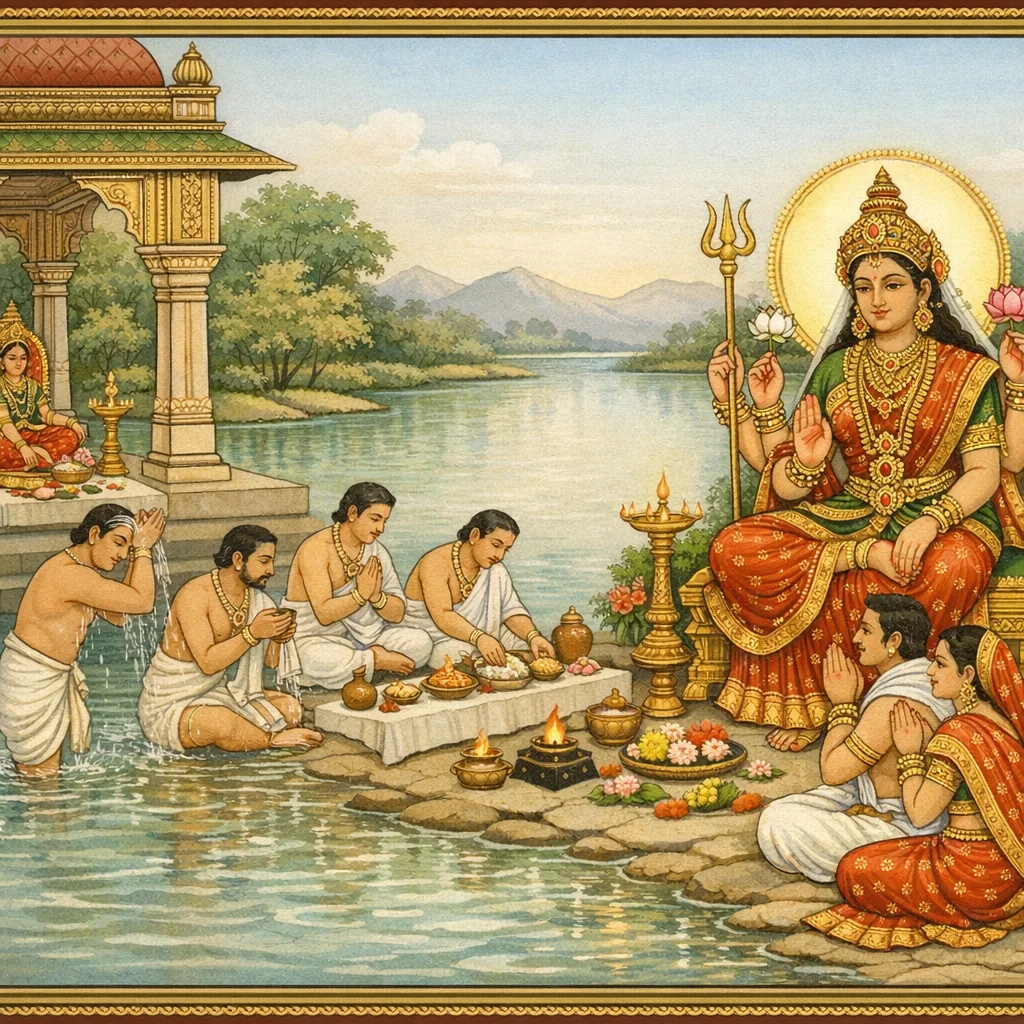
Mārkaṇḍeya describes a sacred tīrtha where the Goddess is revered as Siddheśvarī and also as Vaiṣṇavī, praised as the destroyer of moral impurity and the remover of sins (pāpa-nāśinī). Here, auspicious darśana—beholding the Devī—and proper ritual practice are declared especially meritorious. The chapter sets out a practical ritual order: bathe at the tīrtha, perform worship with offerings including rites for the ancestors and the deities (pitṛ-devatāḥ), and then approach the Devī with devotion. It proclaims the fruits: the devoted beholder is freed from sins; women who have lost children or are barren regain progeny; and men and women who bathe at the saṅgama (confluence) receive a son and wealth. The Goddess’s protective power is emphasized: she safeguards lineage and gotra (gotra-rakṣā) and continually protects children and the community when duly worshiped. Observances are prescribed for Aṣṭamī and Caturdaśī, and a distinct regimen for Navamī—bathing, fasting/discipline (upavāsa implied), and worship with intention purified by faith (śraddhā-pūta). The conclusion promises attainment of a supreme realm, difficult even for the gods, presenting the tīrtha as both ritual-ethical and liberating in scope.
Shlokas
Verse 1
मार्कण्डेय उवाच । ततः सिद्धेश्वरी देवी वैष्णवी पापनाशिनी । आनन्दं परमं प्राप्ता दृष्ट्वा स्थानं सुशोभनम्
Mārkaṇḍeya said: Then the Goddess Siddheśvarī—Vaiṣṇavī, destroyer of sins—beheld that most splendid holy place and attained supreme joy.
Verse 2
तत्र तीर्थे नरः स्नात्वा पूजयेत्पितृदेवताः । देवीं पश्यति यो भक्त्या मुच्यते सर्वपातकैः
At that tīrtha, after bathing, a man should worship the Pitṛ-deities, the ancestral gods. Whoever beholds the Goddess there with devotion is freed from all sins and falls.
Verse 3
मृतवत्सा तु या नारी वन्ध्या स्त्रीजननी तथा । पुत्रं सा लभते नारी शीलवन्तं गुणान्वितम्
A woman whose child has died, a barren woman, and likewise one who gives birth only to daughters—she attains a son, virtuous in conduct and endowed with good qualities.
Verse 4
तत्र तीर्थे तु यः स्नात्वा पश्येद्देवीं सुभक्तितः । अष्टम्यां वा चतुर्दश्यां सर्वकालेऽथवा नृप
O King, whoever bathes at that tīrtha and beholds the Goddess with true devotion—whether on the eighth lunar day, or on the fourteenth, or indeed at any time—(receives the praised benefit).
Verse 5
सङ्गमे तु ततः स्नाता नारी वा पुरुषोऽपि वा । पुत्रं धनं तथा देवी ददाति परितोषिता
At the sacred confluence, after bathing, whether a woman or a man, the Goddess—being well pleased—bestows offspring and wealth.
Verse 6
गोत्ररक्षां प्रकुरुते दृष्टा देवी सुपूजिता । प्रजां च पाति सततं पूज्यमाना न संशयः
When the Goddess is seen and duly worshipped, she grants protection to one’s lineage; and, being worshipped, she continually safeguards one’s progeny—of this there is no doubt.
Verse 7
नवम्यां च महाराज स्नात्वा देवीमुपोषितः । पूजयेत्परया भक्त्या श्रद्धापूतेन चेतसा
And on the ninth lunar day, O great king, having bathed and observed a fast, one should worship the Goddess with supreme devotion and with a mind purified by faith.
Verse 8
स गच्छेत्परमं लोकं यः सुरैरपि दुर्लभः
Such a person attains the supreme world—one that is difficult to obtain even for the gods.
Verse 166
। अध्याय
“Chapter”—a scribal/colophon marker indicating the chapter division.