Adhyaya 163
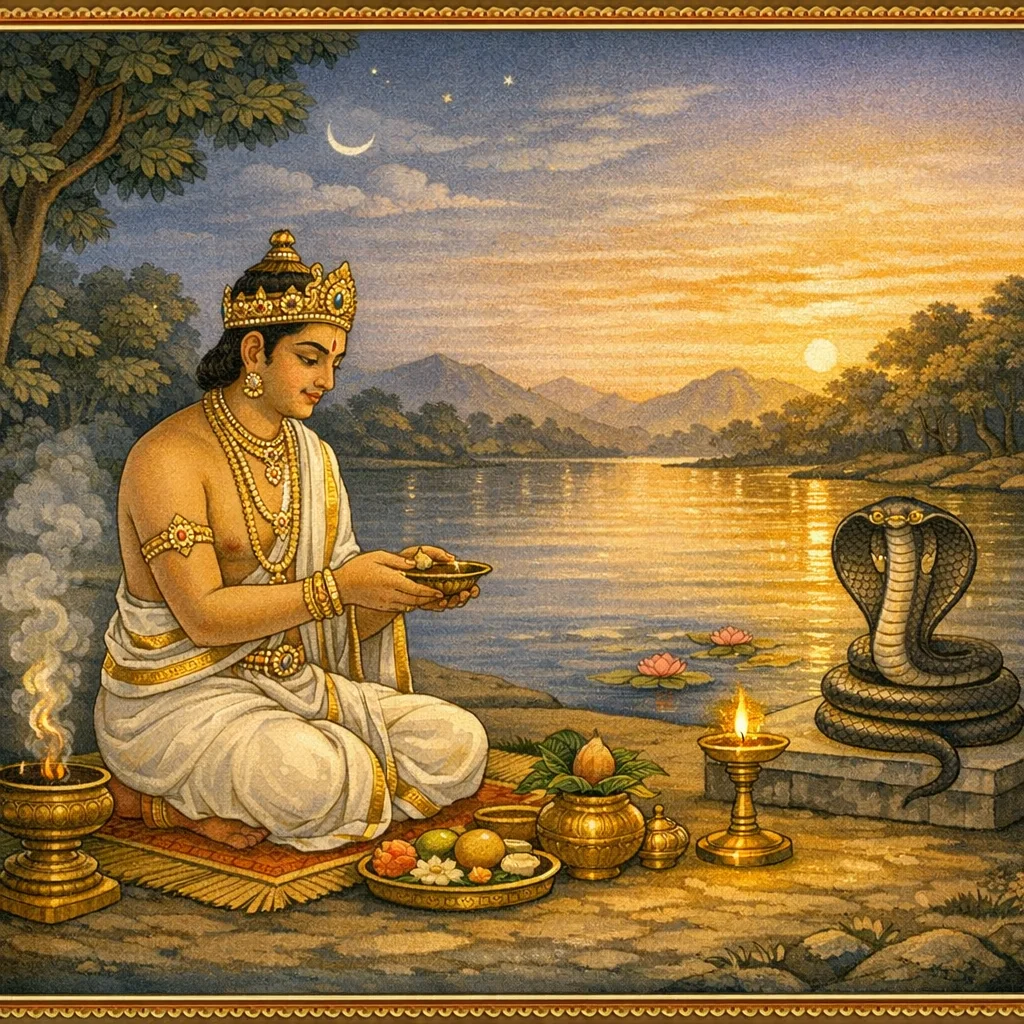
Mārkaṇḍeya instructs a royal listener to go to the eminent Nāga Tīrtha and undertake a precisely timed observance in the bright fortnight of Āśvina, on the fifth lunar day (śukla-pañcamī). The chapter stresses purity, restraint, and disciplined conduct as the foundation. It lays out the ritual sequence: keep a night vigil (jāgaraṇa) with offerings of fragrance, incense, and fitting gifts; then, at dawn, bathe at the tīrtha in a purified state. Thereafter one should perform śrāddha according to rule (yathā-vidhi), fulfilling one’s duty to the ancestors. The discourse ends with the promised fruit: such practice is said to remove all sins, and it further declares—explicitly as Śiva’s word—that whoever relinquishes life at that tīrtha attains an irreversible destination (anivartikā gati). Thus calendrical discipline, devotional rite, and ancestral obligation are joined to the saving sacred geography of the Revā region.
Shlokas
Verse 1
श्रीमार्कण्डेय उवाच । ततो गच्छेन्महाराज नागतीर्थमनुत्तमम् । आश्विनस्य सिते पक्षे पञ्चम्यां नियतः शुचिः
Śrī Mārkaṇḍeya said: Then, O great king, one should go to the unsurpassed Nāga-tīrtha; on the fifth day of the bright fortnight of Āśvina, disciplined and pure.
Verse 2
रात्रौ जागरणं कृत्वा गन्धधूपनिवेदनैः । प्रभाते विमले स्नात्वा श्राद्धं कृत्वा यथाविधि
Keeping vigil through the night and offering fragrant scents, incense, and oblations, then at dawn—after bathing in the pure waters—one should perform śrāddha in the duly prescribed manner.
Verse 3
मुच्यते सर्वपापेभ्यो नात्र कार्या विचारणा । तत्र तीर्थे तु यो राजन्प्राणत्यागं करिष्यति
One is freed from all sins—there is no need for doubt about this. And at that tīrtha, O King, whoever casts off the body (dies) there…
Verse 4
अनिवर्तिका गतिस्तस्य प्रोवाचेति शिवः स्वयम्
Śiva Himself declared: “His onward course is irreversible”—he does not return to lower states.
Verse 163
। अध्याय
“Adhyāya” — a sacred chapter marker, indicating the boundary/colophon in the manuscript tradition.