Adhyaya 162
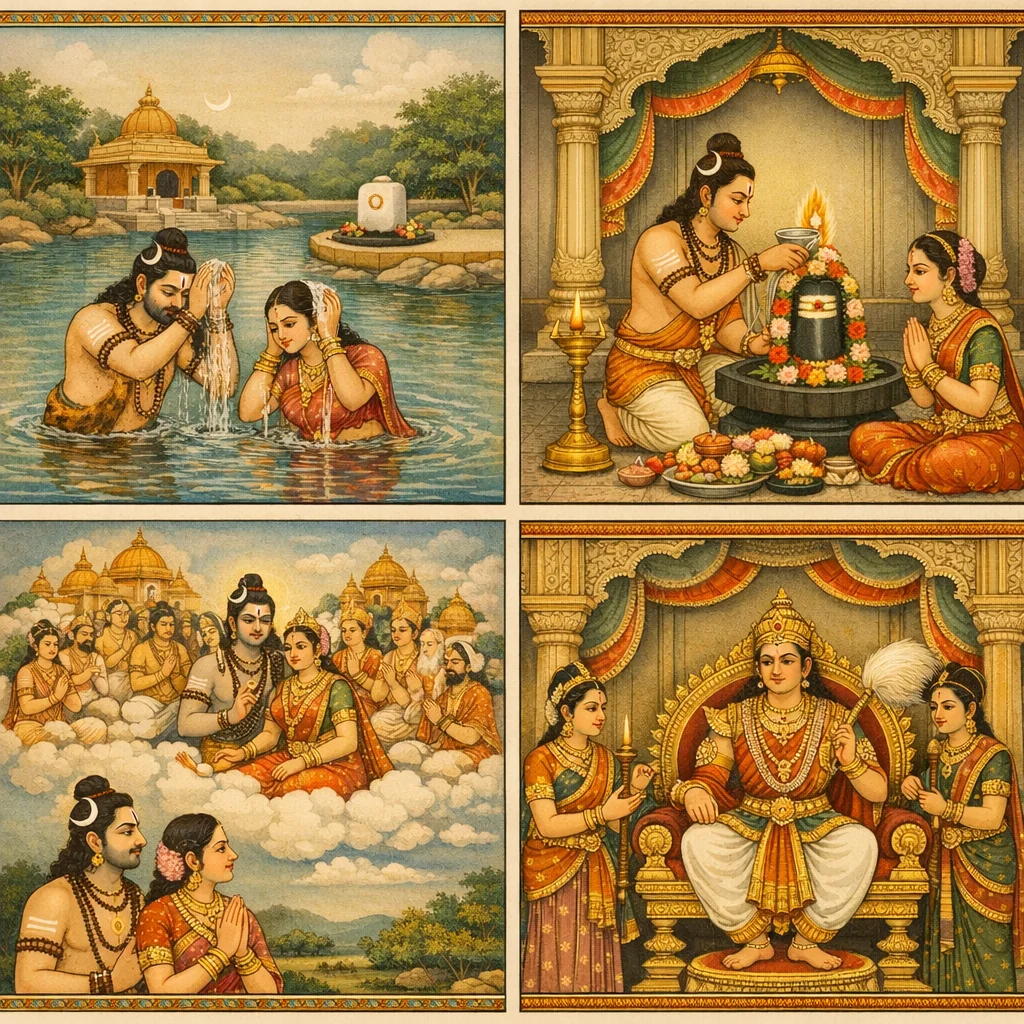
This chapter gives a compact tīrtha-māhātmya in which Mārkaṇḍeya points to Gopeśvara as the next pilgrimage site after Sarpakṣetra, the Serpent-field. It sets out a graded path of purification tied to ritual: a single bath at this tīrtha is said to free a person from moral faults and sins (pātaka). An ethical boundary is then stated: one who bathes and afterward ends life by one’s own will is spoken of negatively; even if such a person reaches a Śiva-temple, they remain “connected with sin.” By contrast, bathing and then worshipping Īśvara brings release from all sins and entry into Rudra-loka. After enjoying bliss in Rudra-loka, the pilgrim is reborn as a righteous king. The worldly fruit (phala) is described as royal prosperity—elephants, horses, chariots, attendants, honor from other rulers, and a long, happy life—uniting ritual instruction, moral counsel, and phalaśruti in a pilgrimage-register style.
Shlokas
Verse 1
श्रीमार्कण्डेय उवाच । गोपेश्वरं ततो गच्छेत्सर्पक्षेत्रादनन्तरम् । यत्र स्नानेन चैकेन मुच्यन्ते पातकैर्नराः
Śrī Mārkaṇḍeya said: Thereafter one should go to Gopeśvara, immediately after visiting Sarpakṣetra—where, by a single bath, people are freed from sins.
Verse 2
तत्र तीर्थे तु यः स्नात्वा कुरुते प्राणसंक्षयम् । स गच्छेद्यदि युक्तोऽपि पापेन शिवमन्दिरम्
And at that tīrtha, whoever bathes and then ends his life—though burdened with sin—goes to Śiva’s abode, his sacred realm.
Verse 3
तत्र तीर्थे तु यः स्नात्वा पूजयेद्देवमीश्वरम् । मुच्यते सर्वपापैश्च रुद्रलोकं स गच्छति
At that tīrtha, whoever bathes and worships the Lord God, Īśvara, is freed from all sins and goes to Rudra’s world.
Verse 4
क्रीडित्वा च यथाकामं रुद्रलोके महातपाः । इह मानुष्यतां प्राप्य राजा भवति धार्मिकः
After delighting there in Rudra’s world as he wishes, the great ascetic returns here, attains human birth, and becomes a righteous king, established in dharma.
Verse 5
हस्त्यश्वरथसम्पन्नो दासीदाससमन्वितः । पूज्यमानो नरेन्द्रैश्च जीवेद्वर्षशतं सुखी
Endowed with elephants, horses, and chariots, attended by maidservants and servants, honored even by kings, he lives happily for a hundred years.
Verse 162
। अध्याय
“Chapter” (a chapter-end marker line).