Adhyaya 161
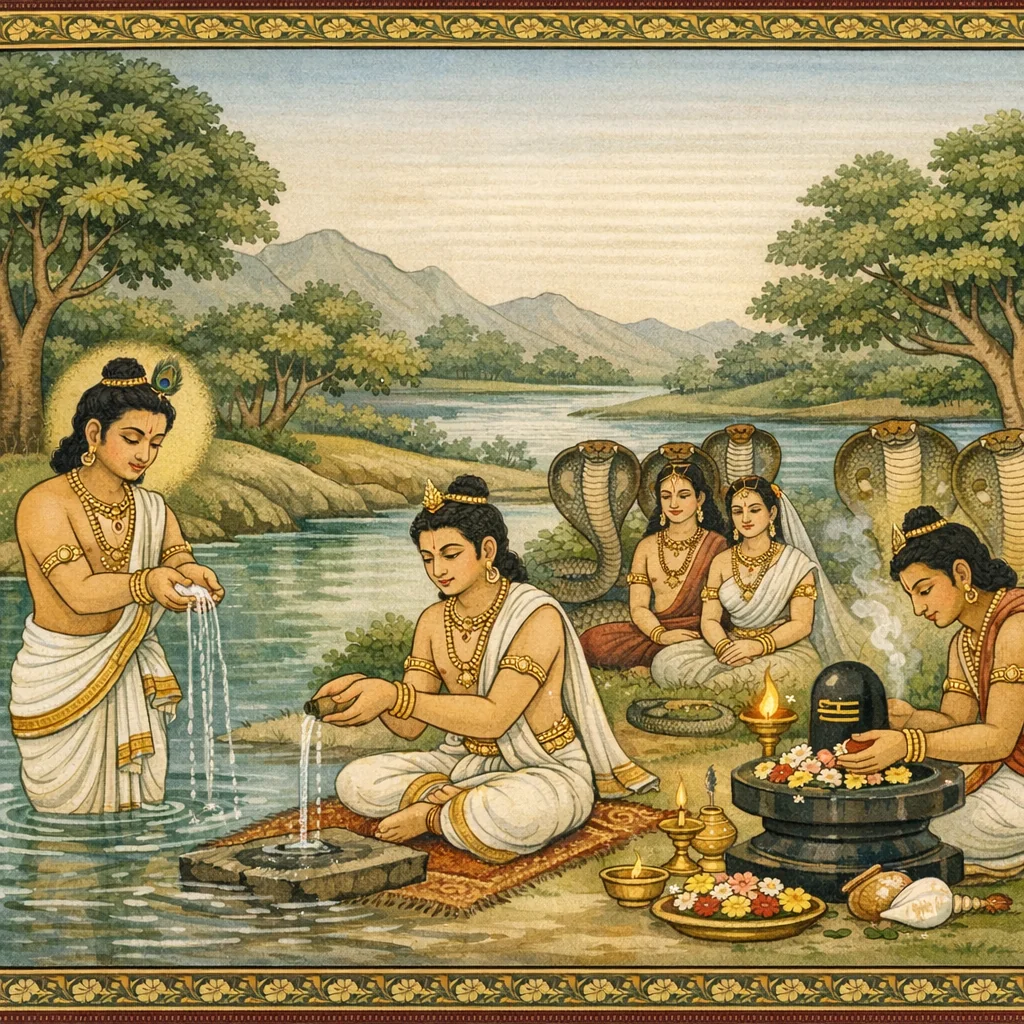
Chapter 161 records Mārkaṇḍeya’s counsel to King Yudhiṣṭhira on visiting Sarpa-tīrtha, an extraordinary sacred ford where great nāgas attained success through intense tapas. The chapter names renowned serpent beings—Vāsuki, Takṣaka, Airāvata, Kāliya, Karkoṭaka, Dhanañjaya, Śaṅkhacūḍa, Dhṛtarāṣṭra, Kulika, Vāmana, and their lineages—portraying the site as a living holy realm where ascetic accomplishment brings honor and delight. It then gives ritual and ethical instruction: bathing at Sarpa-tīrtha and offering tarpaṇa to ancestors and deities is said, by Śaṅkara’s earlier declaration, to yield merit equal to the Vājapeya sacrifice. A protective teaching follows, stating that those who bathe there become free from fear of snakes and scorpions. Finally, a specific observance for Mārgaśīrṣa kṛṣṇa aṣṭamī is prescribed: fasting and purity, filling a liṅga with sesame (tila), worship with fragrance and flowers, and then prostration with apology and atonement. The phalāśruti promises heavenly enjoyment in proportion to the sesame and offerings, and later rebirth in a pure family endowed with beauty, good fortune, and great wealth.
Shlokas
Verse 1
श्रीमार्कण्डेय उवाच । ततो गच्छेन्महाराज सर्पतीर्थमनुत्तमम् । यत्र सिद्धा महासर्पास्तपस्तप्त्वा युधिष्ठिर
Śrī Mārkaṇḍeya said: “Thereafter, O great king, go to the unsurpassed Sarpa-tīrtha, where the mighty serpents, having performed tapas (austerities), attained spiritual perfection, O Yudhiṣṭhira.”
Verse 2
वासुकिस्तक्षको घोरः सार्प ऐरावतस्तथा । कालियश्च महाभागः कर्कोटकधनंजयौ
Vāsuki; Takṣaka the terrible; Sārpa, and likewise Airāvata; and the illustrious Kāliya, together with Karkoṭaka and Dhanaṃjaya—
Verse 3
शङ्खचूडो महातेजा धृतराष्ट्रो वृकोदरः । कुलिको वामनश्चैव तेषां ये पुत्रपौत्रिणः
Śaṅkhacūḍa of great splendor, Dhṛtarāṣṭra, Vṛkodara, Kulika, and also Vāmana—and those who are their sons and grandsons—
Verse 4
तत्र तीर्थे महापुण्ये तपस्तप्त्वा सुदुष्करम् । भुञ्जन्ति विविधान्भोगान्क्रीडन्ति च यथासुखम्
There, at that supremely meritorious tīrtha, having undertaken very difficult tapas (austerities), they enjoy diverse delights and sport about according to their pleasure.
Verse 5
तत्र तीर्थे तु यः स्नात्वा तर्पयेत्पितृदेवताः । वाजपेयफलं तस्य पुरा प्रोवाच शङ्करः
And whoever bathes at that tīrtha and offers tarpaṇa-libations to satisfy the Pitṛs and the deities—Śaṅkara long ago declared that person’s reward to equal the fruit of the Vājapeya sacrifice.
Verse 6
स्नातानां सर्पतीर्थे तु नराणां भुवि भारत । सर्पवृश्चिकजातिभ्यो न भयं विद्यते क्वचित्
For men who have bathed at Sarpa-tīrtha, O Bhārata, no fear from the kinds of serpents and scorpions is found anywhere on earth.
Verse 7
मृतो भोगवतीं गत्वा पूज्यमानो महोरगैः । नागकन्यापरिवृतो महाभोगपतिर्भवेत्
Upon death, having gone to Bhogavatī, honored by the great nāgas, and surrounded by nāga-maidens, one becomes a lord of vast enjoyments.
Verse 8
मार्गशीर्षस्य मासस्य कृष्णपक्षे च याष्टमी । सोपवासः शुचिर्भूत्वा लिङ्गं सम्पूरयेत्तिलैः । यथाविभवसारेण गन्धपुष्पैः समर्चयेत्
On the eighth lunar day in the dark fortnight of the month of Mārgaśīrṣa, having fasted and become pure, one should fill the Śiva-liṅga with sesame seeds as an offering, and—according to one’s means—worship it well with fragrances and flowers.
Verse 9
एवं विधाय विधिवत्प्रणिपत्य क्षमापयेत् । तस्य यत्फलमुद्दिष्टं तच्छृणुष्व नरेश्वर
Having done thus in the proper manner, one should bow down and seek forgiveness. Now hear, O lord of men, the fruit that is declared for that observance.
Verse 10
तिलास्तत्र च यत्संख्याः पत्रपुष्पफलानि च । तावत्स्वर्गपुरे राजन्मोदते कालमीप्सितम्
O King, for as many sesame seeds as are there, and for as many leaves, flowers, and fruits as are offered, for that very measure of time he rejoices in the city of heaven, enjoying the desired span.
Verse 11
ततः स्वर्गात्परिभ्रष्टो जायते विमले कुले । सुरूपः सुभगश्चैव धनकोटिपतिर्भवेत्
Then, when his merit in heaven is spent and he returns, he is born in a pure and stainless family; handsome and fortunate, he becomes the lord of wealth amounting to crores.
Verse 161
। अध्याय
“Chapter” (end-of-chapter marker).