Adhyaya 160
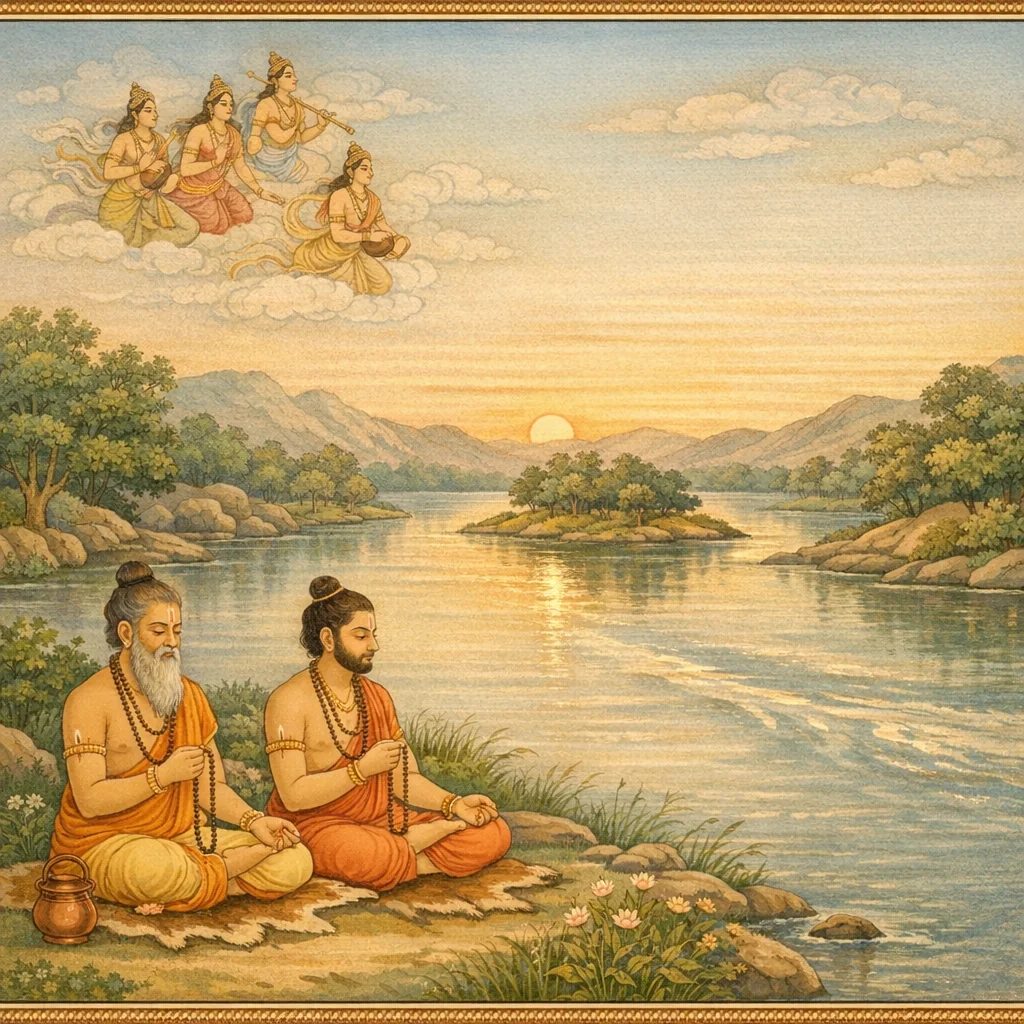
Mārkaṇḍeya addresses a descendant of Pāṇḍu and directs him to the unsurpassed Mokṣatīrtha, a sacred ford frequented by devas, gandharvas, and ascetic sages. Many, he says, fail to recognize it through delusion born of Viṣṇu’s māyā, while accomplished ṛṣis have attained liberation there. A roll of eminent seers—Pulastya, Pulaha, Kratu, Prācetasa, Vasiṣṭha, Dakṣa, Nārada, and others—is given, followed by the claim that “seven thousand” great beings, together with their sons, reached mokṣa at this very tīrtha, establishing it as a giver of liberation. The chapter then points to a saṅgama: amid the current a river named Tamahā is said to fall in, and that confluence is praised as destroying all sins. Proper Gāyatrī japa there is equated with the fruits of extensive Vedic study (Ṛg/Yajus/Sāman), and gifts, oblations, and recitations performed at the site become imperishable, serving as a superior means to liberation. Finally, it declares that twice-born renunciants who die at this tīrtha attain a non-returning destiny (anivartikā gati) by the place’s power, concluding that the procedure has been stated briefly though the tīrtha’s fuller expanse is taught in the Purāṇa.
Shlokas
Verse 1
श्रीमार्कण्डेय उवाच । ततो गच्छेत्पाण्डुपुत्र मोक्षतीर्थमनुत्तमम् । सेवितं देवगन्धर्वैर्मुनिभिश्च तपोधनैः
Śrī Mārkaṇḍeya said: “Then, O son of Pāṇḍu, one should go to the unsurpassed Mokṣatīrtha, revered and frequented by gods, Gandharvas, and sages rich in austerity.”
Verse 2
बहवस्तन्न जानन्ति विष्णुमायाविमोहिताः । यत्र सिद्धा महाभागा ऋषयः सतपोधनाः
Many do not know of it, deluded by Viṣṇu’s māyā—(that place) where the accomplished siddhas, the fortunate ṛṣis, truly wealthy in austerity, have attained perfection.
Verse 3
पुलस्त्यः पुलहो विद्वान्क्रतुश्चैव महामतिः । प्राचेतसो वसिष्ठश्च दक्षो नारद एव च
Pulastya, Pulaha the learned, and Kratu of great intellect; Prācetasa, Vasiṣṭha, Dakṣa, and also Nārada—all are bound to the sanctity of that tīrtha.
Verse 4
एते चान्ये महाभागाः सप्तसाहस्रसंज्ञिताः । मोक्षं गताः सह सुतैस्तत्तीर्थं तेन मोक्षदम्
These and other greatly blessed ones, known as the “Seven Thousand,” attained liberation together with their sons; therefore that tīrtha is famed as a giver of mokṣa.
Verse 5
तत्र प्रवाहमध्ये तु पतिता तमहा नदी । तत्र तत्सङ्गमं तीर्थं सर्वपापक्षयंकरम्
There, in the midst of the main current, the river Tamahā joins; and at that confluence is a tīrtha that brings about the destruction of all sins.
Verse 6
ऋग्यजुःसामसंज्ञानामभ्यस्तानां तु यत्फलम् । सम्यग्जप्त्वा तु विधिना गायत्रीं तत्र तल्लभेत्
Whatever fruit is gained by mastering the Ṛg, Yajus, and Sāman Vedas—that very fruit one obtains there by duly chanting the Gāyatrī according to rule.
Verse 7
तत्र दत्तं हुतं जप्तं तीर्थसेवार्जितं फलम् । सर्वमक्षयतां याति मोक्षसाधनमुत्तमम्
Charity given there, offerings made into fire, mantra-recitation, and the fruits earned by service to the tīrtha—all of it becomes imperishable, an unsurpassed means toward liberation.
Verse 8
तत्र तीर्थे मृतानां तु संन्यासेन द्विजन्मनाम् । अनिवर्तिका गतिस्तेषां मोक्षतीर्थप्रभावतः
At that tīrtha, for the twice-born who die there in renunciation, their course is one of no return—by the power of Mokṣatīrtha.
Verse 9
एष ते विधिरुद्दिष्टः संक्षेपेण मयानघ । व्युष्टिस्तीर्थस्य महती पुराणे याभिधीयते
Thus, O sinless one, I have set forth to you in brief the prescribed procedure; the great and fuller account of this tīrtha is told in the Purāṇa.
Verse 160
। अध्याय
“Chapter.” (A colophon-style marker indicating a chapter transition.)