Adhyaya 157
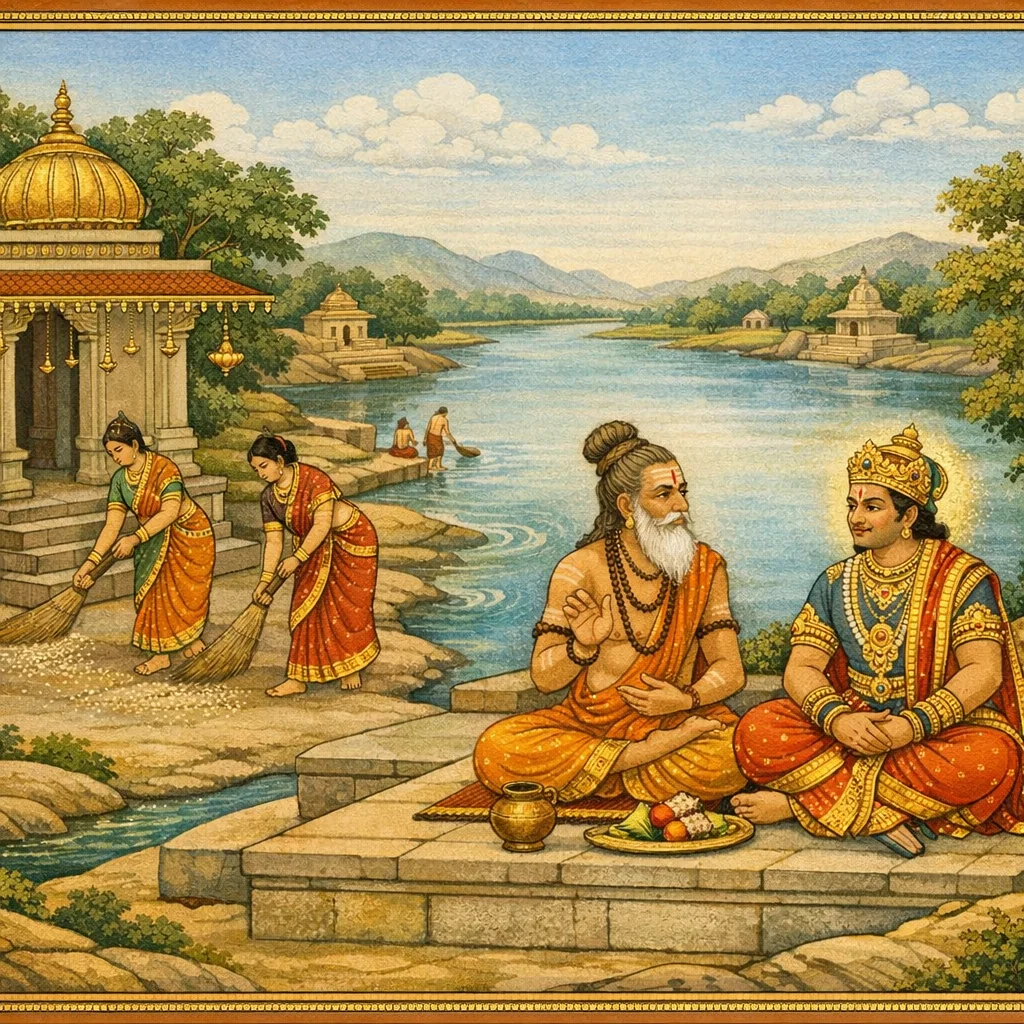
This chapter records Mārkaṇḍeya’s teaching to a king near Śuklatīrtha and introduces the famed Vāsudeva-tīrtha on the Narmadā (Revā). It explains a sacred, name-giving event: by the mere utterance of “hūṅkāra,” the river is said to have shifted by a krośa, and the place becomes known as Hūṅkāra, with the bathing-spot called Hūṅkāratīrtha. Its theological focus is Vaiṣṇava devotion expressed through pilgrimage: bathing at Hūṅkāratīrtha and beholding the imperishable Acyuta is said to free one from demerit accumulated over many births. The text then offers ethical-devotional instruction—declaring that none rescues those sunk in saṃsāra like Nārāyaṇa, praising tongue, mind, and hands devoted to Hari, and calling blessed those with Hari established in the heart. It further claims that fruits sought through other deity-worship are gained by aṣṭāṅga-prostration to Hari, and that even incidental contact with temple dust or services such as sweeping, sprinkling, and plastering in the Lord’s abode destroy pāpa. A phalaśruti-like promise speaks of ascent to Viṣṇuloka and swift sin-dissolution even when a namaskāra lacks full sincerity. The chapter ends by stressing that deeds, good or otherwise, performed at Hūṅkāratīrtha endure in their consequences, highlighting the site’s heightened moral-ritual potency.
Shlokas
Verse 1
श्रीमार्कण्डेय उवाच । तस्यैवानन्तरं राजञ्छुक्लतीर्थसमीपतः । वासुदेवस्य तीर्थं तु सर्वलोकेषु पूजितम्
Śrī Mārkaṇḍeya said: “Immediately after that, O King, near Śukla-tīrtha lies the sacred ford of Vāsudeva—revered and worshipped in all the worlds.”
Verse 2
तद्धि पुण्यं सुविख्यातं नर्मदायां पुरातनम् । यत्र हुङ्कारमात्रेण रेवा क्रोशं जगाम सा
“That holy place is meritorious, ancient, and renowned on the Narmadā—where, by a mere utterance of ‘huṅ’, Revā (the river) moved away by a krośa.”
Verse 3
यदा प्रभृति राजेन्द्र हुङ्कारेण गता सरित् । तदाप्रभृति स स्वामी हुङ्कारः शब्दितो बुधैः
From that very time, O best of kings, when the river departed at the utterance “huṅ,” from then onward the Lord of that place has been known by the wise as “Huṅkāra.”
Verse 4
हुङ्कारतीर्थे यः स्नात्वा पश्यत्यव्ययमच्युतम् । स मुच्यते नरः पापैः सप्तजन्म कृतैरपि
Whoever bathes at Huṅkāra-tīrtha and beholds the imperishable Acyuta (Viṣṇu) is freed from sins—even those committed across seven births.
Verse 5
संसारार्णवमग्नानां नराणां पापकर्मिणाम् । नैवोद्धर्ता जगन्नाथं विना नारायणं परः
For those sunk in the ocean of saṃsāra, burdened by sinful deeds, there is no savior other than Nārāyaṇa, the Lord of the world.
Verse 6
सा जिह्वा या हरिं स्तौति तच्चित्तं यत्तदर्पितम् । तावेव केवलौ श्लाघ्यौ यौ तत्पूजाकरौ करौ
That tongue alone is worthy which praises Hari; that mind alone is worthy which is offered to Him. Only those two hands are truly praiseworthy which perform His worship.
Verse 7
सर्वदा सर्वकार्येषु नास्ति तेषाममङ्गलम् । येषां हृदिस्थो भगवान्मङ्गलायतनो हरिः
At all times and in all undertakings, no inauspiciousness befalls those in whose heart dwells Bhagavān Hari, the very abode of auspiciousness.
Verse 8
यदन्यद्देवतार्चायाः फलं प्राप्नोति मानवः । साष्टाङ्गप्रणिपातेन तत्फलं लभते हरेः
Whatever fruit a person gains by worship of other deities, that very fruit he obtains from Hari by performing the full eight-limbed prostration (sāṣṭāṅga-praṇipāta).
Verse 9
रेणुगुण्ठितगात्रस्य यावन्तोऽस्य रजःकणाः । तावद्वर्षसहस्राणि विष्णुलोके महीयते
As many dust-particles as cling to the body covered with sacred dust, for that many thousands of years he is honored and exalted in Viṣṇu’s world.
Verse 10
सम्मार्जनाभ्युक्षणलेपनेन तदालये नश्यति सर्वपापम् । नारी नराणां परया तु भक्त्या दृष्ट्वा तु रेवां नरसत्तमस्य
By sweeping, sprinkling with sanctified water, and smearing the sacred place within that shrine, all sins are destroyed. And a woman, with supreme devotion, upon beholding Revā (the Narmadā)—O best of men—attains that purifying merit.
Verse 11
येनार्चितो भगवान्वासुदेवो जन्मार्जितं नश्यति तस्य पापम् । स याति लोकं गरुडध्वजस्य विधूतपापः सुरसङ्घपूज्यताम्
He by whom Bhagavān Vāsudeva is worshipped—his sin accumulated through births is destroyed. Purged of wrongdoing, he goes to the world of the Garuḍa-bannered Lord (Viṣṇu) and becomes worthy of honor among the hosts of gods.
Verse 12
शाठ्येनापि नमस्कारं प्रयुञ्जंश्चक्रपाणिनः । सप्तजन्मार्जितं पापं गच्छत्याशु न संशयः
Even if one offers a bow (namaskāra) to the Discus-bearing Lord (Viṣṇu) with mere pretense, the sin accumulated over seven births quickly departs—of this there is no doubt.
Verse 13
पूजायां प्रीयते रुद्रो जपहोमैर्दिवाकरः । शङ्खचक्रगदापाणिः प्रणिपातेन तुष्यति
Rudra is pleased by worship; the Sun is pleased by japa and homa. And the Lord who bears conch, discus, and mace is satisfied by prostration.
Verse 14
भवजलधिगतानां द्वन्द्ववाताहतानां सुतदुहितृकलत्रत्राणभारार्दितानाम् । विषमविषयतोये मज्जतामप्लवानां भवति शरणमेको विष्णुपोतो नराणाम्
For those who have fallen into the ocean of worldly becoming, battered by the winds of dualities, oppressed by the burden of protecting son, daughter, and spouse—who are drowning in the treacherous waters of sense-objects without any raft—there is but one refuge for people: the boat of Viṣṇu.
Verse 15
हुङ्कारतीर्थे राजेन्द्र शुभं वा यदि वाशुभम् । यत्कृतं पुरुषव्याघ्र तन्नश्यति न कर्हिचित्
At Huṅkāra Tīrtha, O lord of kings—whether good or even ill is done—O tiger among men, that deed never perishes (its result is never lost).
Verse 157
। अध्याय
End of the chapter (adhyāya).