Adhyaya 156
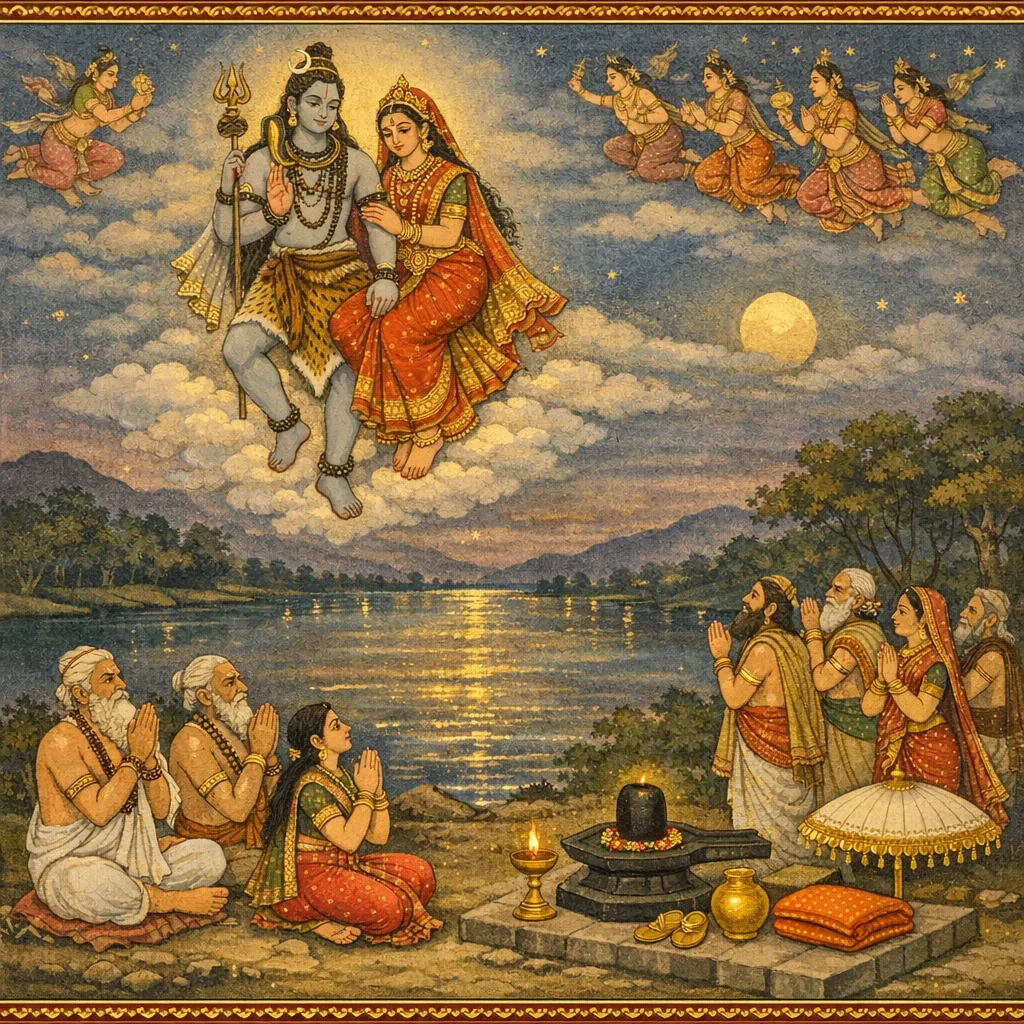
Mārkaṇḍeya extols Śuklatīrtha on the Narmadā (Revā) as an unequalled place of pilgrimage, set on a directionally sloping terrain and frequented by sages. The chapter is framed by sacred time and divine manifestation: on Kṛṣṇapakṣa Caturdaśī—especially in Vaiśākha, and also emphasized in Kārttika—Śiva comes from Kailāsa with Umā, and after ritual bathing devotees are said to behold Him. Brahmā, Viṣṇu, Indra, and hosts of Gandharvas, Apsarases, Yakṣas, Siddhas, Vidyādharas, and Nāgas attend, sharing in the tīrtha’s purifying power. Again and again the text states an expiatory principle: bathing here is like cloth cleansed by a washerman, and even grave faults are removed through prescribed observances. Ancestor rites (tarpaṇa and offerings of Revā water) grant long satisfaction to the pitṛs. It further details gift-rituals—offering a ghee-soaked blanket, gold according to one’s means, and donations of footwear, umbrella, bed, seat, food, water, and grains—linking them to post-mortem destinations such as Śiva-loka/Rudra-loka, and in a distinct ascetic strand, Varuṇa’s city. Other practices include month-long fasting, circumambulation (equal to circumambulating the earth), vṛṣa-mokṣa (bull release), gifting an adorned maiden within one’s capacity, and worship of a “beautiful pair” dedicated to Rudra to prevent separation across births. The closing phalaśruti affirms that devoted hearing yields desired ends—offspring, wealth, or liberation—spoken in the authoritative tone of received tradition.
Shlokas
Verse 1
श्रीमार्कण्डेय उवाच । नास्ति लोकेषु तत्तीर्थं पृथिव्यां यन्नरेश्वर । शुक्लतीर्थेन सदृशमुपमानेन गीयते
Śrī Mārkaṇḍeya said: O lord of men, there is no such holy ford in the worlds, nowhere on earth, that is sung as comparable—by any measure—to Śuklatīrtha.
Verse 2
शुक्लतीर्थं महातीर्थं नर्मदायां व्यवस्थितम् । प्रागुदक्प्रवणे देशे मुनिसङ्घनिषेवितम्
Śuklatīrtha is a great tīrtha situated on the Narmadā, in a region sloping to the east and north, frequented and served by hosts of sages.
Verse 3
वैशाखे च तथा मासि कृष्णपक्षे चतुर्दशी । कैलासादुमया सार्द्धं स्वयमायाति शङ्करः
In the month of Vaiśākha, on the fourteenth day of the dark fortnight, Śaṅkara himself comes from Kailāsa together with Umā.
Verse 4
मध्याह्नसमये स्नात्वा पश्यत्यात्मानमात्मना । ब्रह्मविष्ण्विन्द्रसहितः शुक्लतीर्थे समाहितः
Bathing at midday, he beholds the Self by the Self. Accompanied by Brahmā, Viṣṇu, and Indra, he remains absorbed in contemplation at Śuklatīrtha.
Verse 5
कार्त्तिक्यां तु विशेषेण वैशाख्यां च नरोत्तम । ब्रह्मविष्णुमहादेवान् स्नात्वा पश्यति तद्दिने
O best of men, especially in the month of Kārttika and also in Vaiśākha, after bathing at this sacred ford one beholds Brahmā, Viṣṇu, and Mahādeva on that very day.
Verse 6
देवराजः सुरैः सार्द्धं वायुमार्गव्यवस्थितः । कृष्णपक्षे चतुर्दश्यां स्नात्वा पश्यति शङ्करम्
Indra, the king of the gods, stationed along the path of the wind together with the devas, bathes on the fourteenth day of the dark fortnight and beholds Śaṅkara.
Verse 7
गन्धर्वाप्सरसो यक्षाः सिद्धविद्याधरोरगाः । तद्दिने तेऽपि देवेशं दृष्ट्वा मुञ्चन्ति किल्बिषम्
Gandharvas, Apsarases, Yakṣas, Siddhas, Vidyādharas, and Nāgas too—on that day, after beholding the Lord of the gods, they cast off their sins.
Verse 8
अर्धयोजनविस्तारं तदर्द्धेनैव चायतम् । शुक्लतीर्थं महापुण्यं महापातकनाशनम्
Śukla-tīrtha extends for half a yojana in breadth and half of that in length; it is supremely meritorious and destroys even the gravest sins.
Verse 9
यत्र स्थितैः प्रदृश्यन्ते वृक्षाग्राणि नरोत्तमैः । तत्र स्थिता महापापैर्मुच्यन्ते पूर्वसंचितैः
O best of men, in that place where even the tops of the trees become visible to those who stand there, whoever remains there is freed from great sins accumulated from the past.
Verse 10
पापोपपातकैर्युक्तो नरः स्नात्वा प्रमुच्यते । उपार्जिता विनश्येत भ्रूणहत्यापि दुस्त्यजा
A man burdened with sins and secondary transgressions is released by bathing here. Even the hard-to-shake sin of foeticide, amassed by one’s own deeds, is destroyed.
Verse 11
यस्मात्तत्रैव देवेश उमया सह तिष्ठति । वैशाख्यां च विशेषेण कैलासादेति शङ्करः
For the Lord of the gods abides there itself together with Umā; and in particular during Vaiśākha, Śaṅkara comes there from Kailāsa.
Verse 12
तेन तीर्थं महापुण्यं सर्वपातकनाशनम् । कथितं ब्रह्मणा पूर्वं मया तव तथा नृप
Therefore this tīrtha is of great merit and destroys all sins. It was earlier proclaimed by Brahmā, and now I have likewise declared it to you, O king.
Verse 13
रजकेन यथा धौतं वस्त्रं भवति निर्मलम् । तथा तत्र वपुःस्नानं पुरुषस्य भवेच्छुचि
Just as a garment washed by a launderer becomes spotless, so too bathing the body there makes a man pure.
Verse 14
पूर्वे वयसि पापानि कृत्वा पुष्टानि मानवः । अहोरात्रोषितो भूत्वा शुक्लतीर्थे व्यपोहति
One who committed sins earlier in life and let them grow is freed of them at Śukla-tīrtha by staying there for a day and a night.
Verse 15
शुक्लतीर्थे महाराज राकां रेवाजलाञ्जलिम् । कल्पकोटिसहस्राणि दत्त्वा स्युः पितरः शिवाः
O great king, at Śukla-tīrtha, if on the full-moon night one offers a palmful of Reva (Narmadā) water, then the Pitṛs—as though gifted for thousands of crores of kalpas—become auspicious and Śiva-like, fully satisfied.
Verse 16
न माता न पिता बन्धुः पतनं नरकार्णवे । उद्धरन्ति यथा पुण्यं शुक्लतीर्थे नरेश्वर
O lord of men, neither mother nor father nor any kinsman can rescue one sinking into the ocean of hell; only the merit gained at Śukla-tīrtha can lift him up so.
Verse 17
तपसा ब्रह्मचर्येण न तां गच्छन्ति सद्गतिम् । शुक्लतीर्थे मृतो जन्तुर्देहत्यागेन यां लभेत्
Neither by austerity nor even by brahmacarya do people attain that same blessed destiny; but a being who dies at Śukla-tīrtha gains it simply by casting off the body.
Verse 18
कार्त्तिकस्य तु मासस्य कृष्णपक्षे चतुर्दशीम् । घृतेन स्नापयेद्देवमुपोष्य प्रयतो नरः
But in the month of Kārttika, on the fourteenth lunar day of the dark fortnight, a disciplined man should fast and, with careful devotion, bathe the Deity with ghee.
Verse 19
स्नात्वा प्रभाते रेवायां दद्यात्सघृतकम्बलम् । सहिरण्यं यथाशक्ति देवमुद्दिश्य शङ्करं
After bathing at dawn in the Revā, one should, according to one’s capacity, donate a blanket along with ghee and gold, dedicating the offering to Śaṅkara.
Verse 20
देवस्य पूरणं कुर्याद्घृतेन घृतकम्बलम् । स गच्छति महातेजाः शिवलोकं मृतो नरः
Let him fully provide the prescribed offering for the Lord—a gift filled with ghee, together with ghee. That man, radiant with great spiritual splendor, upon death goes to Śivaloka.
Verse 21
एकविंशकुलोपेतो यावदाभूतसम्प्लवम् । शुक्लतीर्थे नरः स्नात्वा ह्युमां रुद्रं च योऽर्चयेत्
Whoever bathes at Śuklatīrtha and worships Umā and Rudra becomes endowed with merit that uplifts twenty-one generations, lasting until the cosmic dissolution.
Verse 22
गन्धपुष्पादिधूपैश्च सोऽश्वमेधफलं लभेत् । मासोपवासं यः कुर्यात्तत्र तीर्थे नरेश्वर
And with fragrances, flowers, and incense, he attains the fruit of an Aśvamedha sacrifice. O king, whoever undertakes a month-long fast at that tīrtha gains such merit.
Verse 23
मुच्यते स महत्पापैः सप्तजन्मसुसंचितैः । उष्ट्रीक्षीरमविक्षीरं नवश्राद्धे च भोजनम्
He is freed from great sins amassed through seven births—such as drinking camel’s milk, sheep’s milk, and eating at a “new śrāddha,” an improper funeral rite.
Verse 24
वृषलीगमनं चैव तथाभक्ष्यस्य भक्षणम् । अविक्रयेऽनृते पापं माहिषेऽयाज्ययाजके
(Sins such as) intercourse with a vṛṣalī, eating what is forbidden, sin born of dishonest trade and falsehood, and faults connected with buffalo-sacrifice and officiating for the unworthy—from all these one is purified.
Verse 25
वार्द्धुष्ये पङ्क्तिगरदे देवब्राह्मणदूषके । एवमादीनि पापानि तथान्यान्यपि भारत
O Bhārata, sins such as harming others in matters of livelihood and prosperity, corrupting the sacred dining line, and reviling the gods and the brāhmaṇas—along with many other offenses of this kind—are spoken of here.
Verse 26
चान्द्रायणेन नश्यन्ति शुक्लतीर्थे न संशयः । शुक्लतीर्थे तु यः स्नात्वा तर्पयेत्पितृदेवताः
By the Cāndrāyaṇa observance they are destroyed at Śuklatīrtha—of this there is no doubt. And whoever bathes at Śuklatīrtha and offers tarpaṇa, libations to satisfy the Pitṛs and the deities—
Verse 27
तस्य ते द्वादशाब्दानि तृप्तिं यान्ति सुतर्पिताः । पादुकोपानहौ छत्रं शय्यामासनमेव च
For him, those Pitṛs, well satisfied, abide in contentment for twelve years. (One may also give in charity) sandals and shoes, an umbrella, a bed, and a seat as well.
Verse 28
सुवर्णं धनधान्यं च श्राद्धं युक्तहलं तथा । अन्नं पानीयसंहितं तस्मिंस्तीर्थे ददन्ति ये
Those who at that tīrtha give gold, wealth and grain, perform śrāddha, and donate a plough with its fittings, as well as food together with drinking-water—
Verse 29
हृष्टाः पुष्टा मृता यान्ति शिवलोकं न संशयः । तत्र तीर्थे तु यो भक्त्या शिवमुद्दिश्य भारत
They depart from this world joyful and nourished, and upon death they go to Śiva’s world—of this there is no doubt. And, O Bhārata, whoever at that tīrtha, with devotion, intending (an offering) for Śiva—
Verse 30
भिक्षामात्रं तथान्नं ये तेऽपि स्वर्यान्ति वै नराः । यज्विनां व्रतिनां चैव तत्र तीर्थनिवासिनाम्
Even those men who give merely alms, and food as well, indeed go to heaven—especially when it is given to sacrificers and vow-observers who reside at that tīrtha—
Verse 31
अपि वालाग्रमात्रं हि दत्तं भवति चाक्षयम् । अग्निप्रवेशं यः कुर्याच्छुक्लतीर्थे समाहितः
Even a gift as small as the tip of a hair becomes imperishable. And one who, with collected mind, enters the fire at Śuklatīrtha—
Verse 32
रागद्वेषविनिर्मुक्तो हृदि ध्यात्वा जनार्दनम् । सर्वकामसुसम्पूर्णः स गच्छेद्वारुणं पुरम्
Freed from attachment and aversion, meditating in the heart upon Janārdana, fulfilled in all desired aims, he goes to the city of Varuṇa.
Verse 33
न रोगो न जरा तत्र यत्र देवोऽंभसां पतिः । अनाशकं तु यः कुर्यात्तस्मिंस्तीर्थे युधिष्ठिर
There is neither disease nor old age there, where Varuṇa, the Lord of the waters, abides. And, O Yudhiṣṭhira, whoever undertakes the anāśaka observance at that tīrtha—
Verse 34
अनिवर्तिका गतिस्तस्य रुद्रलोकादसंशयम् । अवशः स्ववशो वापि जन्तुस्तत्क्षेत्रमण्डले
His course becomes irreversible—without doubt—(leading) from Rudra’s world. Whether helpless or self-controlled, any being within the circuit of that sacred field—
Verse 35
मृतः स तु न सन्देहो रुद्रस्यानुचरो भवेत् । शुक्लतीर्थे तु यः कन्यां शक्त्या दद्यादलंकृताम्
After death, he—without any doubt—becomes an attendant of Rudra. And at Śukla Tīrtha, whoever, according to his means, gives in charity a maiden adorned with ornaments—(attains this exalted destiny).
Verse 36
विधिना यो नृपश्रेष्ठ कुरुते वृषमोक्षणम् । तस्य यत्फलमुद्दिष्टं पुराणे रुद्रभाषितम्
O best of kings, whoever performs, in due rite, the release of a bull (vṛṣamokṣaṇa) surely obtains the fruit declared for that act in the Purāṇa, as spoken by Rudra.
Verse 37
तदहं सम्प्रवक्ष्यामि शृणुष्वैकमना नृप । यावन्तो रोमकूपाः स्युः सर्वाङ्गेषु पृथक्पृथक्
That I shall now explain—listen with a single-pointed mind, O king: as many as there are hair-pores, distinct and separate across all the limbs (of the body)—
Verse 38
तावद्वर्षसहस्राणि रुद्रलोके महीयते । शुक्लतीर्थे तु यद्दत्तं ग्रहणे चन्द्रसूर्ययोः
For so many thousands of years he is honored in Rudra’s world. And whatever is given at Śukla Tīrtha at the time of a lunar or solar eclipse…
Verse 39
वर्धते तद्गुणं तावद्दिनानि दश पञ्च च । शुक्लतीर्थे शुचिर्भूत्वा यः करोति प्रदक्षिणम्
Its merit increases in that same measure—for fifteen days. And at Śukla Tīrtha, whoever, having become pure, performs pradakṣiṇā (devotional circumambulation)…
Verse 40
पृथ्वी प्रदक्षिणा तेन कृता यत्तस्य तत्फलम् । शोभनं मिथुनं यस्तु रुद्रमुद्दिश्य पूजयेत्
The fruit he gains is the same as if he had circumambulated the whole earth. And whoever, intending Rudra, worships a beautiful consecrated pair (mithuna)…
Verse 41
सप्त जन्मानि तस्यैव वियोगो न च वै क्वचित् । एतत्ते कथितं राजन् संक्षेपेण फलं महत्
For seven births, for him there is never any separation at any time. O king, this great fruit has been told to you in brief.
Verse 42
शुक्लतीर्थस्य यत्पुण्यं यथा देवाच्छ्रुतं मया । य इदं शृणुयाद्भक्त्या पुराणे विहितं फलम्
The merit of Śukla Tīrtha—just as I heard it from a god—whoever listens to this with devotion, to this fruit enjoined in the Purāṇa…
Verse 43
स लभेन्नात्र सन्देहः सत्यं सत्यं पुनः पुनः । पुत्रार्थी लभते पुत्रं धनार्थी लभते धनम्
He surely attains it—there is no doubt; true, true, again and again. One who longs for a son obtains a son; one who longs for wealth obtains wealth.
Verse 44
मोक्षार्थी लभते मोक्षं स्नानदानफलं महत्
One who seeks liberation attains liberation; great indeed is the fruit of sacred bathing and charitable giving there.
Verse 156
। अध्याय
Chapter (heading marker).