Adhyaya 154
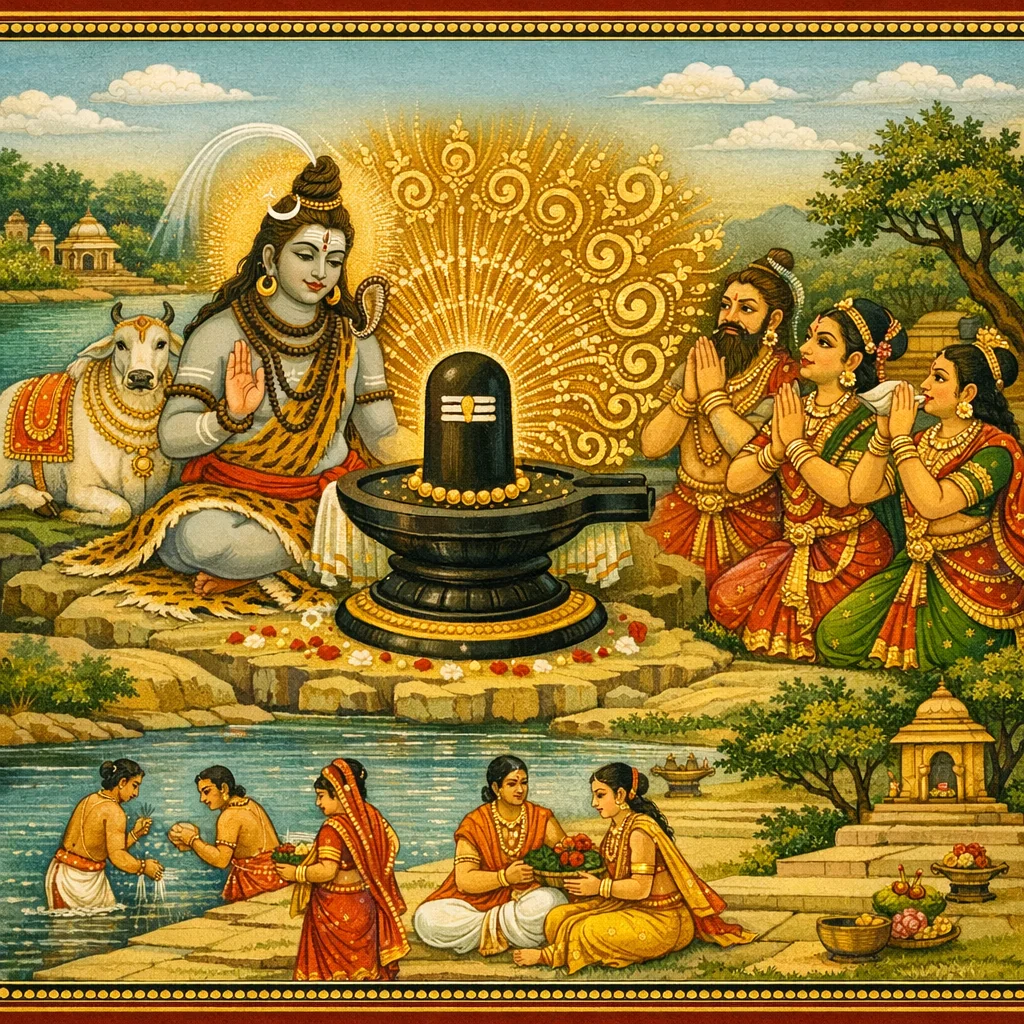
Voiced by Śrī Mārkaṇḍeya, this chapter points to a famed tīrtha called Kalakaleśvara on the southern bank of the Narmadā, said to be divinely established (svayaṃ devena nirmitam). In a Śaiva setting, after Mahādeva slays Andhaka in battle, devas, gandharvas, kinnaras, and great serpents honor Him amid resounding instruments and Vedic praises. The shrine’s name is explained as arising from the “kalakala” tumult made by the pramathas and bards at the very time the liṅga was installed. The prescribed rite teaches that bathing there and beholding Kalakaleśvara grants merit surpassing a Vājapeya sacrifice. The phalaśruti promises purification, ascent to heaven in a supreme chariot praised by apsarases, enjoyment of celestial delights, and eventual rebirth in a pure lineage as a learned, healthy, long-lived brāhmaṇa.
Shlokas
Verse 1
श्रीमार्कण्डेय उवाच । नर्मदादक्षिणे कूले तीर्थं कलकलेश्वरम् । विख्यातं सर्वलोकेषु स्वयं देवेन निर्मितम्
Śrī Mārkaṇḍeya said: On the southern bank of the Narmadā is the sacred tīrtha called Kalakaleśvara, renowned in all worlds, fashioned by the Deity Himself.
Verse 2
अन्धकं समरे हत्वा देवदेवो महेश्वरः । सहितो देवगन्धर्वैः किन्नरैश्च महोरगैः
Having slain Andhaka in battle, Maheśvara—the God of gods—proceeded, accompanied by Devas, Gandharvas, Kinnaras, and the great Nāgas.
Verse 3
शङ्खतूर्यनिनादैश्च मृदङ्गपणवादिभिः । वीणावेणुरवैश्चान्यैः स्तुतिभिः पुष्कलादिभिः
With the blare of conches and trumpets, with mṛdaṅgas, paṇavas and other drums, with the sounds of vīṇā and flute, and with abundant hymns of praise,
Verse 4
गायन्ति सामानि यजूंषि चान्ये छन्दांसि चान्ये ऋचमुद्गिरन्ति । स्तोत्रैरनेकैरपरे गृणन्ति महेश्वरं तत्र महानुभावाः
There, exalted souls sing the Sāman-chants; others recite the Yajus-formulas; others proclaim the Vedic metres and utter the Ṛk-hymns. Still others praise Maheśvara with many kinds of hymns.
Verse 5
प्रमथानां निनादेन कल्कलेन च बन्दिनाम् । यस्मात्प्रतिष्ठितं लिङ्गं तस्माज्जातं तदाख्यया
Because the liṅga was established amid the roar of the Pramathas and the clamorous cries of the bards, it came to be known by that very name: Kalkaleśvara.
Verse 6
तत्र तीर्थे तु यः स्नात्वा वीक्षेत्कलकलेश्वरम् । वाजपेयात्परं पुण्यं स लभेन्मानवो भुवि
Whoever bathes at that tīrtha and then beholds Kalkaleśvara gains, in this very world, merit surpassing even that of the Vājapeya sacrifice.
Verse 7
तेन पुण्येन पूतात्मा प्राणत्यागाद्दिवं व्रजेत् । आरूढः परमं यानं गीयमानोऽप्सरोगणैः
Purified by that merit, when the life-breath is relinquished he goes to heaven—mounted upon the supreme celestial chariot, sung of by hosts of Apsarases.
Verse 8
उपभुज्य महाभोगान्कालेन महता ततः । मर्त्यलोके महात्मासौ जायते विमले कुले
After enjoying great celestial pleasures for a long time, that great soul is then born again in the mortal world, in a pure and noble family.
Verse 9
ब्राह्मणः सुभगो लोके वेदवेदाङ्गपारगः । व्याधिशोकविनिर्मुक्तो जीवेच्च शरदां शतम्
He becomes a fortunate brāhmaṇa in the world, accomplished in the Vedas and their auxiliaries; free from illness and sorrow, he lives for a hundred autumns.
Verse 154
। अध्याय
“Chapter” (a colophon/heading fragment marking the adhyāya).