Adhyaya 153
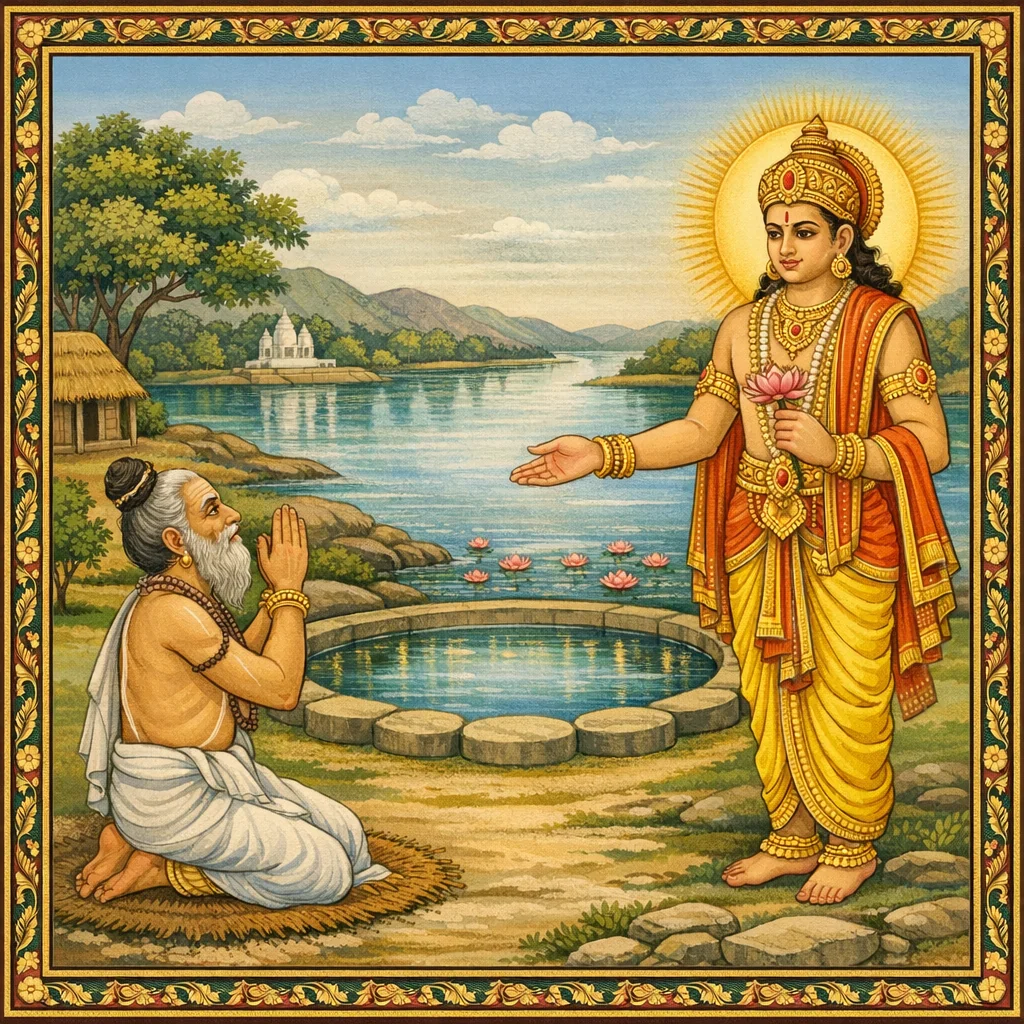
The chapter begins with Mārkaṇḍeya praising an “unsurpassed” Ravi Tīrtha, whose very sight is said to free one from sins. He sets out a scheme of merit: bathing at Ravi Tīrtha and beholding Bhāskara (the Sun) yields definite fruits; gifts and charity dedicated to Ravi, when properly bestowed upon a worthy Brahmin, give immeasurable results—especially at sacred times such as ayana, viṣuva, saṅkrānti, during solar or lunar eclipses, and at vyatīpāta. The Sun is taught as the “returner” of offerings, repaying gifts across time, even over many births, with merit graded by timing. When Yudhiṣṭhira asks why Ravi Tīrtha is exceptionally meritorious, Mārkaṇḍeya narrates its origin. In early Kṛtayuga, the learned Brahmin Jābāli repeatedly refuses conjugal union during his wife’s fertile period out of vow-observance; the distressed wife fasts and dies, and Jābāli, burdened by the resulting sin, is struck with a kuṣṭha-like skin disease and bodily decay. Seeking a cure, he learns of a Bhāskara Tīrtha on the Narmadā’s northern bank, linked with Ādityeśvara and famed for destroying all diseases; yet too ill to travel, he performs fierce austerities to bring Ādityeśvara to his own place. After a hundred years Sūrya grants a boon and manifests there, and the spot is proclaimed a tīrtha that removes sins and sorrows. A discipline is prescribed: for a full year, every Sunday one should bathe, perform seven circumambulations, offer worship, and gaze upon the Sun; this is said to quickly end skin diseases and to bestow worldly prosperity. Śrāddha performed there at saṅkrānti is declared to satisfy the ancestors, since Bhāskara is presented as connected with the Pitṛs. The chapter closes by reaffirming Ādityeśvara’s purifying and healing power.
Shlokas
Verse 1
मार्कण्डेय उवाच । तस्यैवानन्तरं चान्यद्रवितीर्थमनुत्तमम् । यस्य संदर्शनादेव मुच्यन्ते पातकैर्नराः
Mārkaṇḍeya said: Immediately after that there is another unsurpassed holy ford—Ravitīrtha—by the mere sight of which people are freed from sins.
Verse 2
रवितीर्थे तु यः स्नात्वा नरः पश्यति भास्करम् । तस्य यत्फलमुद्दिष्टं स्वयं देवेन तच्छृणु
At Ravitīrtha, the man who bathes and beholds Bhāskara (the Sun)—hear now the fruit that the god himself has declared for him.
Verse 3
नान्धो न मूको बधिरः कुले भवति कश्चन । कुरूपः कुनखी वापि तस्य जन्मानि षोडश
In his lineage, for sixteen births, no one becomes blind, mute, or deaf—nor even ugly or deformed in nails.
Verse 4
दद्रुचित्रककुष्ठानि मण्डलानि विचर्चिका । नश्यन्ति देवभक्तस्य षण्मासान्नात्र संशयः
Ringworm, vitiligo-like patches, leprosy, circular eruptions, and eczema are destroyed for the devotee of the deity within six months—of this there is no doubt.
Verse 5
चरितं तस्य देवस्य पुराणे यच्छ्रुतं मया । न तत्कथयितुं शक्यं संक्षेपेण नृपोत्तम
O best of kings, the deeds of that god which I have heard in the Purāṇas cannot be recounted in brief.
Verse 6
तत्र तीर्थे तु यद्दानं रविमुद्दिश्य दीयते । विधिना पात्रविप्राय तस्यान्तो नास्ति कर्हिचित्
At that tīrtha, whatever gift is given, dedicated to Ravi (the Sun), according to proper rule and to a worthy brāhmaṇa—its merit has no end at any time.
Verse 7
अयने विषुवे चैव चन्द्रसूर्यग्रहे तथा । रवितीर्थे प्रदत्तानां दानानां फलमुत्तमम्
Gifts given at Ravitīrtha during solstices, equinoxes, and lunar or solar eclipses yield the highest fruit.
Verse 8
संक्रान्तौ यानि दानानि हव्यकव्यानि भारत । अपामिव समुद्रस्य तेषामन्तो न लभ्यते
O Bhārata, whatever gifts are given and whatever oblations—offered to the gods and to the ancestors—are performed at the time of Saṃkrānti, their merit cannot be measured, just as the limit of the ocean’s waters cannot be found.
Verse 9
येन येन यदा दत्तं येन येन यदा हुतम् । तस्य तस्य तदा काले सविता प्रतिदायकः
Whatever a person gives, and whatever a person offers into the fire—whenever it is done—at that very time Savitṛ (the Sun) becomes the one who repays it in kind, granting the corresponding return.
Verse 10
सप्त जन्मानि तान्येव ददात्यर्कः पुनः पुनः । शतमिन्दुक्षये दानं सहस्रं तु दिनक्षये
For seven births, the Sun (Arka) repeatedly bestows those very rewards. A gift given at the waning of the Moon yields a hundredfold result, and a gift given at the close of the day yields a thousandfold result.
Verse 11
संक्रान्तौ शतसाहस्रं व्यतीपाते त्वनन्तकम्
On Saṃkrānti the merit becomes a hundred-thousandfold; but on Vyatīpāta it becomes limitless.
Verse 12
युधिष्ठिर उवाच । रवितीर्थं कथं तात पुण्यात्पुण्यतरं स्मृतम् । विस्तरेण ममाख्याहि श्रवणौ मम लम्पटौ
Yudhiṣṭhira said: O revered sir, why is Ravitīrtha remembered as even more meritorious than other holy places? Tell it to me in detail—my ears are eager to hear.
Verse 13
श्रीमार्कण्डेय उवाच । शृणुष्वावहितो भूत्वा ह्यादित्येश्वरमुत्तमम् । उत्तरे नर्मदाकूले सर्वव्याधिविनाशनम्
Śrī Mārkaṇḍeya said: Listen attentively as I speak of the supreme Ādityeśvara on the northern bank of the Narmadā—the destroyer of all diseases.
Verse 14
पुरा कृतयुगस्यादौ जाबालिर्ब्राह्मणोऽभवत् । वसिष्ठान्वयसम्भूतो वेदशास्त्रार्थपारगः
Long ago, at the beginning of the Kṛtayuga, there lived a brāhmaṇa named Jābāli—born in the lineage of Vasiṣṭha and well-versed in the meanings of the Vedas and the śāstras.
Verse 15
पतिव्रता साधुशीला तस्य भार्या मनस्विनी । ऋतुकाले तु सा गत्वा भर्तारमिदमब्रवीत्
His wife was a pativratā, virtuous in conduct and strong-minded. When her season of fertility arrived, she approached her husband and spoke these words.
Verse 16
वर्तते ऋतुकालो मे भर्तारं त्वामुपस्थिता । भज मां प्रीतिसंयुक्तः पुत्रकामां तु कामिनीम्
My season of fertility is now present; I have come to you, my husband. Unite with me in loving affection—I, a devoted wife, long for a son.
Verse 17
एवमुक्तो द्विजः प्राह प्रियेऽद्याहं व्रतान्वितः । गच्छेदानीं वरारोहे दास्य ऋत्वन्तरे पुनः
Thus addressed, the brāhmaṇa replied: “Beloved, today I am bound by a vow. Go now, fair-hipped one; in another ṛtu-season I shall consent again.”
Verse 18
पुनर्द्वितीये सम्प्राप्ते ऋतुकालेऽप्युपस्थिता । पुनः सा छन्दिता तेन व्रतस्थोऽद्येति भारत
When the second season of fertility arrived again, she approached him once more. Yet he again dissuaded her, saying, “Today I am established in my vow, O Bhārata.”
Verse 19
इत्थं वा बहुशस्तेन छन्दिता च पुनः पुनः । निराशा चाभवत्तत्र भर्तारं प्रति भामिनी
In this manner, again and again, she was repeatedly turned back by him. Thus, in that place, the passionate woman became hopeless toward her husband.
Verse 20
दुःखेन महताविष्टा विधायानशनं मृता । तेन भ्रूणहतेनैव पापेन सहसा द्विजः
Overwhelmed by immense sorrow, she undertook fasting unto death and died. By that very sin of foeticide, the twice-born man was suddenly seized by its consequence.
Verse 21
शीर्णघ्राणाङ्घ्रिरभवत्तपः सर्वं ननाश च । दृष्ट्वात्मानं स कुष्ठेन व्याप्तं ब्राह्मणसत्तमः
His nose and feet decayed, and all his tapas was brought to ruin. Seeing himself wholly pervaded by leprosy, that most excellent brāhmaṇa was seized by anguish.
Verse 22
विषादं परमं गत्वा नर्मदातटमाश्रितः । अपृच्छद्भास्करं तीर्थं द्विजेभ्यो द्विजसत्तमः
Falling into profound despair, he took refuge on the bank of the Narmadā. There, that best of the twice-born asked the brāhmaṇas about Bhāskara-tīrtha.
Verse 23
आरोग्यं भास्करादिच्छेदिति संचिन्त्य चेतसि । कुतस्तद्भास्करं तीर्थं भो द्विजाः कथ्यतां मम
Thinking in his heart, “May I obtain health through Bhāskara,” he said: “From where may that Bhāskara-tīrtha be reached? O brāhmaṇas, tell me.”
Verse 24
तपस्तप्याम्यहं गत्वा तस्मिंस्तीर्थे सुभावितः
“I shall go to that tīrtha and perform tapas there,”—so he resolved, his mind well-directed toward purification.
Verse 25
द्विजा ऊचुः । रेवाया उत्तरे कूले आदित्येश्वरनामतः । विद्यते भास्करं तीर्थं सर्वव्याधिविनाशनम्
The brāhmaṇas said: “On the northern bank of the Revā there is a shrine known as Ādityeśvara. There lies Bhāskara-tīrtha, the destroyer of all diseases.”
Verse 26
तत्र याह्यविचारेण गन्तुं चेच्छक्यते त्वया । एवमुक्तो द्विजैर्विप्रो गन्तुं तत्र प्रचक्रमे
“Go there without hesitation, if you are able to travel.” Thus addressed by the brāhmaṇas, the brāhmaṇa began to set out for that place.
Verse 27
व्याधिना परिभूतस्तु घोरेण प्राणहारिणा । यदा गन्तुं न शक्नोति तदा तेन विचिन्तितम्
But he was crushed by a dreadful, life-threatening illness. When he found he could not proceed, then he began to reflect.
Verse 28
सामर्थ्यं ब्राह्मणानां हि विद्यते भुवनत्रये । लिङ्गपातः कृतो विप्रैर्देवदेवस्य शूलिनः
The spiritual potency of the brāhmaṇas is indeed known throughout the three worlds; for it was the brāhmaṇa sages who, by their sacred power, caused the liṅga of Śūlin—the Trident-bearing Lord of Lords—to descend and be established.
Verse 29
समुद्रः शोषितो विप्रैर्विन्ध्यश्चापि निवारितः । अहमप्यत्र संस्थस्तु ह्यानयिष्यामि भास्करम्
By brāhmaṇa sages the ocean has been dried up, and even the Vindhya has been checked and restrained. So I too, remaining steadfast here, shall bring Bhāskara (the Sun) to appear.
Verse 30
तपोबलेन महता ह्यादित्येश्वरसंज्ञितम् । इति निश्चित्य मनसा ह्युग्रे तपसि संस्थितः
Determining in his mind, “By great power of austerity it shall become renowned as Ādityeśvara,” he then took his stand in fierce and concentrated tapas.
Verse 31
वायुभक्षो निराहारो ग्रीष्मे पञ्चाग्निमध्यगः । शिशिरे तोयमध्यस्थो वर्षास्वप्रावृताकृतिः
Living on air alone and fasting without food, in summer he stayed amid the five fires; in winter he stood immersed in water; and in the rains he remained without covering or shelter.
Verse 32
साग्रे वर्षशते पूर्णे रविस्तुष्टोऽब्रवीदिदम्
When a full hundred years had been completed, Ravi (the Sun), pleased, spoke these words.
Verse 33
सूर्य उवाच । वरं वरय भद्रं ते किं ते मनसि वाञ्छितम् । अदेयमपि दास्यामि ब्रूहि मां त्वं चिरं कृथाः
Sūrya said: “Choose a boon—may it be auspicious for you. What is it that your heart desires? Even what is ordinarily not to be given, I shall grant. Tell me; you have performed austerity for a long time.”
Verse 34
किमसाध्यं हि ते विप्र इदानीं तपसि स्थितः
“O brāhmaṇa sage, what could possibly be unattainable for you now, as you stand established in austerity?”
Verse 35
जाबालिरुवाच । यदि तुष्टोऽसि देवेश यदि देयो वरो मम । मम प्रतिज्ञा देवेश ह्यादित्येश्वरदर्शने
Jābāli said: “If you are pleased, O Lord of gods, and if a boon is to be granted to me—then, O Lord, my vow is bound up with the vision of Ādityeśvara.”
Verse 36
कृता तां पारितुं देव न शक्तो व्याधिना वृतः । शुक्लतीर्थेऽत्र तिष्ठ त्वमादित्येश्वरमूर्तिधृक्
“Having made that vow, O Lord, I am not able to fulfill it, being overcome by illness. Therefore, remain here at this Śukla-tīrtha, assuming the form of Ādityeśvara.”
Verse 37
एवमुक्ते तु देवेशो बहुरूपो दिवाकरः । उत्तरे नर्मदाकूले क्षणादेव व्यदृश्यत
When this was said, the Lord of gods—Divākara, taking many forms—appeared instantly on the northern bank of the Narmadā.
Verse 38
तदाप्रभृति भूपाल तद्धि तीर्थं प्रचक्षते । सर्वपापहरं प्रोक्तं सर्वदुःखविनाशनम्
From that time onward, O king, it is indeed proclaimed as a sacred ford (tīrtha). It is declared to remove all sins and to destroy every form of sorrow.
Verse 39
यस्तु संवत्सरं पूर्णं नित्यमादित्यवासरे । स्नात्वा प्रदक्षिणाः सप्त दत्त्वा पश्यति भास्करम्
But whoever, for a full year, regularly on Sundays, bathes there, performs seven circumambulations, gives offerings, and beholds the Sun—
Verse 40
यत्फलं लभते तेन तच्छृणुष्व मयोदितम् । प्रसुप्तं मण्डलानीह दद्रुकुष्ठविचर्चिकाः
Hear from me what fruit he gains thereby. Here, skin ailments—ringworm-like patches, leprosy, and scabies—lie as though dormant and are subdued.
Verse 41
नश्यन्ति सत्वरं राजंस्तूलराशिरिवानले । धनपुत्रकलत्राणां पूरयेद्वत्सरत्रयात्
They perish swiftly, O king, like a heap of cotton in fire. And within three years, one’s wealth, children, and conjugal prosperity are brought to fullness.
Verse 42
यस्तु श्राद्धप्रदस्तत्र पित्ःनुद्दिश्य संक्रमे । तृप्यन्ति पितरस्तस्य पितृदेवो हि भास्करः
And whoever there offers śrāddha, intending it for the Pitṛs at the time of saṅkrānti, his ancestors are satisfied; for Bhāskara is truly the divine lord of the Pitṛs.
Verse 43
इति ते कथितं सर्वमादित्येश्वरमुत्तमम् । सर्वपापहरं दिव्यं सर्वरोगविनाशनम्
Thus, all has been told to you of the supreme Ādityeśvara—divine, removing all sins, and destroying every disease.
Verse 153
। अध्याय
“Adhyāya”—the chapter colophon marker, indicating the boundary and end of the chapter.