Adhyaya 152
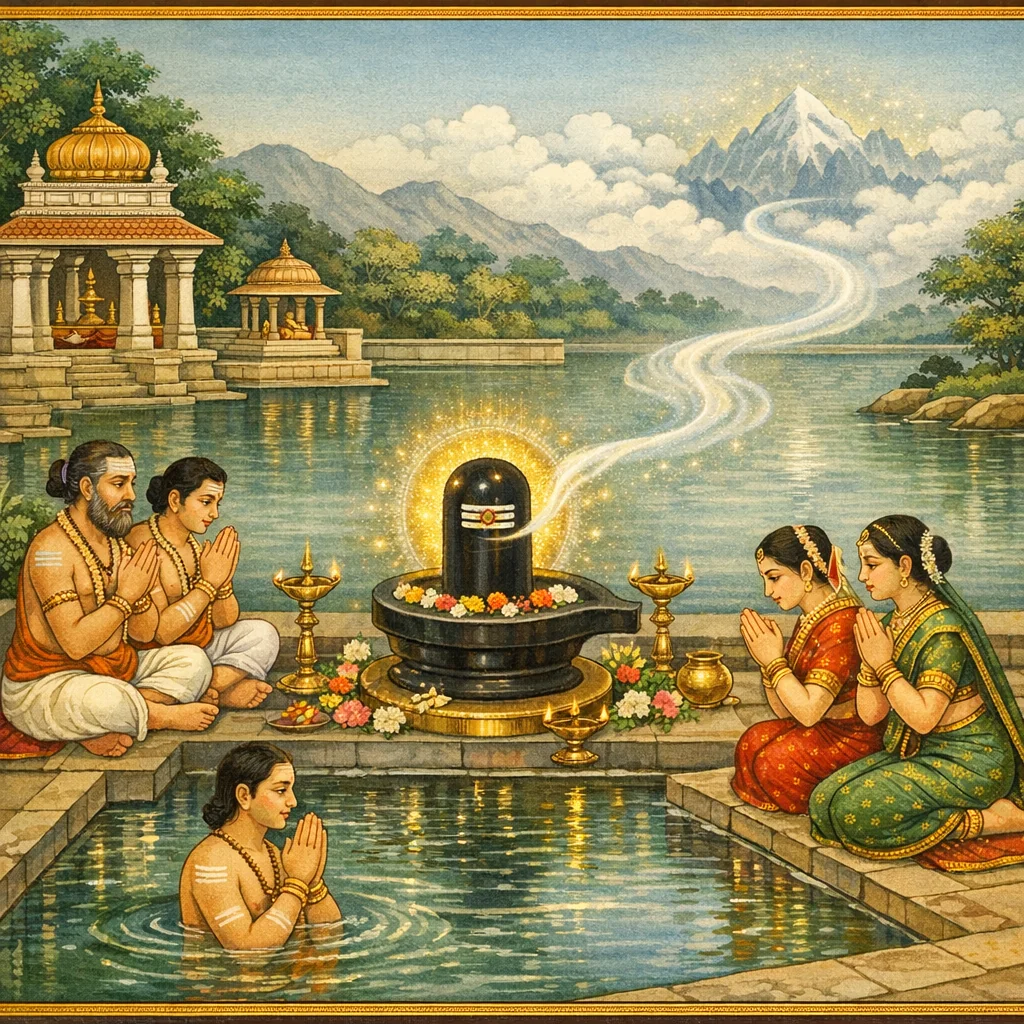
In this brief theological notice, Mārkaṇḍeya directs the pilgrim to proceed to the eminent shrine of Bhārgaleśvara. He proclaims Śaṅkara (Śiva) as “the life-breath of the world,” declaring that mere remembrance of Him destroys sin. The chapter then states two fruits tied to this tīrtha: (1) one who bathes there and worships Parameśvara gains the merit of an Aśvamedha sacrifice; (2) one who relinquishes life (prāṇatyāga) at that tīrtha attains an “anivartikā gati,” an irreversible course, and reaches Rudra-loka without doubt. Thus the Purāṇa presents devotion, sacred place, and remembrance as potent means of salvation within a Śaiva soteriology.
Shlokas
Verse 1
श्रीमार्कण्डेय उवाच । ततो गच्छेद्धरापाल भार्गलेश्वरमुत्तमम् । शङ्करं जगतः प्राणं स्मृतमात्राघनाशनम्
Śrī Mārkaṇḍeya said: Then, O protector of the earth, one should go to the excellent Bhārgaleśvara—Śaṅkara, the very life-breath of the world—who destroys sin the moment he is remembered.
Verse 2
तत्र तीर्थे तु यः स्नात्वा पूजयेत्परमेश्वरम् । अश्वमेधस्य यज्ञस्य फलं प्राप्नोति मानवः
Whoever bathes at that tīrtha and worships Parameśvara attains the merit said to arise from the Aśvamedha sacrifice.
Verse 3
तत्र तीर्थे तु यः कश्चित्प्राणत्यागं करिष्यति । अनिवर्तिका गतिस्तस्य रुद्रलोकादसंशयम्
Whoever, at that tīrtha, gives up the life-breath—his onward course becomes irreversible; from Rudra’s world there is no return, without doubt.
Verse 152
। अध्याय
“Chapter”—a manuscript heading or colophon fragment.