Adhyaya 149
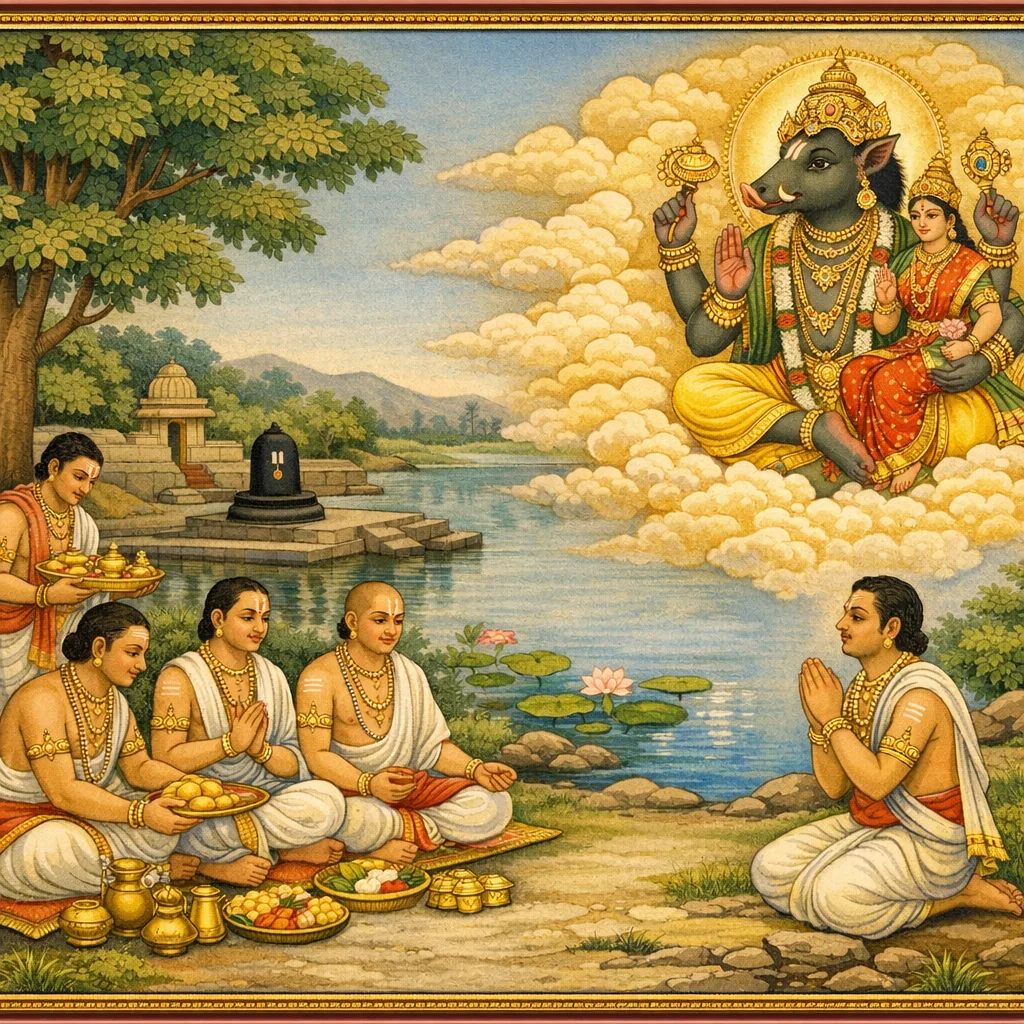
Mārkaṇḍeya describes a sacred tīrtha called Liṅgeśvara, where the darśana of the “Lord of gods” is said to destroy sin. The site is framed within Viṣṇu-centered devotion, recalling the Lord’s protecting power (including the Varāha motif), and laying down pilgrimage conduct: bathe at the tīrtha, bow to the deity, and honor Brahmins with gifts, reverence, and meals. A calendrical vow is then taught: on dvādaśī, with fasting and restraint, worship the Lord with fragrance and garlands, perform tarpaṇa for ancestors and deities, and recite twelve divine names. Monthly worship is systematized by linking each lunar month to a Viṣṇu epithet (from Keśava to Dāmodara), declaring name-recitation a purifying act that removes faults of speech, mind, and body. The chapter closes by praising the fortune of devotees and warning of the spiritual loss of a life without bhakti, giving instructions for ancestor offerings (sesame-mixed water) during eclipses and aṣṭakā periods, and ending with an exalted benediction to Hari in the boar form as a vision of peace.
Shlokas
Verse 1
श्रीमार्कण्डेय उवाच । तस्यैवानन्तरं तीर्थं लिङ्गेश्वरमिति श्रुतम् । दर्शनाद्देवदेवस्य यत्र पापं प्रणश्यति
Śrī Mārkaṇḍeya said: “Next to that is a sacred tīrtha renowned as Liṅgeśvara. By the mere sight (darśana) of the God of gods there, sin is destroyed.”
Verse 2
कृत्वा तु कदनं घोरं दानवानां युधिष्ठिर । वाराहं रूपमास्थाय नर्मदायां व्यवस्थितः
O Yudhiṣṭhira, after inflicting a terrible rout upon the Dānavas, he assumed the form of Varāha, the Boar, and took his station in the Narmadā.
Verse 3
तत्र तीर्थे तु यः स्नानं कृत्वा देवं नमस्यति । स मुच्यते नृपश्रेष्ठ महापापैः पुराकृतैः
At that sacred tīrtha, whoever bathes and then bows to the Lord is freed, O best of kings, from the great sins committed in former times.
Verse 4
द्वादश्यां कृष्णपक्षस्य शुक्ले च समुपोषितः । गन्धमाल्यैर्जगन्नाथं पूजयेत्पाण्डुनन्दन
O son of Pāṇḍu, observing a fast on the Dvādaśī tithi—both in the dark fortnight and in the bright—one should worship Jagannātha, the Lord of the universe, with fragrances and garlands.
Verse 5
ब्राह्मणांश्च महाभाग दानसंमानभोजनैः । पूजयेत्परया भक्त्या तस्य पुण्यफलं शृणु
O noble one, one should honor brāhmaṇas with gifts, respectful reception, and food, worshipping them with supreme devotion. Now hear the meritorious fruit that arises from this.
Verse 6
सत्रयाजिफलं जन्तुर्लभते द्वादशाब्दकैः । ब्राह्मणान्भोजयंस्तत्र तदेव लभते फलम्
The fruit gained by performing a satra-sacrifice is obtained only after twelve years; but there, by feeding brāhmaṇas, one attains that very same result.
Verse 7
तर्पयित्वा पितॄन् देवान् स्नात्वा तद्गतमानसः । जपेद्द्वादशनामानि देवस्य पुरतः स्थितः
Having offered tarpaṇa to the ancestors and the gods, and having bathed with the mind absorbed in that devotion, one should chant the twelve names of the Lord, standing before the Deity.
Verse 8
मासि मासि निराहारो द्वादश्यां कुरुनन्दन । केशवं पूजयेन्नित्यं मासि मार्गशिरे बुधः
Month after month, fasting on Dvādaśī, O son of the Kurus, the wise should worship Keśava each day in the month of Mārgaśīrṣa.
Verse 9
पौषे नारायणं देवं माघमासे तु माधवम् । गोविन्दं फाल्गुने मासि विष्णुं चैत्रे समर्चयेत्
In Pauṣa one should worship the Lord Nārāyaṇa; in Māgha, Mādhava; in Phālguna, Govinda; and in Caitra, Viṣṇu—offering due adoration each month.
Verse 10
वैशाखे मधुहन्तारं ज्येष्ठे देवं त्रिविक्रमम् । वामनं तु तथाषाढे श्रावणे श्रीधरं स्मरेत्
In Vaiśākha one should remember Madhuhantṛ; in Jyeṣṭha, the Lord Trivikrama; in Āṣāḍha, Vāmana; and in Śrāvaṇa, Śrīdhara.
Verse 11
हृषीकेशं भाद्रपदे पद्मनाभं तथाश्विने । दामोदरं कार्त्तिके तु कीर्तयन्नावसीदति
In Bhādrapada one should chant Hṛṣīkeśa; in Āśvina, Padmanābha; and in Kārttika, Dāmodara. One who thus sings these names does not fall into distress.
Verse 12
वाचिकं मानसं पापं कर्मजं यत्पुरा कृतम् । तन्नश्यति न सन्देहो मासनामानुकीर्तनात्
Sins committed long ago—by speech, by mind, or born of actions—are destroyed without doubt through the repeated chanting of the (Lord’s) names associated with the months.
Verse 13
स्वयं विनुद्धः सततमुन्मिषन्निमिषंस्तथा । शीघ्रं प्रपश्य भुञ्जानो मन्त्रहीनं समुद्गिरेत्
Even if one is personally hindered and agitated—restlessly blinking and looking about—while eating, one should swiftly utter the Divine Name, even without formal mantras.
Verse 14
परमापद्गतस्यापि जन्तोरेषा प्रतिक्रिया । यन्मासाधिपतेर्विष्णोर्मासनामानुकीर्तनम्
Even for one fallen into the gravest calamity, this is the remedy: the repeated chanting of Viṣṇu’s month-names, for He is the Lord who presides over the months.
Verse 15
ता निशास्ते च दिवसास्ते मासास्ते च वत्सराः । नराणां सफला येषु चिन्तितो भगवान्हरिः
Only those nights and days, those months and years, are truly fruitful for human beings in which Lord Hari is remembered and contemplated.
Verse 16
परमापद्गतस्यापि यस्य देवो जनार्दनः । नावसर्पति हृत्पद्मात्स योगी नात्र संशयः
Even when one has fallen into the greatest calamity, if the god Janārdana does not slip away from the lotus of one’s heart, that person is truly a yogin—of this there is no doubt.
Verse 17
ते भाग्यहीना मनुजाः सुशोच्यास्ते भूमिभाराय कृतावताराः । अचेतनास्ते पशुभिः समाना ये भक्तिहीना भगवत्यनन्ते
Fortune-less are those humans—truly to be lamented—who are born only as a burden upon the earth. Senseless like beasts are those who are devoid of devotion to the Blessed Lord Ananta.
Verse 18
ते पूर्णकार्याः पुरुषाः पृथिव्यां ते स्वाङ्गपाताद्भुवनं पुनन्ति । विचक्षणा विश्वविभूषणास्ते ये भक्तियुक्ता भगवत्यनन्ते
On earth, those persons alone have fulfilled their purpose; by the very fall of their bodies they purify the world. Discerning, and the adornment of the universe, are those endowed with devotion to the Blessed Lord Ananta.
Verse 19
स एव सुकृती तेन लब्धं जन्मतरोः फलम् । चित्ते वचसि काये च यस्य देवो जनार्दनः
He alone is truly meritorious; in him the fruit of the tree of human birth is obtained—he whose mind, speech, and body are devoted to the divine Lord Janārdana.
Verse 20
एतत्तीर्थवरं पुण्यं लिङ्गो यत्र जनार्दनः । वञ्चयित्वा रिपून्संख्ये क्रोधो भूत्वा सनातनः
This is a supremely excellent and holy tīrtha, where Janārdana is present as a liṅga. Having outwitted the enemies in battle, the Eternal One became manifest as wrath itself.
Verse 21
उपप्लवे चन्द्रमसो रवेश्च यो ह्यष्टकानामयनद्वये च । पानीयमप्यत्र तिलैर्विमिश्रं दद्यात्पितृभ्यः प्रयतो मनुष्यः
At eclipses of the moon and the sun, and on the Aṣṭakā days as well as at both solstitial transitions, a disciplined person should offer to the Pitṛs even water here, mixed with sesame seeds.
Verse 22
घोणोन्मीलितमेरुरन्ध्रनिवहो दुःखाब्धिमज्जत्प्लवः प्रादुर्भूतरसातलोदरबृहत्पङ्कार्धमग्नक्षुरः । फूत्कारोत्करनुन्नवातविदलद्दिग्दन्तिनादश्रुतिन्यस्तस्तब्धवपुः श्रुतिर्भवतु वः क्रोडो हरिः शान्तये
May Hari in his boar-incarnation be for your peace—whose snout opened the clefts of Meru, who is a raft for beings sinking in the ocean of sorrow, whose tusk at his manifestation was half-submerged in the vast mire of Rasātala, and whose firm body, poised in stillness, is celebrated in the Śruti amid the roaring of the world-elephants of the directions and the winds driven by his mighty snorts.
Verse 149
अध्याय
Chapter (a section marker).