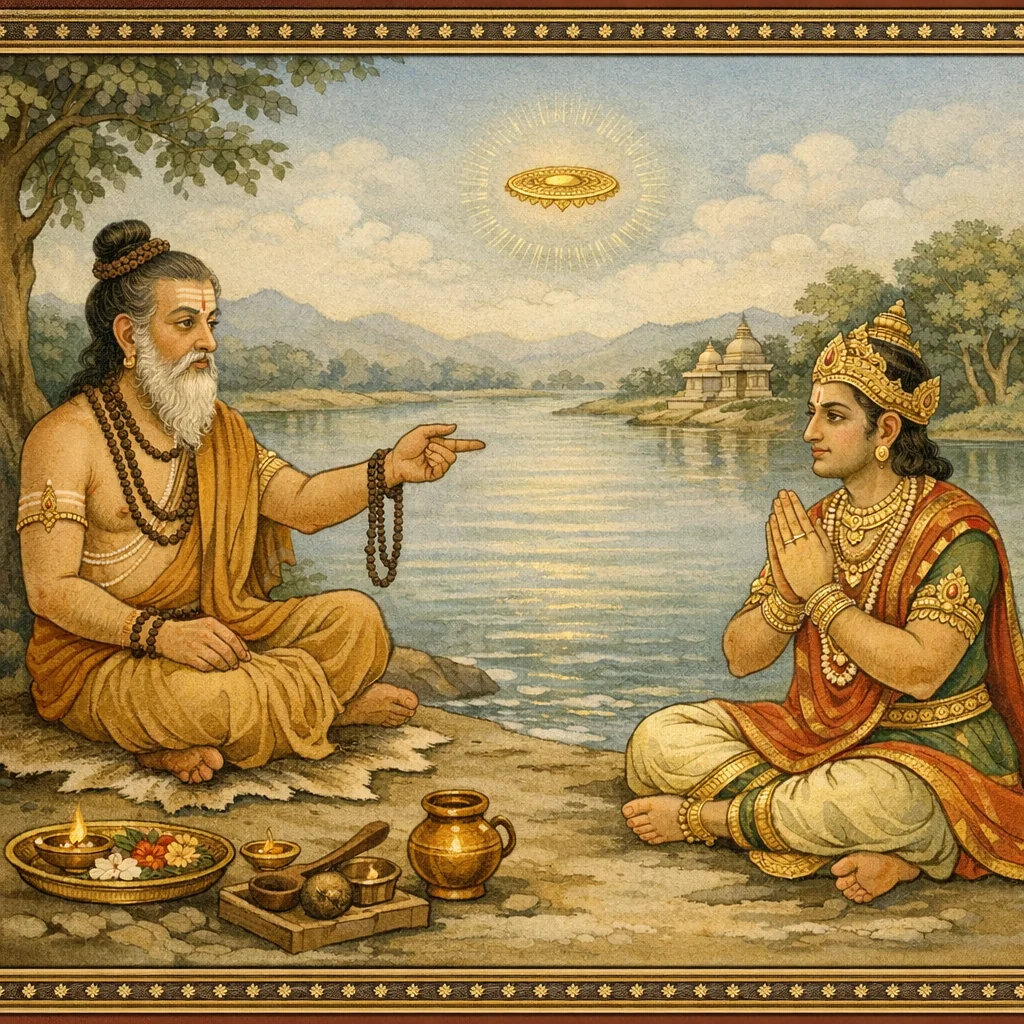
Adhyaya 144
This chapter is a brief, itinerary-like instruction spoken by Śrī Mārkaṇḍeya to a royal listener. He directs the hearer to proceed to an “excellent” Dvādaśī-tīrtha and highlights the exceptional standing of Cakratīrtha in contrast to ordinary ritual practice. It states that, in general, the fruits of giving (dāna), recitation (japa), fire-offerings (homa), and bali/ritual offerings may diminish or be exhausted over time. Yet deeds performed at Cakratīrtha are praised as undiminishing, their merit never waning. The chapter concludes by affirming that the tīrtha’s supreme māhātmya—embracing its significance for past and future—has been explained distinctly and completely, serving as the formal closing of this praise.
Shlokas
Verse 1
श्रीमार्कण्डेय उवाच । ततो गच्छेन्महाराज द्वादशीतीर्थमुत्तमम् । क्षरन्ति सर्वदानानि जपहोमबलिक्रियाः
Śrī Mārkaṇḍeya said: Then, O great King, one should go to the excellent Dvādaśī Tīrtha. Elsewhere, the fruit of all gifts, mantra-recitation, fire-offerings, and bali-rites diminishes.
Verse 2
न क्षीयते तु राजेन्द्र चक्रतीर्थे तु यत्कृतम् । यद्भूतं यद्भविष्यच्च तीर्थमाहात्म्यमुत्तमम्
But, O lord of kings, whatever is done at Cakra Tīrtha does not diminish. This is the supreme greatness of the tīrtha—whether in what has been, or what will be.
Verse 3
कथितं तन्मया सर्वं पृथग्भावेन भारत
O Bhārata, I have related all of that to you in full, set forth distinctly and in proper order.
Verse 144
। अध्याय
End of the chapter (Adhyāya).