Adhyaya 142
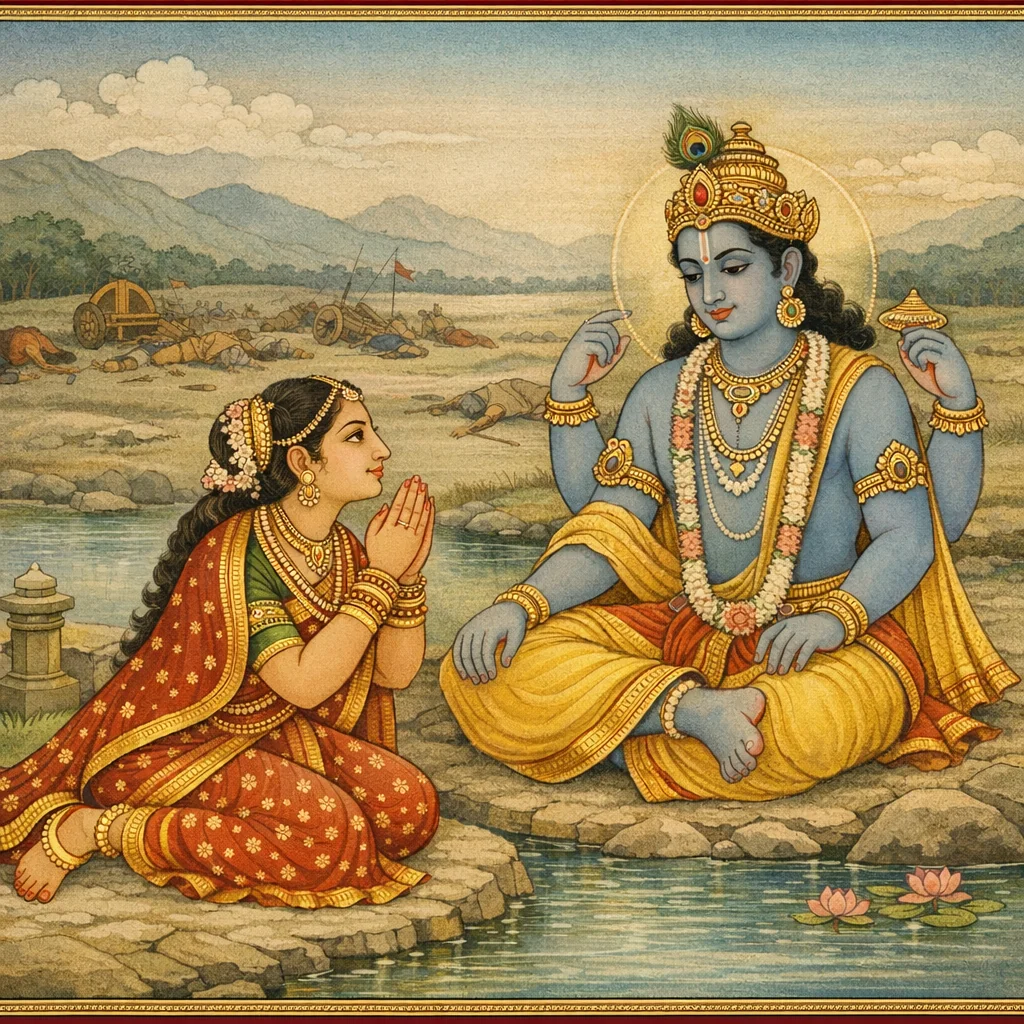
This chapter is framed as a dialogue in which the sage Mārkaṇḍeya instructs Yudhiṣṭhira on the glory of Rukmiṇī-tīrtha. Mere bathing there is said to bestow beauty and auspicious prosperity, with special emphasis on the observances of Aṣṭamī, Caturdaśī, and most notably Tṛtīyā. An origin itihāsa then establishes the tīrtha’s authority: Bhīṣmaka of Kuṇḍina has a daughter, Rukmiṇī, and an incorporeal voice foretells she must be given to a four-armed deity. Political designs promise her to Śiśupāla, but Kṛṣṇa and Saṅkarṣaṇa arrive; Rukmiṇī meets Hari in a disguised form, and Kṛṣṇa carries her away. A martial pursuit follows—Baladeva’s battle is vividly evoked and Rukmī is confronted—yet at Rukmiṇī’s plea Kṛṣṇa restrains the Sudarśana, reveals his divine form, and reconciliation is achieved. The chapter then turns to ritual-legal and ethical instruction: Kṛṣṇa honors seven sage-figures (the mānasaputras tradition) and grants villages, while issuing a stern warning against seizing donated land (dāna-bhūmi), declaring severe karmic consequences. The concluding tīrtha-māhātmya lists meritorious acts—bathing, worship of Baladeva–Keśava, pradakṣiṇā, and gifts such as kapilā-dāna, gold and silver, footwear, and cloth—compares the tīrtha’s merit with famed pan-Indian holy sites, and sets forth post-mortem फलश्रuti, including the destinies of those who die by fire, water, or fasting within the tīrtha’s sacred sphere.
Shlokas
Verse 1
श्रीमार्कण्डेय उवाच । ततो गच्छेन्महाराज रुक्मिणीतीर्थमुत्तमम् । यत्रैव स्नानमात्रेण रूपवान्सुभगो भवेत्
Śrī Mārkaṇḍeya said: “Then, O great king, one should go to the excellent Rukmiṇī-tīrtha, where by bathing alone a person becomes handsome and fortunate.”
Verse 2
अष्टम्यां च चतुर्दश्यां तृतीयायां विशेषतः । स्नानं समाचरेत्तत्र न चेह जायते पुनः
Especially on the eighth lunar day, the fourteenth, and most of all the third, one should perform bathing there; then one is not born here again.
Verse 3
यः स्नात्वा रुक्मिणीतीर्थे दानं दद्यात्तु कांचनम् । तत्तीर्थस्य प्रभावेन शोकं नाप्नोति मानवः
Whoever bathes at Rukmiṇī Tīrtha and then gives a gift of gold—by the potency of that sacred ford, such a person does not fall into grief.
Verse 4
युधिष्ठिर उवाच । तीर्थस्यास्य कथं जातो महिमेदृङ्मुनीश्वर । रूपसौभाग्यदं येन तीर्थमेतद्ब्रवीहि मे
Yudhiṣṭhira said: “O lord of sages, how did such greatness of this tīrtha arise? Tell me about this sacred place, by which beauty and good fortune are bestowed.”
Verse 5
मार्कण्डेय उवाच । कथयामि यथावृत्तमितिहासं पुरातनम् । कथितं पूर्वतो वृद्धैः पारम्पर्येण भारत
Mārkaṇḍeya said: “I shall recount the ancient history exactly as it happened—told long ago by the elders through the lineage of tradition, O Bhārata.”
Verse 6
तं तेऽहं सम्प्रवक्ष्यामि शृणुष्वैकाग्रमानसः । नगरं कुण्डिनं नाम भीष्मकः परिपाति हि
Now I shall declare that account to you—listen with a single-pointed mind: there is a city named Kuṇḍina, which King Bhīṣmaka indeed rules.
Verse 7
हस्त्यश्वरथसम्पन्नो धनाढ्योऽति प्रतापवान् । स्त्रीसहस्रस्य मध्यस्थः कुरुते राज्यमुत्तमम्
Endowed with elephants, horses, and chariots—immensely wealthy and highly valorous—surrounded by a thousand women, he administers an excellent kingdom.
Verse 8
तस्य भार्या महादेवी प्राणेभ्योऽपि गरीयसी । तस्यामुत्पादयामास पुत्रमेकं च रुक्मकम्
His queen, a great lady dearer to him even than life-breath, bore him a son—one named Rukmaka.
Verse 9
द्वितीया तनया जज्ञे रुक्मिणी नाम नामतः । तदाशरीरिणी वाचा राजानं तमुवाच ह
A second child was born—a daughter named Rukmiṇī. At that time, a bodiless voice addressed that king.
Verse 10
चतुर्भुजाय दातव्या कन्येयं भुवि भीष्मक । एवं तद्वचनं श्रुत्वा जहर्ष प्रियया सह
“O Bhīṣmaka, this maiden must be given in marriage to the Four-armed Lord upon the earth.” Hearing these words, the king rejoiced together with his beloved queen.
Verse 11
ब्राह्मणैः सह विद्वद्भिः प्रविष्टः सूतिकागृहम् । स्वस्तिकं वाचयित्वास्याश्चक्रे नामेति रुक्मिणी
Entering the lying-in chamber with learned brāhmaṇas, he had auspicious benedictions recited and thus bestowed upon her the name “Rukmiṇī.”
Verse 12
यतः सुवर्णतिलको जन्मना सह भारत । ततः सा रुक्मिणीनाम ब्राह्मणैः कीर्तिता तदा
Because she bore a golden mark upon her forehead from the moment of birth, O Bhārata, the brāhmaṇas then proclaimed her name as “Rukmiṇī.”
Verse 13
ततः सा कालपर्यायादष्टवर्षा व्यजायत । पूर्वोक्तं चैव तद्वाक्यमशरीरिण्युदीरितम्
Then, as time passed, she grew and reached eight years of age; and that very utterance earlier spoken by the bodiless voice was proclaimed again.
Verse 14
स्मृत्वा स्मृत्वाथ नृपतिश्चिन्तयामास भूपतिः । कस्मै देया मया बाला भविता कश्चतुर्भुजः
Remembering it again and again, the king reflected: “To whom should I give this maiden? And who is that ‘four-armed’ one destined for her?”
Verse 15
एतस्मिन्नन्तरे तावद्रैवतात्पर्वतोत्तमात् । मुख्यश्चेदिपतिस्तत्र दमघोषः समागतः
Meanwhile, at that very time, from Raivata—the excellent mountain—there arrived the foremost lord of Cedi, King Damaghoṣa.
Verse 16
प्रविष्टो राजसदनं यत्र राजा स भीष्मकः । तं दृष्ट्वा चागतं गेहे पूजयामास भूपतिः
He entered the royal palace where King Bhīṣmaka was. Seeing him arrive at his home, the king honored him with due reverence.
Verse 17
आसनं विपुलं दत्त्वा सभां गत्वा निवेशितः । कुशलं तव राजेन्द्र दमघोष श्रियायुत
After offering him a spacious seat and having him settled in the assembly hall, the king said: “O lord of kings, Damaghoṣa, endowed with prosperity—are you well?”
Verse 18
पुण्याहमद्य संजातमहं त्वद्दर्शनोत्सुकः । कन्या मदीया राजेन्द्र ह्यष्टवर्षा व्यजायत
“Today has become auspicious; I have been eager to see you. O best of kings, my daughter has now come to be eight years of age.”
Verse 19
चतुर्भुजाय दातव्या वागुवाचाशरीरिणी । भीष्मकस्य वचः श्रुत्वा दमघोषोऽब्रवीदिदम्
“‘She is to be given to the four-armed one’—thus spoke the bodiless voice.” Hearing Bhīṣmaka’s words, Damaghoṣa said this:
Verse 20
चतुर्भुजो मम सुतस्त्रिषु लोकेषु विश्रुतः । तस्येयं दीयतां कन्या शिशुपालस्य भीष्मक
“My son is four-armed and renowned in the three worlds. Therefore, O Bhīṣmaka, let this maiden be given to him—to Śiśupāla.”
Verse 21
तस्य तद्वचनं श्रुत्वा दमघोषस्य भूमिप । भीष्मकेन ततो दत्ता शिशुपालाय रुक्मिणी
O king, hearing the words of Damaghoṣa, Bhīṣmaka then gave Rukmiṇī in marriage to Śiśupāla.
Verse 22
प्रारब्धं मङ्गलं तत्र भीष्मकेण युधिष्ठिर । दिक्षु देशान्तरेष्वेव ये वसन्ति स्वगोत्रजाः
O Yudhiṣṭhira, Bhīṣmaka there began the auspicious wedding rites, and (sent word) to those of his own clan who dwelt in the directions, in distant regions.
Verse 23
निमन्त्रितास्तु ते सर्वे समाजग्मुर्यथाक्रमम् । ततो यादववंशस्य तिलकौ बलकेशवौ
Thus, all those who had been invited arrived in due order. Then came the two ornaments of the Yādava line—Balarāma and Keśava (Kṛṣṇa).
Verse 24
निमन्त्रितौ समायातौ कुण्डिनं भीष्मकस्य तु । भीष्मकेण यथान्यायं पूजितौ तौ यदूत्तमौ
Invited, the two arrived at Kuṇḍina, the city of Bhīṣmaka; and Bhīṣmaka duly honored those two foremost among the Yadus.
Verse 25
ततः प्रदोषसमये रुक्मिणी काममोहिनी । सखीभिः सहिता याता पूर्बहिश्चाम्बिकार्चने
Then, at the twilight hour of pradoṣa, Rukmiṇī—enchanting the heart with love—went out to the eastern side with her companions to worship Ambikā.
Verse 26
सापश्यत्तत्र देवेशं गोपवेषधरं हरिम् । तं दृष्ट्वा मोहमापन्ना कामेन कलुषीकृता
There she beheld the Lord of the gods—Hari—wearing the guise of a cowherd. Seeing Him, she fell into bewilderment, her mind stirred and clouded by love’s longing.
Verse 27
केशवोऽपि च तां दृष्ट्वा संकर्षणमुवाच ह । स्त्रीरत्नप्रवरं तात हर्तव्यमिति मे मतिः
Keśava too, seeing her, spoke to Saṅkarṣaṇa: “Dear brother, in my judgment this supreme jewel among women should be taken away.”
Verse 28
केशवस्य वचः श्रुत्वा संकर्षण उवाच ह । गच्छ कृष्ण महाबाहो स्त्रीरत्नं चाशु गृह्यताम्
Hearing Keśava’s words, Saṅkarṣaṇa replied: “Go, Kṛṣṇa of mighty arms; swiftly take that precious jewel among women.”
Verse 29
अहं च तव मार्गेण ह्यागमिष्यामि पृष्ठतः । दानवानां च सर्वेषां कुर्वंश्च कदनं महत्
“And I too shall follow behind you along your path, causing a great slaughter among all those dānavas (hostile fighters).”
Verse 30
संकर्षणमतं प्राप्य केशवः केशिसूदनः । ययौ कन्यां गृहीत्वा तु रथमारोप्य सत्वरम्
Having obtained Saṅkarṣaṇa’s assent, Keśava—the slayer of Keśī—seized the maiden, placed her upon the chariot, and departed at once.
Verse 31
निर्गतः सहसा राजन्वेगेनैवानिलो यथा । हाहाकारस्तदा जातो भीष्मकस्य पुरे महान्
He set forth suddenly, O King, with the very speed of the wind. Then a great cry of alarm arose in Bhīṣmaka’s city.
Verse 32
निर्गता दानवाः क्रुद्धा वेला इव महोदधेः । गर्जन्तः सायुधाः सर्वे धावन्तो रथवर्त्मनि
Furious dānavas rushed out like surging waves of the great ocean—roaring, fully armed, and running along the chariot-road in pursuit.
Verse 33
बलदेवं ततः प्राप्ता रथमार्गानुगामिनम् । तेषां युद्धं बलस्यासीत्सर्वलोकक्षयंकरम्
Then they came upon Baladeva as he followed the track of the chariot. The battle that arose with Bala was so dreadful that it seemed capable of bringing ruin upon all the worlds.
Verse 34
यथा तारामये पूर्वं सङ्ग्रामे लोकविश्रुते । गदाहस्तो महाबाहुस्त्रैलोक्येऽप्रतिमो बलः
Just as in the famed and widely celebrated battle at Tārāmaya in former times, mighty-armed Bala—mace in hand—was unequalled in all the three worlds.
Verse 35
हलेनाकृष्य सहसा गदापातैरपातयत् । अशक्यो दानवैर्हन्तुं बलभद्रो महाबलः
Dragging them in an instant with his plough, he struck them down with blows of his mace. That immensely powerful Balabhadra was impossible for the Dānavas to slay.
Verse 36
बभञ्ज दानवान्सर्वांस्तस्थौ गिरिरिवाचलः । तं दृष्ट्वा च बलं क्रुद्धं दुर्धर्षं त्रिदशैरपि
He shattered all the Dānavas and stood firm like an unmoving mountain. Seeing Bala—angered and unassailable even to the gods—
Verse 37
भीष्मपुत्रो महातेजा रुक्मीनां महयशाः । नराणामतिशूराणामक्षौहिण्या समन्वितः
Then the son of Bhīṣma—of great splendor and great renown among the Rukmins—came accompanied by an akṣauhiṇī of exceedingly valiant men.
Verse 38
बलभद्रमतिक्रम्य ततो युद्धे निराकरोत् । तद्युद्धं वञ्चयित्वा तु रथमार्गेण सत्वरम्
Passing beyond Balabhadra, he then turned away from the battle. Avoiding that fight, he hurried onward by the chariot-road.
Verse 39
केशवोऽपि तदा देवो रुक्मिण्या सहितो ययौ । विन्ध्यं तु लङ्घयित्वाग्रे त्रैलोक्यगुरुरव्ययः
Keśava too, the Lord, went forth at that time together with Rukmiṇī. Leaping across the Vindhya range, the imperishable Guru of the three worlds advanced ahead.
Verse 40
नर्मदातटमापेदे यत्र सिद्धः पुरा पुनः । अजेयो येन संजातस्तीर्थस्यास्य प्रभावतः
He reached the bank of the Narmadā, where he had formerly attained perfection again and again. By the power of this tīrtha he had become unconquerable.
Verse 41
एतस्मात्कारणात्तात योधनीपुरमुच्यते । रुक्मोऽपि दानवेन्द्रोऽसौ प्राप्तः
For this reason, dear one, it is called Yodhanīpura. And Rukma too—the lord of the Dānavas—arrived there.
Verse 42
प्रत्युवाचाच्युतं क्रुद्धस्तिष्ठ तिष्ठेति मा व्रज । अद्य त्वां निशितैर्बाणैर्नेष्यामि यमसादनम्
Enraged, he shouted back to Acyuta: “Stop, stop—do not go! Today, with my sharp arrows, I shall send you to Yama’s abode.”
Verse 43
एवं परस्परं वीरौ जगर्जतुरुभावपि । तयोर्युद्धमभूद्घोरं तारकाग्निजसन्निभम्
Thus the two heroes roared at one another in challenge. Their battle then became dreadful—blazing like the fire of Tārakā’s son, Skanda.
Verse 44
चिक्षेप शरजालानि केशवं प्रति दानवः । नानुचिन्त्य शरांस्तस्य केशवः केशिसूदनः
The Dānava hurled volleys of arrows at Keśava. Keśava—the slayer of Keśin—paid no heed to those shafts.
Verse 45
ततो विष्णुः स्वयं क्रुद्धश्चक्रं गृह्य सुदर्शनम् । सम्प्रहरत्यमुं यावद्रुक्मिण्यात्र निवारितः
Then Viṣṇu Himself, angered, seized the Sudarśana discus and was about to strike him—when Rukmiṇī restrained Him there.
Verse 46
त्वां न जानाति देवेशं चतुर्बाहुं जनार्दनम् । दर्शयस्व स्वकं रूपं दयां कृत्वा ममोपरि
He does not recognize You as the Lord of the gods—Janārdana, the four-armed One. Out of compassion for me, reveal Your own true form.
Verse 47
एवमुक्तस्तु रुक्मिण्या दर्शयामास भारत । देवा दृष्ट्वापि तद्रूपं स्तुवन्त्याकाशसंस्थिताः । दिव्यं चक्षुस्तदा देवो ददौ रुक्मस्य भारत
Thus addressed by Rukmiṇī, He revealed His true form, O Bhārata. The gods, stationed in the sky, beheld that form and praised Him. Then the Lord granted Rukma divine sight, O Bhārata.
Verse 48
रुक्म उवाच । यन्मया पापनिष्ठेन मन्दभाग्येन केशव । सायकैराहतं वक्षस्तत्सर्वं क्षन्तुमर्हसि
Rukma said: O Keśava, I—sin-inclined and ill-fated—have struck Your chest with arrows. Please forgive all of that.
Verse 49
पूर्वं दत्ता स्वयं देव जानकी जनकेन वै । मया प्रदत्ता देवेश रुक्मिणी तव केशव
Formerly, O Lord, Jānakī was given by Janaka himself. Likewise, O Lord of the gods, I have given Rukmiṇī to You, O Keśava.
Verse 50
उद्वाहय यथान्यायं विधिदृष्टेन कर्मणा । रुक्मस्य वचनं श्रुत्वा ततस्तुष्टो जगद्गुरुः
“Marry her as is proper, by the rite enjoined in the rules.” Hearing Rukma’s words, the World-Teacher was then pleased.
Verse 51
बभाषे देवदेवेशो रुक्मिणं भीष्मकात्मजम् । गच्छ स्वकं पुरं मा भैः कुरु राज्यमकण्टकम्
The Lord of lords spoke to Rukma, son of Bhīṣmaka: “Go to your own city; do not fear. Rule your kingdom without thorns—free from troubles.”
Verse 52
केशवस्य वचः श्रुत्वा रुक्मो दानवपुंगवः । तं प्रणम्य जगन्नाथं जगाम भवनं पितुः
Hearing Keśava’s words, Rukma—the foremost among the Dānavas—bowed to Jagannātha and went to his father’s house.
Verse 53
गते रुक्मे तदा कृष्णः समामन्त्र्य द्विजोत्तमान् । मरीचिमत्र्यङ्गिरसं पुलस्त्यं पुलहं क्रतुम्
When Rukma had departed, Kṛṣṇa then formally invited the foremost of the twice-born—Marīci, Atri, Aṅgiras, Pulastya, Pulaha, and Kratu.
Verse 54
वसिष्ठं च महाभागमित्येते सप्त मानसाः । इत्येते ब्राह्मणाः सप्त पुराणे निश्चयं गताः
And the greatly fortunate Vasiṣṭha—these are the seven mind-born sages. Thus these seven brāhmaṇas are firmly established as such in the Purāṇic tradition.
Verse 55
क्षमावन्तः प्रजावन्तो महर्षिभिरलंकृताः । इत्येवं ब्रह्मपुत्राश्च सत्यवन्तो महामते
Endowed with forbearance, rich in progeny and disciples, and adorned with the stature of great seers—such indeed are these sons of Brahmā, truthful in nature, O wise one.
Verse 56
नर्मदातटमाश्रित्य निवसन्ति जितेन्द्रियाः । तपःस्वाध्यायनिरता जपहोमपरायणाः
Resorting to the bank of the Narmadā, they dwell there with senses conquered—intent on austerity and Vedic study, devoted to japa and the fire-offering.
Verse 57
निमन्त्रितास्तु राजेन्द्र केशवेन महात्मना । श्राद्धं कृत्वा यथान्यायं ब्रह्मोक्तविधिना ततः
Invited by the great-souled Keśava, O king, they then performed the śrāddha in due manner, according to the procedure taught by Brahmā.
Verse 58
हरिस्तान्पूजयामास सप्तब्रह्मर्षिपुंगवान् । प्रददौ द्वादश ग्रामांस्तेभ्यस्तत्र जनार्दनः
Hari honored those seven eminent Brahma-sages, and there Janārdana granted to them twelve villages as a gift.
Verse 59
यावच्चन्द्रश्च सूर्यश्च यावत्तिष्ठति मेदिनी । तावद्दानं मया दत्तं परिपन्थी न कश्चन
So long as the moon and the sun endure, so long as the earth remains—this gift given by me shall stand; let no one become an obstructer of it.
Verse 60
मद्दत्तं पालयिष्यन्ते ये नृपा गतकल्मषाः । तेभ्यः स्वस्ति करिष्यामि दास्यामि परमां गतिम्
Those kings who, freed from sin, will protect what has been given by me—to them I shall grant welfare and bestow the highest destiny.
Verse 61
यावद्धि यान्ति लोकेषु महाभूतानि पञ्च च । तावत्ते दिवि मोदन्ते मद्दत्तपरिपालकाः
So long as the five great elements move within the worlds, so long do those who safeguard my gift rejoice in heaven.
Verse 62
यस्तु लोपयते मूढो दत्तं वः पृथिवीतले । नरके तस्य वासः स्याद्यावदाभूतसम्प्लवम्
But the deluded one who destroys or annuls what has been given to you upon the earth shall dwell in hell until the dissolution of created beings.
Verse 63
स्वदत्ता परदत्ता वा पालनीया वसुंधरा । यस्य यस्य यदा भूमिस्तस्य तस्य तदा फलम्
Whether land has been granted by oneself or by another, this Earth must be protected and upheld; whoever holds the land at a given time, his at that time is the fruit of its stewardship.
Verse 64
स्वदत्तां परदत्तां वा यो हरेत वसुंधराम् । स विष्ठायां कृमिर्भूत्वा पितृभिः सह मज्जति
He who seizes land—whether granted by himself or granted by another—becomes a worm in filth and sinks there along with his ancestors.
Verse 65
अन्यायेन हृता भूमिरन्यायेन च हारिता । हर्ता हारयिता चैव विष्ठायां जायते कृमिः
Land unjustly taken—or unjustly caused to be taken—makes both the taker and the instigator be born as worms in filth.
Verse 66
षष्टिवर्षसहस्राणि स्वर्गे तिष्ठति भूमिदः । आच्छेत्ता चानुमन्ता च तान्येव नरके वसेत्
For sixty thousand years the giver of land abides in heaven; but the confiscator—and the one who approves it—dwells in hell for that very same span.
Verse 67
यानीह दत्तानि पुरा नरेन्द्रैर्दानानि धर्मार्थयशस्कराणि । निर्माल्यरूपप्रतिमानि तानि को नाम साधुः पुनराददाति
Those gifts once bestowed here by kings—gifts that generate dharma, prosperity, and fame—are like sacred offerings already laid aside; what virtuous person would ever take them back again?
Verse 68
एवं तान्पूजयित्वा तु सम्यङ्न्यायेन पाण्डव । रुक्मिण्या विधिवत्पाणिं जग्राह मधुसूदनः
Having thus duly honored them in accordance with proper custom, O Pāṇḍava, Madhusūdana lawfully took the hand of Rukmiṇī in marriage.
Verse 69
मुशली च ततः सर्वाञ्जित्वा दानवपुंगवान् । स्वस्थानमगमत्तत्र कृत्वा कार्यं सुशोभनम्
Then Muśalī (Balarāma), having conquered all the foremost Dānavas, returned to his own abode, having accomplished a most splendid deed there.
Verse 70
प्रयातौ द्वारवत्यां तौ कृष्णसंकर्षणावुभौ । गच्छमानं तु तं दृष्ट्वा केशवं क्लेशनाशनम्
Both Kṛṣṇa and Saṃkarṣaṇa then set out for Dvāravatī. Seeing Keśava—the destroyer of afflictions—departing on his way…
Verse 71
ब्राह्मणाः सत्यवन्तश्च निर्गताः शंसितव्रताः । आगच्छमानांस्तौ वीक्ष्य रथमार्गेण ब्राह्मणान्
Truthful brāhmaṇas, renowned for their vows, came forth; and seeing those brāhmaṇas approaching along the chariot-road…
Verse 72
मुहूर्तं तत्र विश्रम्य केशवो वाक्यमब्रवीत् । किमागमनकार्यं वो ब्रूत सर्वं द्विजोत्तमाः
Resting there for a moment, Keśava spoke: “What is the purpose of your coming? Tell me everything, O best of the twice-born.”
Verse 73
कुर्वाणाः स्वीयकर्माणि मम कृत्यं तु तिष्ठते । देवस्य वचनं श्रुत्वा मुनयो वाक्यमब्रुवन्
“While we each carry on our own appointed duties, your sacred task still remains.” Having heard the Lord’s words, the sages then spoke in reply.
Verse 74
कल्पकोटिसहस्रेण सत्यभावात्तु वन्दितः । दुष्प्राप्योऽसि मनुष्याणां प्राप्तः किं त्यजसे हि नः
Honoured for countless crores of kalpas because of your steadfast truthfulness, you are exceedingly hard for human beings to attain. Now that you have come to us, why would you abandon us?
Verse 75
ब्राह्मणानां वचः श्रुत्वा भगवानिदमब्रवीत् । मथुरायां द्वारवत्यां योधनीपुर एव च
Hearing the words of the brāhmaṇas, the Blessed Lord replied: “In Mathurā, in Dvāravatī, and also in Yodhanīpura…”
Verse 76
त्रिकालमागमिष्यामि सत्यं सत्यं पुनः पुनः । एवं ते ब्राह्मणाः श्रुत्वा योधनीपुरमागताः
“At the three times of day I shall come—truly, truly, again and again.” Hearing this, those brāhmaṇas went to Yodhanīpura.
Verse 77
अवतीर्णस्त्रिभागेन प्रादुर्भावे तु माथुरे । एतत्ते कथितं सर्वं तीर्थस्योत्पत्तिकारणम्
At the time of His appearance in Mathurā, He manifested in a threefold portion. Thus everything has been told to you—the cause of this tīrtha’s origin.
Verse 78
भूतं भव्यं भविष्यच्च वर्तमानं तथापरम् । यं श्रुत्वा सर्वपापेभ्यो मुच्यते नात्र संशयः
Past, future, and what is yet to come; the present and what lies beyond as well—hearing this, one is freed from all sins; of this there is no doubt.
Verse 79
तत्र तीर्थे तु यः स्नात्वा पूजयेद्बलकेशवौ । तेन देवो जगद्धाता पूजितस्त्रिगुणात्मवान्
At that tīrtha, whoever bathes and then worships Bala and Keśava—by him the God, the Sustainer of the world, the One whose being encompasses the three guṇas, is truly worshipped.
Verse 80
उपवासी नरो भूत्वा यस्तु कुर्यात्प्रदक्षिणम् । मुच्यते सर्वपापेभ्यो नात्र कार्या विचारणा
Becoming a fasting devotee, the person who performs pradakṣiṇā (reverent circumambulation) is freed from all sins—on this there is no need for doubt or debate.
Verse 81
तत्र तीर्थे तु ये वृक्षास्तान्पश्यन्त्यपि ये नराः । तेऽपि पापैः प्रमुच्यन्ते भ्रूणहत्यासमैरपि
At that sacred tīrtha, even those who merely behold the trees are freed from sins—even from those equal to the slaying of an embryo.
Verse 82
प्रातरुत्थाय ये केचित्पश्यन्ति बलकेशवौ । तेन ते सदृशाः स्युर्वै देवदेवेन चक्रिणा
Whoever, rising early in the morning, beholds Bala and Keśava—by that act they become akin to the God of gods, the wielder of the discus.
Verse 83
ते पूज्यास्ते नमस्कार्यास्तेषां जन्म सुजीवितम् । ये नमन्ति जगन्नाथं देवं नारायणं हरिम्
Worthy of worship, worthy of reverent salutations—truly blessed is their birth and well-lived their life—those who bow down to the Lord of the universe, the divine Nārāyaṇa, Hari.
Verse 84
तत्र तीर्थे तु यद्दानं स्नानं देवार्चनं नृप । तत्सर्वमक्षयं तस्य इत्येवं शङ्करोऽब्रवीत्
O King, whatever charity, ritual bathing, and worship of the gods is performed at that sacred tīrtha—Śaṅkara declared that all of it becomes imperishable for the doer, yielding undiminishing merit.
Verse 85
प्रविश्याग्नौ मृतानां च यत्फलं समुदाहृतम् । तच्छृणुष्व नृपश्रेष्ठ प्रोच्यमानमशेषतः
O best of kings, hear in full the fruit that has been proclaimed for those who die by entering fire; it will now be explained without remainder.
Verse 86
विमानेनार्कवर्णेन किंकिणीजालमालिना । आग्नेये भवते तत्र मोदते कालमीप्सितम्
There, riding in a sun-hued celestial vimāna adorned with a net of tinkling bells, he reaches the realm of Agni and rejoices for as long as he desires.
Verse 87
जले चैवा मृतानां तु योधनीपुरमध्यतः । वसन्ति वारुणे लोके यावदाभूतसम्प्लवम्
And those who die in water dwell in Varuṇa’s world, in the midst of Yodhanīpura, until the great cosmic dissolution.
Verse 88
अनाशके मृतानां तु तत्र तीर्थे नराधिप । अनिवर्तिका गतिर्नृणां नात्र कार्या विचारणा
O lord of men, for those who die at that tīrtha while fasting (without eating), the path attained is irreversible; here no further doubt or deliberation is needed.
Verse 89
तत्र तीर्थे तु यो दद्यात्कपिलादानमुत्तमम् । विधानेन तु संयुक्तं शृणु तस्यापि यत्फलम्
At that tīrtha, whoever duly performs the excellent kapilā-dāna—the gift of a tawny cow according to proper rite—hear also the fruit of that act.
Verse 90
यावन्ति तस्या रोमाणि तत्प्रसूतेश्च भारत । तावन्ति दिवि मोदन्ते सर्वकामैः सुपूजिताः
O Bhārata, as many hairs as that cow has—and as many as her offspring too—so many (years) they rejoice in heaven, honored and fulfilled with every desired enjoyment.
Verse 91
यावन्ति रोमाणि भवन्ति धेन्वास्तावन्ति वर्षाणि महीयते सः । स्वर्गाच्च्युतश्चापि ततस्त्रिलोक्यां कुले समुत्पत्स्यति गोमतां सः
For as many hairs as there are upon the cow, for so many years he is honored in heaven. And even after he falls from heaven thereafter, in the three worlds he is born into a lineage rich in cattle.
Verse 92
तत्र तीर्थे तु यो दद्याद्रूप्यं काञ्चनमेव वा । काञ्चनेन विमानेन विष्णुलोके महीयते
At that tīrtha, whoever gives silver—or even gold—is honored in Viṣṇu’s world, borne upon a golden celestial chariot.
Verse 93
तस्मिंस्तीर्थे तु यो दद्यात्पादुके वस्त्रमेव च । दानस्यास्य प्रभावेन लभते स्वर्गमीप्सितम्
Whoever, at that sacred ford, gives sandals and also clothing—by the power of that gift—attains the desired heaven.
Verse 94
ऋग्यजुःसामवेदानां पठनाद्यत्फलं भवेत् । तत्र तीर्थे तु राजेन्द्र गायत्र्या तत्फलं लभेत्
O lord of kings, whatever fruit arises from the recitation of the Ṛg, Yajur, and Sāma Vedas—at that tīrtha one gains that very fruit through the japa of the Gāyatrī.
Verse 95
प्रयागे यद्भवेत्पुण्यं गयायां च त्रिपुष्करे । कुरुक्षेत्रे तु राजेन्द्र राहुग्रस्ते दिवाकरे
O lord of kings, whatever merit (puṇya) is found at Prayāga, at Gayā, and at Tripuṣkara—and (whatever merit is found) at Kurukṣetra when the sun is seized by Rāhu during an eclipse…
Verse 96
सोमेश्वरे च यत्पुण्यं सोमस्य ग्रहणे तथा । तत्फलं लभते तत्र स्नानमात्रान्न संशयः
Whatever merit there is at Someśvara, likewise (whatever merit there is) at a lunar eclipse—one gains that very fruit there by bathing alone; of this there is no doubt.
Verse 97
द्वादश्यां तु नरः स्नात्वा नमस्कृत्य जनार्दनम् । उद्धृताः पितरस्तेन अवाप्तं जन्मनः फलम्
Indeed, on the Dvādaśī day, a man who bathes and bows to Janārdana—by that act his forefathers are uplifted, and the true fruit of his birth is obtained.
Verse 98
संक्रान्तौ च व्यतीपाते द्वादश्यां च विशेषतः । ब्राह्मणं भोजयेदेकं कोटिर्भवति भोजिता
At Saṅkrānti, at Vyatīpāta, and especially on Dvādaśī—if one feeds even a single brāhmaṇa, it becomes as though a crore have been fed.
Verse 99
पृथिव्यां यानि तीर्थानि ह्यासमुद्राणि पाण्डव । तानि सर्वाणि तत्रैव द्वादश्यां पाण्डुनन्दन
O Pāṇḍava, all the holy fords on earth—together with those by the seas—are all present there itself on Dvādaśī, O son of Pāṇḍu.
Verse 100
क्षयं यान्ति च दानानि यज्ञहोमबलिक्रियाः । न क्षीयते महाराज तत्र तीर्थे तु यत्कृतम्
Gifts, sacrifices, fire-offerings, and bali-rites may diminish (in their yield), O great king; but whatever is done at that tīrtha does not diminish.
Verse 101
यद्भूतं यद्भविष्यच्च तीर्थमाहात्म्यमुत्तमम् । कथितं ते मया सर्वं पृथग्भावेन भारत
O Bhārata, the supreme greatness of the tīrtha—what was and what will be—has been told to you by me in full, distinctly and completely.
Verse 142
। अध्याय
End of the chapter (colophon marker).