Adhyaya 140
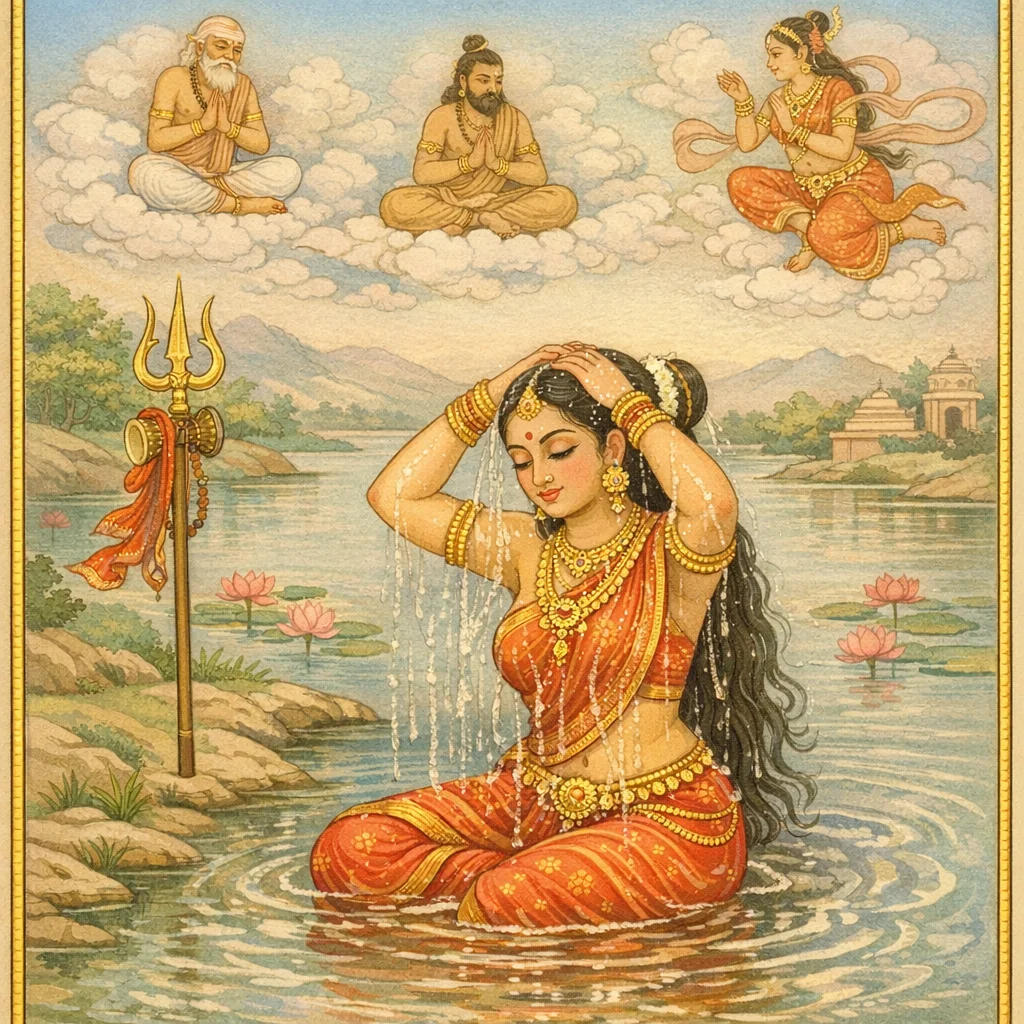
The chapter is framed as an instructive pilgrimage itinerary within the Revākhaṇḍa. Mārkaṇḍeya directs the royal listener to go to Nandāhrada, an unsurpassed sacred lake where siddhas abide and where the goddess Nandā is revered as a bestower of boons. Its sanctity is grounded in a mythic battle: the formidable Mahīṣāsura, dreaded by the devas, is overcome when the Goddess—manifest as Śūlinī—pierces him with her trident. Thereafter the wide-eyed Goddess bathes there, and the lake comes to be known as Nandāhrada. The text then prescribes practice: bathing at this tīrtha with devotion to Nandā and giving gifts to brāhmaṇas is said to yield merit equal to an Aśvamedha. Nandāhrada is also counted among rare, supremely valued holy sites alongside Bhairava, Kedāra, and Rudra Mahālaya, though many fail to recognize it, distracted by desire and attachment. In the concluding phalaśruti, the claim is expanded: the combined fruits of bathing and gifting across the whole ocean-girdled earth are declared to accrue from bathing at Nandāhrada, presenting it as a concentrated locus of merit and righteous conduct.
Shlokas
Verse 1
मार्कण्डेय उवाच । ततो गच्छेन्महाराज नन्दाह्रदमनुत्तमम् । यत्र सिद्धा महाभागा नन्दा देवी वरप्रदा
Mārkaṇḍeya said: Then, O great king, one should go to the unsurpassed Lake of Nandā, where the greatly blessed Goddess Nandā abides, she who bestows boons.
Verse 2
महिषासुरे महाकाये पुरा देवभयंकरे । शूलिन्या शूलभिन्नाङ्गे कृते दानवसत्तमे
Formerly, when the great-bodied Mahiṣāsura—terrifying to the gods—was struck by the Trident-bearing Goddess, his limbs rent by the trident, that foremost of demons was brought down.
Verse 3
येनैकादशरुद्राश्च ह्यादित्याः समरुद्गणाः । वसवो वायुना सार्द्धं चन्द्रादित्यौ सुरेश्वर
By whom, O lord of gods, the eleven Rudras, the Ādityas together with the hosts of Maruts, the Vasus along with Vāyu, and even the Moon and the Sun, were all overpowered—
Verse 4
बलिना निर्जिता येन ब्रह्मविष्णुमहेश्वराः । सङ्ग्रामे सुमहाघोरे कृते देवभयंकरे
By his might even Brahmā, Viṣṇu, and Maheśvara were defeated, when a most dreadful battle—bringing terror to the gods—was waged.
Verse 5
कृत्वा तत्कदनं घोरं नन्दा देवी सुरेश्वरी । यस्मात्स्नाता विशालाक्षी तेन नन्दाह्रदः स्मृतः
Having wrought that dreadful destruction, the goddess Nandā, sovereign over the gods, bathed there; because the wide-eyed Goddess bathed in that place, it is remembered as “Nandā-hrada” (Nandā’s Lake).
Verse 6
तत्र तीर्थे तु यः स्नात्वा नन्दामुद्दिश्य भारत । ददाति दानं विप्रेभ्यः सोऽश्वमेधफलं लभेत्
But whoever bathes at that tīrtha and, intending it for Goddess Nandā, gives charity to the brāhmaṇas—O Bhārata—obtains the reward of an Aśvamedha sacrifice.
Verse 7
भैरवं चैव केदारं तथा रुद्रं महालयम् । नन्दाह्रदश्चतुर्थः स्यात्पञ्चमं भुवि दुर्लभम्
Bhairava, Kedāra, Rudra, and Mahālaya are spoken of as foremost holy places; Nandā-hrada is said to be the fourth, while the fifth is rare to obtain upon the earth.
Verse 8
बहवस्तं न जानन्ति कामरागसमन्विताः । नर्मदाया ह्रदं पुण्यं सर्वपातकनाशनम्
Many, driven by desire and attachment, do not know of it. This sacred lake of the Narmadā is holy, destroying every sin.
Verse 9
तत्र तीर्थे तु यः स्नात्वा नन्दां देवीं प्रपूजयेत् । किं तस्य हिमवन्मध्यगमनेन प्रयोजनम्
Whoever bathes at that tīrtha and duly worships Goddess Nandā—what need has he then to journey into the heart of the Himālaya?
Verse 10
परमार्थमविज्ञाय पर्यटन्ति तमोवृताः । तेषां समागमे पार्थ श्रम एव हि केवलम्
Not knowing the highest truth, those veiled in darkness wander about. In the company of such people, O Pārtha, there is only fatigue—nothing more.
Verse 11
पृथिव्यां सागरान्तायां स्नानदानेन यत्फलम् । तत्फलं समवाप्नोति स्नात्वा नन्दाह्रदे नृप
Whatever merit is gained on the whole earth, bounded by the oceans, through bathing and charitable giving—one obtains that very fruit by bathing in Nandā-hrada, O King.
Verse 140
। अध्याय
Chapter marker (colophon).