Adhyaya 138
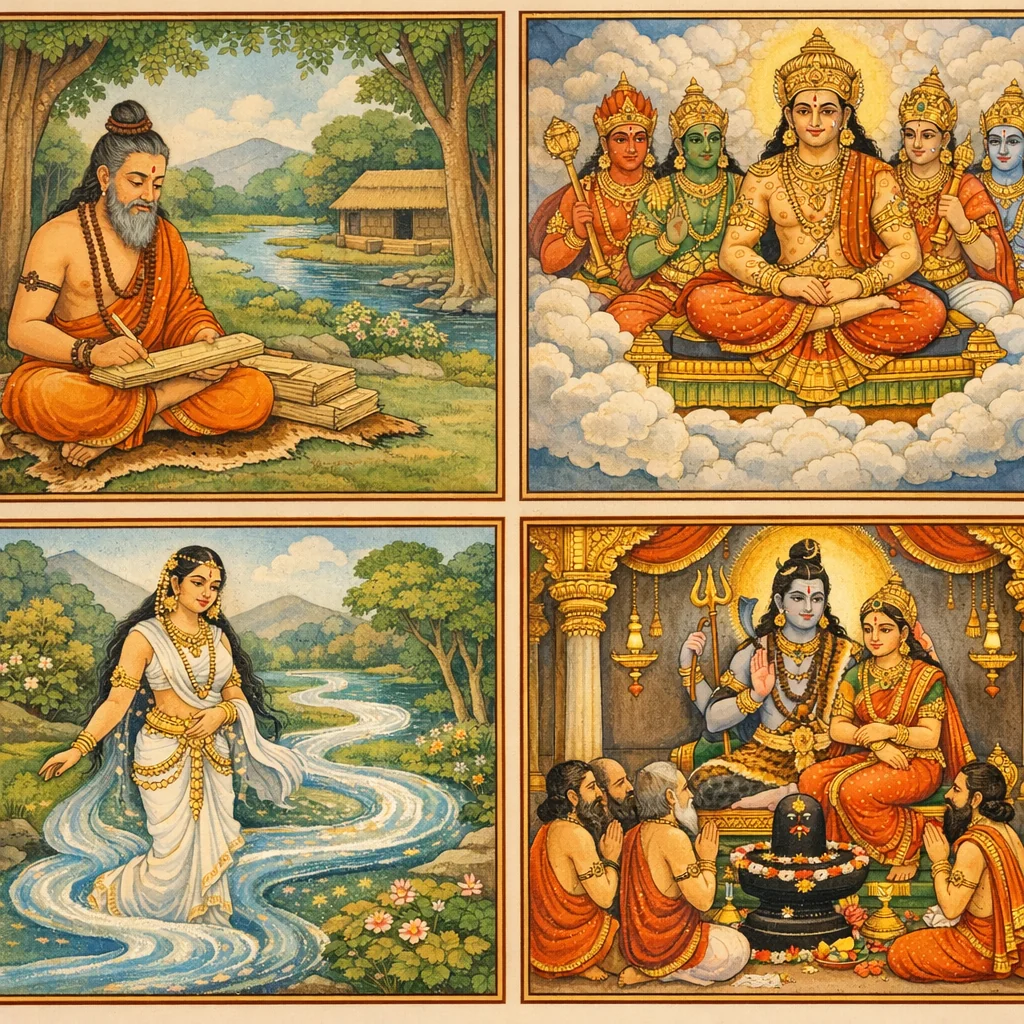
Mārkaṇḍeya teaches that a pilgrim should go to the peerless Śakratīrtha. Its holiness is explained through an origin legend: Indra (Śakra), cursed by the sage Gautama for his own wrongdoing, loses his royal splendor and withdraws in shame. The gods and ascetic seers, distressed, approach Gautama with conciliatory words, arguing that a world without Indra is harmful to divine and human order, and they beg mercy for the afflicted deity. Gautama, praised as a foremost knower of the Veda, relents and grants a boon: what had been “a thousand marks” becomes “a thousand eyes” by the sage’s favor, restoring Indra’s dignity. Indra then goes to the Narmadā, bathes in pure water, establishes and worships Tripurāntaka (Śiva, destroyer of Tripura), and returns to the heavenly abode honored by apsarases. The chapter ends with a clear phala: one who bathes at this tīrtha and worships Parameśvara is freed from the sin connected with illicit approach to another’s spouse, presenting the site as a Śaiva remedy of ritual and ethical purification.
Shlokas
Verse 1
श्रीमार्कण्डेय उवाच । ततो गच्छेत्पाण्डुपुत्र शक्रतीर्थमनुत्तमम् । यत्र सिद्धो महाभागो देवराजः शतक्रतुः
Śrī Mārkaṇḍeya said: “Then, O son of Pāṇḍu, one should go to the unsurpassed Śakra-tīrtha, where the fortunate lord of the gods—Śatakratu (Indra)—attained accomplishment.”
Verse 2
गौतमेन पुरा शप्तं ज्ञात्वा देवाः सुरेश्वरम् । ब्रह्माद्या देवताः सर्व ऋषयश्च तपोधनाः
Learning that the lord of the gods had formerly been cursed by Gautama, all the deities—beginning with Brahmā—and the austerity-rich sages assembled.
Verse 3
गौतमं प्रार्थयामासुर्वाक्यैः सानुनयैः शुभैः । गतराज्यं गतश्रीकं शक्रं प्रति मुनीश्वर
With gracious and conciliatory words they entreated Gautama: “O lord among sages, show regard for Śakra, who has lost his kingdom and whose splendor has departed.”
Verse 4
इन्द्रेन रहितं राज्यं न कश्चित्कामयेद्द्विज । देवो वा मानवो वापि एतत्ते विदितं प्रभो
“No one would desire a kingdom devoid of Indra—whether god or human. This, O venerable one, is well known to you.”
Verse 5
तस्य त्वं भगयुक्तस्य दयां कुरु द्विजोत्तम । गतश्चादर्शनं शक्रो दूषितः स्वेन पाप्मना
Therefore, O best of the twice-born, show compassion to him, though marked by disgrace; Śakra has withdrawn from sight, tainted by his own sin.
Verse 6
देवानां वचनं श्रुत्वा गौतमो वेदवित्तमः । तथेति कृत्वा शक्रस्य वरं दातुं प्रचक्रमे
Hearing the words of the gods, Gautama—supreme among knowers of the Veda—assented, saying, “So be it,” and began to bestow a boon upon Śakra.
Verse 7
एतद्भगसहस्रं तु पुरा जातं शतक्रतो । तल्लोचनसहस्रं तु मत्प्रसादाद्भविष्यति
“O Śatakratu, what was formerly a ‘thousand marks of shame’ shall, by my favor, become a ‘thousand eyes’.”
Verse 8
एवमुक्तः सहस्राक्षः प्रणम्य मुनिसत्तमम् । ब्राह्मणांस्तान्महाभागान्नर्मदां प्रत्यगात्ततः
Thus addressed, Sahasrākṣa (Indra) bowed to the best of sages; then, together with those fortunate Brahmins, he set out toward the Narmadā.
Verse 9
स्नात्वा स विमले तोये संस्थाप्य त्रिपुरान्तकम् । जगाम त्रिदशावासं पूज्यमानोऽप्सरोगणैः
After bathing in the spotless waters and establishing the worship of Tripurāntaka, he went to the abode of the gods, honored by hosts of apsarases.
Verse 10
तत्र तीर्थे तु यः स्नात्वा पूजयेत्परमेश्वरम् । परदाराभिगमनान्मुच्यते पातकान्नरः
At that sacred ford, whoever bathes and worships Parameśvara is freed from the stain of sin—even the grave fault of approaching another’s wife.
Verse 138
। अध्याय
“Chapter” (a colophon or section marker).