Adhyaya 137
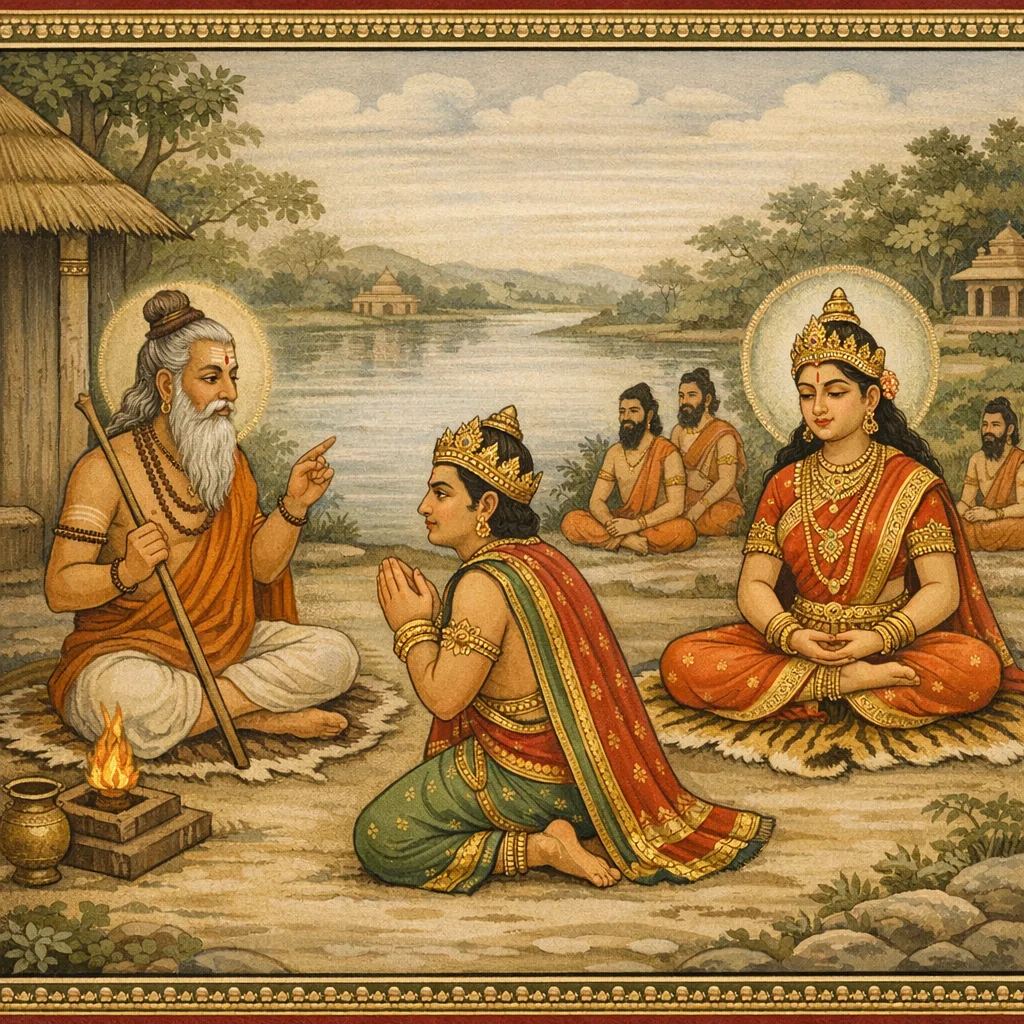
This adhyāya records Mārkaṇḍeya’s guidance to a royal hearer, directing the pilgrim to Karkaṭeśvara—an eminent Śaiva tīrtha on the northern bank of the Narmadā—praised as a place where sins are destroyed. It explains the prescribed rites and their fruits: bathing according to vidhi and worshipping Śiva grants, after death, an irreversible course toward Rudra’s realm. Though the speaker says the site’s greatness cannot be fully compressed into words, he states key doctrines: any deed—auspicious or inauspicious—performed there becomes “imperishable,” showing the intensified durability of karma in sacred space. This power is grounded in exemplary presences: the Vālakhilya sages and Marīci-linked ascetics who choose to delight there, and Devī Nārāyaṇī who continues severe tapas. Finally, ancestral offerings are prescribed: one who bathes and performs tarpana satisfies the forefathers for twelve years, uniting personal liberation, ethical conduct, and lineage duty in a single tīrtha-centered ritual path.
Shlokas
Verse 1
मार्कण्डेय उवाच । धर्मपुत्र ततो गच्छेत्कर्कटेश्वरमुत्तमम् । उत्तरे नर्मदाकूले सर्वपापक्षयंकरम्
Mārkaṇḍeya said: “O son of Dharma, then one should go to the supreme Karkaṭeśvara, on the northern bank of the Narmadā—where all sins are brought to destruction.”
Verse 2
तत्र स्नात्वा विधानेन यस्तु पूजयते शिवम् । अनिवर्तिका गतिस्तस्य रुद्रलोकादसंशयम्
Having bathed there according to proper rite, whoever worships Śiva attains a path that does not return—reaching Rudra’s world, without doubt.
Verse 3
तस्य तीर्थस्य माहात्म्यं पुराणे यच्छ्रुतं मया । न तद्वर्णयितुं शक्यं संक्षेपेण वदाम्यतः
The greatness of that tīrtha, as I have heard it in the Purāṇas, cannot truly be described; therefore I shall speak of it only in brief.
Verse 4
तत्र तीर्थे तु यः कुर्यात्किंचित्कर्म शुभाशुभम् । हर्षान्मदान्महाराज तत्सर्वं जायतेऽक्षयम्
At that tīrtha, whatever act a person performs—auspicious or inauspicious—O great king, whether from joy or from heedlessness, all of it becomes unfailing in its result.
Verse 5
तत्र तीर्थे तपस्तप्त्वा वालखिल्या मरीचयः । रमन्तेऽद्यापि लोकेषु स्वेच्छया कुरुनन्दन
Having practiced austerities at that tīrtha, the Vālakhilyas and the Marīcis still delight even today, moving through the worlds at will—O joy of the Kurus.
Verse 6
तत्रस्थास्तन्न जानन्ति नराज्ञानबहिष्कृताः । शरीरस्थमिवात्मानमक्षयं ज्योतिरव्ययम्
Those who dwell there do not recognize that truth, for they are driven out by ignorance—like one who fails to perceive the Self, the imperishable, undecaying light, though it abides within the body.
Verse 7
तत्र तीर्थे नृपश्रेष्ठ देवी नारायणी पुरा । अद्यापि तपते घोरं तपो यावत्किलार्बुदम्
At that tīrtha, O best of kings, the goddess Nārāyaṇī formerly undertook severe austerity—and even now she performs fierce tapas for as long as an arbuda, a vast span of time.
Verse 8
तत्र तीर्थे तु यः स्नात्वा तर्पयेत्पितृदेवताः । तस्य ते द्वादशाब्दानि तृप्तिं यान्ति पितामहाः
At that tīrtha, if one bathes and offers tarpaṇa to the Pitṛ-deities, then one’s ancestors remain satisfied for twelve years.
Verse 137
। अध्याय
Colophon: “Chapter” (end/transition of the adhyāya).