Adhyaya 136
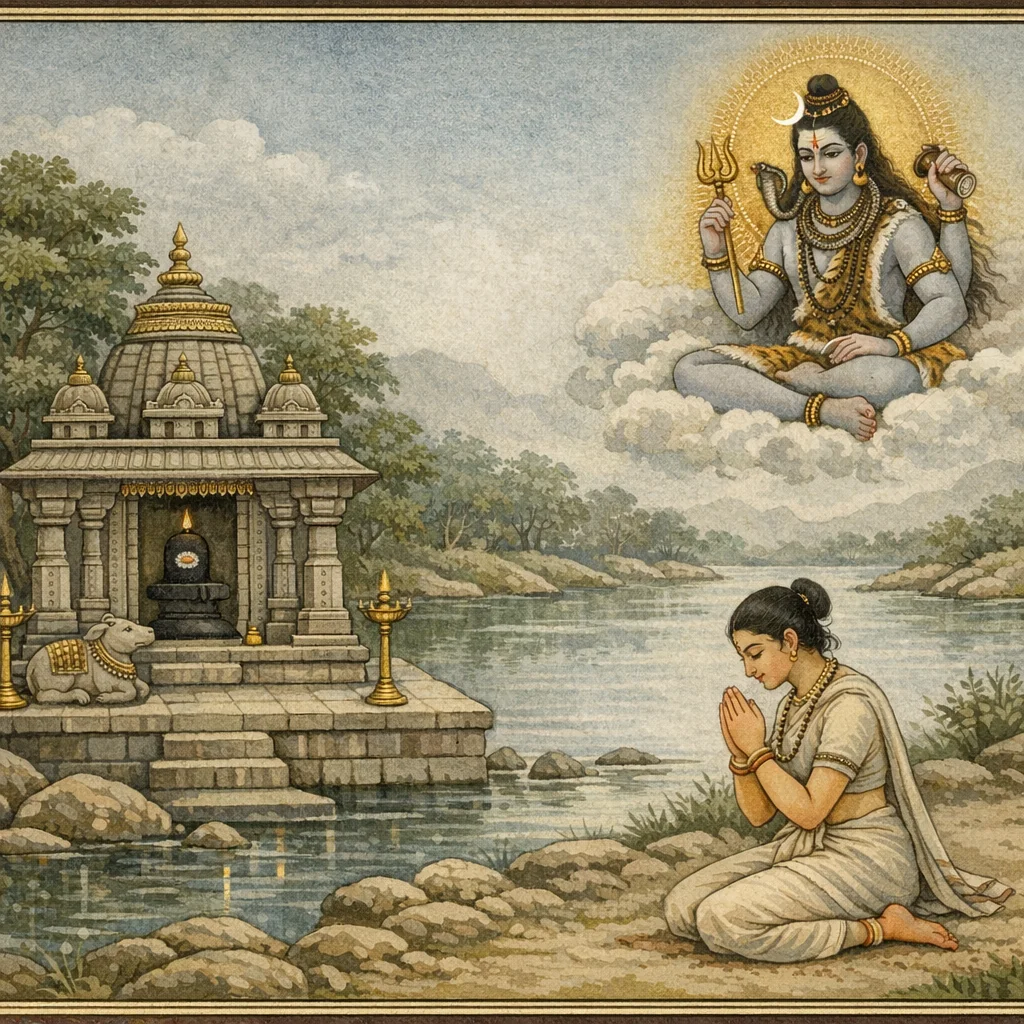
Mārkaṇḍeya retells, in a place-centered manner, the Ahalyā–Gautama–Indra episode to establish the sanctity of the Ahalyeśvara shrine of Śiva and the adjoining tīrtha. Gautama is portrayed as an exemplary brāhmaṇa-ascetic, and Ahalyā as famed for beauty; Indra (Śakra), driven by desire, deceives Gautama by assuming a disguise and approaches Ahalyā near their dwelling. When Gautama arrives and recognizes the transgression, he curses Indra, leaving a bodily mark described as the manifestation of many bhagas; Indra then relinquishes sovereignty and undertakes austerities. Ahalyā too is cursed to become stone, yet her release is time-bound: after a thousand years she is purified upon seeing Rāma during a pilgrimage, accompanied by Viśvāmitra. Restored, Ahalyā performs rites on the bank of the Narmadā tīrtha—sacred bathing (snāna) and austerities, including cāndrāyaṇa and other kṛcchras. Pleased, Mahādeva grants a boon; Ahalyā installs Śiva as “Ahalyeśvara.” The phalaśruti concludes that those who bathe at the tīrtha and worship Parameśvara there attain heaven and, in due course, human rebirth endowed with prosperity, learning, health, longevity, and unbroken family lineage.
Shlokas
Verse 1
श्रीमार्कण्डेय उवाच । ततो गच्छेन्महीपाल चाहल्येश्वरमुत्तमम् । यत्र सिद्धा महाभागा त्वहल्या तापसी पुरा
Śrī Mārkaṇḍeya said: “Then, O king, one should go to the excellent shrine of Cāhalyeśvara, where in former times the greatly fortunate ascetic Ahalyā attained perfection (siddhi).”
Verse 2
गौतमो ब्राह्मणस्त्वासीत्साक्षाद्ब्रह्मेव चापरः । सत्यधर्मसमायुक्तो वानप्रस्थाश्रमे रतः
There was the brāhmaṇa Gautama, as though another Brahmā in person—endowed with truth and dharma, devoted to the vānaprastha āśrama.
Verse 3
तस्य पत्नी महाभागा ह्यहल्या नाम विश्रुता । रूपयौवनसम्पन्ना त्रिषु लोकेषु विश्रुता
His wife was the greatly blessed one, famed by the name Ahalyā—endowed with beauty and youth, renowned throughout the three worlds.
Verse 4
अस्या अप्यतिरूपेण देवराजः शतक्रतुः । मोहितो लोभयामास ह्यहल्यां बलसूदनः
Enchanted by her extraordinary beauty, Indra—the king of the gods, performer of a hundred sacrifices—fell into delusion and sought to entice Ahalyā, the slayer of Bala.
Verse 5
मां भजस्व वरारोहे देवराजमनिन्दिते । क्रीडयस्व मया सार्द्धं त्रिषु लोकेषु पूजिता
“Choose me,” he said—“O fair-hipped one, O blameless lady—choose the king of the gods. Sport with me; you shall be honored in the three worlds.”
Verse 6
किं करिष्यसि विप्रेण शौचाचारकृशेन तु । तपःस्वाध्यायशीलेन क्लिश्यन्तीव सुलोचने
‘What will you do with a brāhmaṇa who is lean from purity and strict conduct—one devoted to austerity and Vedic study? O fair-eyed one, you seem as though you are suffering in such a life.’
Verse 7
एवमुक्ता वरारोहा स्त्रीस्वभावात्सुचञ्चला । मनसाध्याय शक्रं सा कामेन कलुषीकृता
Thus addressed, the fair-hipped lady—fickle by the wavering tendencies of human nature—began to contemplate Śakra in her mind; desire stained her with inner impurity.
Verse 8
तस्या विदित्वा तं भावं स देवः पाकशासनः । गौतमं वञ्चयामास दुष्टभावेन भावितः
Knowing her inclination, that god—Pākaśāsana (Indra)—set about deceiving Gautama, his mind driven by a wicked intent.
Verse 9
विदित्वा चान्तरं तस्य गृहीत्वा वेषमुत्तमम् । अहल्यां रमयामास विश्वस्तां मन्दिरान्तिके
Finding his moment, he assumed an excellent disguise and enticed Ahalyā—who trusted him—near the dwelling.
Verse 10
क्षणमात्रान्तरे तत्र देवराजस्य भारत । आजगाम मुनिश्रेष्ठो मन्दिरं त्वरयान्वितः
But in that very place, within a mere moment, O Bhārata, the foremost of sages hurried back to the dwelling of the lord of the gods.
Verse 11
आगतं गौतमं दृष्ट्वा भीतभीतः पुरंदरः । निर्गतः स ततो दृष्ट्वा शक्रोऽयमिति चिन्तयन्
Seeing Gautama arrive, Purandara (Indra) became terrified. He slipped out; and on seeing him, Gautama thought, ‘This is Śakra.’
Verse 12
ततः शशाप देवेन्द्रं गौतमः क्रोधमूर्छितः । अजितेन्द्रियोऽसि यस्मात्त्वं तस्माद्बहुभगो भव
Then Gautama, overcome by wrath, cursed the lord of the gods: ‘Because you have not conquered the senses, therefore become “many-marked.”’
Verse 13
एवमुक्तस्तु देवेन्द्रस्तत्क्षणादेव भारत । भगानां तु सहस्रेण तत्क्षणादेव वेष्टितः
Thus addressed, O Bhārata, Devendra at that very instant became covered—indeed encircled—by a thousand ‘bhagas’ (sexual marks).
Verse 14
त्यक्त्वा राज्यं सुरैः सार्द्धं गतश्रीको जगाम ह । तपश्चचार विपुलं गौतमेन महीतले
Abandoning his sovereignty, his splendor lost, he departed with the gods; and upon the earth he performed mighty austerities in relation to Gautama, seeking relief.
Verse 15
अहल्यापि ततः शप्ता यस्मात्त्वं दुष्टचारिणी । प्रेक्ष्य मां रमसे शक्रं तस्मादश्ममयी भव
Then Ahalyā too was cursed: “Since you have acted wickedly—seeing me, yet choosing to delight in Śakra—therefore become made of stone.”
Verse 16
गते वर्षसहस्रान्ते रामं दृष्ट्वा यशस्विनम् । तीर्थयात्राप्रसङ्गेन धौतपापा भविष्यसि
When a thousand years have passed, on seeing the illustrious Rāma, you will—through the occasion of pilgrimage to the tīrthas—have your sins washed away.
Verse 17
एवं गते ततः काले दृष्टा रामेण धीमता । विश्वामित्रसहायेन त्यक्त्वा साश्ममयीं तनुम्
When that time had thus passed, she was seen by the wise Rāma; and with Viśvāmitra as his aid, she cast off that stone-like body.
Verse 18
पूजयित्वा यथान्यायं गतपापा विमत्सरा । आगता नर्मदातीरे तीर्थे स्नात्वा यथाविधि
Having worshipped in the proper manner, free from sin and without envy, she came to the bank of the Narmadā; and bathing at the tīrtha according to rule,
Verse 19
कृतं चान्द्रायणं मासं कृच्छ्रं चान्यं ततः परम् । ततस्तुष्टो महादेवो दत्त्वा वरमनुत्तमम्
She observed the Cāndrāyaṇa vow for a month, and thereafter undertook another austere Kṛcchra discipline. Then Mahādeva, pleased, bestowed an unsurpassed boon.
Verse 20
जगामादर्शनं भूयो रेमे चोमापतिश्चिरम् । अहल्या तु गते देवे स्थापयित्वा जगद्गुरुम्
Again he departed beyond sight, and the Lord of Umā remained at ease for a long time. But when the Deva had gone, Ahalyā, having installed the Guru of the world as a shrine,
Verse 21
अहल्येश्वरनामानं स्वगृहे चागमत्पुनः । तत्र तीर्थे तु यः स्नात्वा पूजयेत्परमेश्वरम्
and she returned again to her own abode, naming the deity “Ahalyeśvara.” Whoever, at that tīrtha, bathes and worships Parameśvara,
Verse 22
स मृतः स्वर्गमाप्नोति यत्र देवो महेश्वरः । क्रीडयित्वा यथाकामं तत्र लोके महातपाः
upon death attains heaven, there where the Deva Maheśvara abides. Having enjoyed there according to desire, that great ascetic soul in that world
Verse 23
गते वर्षसहस्रान्ते मानुष्यं लभते पुनः । धनधान्यचयोपेतः पुत्रपौत्रसमन्वितः
When a thousand years have passed, he attains human birth again, endowed with abundance of wealth and grain, and accompanied by sons and grandsons.
Verse 24
वेदविद्याश्रयो धीमाञ्जायते विमले कुले । रूपसौभाग्यसम्पन्नः सर्वव्याधिविवर्जितः । जीवेद्वर्षशतं साग्रमहल्यातीर्थसेवनात्
Through service to Ahalyā-tīrtha, one is born wise in a pure family, devoted to Vedic learning; endowed with beauty and good fortune, free from all diseases, one lives a full hundred years and more.
Verse 136
। अध्याय
“Chapter.” (A chapter-end marker/colophon fragment as transmitted.)