Adhyaya 134
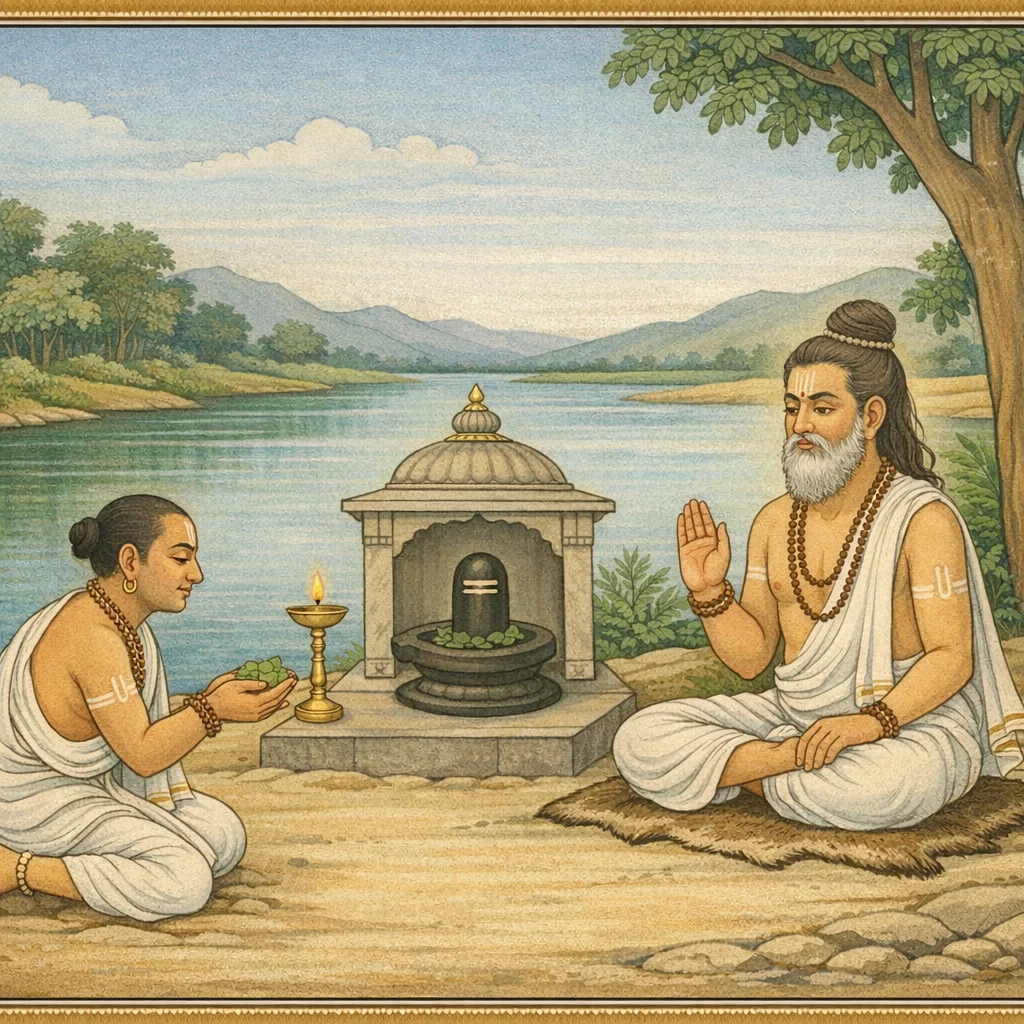
This adhyāya is a concise tīrtha-māhātmya declaration spoken by Śrī Mārkaṇḍeya. It points to an ‘unsurpassed’ sacred place named Rāmeśvara, situated on the southern bank of the Narmadā (Revā). Rāmeśvara is praised as pāpa-hara (the remover of sin and ritual taint), as the giver of puṇya (merit), and as sarva-duḥkha-ghna (the destroyer of all affliction). The effective observance is then stated: whoever bathes there (snāna) and worships Maheśvara—addressed as Mahādeva and Mahātmā—is freed from all kilbiṣa (transgressions and impurities). Thus the text joins place, ritual order (bath → pūjā), and the promised fruit of purification into a compact guide for pilgrimage practice.
Shlokas
Verse 1
श्रीमार्कण्डेय उवाच । नर्मदादक्षिणे कूले रामेश्वरमनुत्तमम् । तीर्थं पापहरं पुण्यं सर्वदुःखघ्नमुत्तमम्
Śrī Mārkaṇḍeya said: On the southern bank of the Narmadā stands the unsurpassed Rāmeśvara—an excellent tīrtha, holy and sin-destroying, the supreme remover of every sorrow.
Verse 2
तत्र तीर्थे तु ये स्नात्वा पूजयन्ति महेश्वरम् । महादेवं महात्मानं मुच्यन्ते सर्वकिल्बिषैः
Those who bathe at that tīrtha and worship Maheśvara—Mahādeva, the great-souled Lord—are freed from all defilements and sins.
Verse 134
। अध्याय
Chapter (marker).