Adhyaya 133
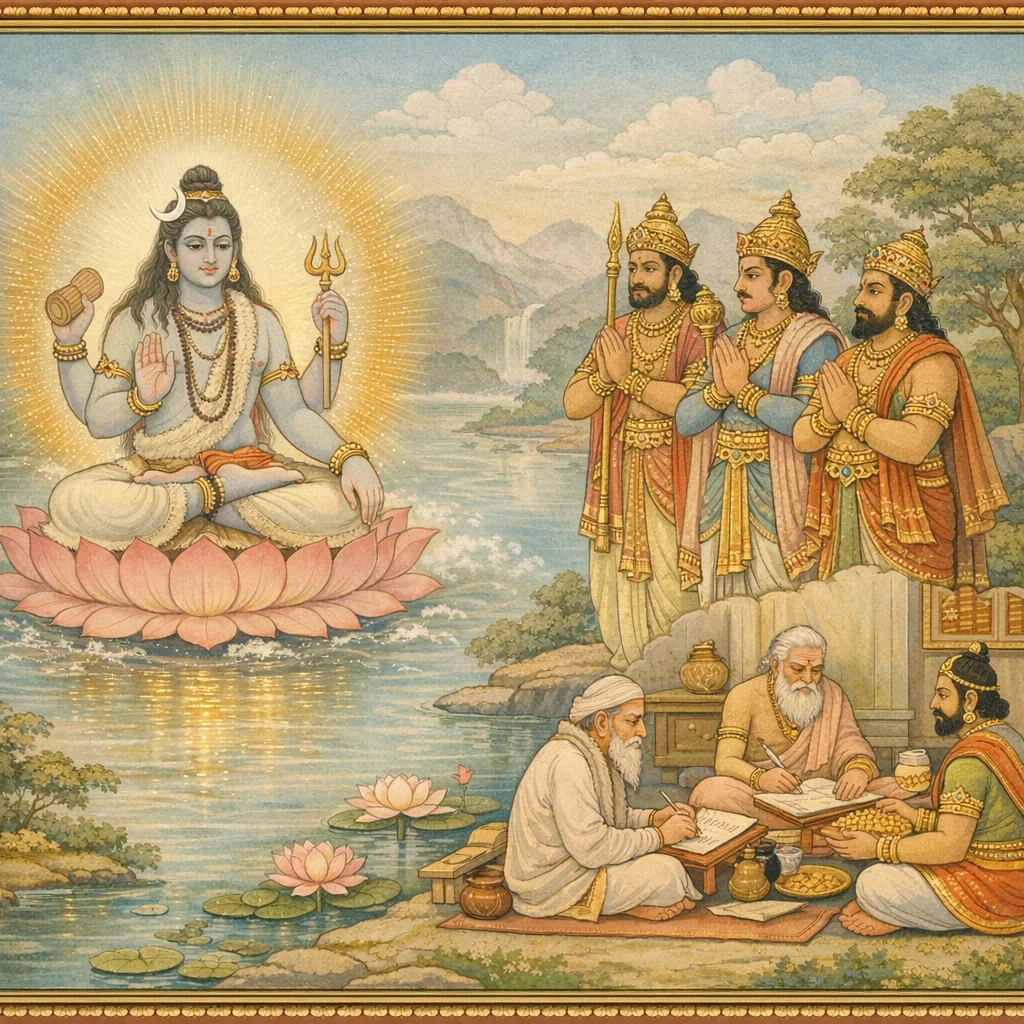
Mārkaṇḍeya points out a supreme set of four tīrthas whose mere darśana is said to destroy sin: the sacred stations of the lokapālas Kubera, Varuṇa, Yama, and Vāyu. When Yudhiṣṭhira asks why these guardians performed austerities on the bank of the Narmadā, Mārkaṇḍeya explains that, in an unstable world, they sought a firm foundation, and that Dharma is the sustaining support of all beings. The lokapālas undertake intense tapas and receive boons from Śiva: Kubera becomes lord of the yakṣas and of wealth; Yama gains authority over restraint and judgment; Varuṇa attains sovereignty in the realm of waters; and Vāyu becomes all-pervasive. Each establishes a shrine bearing his name and performs worship with offerings. The account then turns to social and ethical injunctions: learned brāhmaṇas are to be invited and honored with gifts, especially grants of land, with stern warnings against confiscation. Punishments are declared for those who annul such gifts, while protecting a grant is praised as greater than giving it. The specific tīrtha-fruits are listed: worship at Kubereśa yields merit like an Aśvamedha; at Yameśvara, release from sins gathered across births; at Varuṇeśa, merit like a Vājapeya; and at Vāteśvara, the fulfillment of life’s aims. The phalaśruti concludes that hearing or reciting this narrative removes sin and increases auspiciousness.
Shlokas
Verse 1
श्रीमार्कण्डेय उवाच । ततो गच्छेन्महीपाल परं तीर्थचतुष्टयम् । येषां दर्शनमात्रेण सर्वपापक्षयो भवेत्
Śrī Mārkaṇḍeya said: Then, O king, one should proceed to the supreme set of four sacred tīrthas—by the mere sight of which all sins are destroyed.
Verse 2
कौबेरं वारुणं याम्यं वायव्यं तु ततः परम् । यत्र सिद्धा महाप्राज्ञा लोकपाला महाबलाः
Kaubera, Vāruṇa, Yāmya, and then the excellent Vāyavya—these are the four; where mighty, world-guarding deities, accomplished and supremely wise, are present.
Verse 3
युधिष्ठिर उवाच । किमर्थं लोकपालैश्च तपश्चीर्णं पुरानघ । नर्मदातटमाश्रित्य ह्येतन्मे वक्तुमर्हसि
Yudhiṣṭhira said: O sinless one, for what reason did the guardians of the worlds perform austerities in ancient times, taking refuge on the bank of the Narmadā? Please tell me this.
Verse 4
श्रीमार्कण्डेय उवाच । अधिष्ठानं समिच्छन्ति ह्यचलं निर्बले सति । संसारे सर्वभूतानां तृणबिन्दुवदस्थिरे
Śrī Mārkaṇḍeya said: When strength is lacking, beings in this world seek an unmoving support; for in saṃsāra the condition of all creatures is unstable—like a drop upon a blade of grass.
Verse 5
कदलीसारनिःसारे मृगतृष्णेव चञ्चले । स्थावरे जङ्गमे सर्वे भूतग्रामे चतुर्विधे
In this assembly of beings—fourfold in kind—whether stationary or moving, all is fickle like a mirage, and insubstantial like the pith of a banana tree.
Verse 6
धर्मो माता पिता धर्मो धर्मो बन्धुः सुहृत्तथा । आधारः सर्वभूतानां त्रैलोक्ये सचराचरे
Dharma is the mother; dharma is the father; dharma is one’s kinsman and also one’s true friend. Dharma is the support of all beings throughout the three worlds—moving and unmoving.
Verse 7
एवं ज्ञात्वा तु ते सर्वे लोकपालाः कृतक्षणाः । तपस्ते चक्रुरतुलं मारुताहारतत्पराः
Knowing thus, all those guardians of the worlds—fully resolved—performed incomparable austerities, intent on living only on air.
Verse 8
ततस्तुष्टो महादेवः कृतस्यार्द्धे गते तदा । अनुरूपेण राजेन्द्र युगस्य परमेश्वरः
Then, when half of the Kṛta-yuga had passed, Mahādeva—the Supreme Lord of the age—became pleased, O king, and appeared in a form befitting that time.
Verse 9
वरेण छन्दयामास लोकपालान्महाबलान् । यो यमिच्छति कामं वै तं तं तस्य ददाम्यहम्
With a boon he gratified those mighty guardians of the worlds, saying: “Whatever desire any one of you wishes for, that I shall grant to him.”
Verse 10
एतच्छ्रुत्वा वचस्तस्य लोकपाला जगद्धिताः । वरदं प्रार्थयामासुर्देवं वरमनुत्तमम्
Hearing his words, the world-guardians—intent on the welfare of the universe—began to petition that boon-giving god for the highest of boons.
Verse 11
कुबेर उवाच । यदि तुष्टो महादेव यदि देयो वरो मम । यक्षाणामीश्वरश्चाहं भवामि धनदस्त्विति
Kubera said: “If you are pleased, O Mahādeva, and if a boon is to be granted to me—may I become the lord of the Yakṣas, and be known as Dhanada, the giver of wealth.”
Verse 12
ततः प्रोवाच देवेशं यमः संयमने रतः । तत्र प्रधानो भगवान् भवेयं सर्वजन्तुषु
Then Yama—devoted to restraint and governance—spoke to the Lord of gods: “In that domain, among all beings, may I become the foremost lord.”
Verse 13
वरुणोऽनन्तरं प्राह प्रणम्य तु महेश्वरम् । क्रीडेयं वारुणे लोके यादोगणसमन्वितः
Thereupon Varuṇa, bowing to Maheśvara, spoke: “May I sport in my own Varuṇa-world, surrounded by the hosts of aquatic beings.”
Verse 14
जगादाशु ततो वायुः प्रणम्य तु महेश्वरम् । व्यापकत्वं त्रिलोकेषु प्रार्थयामास भारत
Then Vāyu, quickly bowing to Maheśvara, prayed for the power to pervade the three worlds, O Bhārata.
Verse 15
तेषां यदीप्सितं काममुमया सह शङ्करः । सर्वेषां लोकपालानः दत्त्वा चादर्शनं गतः
Śaṅkara, together with Umā, granted each Lokapāla the boon he desired—and then vanished from sight.
Verse 16
गते महेश्वरे देवे यथास्थानं तु ते स्थिताः । स्थापना च कृता सर्वैः स्वनाम्नैव पृथक्पृथक्
When the Deva Maheśvara had departed, they remained in their respective stations; and each, separately, established a seat-shrine bearing his own name.
Verse 17
कुबेरश्च कुबेरेशं यमश्चैव यमेश्वरम् । वरुणो वरुणेशं तु वातो वातेश्वरं नृप
Kubera (established) Kubereśa; Yama likewise (established) Yameśvara; Varuṇa (established) Varuṇeśa; and Vāta (established) Vāteśvara, O King.
Verse 18
तर्पणं विदधुः सर्वे मन्त्रैश्च विविधैः शुभैः । सर्वे सर्वेश्वरं देव पूजयित्वा यथाविधि
All of them performed tarpaṇa with many auspicious mantras; and all, having worshipped Sarveśvara, the Lord, according to due rite, proceeded further.
Verse 19
आह्वयामासुस्तान् विप्रान्सर्वे सर्वेश्वरा इव । क्षान्तदान्तजितक्रोधान्सर्वभूताभयप्रदान्
Then all of them, as though they were lords themselves, invited those brāhmaṇas—patient, self-restrained, conquerors of anger, and givers of fearlessness to all beings.
Verse 20
वेदविद्याव्रतस्नातान् सर्वशास्त्रविशारदान् । ऋग्यजुःसामसंयुक्तांस्तथाथर्वविभूषितान्
They invited brāhmaṇas bathed in Vedic learning and disciplined vows, skilled in all śāstras—endowed with Ṛg, Yajus, and Sāman, and adorned also with Atharvan lore.
Verse 21
चातुर्विध्यं तु सर्वेषां दानं दास्याम गृह्णत । एवमुक्त्वा तु सर्वेषां विप्राणां दानमुत्तमम्
“We shall give a fourfold gift to you all—accept it.” Having spoken thus, they prepared the supreme act of charity for all the brāhmaṇas.
Verse 22
तत्र स्थाने ददुस्तेषां भूमिदानमनुत्तमम् । यावच्चन्द्रश्च सूर्यश्च यावत्तिष्ठति मेदिनी
In that very place they granted them an unsurpassed gift of land—(to endure) as long as the moon and the sun (shine), as long as the earth remains.
Verse 23
तावद्दानं तु युष्माकं परिपन्थी न कश्चन । राजा वा राजतुल्यो वा लोकपालैरनुत्तमम्
So long as your gift stands unviolated, no one can obstruct your welfare—whether a king, one equal to a king, or even the unsurpassed guardians of the worlds.
Verse 24
दत्तं लोपयते मूढः श्रूयतां तस्य यो विधिः । शोषयेद्धनदो वित्तं तस्य पापस्य भारत
Hear the fate of that fool who nullifies what has been given: Kubera, the Lord of Wealth, dries up the riches of that sinner, O Bhārata.
Verse 25
शरीरं वरुणो देवः संततीं श्वसनस्तथा । आयुर्नयति तस्याशु यमः संयमनो महान्
Varuṇa seizes his bodily well-being, Vāyu takes away his lineage, and the great Yama—the restrainer—swiftly carries off his lifespan.
Verse 26
निःशेषं भस्मसात्कृत्वा हुतभुग्याति भारत । तस्मात्सर्वप्रयत्नेन ब्राह्मणेभ्यो युधिष्ठिर । भक्तिः कार्या नृपैः सर्वैरिच्छद्भिः श्रेय आत्मनः
Having reduced him wholly to ashes, Agni consumes him, O Bhārata. Therefore, O Yudhiṣṭhira, with every effort kings should render devoted honor to the Brāhmaṇas—for all rulers who seek their own highest good.
Verse 27
राजा वृक्षो ब्राह्मणास्तस्य मूलं भृत्याः पर्णा मन्त्रिणस्तस्य शाखाः । तस्मान्मूलं यत्नतो रक्षणीयं मूले गुप्ते नास्ति वृक्षस्य नाशः
The king is a tree; the Brāhmaṇas are its root; servants are its leaves; ministers are its branches. Therefore the root must be protected with care—when the root is secure, the tree does not perish.
Verse 28
षष्टिवर्षसहस्राणि स्वर्गे तिष्ठति भूमिदः । आच्छेत्ता चावमन्ता च तान्येव नरके वसेत्
For sixty thousand years the giver of land dwells in heaven; but the one who confiscates it, and the one who scorns it, shall dwell in hell for that same span.
Verse 29
स्वदत्ता परदत्ता वा पालनीया वसुंधरा । यस्य यस्य यदा भूमिस्तस्य तस्य तदा फलम्
Whether given by oneself or by another, the granted land must be protected. For whoever holds the land at any time—he indeed receives its fruit then.
Verse 30
देवताज्ञामनुस्मृत्य राजानो येऽपि तां नृप । पालयिष्यन्ति सततं तेषां वासस्त्रिविष्टपे
Remembering the command of the gods, those kings who will continually protect that land-grant, O ruler, shall have their abode in Triviṣṭapa (heaven).
Verse 31
स्वदत्ता परदत्ता वा यत्नाद्रक्ष्या युधिष्ठिर । मही महीक्षिता नित्यं दानाच्छ्रेयोऽनुपालनम्
Whether given by oneself or by another, the land must be carefully guarded, O Yudhiṣṭhira. For kings, the protection of a grant is always superior to the act of giving itself.
Verse 32
आयुर्यशो बलं वित्तं संततिश्चाक्षया नृप । तेषां भविष्यते नूनं ये प्रजापालने रताः
Long life, fame, strength, wealth, and imperishable progeny shall surely belong to those, O King, who are devoted to the protection of their subjects.
Verse 33
एवमुक्त्वा तु तान् सर्वांल्लोकपालान् द्विजोत्तमान् । पूजयित्वा विधानेन प्रणिपत्य व्यसर्जयन्
Having spoken thus, the excellent Brāhmaṇa worshipped all those Lokapālas according to the sacred rites; then, bowing down, he respectfully bid them farewell.
Verse 34
गतेषु विप्रमुख्येषु स्नात्वा हुतहुताशनाः । लोकपालाः क्षुधाविष्टाः पर्यटन्भैक्षमात्मनः
When the foremost Brāhmaṇas had departed, the Lokapālas bathed and offered oblations to the sacred fire; yet, overcome by hunger, they wandered about seeking alms.
Verse 35
अस्थिचर्मावशेषाङ्गाः कपालोद्धृतपाणयः । अलब्धग्रासमर्द्धार्धं निर्ययुर्नगराद्बहिः
With bodies reduced to mere bone and skin, holding skull-bowls in their hands, and having obtained not even half a morsel of food, they departed from the city.
Verse 36
शापं दत्त्वा तदा क्रोधाद्ब्राह्मणाय युधिष्ठिर । दरिद्राः सततं मूर्खा भवेयुश्च ययुर्गृहान्
Then, in anger, they pronounced a curse upon the brāhmaṇa, O Yudhiṣṭhira: “May you be ever poor and ever foolish.” Having thus cursed him, they returned to their homes.
Verse 37
तदाप्रभृति ते सर्वे ब्राह्मणा धनवर्जिताः । शापदोषेण कौबेर्यां संजाता दुःखभाजनाः
From that time onward, all those brāhmaṇas were bereft of wealth; through the fault of that curse, in Kubera’s domain they became vessels of sorrow.
Verse 38
न धनं पैतृकं पुत्रैर्न पिता पुत्रपौत्रिकम् । भुञ्जते सकलं कालमित्येवं शङ्करोऽब्रवीत्
“Sons do not enjoy ancestral wealth, nor does a father enjoy the wealth of sons and grandsons, through the whole of time”—thus spoke Śaṅkara (Śiva).
Verse 39
कुबेरेशे नरः स्नात्वा यस्तु पूजयते शिवम् । गन्धधूपनमस्कारैः सोऽश्वमेधफलं लभेत्
At Kubereśa, a man who bathes and then worships Śiva with fragrance, incense, and reverent salutations attains merit equal to the fruit of an Aśvamedha sacrifice.
Verse 40
यमतीर्थे तु यः स्नात्वा सम्पश्यति यमेश्वरम् । सर्वपापैः प्रमुच्येत सप्तजन्मान्तरार्जितैः
But at Yama-tīrtha, whoever bathes and beholds Yameśvara is released from all sins—even those accumulated across seven lifetimes.
Verse 41
पूर्णमास्याममावास्यां स्नात्वा तु पितृतर्पणम् । यः करोति तिलैः स्नानं तस्य पुण्यफलं शृणु
On the full-moon day and the new-moon day, having bathed, whoever offers tarpaṇa to the Pitṛs and bathes with sesame—hear the meritorious fruit of that act.
Verse 42
सुतृप्तास्तेन तोयेन पितरश्च पितामहाः । स्वर्गस्था द्वादशाब्दानि क्रीडन्ति प्रपितामहाः
By that water the fathers and grandfathers become fully satisfied; and the great-grandfathers, abiding in heaven, delight there for twelve years.
Verse 43
वरुणेशे नरः स्नात्वा ह्यर्चयित्वा महेश्वरम् । वाजपेयस्य यज्ञस्य फलं प्राप्नोति पुष्कलम्
Having bathed at Varuṇeśvara and duly worshipped Maheśvara, a person attains abundant merit—the very fruit of the Vājapeya sacrifice.
Verse 44
मृतां कालेन महता लोके यत्र जलेश्वरः । स गच्छेत्तत्र यानेन गीयमानोऽप्सरोगणैः
After a long span of time, when one departs this world, one goes to that realm where Jaleśvara abides—borne in a celestial conveyance and praised by hosts of Apsarases.
Verse 45
वातेश्वरे नरः स्नात्वा सम्पूज्य च महेश्वरम् । जायते कृतकृत्योऽसौ लोकपालानवेक्षयन्
Having bathed at Vāteśvara and having fully worshipped Maheśvara, that person becomes one whose life-purpose is fulfilled, beholding the guardians of the worlds (Lokapālas).
Verse 46
किं तस्य बहुभिर्यज्ञैर्दानैर्वा बहुदक्षिणैः । स्नात्वा चतुष्टये लोके अवाप्तं जन्मनः फलम्
What need has he of many yajñas, or of gifts with abundant dakṣiṇā? By bathing in the fourfold sacred complex, he has gained in this very world the true fruit of human birth.
Verse 47
ते धन्यास्ते महात्मानस्तेषां जन्म सुजीवितम् । नित्यं वसन्ति कौरिल्यां लोकपालान्निमन्त्र्य ये
Blessed indeed are they—great-souled are they—whose birth is well-spent: those who dwell continually in Kaurilā, having invited the guardians of the worlds.
Verse 48
एतत्पुण्यं पापहरं धन्यमायुर्विवर्धनम् । पठतां शृण्वतां चैव सर्वपापक्षयो भवेत्
This account is meritorious, sin-destroying, auspicious, and life-enhancing. For those who recite it and those who hear it, the destruction of all sins surely arises.