Adhyaya 131
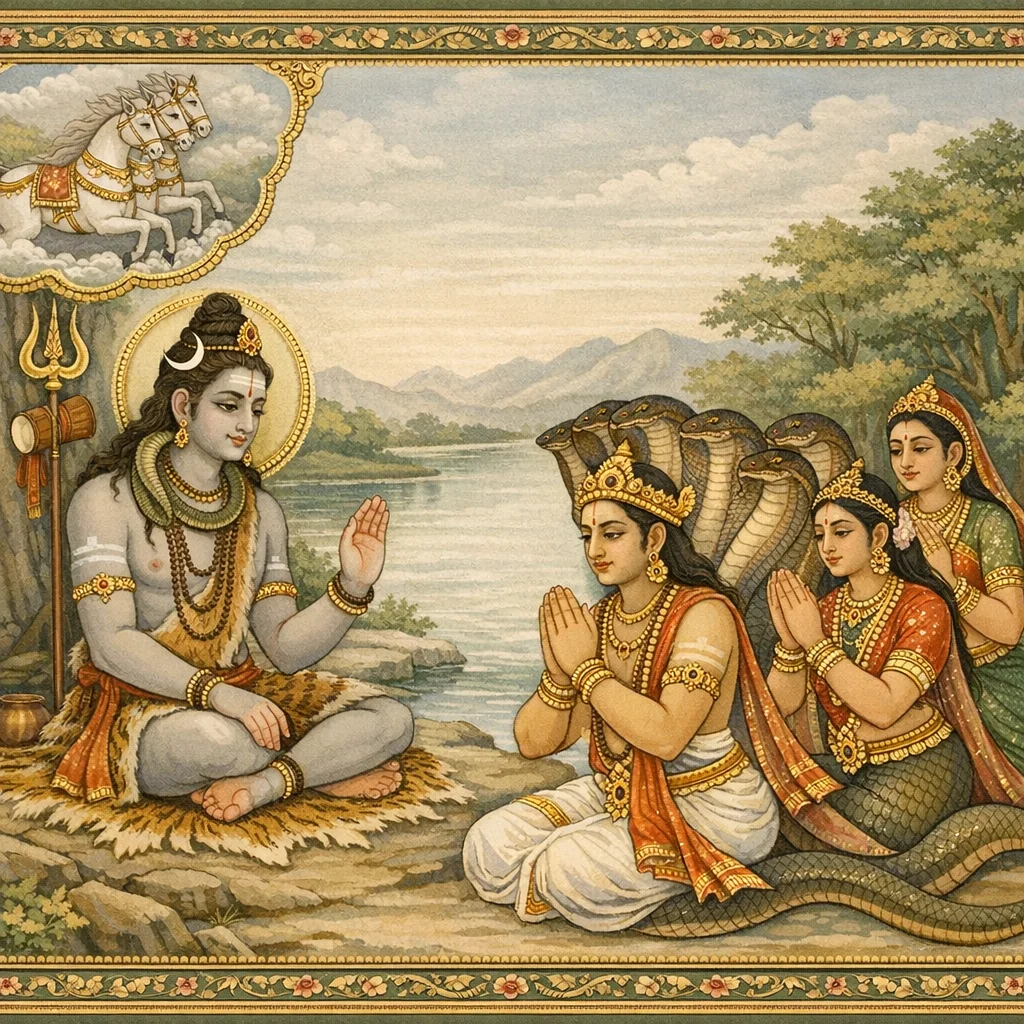
Chapter 131 unfolds as a dialogue between the sage Mārkaṇḍeya and King Yudhiṣṭhira. It first points to an “unsurpassed” Nāgatīrtha on the southern bank of the Narmadā and asks why mighty Nāgas, seized by intense fear, undertook severe tapas. Mārkaṇḍeya recounts a traditional itihāsa: Kaśyapa’s two wives, Vinatā (linked with Garuḍa) and Kadrū (linked with serpents), wager after beholding the celestial horse Uccaiḥśravas. Through Kadrū’s coercion, her serpent-sons attempt deception; some comply out of fear of their mother’s curse, while others seek different refuge. After prolonged austerities, Mahādeva (Śiva) grants grace: Vāsuki is established as a constant protector in Śiva’s proximity, and the Nāgas are assured safety—especially through immersion in the waters of the Narmadā. The chapter ends with ritual instruction and phala: worship of Śiva at this tīrtha on the fifth lunar day (pañcamī) ensures that eight Nāga lineages do not harm the worshipper, and that the departed attains the status of Śiva’s attendant for the desired duration.
Shlokas
Verse 1
श्रीमार्कण्डेय उवाच । नर्मदादक्षिणे कूले नागतीर्थमनुत्तमम् । यत्र सिद्धा महानागा भये जाते ततो नृप
Śrī Mārkaṇḍeya said: On the southern bank of the Narmadā is the unsurpassed Nāgatīrtha, O king, where the perfected great Nāgas—when fear arose—came there seeking refuge.
Verse 2
युधिष्ठिर उवाच । महाभयानां लोकस्य नागानां द्विजसत्तम । कथं जातं भयं तीव्रं येन ते तपसि स्थिताः
Yudhiṣṭhira said: O best of the twice-born, how did that dreadful fear arise among the Nāgas—terror to the world—because of which they remained steadfast in austerity?
Verse 3
भूतं भव्यं भविष्यच्च यत्सुरासुरमानवे । तात ते विदितं सर्वं तेन मे कौतुकं महत्
Past, present, and future—whatever pertains to gods, asuras, and humans—revered sir, all of it is known to you; therefore my curiosity is great.
Verse 4
मम संतापजं दुःखं दुर्योधनसमुद्भवम् । तव वक्त्राम्बुजौघेन प्लावितं निर्वृतिं गतम्
The sorrow born of my burning anguish—arising on account of Duryodhana—has been flooded by the stream from your lotus-like mouth, and has now passed into peace and relief.
Verse 5
श्रुत्वा तव मुखोद्गीतां कथां पापप्रणाशनीम् । भूयो भूयः स्मृतिर्जाता श्रवणे मम सुव्रत
Having heard the tale sung from your own mouth—destroyer of sins—my recollection arises again and again as I listen, O you of noble vow.
Verse 6
न क्लेशत्वं द्विजे युक्तं न चान्यो जानते फलम् । विद्यादानस्य महतः श्रावितस्य सुतस्य च
O twice-born, it is not fitting that there be any reluctance or hardship in answering; for no one else truly knows the fruit of the great gift of knowledge, and of a son rightly instructed through hearing.
Verse 7
एवं ज्ञात्वा यथान्यायं यः प्रश्नः पृच्छितो मया । कथा तु कथ्यतां विप्र दयां कृत्वा ममोपरि
Knowing this, and in keeping with what is proper, the question I have asked—please tell that sacred account, O Brahmin, showing compassion toward me.
Verse 8
मार्कण्डेय उवाच । यथा यथा त्वं नृप भाषसे च तथा तथा मे सुखमेति भारती । शैथिल्यभावाज्जरयान्वितस्य त्वत्सौहृदं नश्यति नैव तात
Mārkaṇḍeya said: As you speak, O king, my words grow ever more joyful. Though I am aged and subject to the slackening of old age, your friendship does not fade at all, dear child.
Verse 9
कथयामि यथावृत्तमितिहासं पुरातनम् । कथितं पूर्वतो वृद्धैः पारम्पर्येण भारत
I shall recount, exactly as it occurred, an ancient itihāsa—told long ago by elders and handed down in unbroken tradition, O Bhārata.
Verse 10
द्वे भार्ये कश्यपस्यास्तां सर्वलोकेष्वनुत्तमे । गरुत्मतो वै विनता सर्पाणां कद्रुरेव च
Kaśyapa had two wives, unsurpassed in all the worlds—Vinātā, the mother of Garuḍa, and Kadrū, the mother of the serpents.
Verse 11
अश्वसंदर्शनात्ताभ्यां कलिरूपं व्यवस्थितम् । प्रभातकाले राजेन्द्र भास्कराकारवर्चसम्
From the sighting of the horse by those two, a strife-like contention took form—at dawn, O lord of kings—radiant with a splendor like the sun.
Verse 12
तं दृष्ट्वा विनता रूपमश्वं सर्वत्र पाण्डुरम् । अथ तां कद्रूमवोचत्सा पश्य पश्य वरानने
Seeing that horse, pale all over, Vinātā beheld its form; then Kadrū said to her, “Look, look, O fair-faced one!”
Verse 13
उच्चैःश्रवसः सादृश्यं पश्य सर्वत्र पाण्डुरम् । धावमानमविश्रान्तं जवेन पवनोपमम्
“See—its likeness to Uccaiḥśravas—pale all over, running without rest, swift as the wind.”
Verse 14
तं दृष्ट्वा सहसा यान्तमीर्ष्याभावेन मोहिता । कृष्णं मत्वा तथाजल्पत्तया सह नृपोत्तम
Seeing him suddenly approaching, she—deluded by the force of jealousy—spoke out, taking him to be black; thus did that excellent king converse with her.
Verse 15
विनते त्वं मृषा लोके नृशंसे कुलपांसनि । कृष्णं चैनं वद श्वेतं नरकं यास्यसे परम्
‘Vinatā, you speak falsely before the world—O cruel one, the disgrace of your lineage! Say that this is black, not white; otherwise you shall go to a dreadful hell.’
Verse 16
विनतोवाच । सत्यानृते तु वचने पणोऽयं ते ममैव तु । सहस्रं वत्सरान्दासी भवेयं तव वेश्मनि
Vinatā said: ‘As to truth or falsehood in speech—this wager stands between you and me. If I lose, I shall become your maidservant in your house for a thousand years.’
Verse 17
तथेति ते प्रतिज्ञाय रात्रौ गत्वा स्वकं गृहम् । परित्यज्य उभे ते तु क्रोधमूर्छितमूर्छिते
Saying, “So be it,” and having pledged their word, they went by night to their own home—both of them, overcome and nearly fainting with anger.
Verse 18
बन्धुगर्वस्य गत्वा तु कथयामास तं पणम् । कद्रूर्विनतया सार्द्धं यद्वृत्तं प्रमदालये
Then Kadrū went to Bandhugarva and told him of that wager—what had transpired with Vinatā in the women’s quarters.
Verse 19
तच्छ्रुत्वा बान्धवाः सर्वे कद्रूपुत्रास्तथैव च । न मन्यन्ते हितं कार्यं कृतं मात्रा विगर्हितम्
Hearing this, all the relatives—Kadrū’s sons as well—did not deem it a beneficial deed, for what their mother had done was blameworthy.
Verse 20
अकृष्णः कृष्णतामम्ब कथं गच्छेद्धयोत्तमः । दासत्वं प्राप्स्यसे त्वं हि पणेनानेन सुव्रते
“Mother, how could that supreme horse—being not black—ever become black? By this wager, O virtuous one, you will indeed fall into servitude.”
Verse 21
कद्रूरुवाच । भवेयं न यथादासी तत्कुरुध्वं हि सत्वरम् । विशध्वं रोमकूपेषु तस्याश्वस्य मतिर्मम
Kadrū said: “So that I may not become a servant as decreed, do this quickly: enter into the pores of that horse’s hair—this is my plan.”
Verse 22
क्षणमात्रं कृते कार्ये सा दासी च भवेन्मम । ततः स्वस्थोरगाः सर्वे भविष्यथ यथासुखम्
“When that deed is accomplished—even for a single moment—she shall become my handmaid; and afterward, all of you serpents shall remain unharmed and dwell in ease.”
Verse 23
सर्पा ऊचुः । यथा त्वं जननी देवि पन्नगानां मता भुवि । तथापि सा विशेषेण वञ्चितव्या न कर्हिचित्
The serpents said: “Though on earth you are revered as the mother of the nāgas, O Goddess, still she should never—most especially—be deceived at any time.”
Verse 24
कद्रूरुवाच । मम वाक्यमकुर्वाणा ये केचिद्भुवि पन्नगाः । हव्यवाहमुखं सर्वे ते यास्यन्त्यविचारिताः
Kadrū said: “Whatever serpents on earth disobey my command—without deliberation—shall all be cast into the mouth of Havyavāha, the Fire-god, the sacrificial flame.”
Verse 25
एतच्छ्रुत्वा तु वचनं घोरं मातृमुखोद्भवम् । केचित्प्रविष्टा रोमाणि तथान्ये गिरिसंस्थिताः
Hearing those dreadful words that issued from their mother’s mouth, some slipped into hair to hide themselves, while others took refuge upon the mountains.
Verse 26
केचित्प्रविष्टा जाह्नव्यामन्ये च तपसि स्थिताः
Some entered into the Jāhnavī (the sacred Gaṅgā), and others remained steadfast in austerity, established in tapas.
Verse 27
ततो वर्षसहस्रान्ते तुतोष परमेश्वरः । महादेवो जगद्धाता ह्युवाच परया गिरा
Then, at the end of a thousand years, the Supreme Lord—Mahādeva, the sustainer of the world—was pleased and spoke in a sublime voice.
Verse 28
भो भोः सर्पा निवर्तध्वं तपसोऽस्य महत्फलम् । यमिच्छथ ददाम्यद्य नात्र कार्या विचारणा
“Ho, ho, O serpents—cease your austerities. This tapas has borne great fruit. Whatever you desire, I grant today; there is no need for hesitation or deliberation.”
Verse 29
सर्पा ऊचुः । कद्रूशापभयाद्भीता देवदेव महेश्वर । तव पार्श्वे वसिष्यामो यावदाभूतसम्प्लवम्
The serpents said: “O God of gods, O Maheśvara—terrified by fear of Kadrū’s curse, we shall dwell at your side until the end of the cosmic dissolution.”
Verse 30
देवदेव उवाच । एकश्चायं महाबाहुर्वासुकिर्भुजगोत्तमः । मम पार्श्वे वसेन्नित्यं सर्वेषां भयरक्षकः
The Lord of gods said: “Let this mighty-armed Vāsuki, best among serpents, dwell always at my side, as the protector from fear for all.”
Verse 31
अन्येषां चैव सर्पाणां भयं नास्ति ममाज्ञया । आप्लुत्य नर्मदातोये भुजगास्ते च रक्षिताः
“And for the other serpents too, there is no fear by my command. Having plunged into the waters of the Narmadā, those serpents are protected.”
Verse 32
नास्ति मृत्युभयं तेषां वसध्वं यत्र चेप्सितम् । कद्रूशापभयं नास्ति ह्येष मे विस्तरः परः
They have no fear of death. Dwell wherever you wish. There is no fear of Kadrū’s curse—this is my supreme assurance and protection.
Verse 33
एवं दत्त्वा वरं तेषां देवदेवो महेश्वरः । जगामाकाशमाविश्य कैलासं धरणीधरम्
Thus, having granted them the boon, Maheśvara—the God of gods—entered the sky and went to Kailāsa, the mountain that upholds the earth.
Verse 34
गते चादर्शनं देवे वासुकिप्रमुखा नृप । स्थापयित्वा तथा जग्मुर्देवदेवं महेश्वरम्
O King, when the Lord had disappeared from sight, Vāsuki and the other nāgas, having duly installed the sacred presence there, then departed to Mahādeva—the God of gods, Maheśvara.
Verse 35
तत्र तीर्थे तु यः कश्चित्पञ्चम्यामर्चयेच्छिवम् । तस्य नागकुलान्यष्टौ न हिंसन्ति कदाचन
Whoever, at that sacred ford, worships Śiva on the fifth lunar day (pañcamī)—the eight clans of nāgas will never harm him at any time.
Verse 36
मृतः कालेन महता तत्र तीर्थे नरेश्वर । शिवस्यानुचरो भूत्वा वसते कालमीप्सितम्
O lord of men, when he later dies in due course, he becomes an attendant of Śiva and dwells (in Śiva’s realm) for as long as he desires.
Verse 131
। अध्याय
“Chapter”—a colophon marking the end of the chapter or a transition.