Adhyaya 127
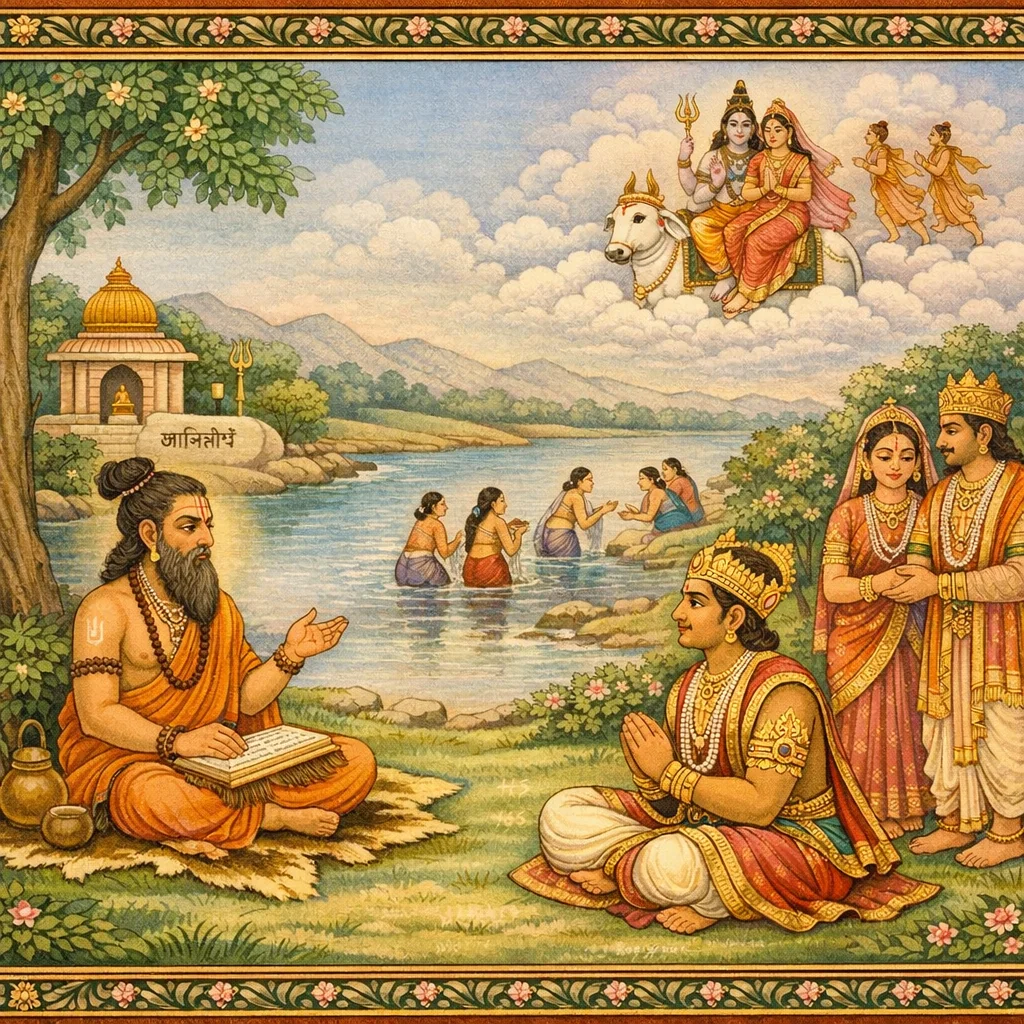
In the Avantī Khaṇḍa of the Revākhaṇḍa, Mārkaṇḍeya instructs a king to proceed to Agnitīrtha, praised as an unsurpassed sacred ford. He first enjoins tīrtha-snāna—ritual bathing there at the beginning of a fortnight (pakṣa-ādau)—declaring that it removes every kind of moral and ritual impurity (kilbiṣa). The teaching then turns to the dharma of giving, centering on kanyādāna: the gifting of a maiden adorned according to one’s means (yathāśaktyā alaṅkṛtām). A phalaśruti compares its merit to the highest Vedic soma-sacrifices, such as Agnīṣṭoma and Atirātra, and proclaims the fruit to be multiplied beyond measure. Finally, the merit is extended through lineage: the donor’s ascent to Śiva-loka is described in proportion to the innumerable continuities of descendants, poetically measured by “hair-count” imagery. Thus the chapter binds social continuity, charitable duty, and soteriological promise within a Śaiva-leaning theological frame.
Shlokas
Verse 1
मार्कण्डेय उवाच । ततो गच्छेत्तु राजेन्द्र अग्नितीर्थमनुत्तमम् । तत्र स्नात्वा तु पक्षादौ मुच्यते सर्वकिल्बिषैः
Mārkaṇḍeya said: “Then, O lord of kings, one should go to the unsurpassed Agnitīrtha. By bathing there at the beginning of a fortnight, one is freed from all sins.”
Verse 2
तत्र तीर्थे तु यः कन्यां दद्यात्स्वयमलंकृताम् । तस्य यत्फलमुद्दिष्टं तच्छृणुष्व नरोत्तम
At that sacred tīrtha, whoever gives a maiden in marriage—adorned by his own effort—hear now, O best of men, the fruit that is declared for him.
Verse 3
अग्निष्टोमातिरात्राभ्यां शतं शतगुणीकृतम् । प्राप्नोति पुरुषो दत्त्वा यथाशक्त्या ह्यलंकृताम्
By giving (the maiden) adorned according to one’s ability, a man obtains merit multiplied a hundredfold upon a hundred, surpassing the fruits of the Agniṣṭoma and Atirātra sacrifices.
Verse 4
तस्याः पुत्रप्रपौत्राणां या भवेद्रोमसंगतिः । स याति तेन मानेन शिवलोके परां गतिम्
In proportion to the sons and grandsons and further descendants she will have—countless as the hairs upon the body—by that very measure he attains the supreme state in Śiva’s world.
Verse 127
। अध्याय
End of the chapter (adhyāya marker).