Adhyaya 126
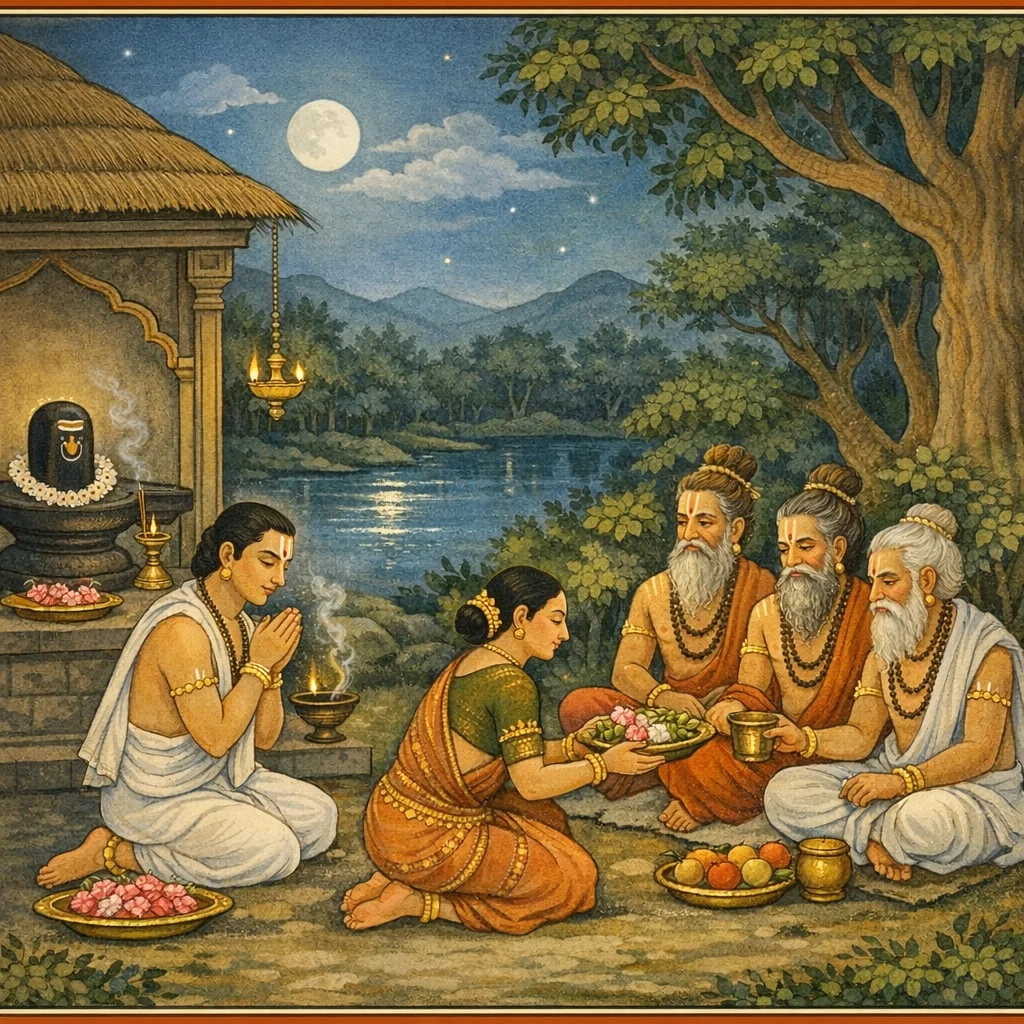
Chapter 126 records Mārkaṇḍeya’s instruction on the supreme tīrtha called “Ayoni-ja” (“not born from a womb”), praised as a healing and purifying refuge for those afflicted by yoni-saṅkaṭa—the distress and constraint bound up with embodied birth. The chapter first enjoins pilgrimage to this place and ritual bathing, said to wash away the sense and burden of such yoni-related suffering. It then prescribes pūjā to Īśvara/Mahādeva with a specific refrain beseeching release from saṃbhava (recurrent becoming) and yoni-saṅkaṭa. Offerings of fragrance, flowers, and incense are declared means for the destruction of sin; devoted liṅga-service (liṅga-pūraṇa) yields prolonged nearness to Deva-deva, expressed hyperbolically by the “count of wax-drops” (siktha-saṅkhyā). Abhiṣeka of Mahādeva with scented water, honey, milk, or curd bestows vipulā śrī—abundant prosperity. The bright fortnight and the fourteenth lunar day (caturdaśī) are highlighted as auspicious times for worship with song and instrumental music; pradakṣiṇā is to be performed while continually repeating the petition. The chapter elevates the six-syllabled formula “namaḥ śivāya” above elaborate mantra collections, asserting that its recitation itself embodies study, hearing, and ritual completion. It concludes by honoring service to Śiva-yogins and righteous giving: along with bathing and worship, one should feed disciplined ascetics (dānta, jitendriya) and give alms and water, whose merit is likened to cosmic immensities such as Meru and the ocean.
Shlokas
Verse 1
मार्कण्डेय उवाच । ततो गच्छेत्तु राजेन्द्र परं तीर्थमयोनिजम् । स्नातमात्रो नरस्तत्र न पश्येद्योनिसङ्कटम्
Mārkaṇḍeya said: “Then, O king, one should go to the supreme tīrtha called Ayonija. A man who merely bathes there no longer beholds the affliction of womb-born existence.”
Verse 2
तत्र तीर्थे नरः स्नात्वा पूजयेद्देवमीश्वरम् । अयोनिजो महादेव यथा त्वं परमेश्वर
Having bathed at that tīrtha, a man should worship the Lord, the God Īśvara, saying: “O Mahādeva, just as You, O Parameśvara, are Ayonija—unborn of any womb…”
Verse 3
तथा मोचय मां देव सम्भवाद्योनिसङ्कटात् । गन्धपुष्पादिधूपैश्च स मुच्येत्सर्वपातकैः
“…so too, O God, release me from the peril of womb-born becoming.” By offerings of fragrances, flowers, incense, and the like, he is freed from all sins.
Verse 4
तस्य देवस्य यो भक्त्या कुरुते लिङ्गपूरणम् । स वसेद्देवदेवस्य यावत्सिक्थस्य संख्यया
Whoever, with devotion, performs for that Lord the rite of “filling/completing” the Śiva-liṅga, dwells in the realm of the God of gods for as many (years) as the number of wax-particles contained in that offering.
Verse 5
अयोनिजे महादेवं स्नापयेद्गन्धवारिणा । मधुक्षीरेण दध्ना वा स लभेद्विपुलां श्रियम्
If one bathes Mahādeva—the Ayonija—with fragrant water, or with honey, milk, or curd, one attains abundant prosperity and auspicious fortune.
Verse 6
अष्टभ्यां च सिते पक्षे असितां वा चतुर्दशीम् । पूजयित्वा महादेवं प्रीणयेद्गीतवाद्यकैः
On the eighth day of the bright fortnight, or on the fourteenth day of the dark fortnight, having worshipped Mahādeva, one should delight Him with singing and instrumental music.
Verse 7
वसेत्स च शिवे लोके ये कुर्वन्ति मनोहरम् । ते वसन्ति शिवे लोके यावदाभूतसम्प्लवम्
Those who perform pleasing acts of worship dwell in Śiva’s world; indeed, they abide in Śiva-loka until the dissolution of created beings.
Verse 8
तस्य देवस्य भक्त्या तु यः करोति प्रदक्षिणाम् । विज्ञापयंश्च सततं मन्त्रेणानेन भारत
But, O Bhārata, whoever with devotion performs circumambulation of that Lord, continually making supplication with this mantra—
Verse 9
तस्य यत्फलमुद्दिष्टं पारम्पर्येण मानवैः । सकाशाद्देवदेवस्य तच्छृणुष्व समाधिना
Hear with focused attention the fruit of that practice, as it has been handed down in human tradition—(a fruit received) from the very presence of the God of gods.
Verse 10
अयोनिजो महादेव यथा त्वं परमेश्वर । तथा मोचय मां शर्व सम्भवाद्योनिसङ्कटात्
O Unborn Mahādeva, as You are the Supreme Lord, so too, O Śarva, liberate me from the distress of womb-bound existence—beginning with birth itself.
Verse 11
किं तस्य बहुभिर्मन्त्रैः कंठशोषणतत्परैः । येनौंनमः शिवायेति प्रोक्तं देवस्य संनिधौ
What need has he of many mantras that merely strain and dry the throat, if he has uttered ‘Oṃ namaḥ śivāya’ in the very presence of the Lord?
Verse 12
तेनाधीतं श्रुतं तेन तेन सर्वमनुष्ठितम् । येनौंनमः शिवायेति मन्त्राभ्यासः स्थिरीकृतः
By him all study is accomplished, by him all sacred learning is heard, and by him every observance is fulfilled—by whom the steady practice of the mantra “Oṃ namaḥ śivāya” has been firmly established.
Verse 13
न तत्फलमवाप्नोति सर्वदेवेषु वै द्विजः । यत्फलं समवाप्नोति षडक्षर उदीरणात्
Indeed, a twice-born does not obtain among all the gods that fruit which is attained by uttering the six-syllabled mantra.
Verse 14
तत्र तीर्थे तु यः स्नात्वा पूजयेच्छिवयोगिनम् । द्विजानामयुतं साग्रं स लभेत्फलमुत्तमम्
Whoever bathes at that sacred ford and then worships a Śaiva yogin attains the supreme reward—equal to the merit of honoring ten thousand and more brāhmaṇas.
Verse 15
अथवा भक्तियुक्तस्तु तेषां दान्ते जितेन्द्रिये । संस्कृत्य ददते भिक्षां फलं तस्य ततोऽधिकम्
Or, if one—endowed with devotion—offers well-prepared alms to those disciplined, sense-conquering ascetics, the fruit of that act is even greater than that previously described.
Verse 16
यतिहस्ते जलं दद्याद्भिक्षां दत्त्वा पुनर्जलम् । सा भिक्षा मेरुणा तुल्या तज्जलं सागरोपमम्
One should place water into the hand of a renunciant; after giving alms, one should again offer water. That alms-gift is said to be equal to Mount Meru, and that water comparable to the ocean.
Verse 126
। अध्याय
End of the chapter (adhyāya marker).