Adhyaya 125
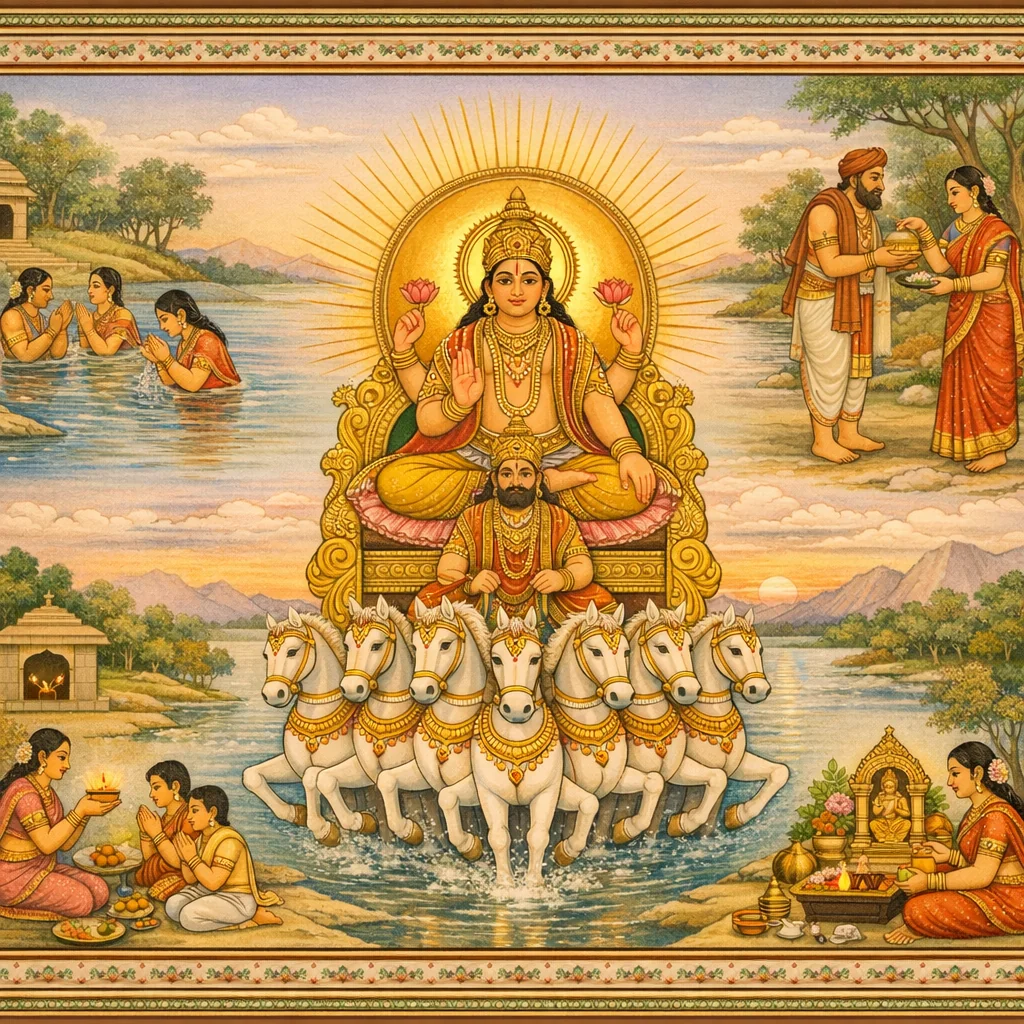
This chapter unfolds as a dialogue: Yudhiṣṭhira asks how the Sun—plainly visible in the world and revered by all the gods—can be called a tapasvin (ascetic), and how he attained the rank and names Āditya/Bhāskara. Mārkaṇḍeya replies by turning to cosmological narration: from an initial darkness a divine, incandescent principle manifests, is described as a personified presence, and the ensuing functions of the cosmos are set forth. The account then returns to the ritual landscape of Ravītīrtha on the bank of the Narmadā, portraying it as a place where solar worship is carried out through snāna (purificatory bathing), pūjā, mantra-japa, and pradakṣiṇā. A sustained emphasis is placed on mantra as the condition that makes rites effective, with analogies showing that action without mantra is fruitless. The chapter closes with calendrical and procedural details—saṅkrānti, vyatīpāta, ayana, viṣuva, eclipses, and Māgha saptamī—along with a litany of the Sun’s twelve names. The phalaśruti proclaims purification, well-being, health, and auspicious outcomes in social life.
Shlokas
Verse 1
श्रीमार्कण्डेय उवाच । ततो गच्छेन्महीपाल रवितीर्थमनुत्तमम् । यत्र देवः सहस्रांशुस्तपस्तप्त्वा दिवं गतः
Śrī Mārkaṇḍeya said: Then, O king, one should go to the unsurpassed Ravi-tīrtha, where the god Sahasrāṃśu (the Sun) performed austerities and attained the heavenly realm.
Verse 2
युधिष्ठिर उवाच । कथं देवो जगद्धाता सर्वदेवनमस्कृतः । तपस्तपति देवेशस्तापसो भास्करो रविः
Yudhiṣṭhira said: How is it that the Lord—the creator of the world, bowed to by all the gods—Ravi Bhāskara, the God of gods, performs tapas as an ascetic?
Verse 3
आराध्यः सर्वभूतानां सर्वदेवैश्च पूजितः । प्रत्यक्षो दृश्यते लोके सृष्टिसंहारकारकः
He is worthy of worship for all beings and honored by all the gods; he is seen directly in the world as the agent of creation and dissolution.
Verse 4
आदित्यत्वं कथं प्राप्तः कथं भास्कर उच्यते । सर्वमेतत्समासेन कथयस्व ममानघ
How did he attain the status of Āditya, and why is he called Bhāskara? Tell me all this concisely, O sinless one.
Verse 5
मार्कण्डेय उवाच । महाप्रश्नो महाराज यस्त्वया परिपृच्छितः । तत्सर्वं सम्प्रवक्ष्यामि नमस्कृत्य स्वयम्भुवम्
Mārkaṇḍeya said: O great king, profound is the question you have asked. I shall explain it all, after bowing to Svayambhū, the Self-born Lord.
Verse 6
आसीदिदं तमोभूतमप्रज्ञातमलक्षणम् । अप्रतर्क्यमविज्ञेयं प्रसुप्तमिव सर्वतः
In the beginning, all this was darkness—unmanifest, without discernible marks; beyond reasoning and unknowable, as though asleep on every side.
Verse 7
ततस्तेजश्च दिव्यं च तप्तपिण्डमनुत्तमम् । आकाशात्तु यथैवोल्का सृष्टिहेतोरधोमुखी
Then there appeared a divine, unsurpassed mass of blazing radiance—like a meteor from the sky, turned downward as the cause of creation.
Verse 8
तत्तेजसोऽन्तः पुरुषः संजातः सर्वभूषितः । स शिवोऽपाणिपादश्च येन सर्वमिदं ततम्
Within that radiance, a Person arose, adorned with all splendors. He was Śiva—without hands and feet—by whom all this universe is pervaded.
Verse 9
तस्योत्पन्नस्य भूतस्य तेजो रूपस्य भारत । पश्चात्प्रजापतिर्भूयः कालः कालान्तरेण वै
O Bhārata, after that radiant being came into manifestation, Prajāpati again brought forth Time—indeed, in due course and at its proper season.
Verse 10
अग्निर्जातः स भूतानां मनुष्यासुररक्षसाम् । सर्वदेवाधिदेवश्च आदित्यस्तेन चोच्यते
He became Fire for all beings—among humans, asuras, and rākṣasas alike; and because he is the Overlord of all the gods, he is therefore called Āditya (the Sun).
Verse 11
आदौ तस्य नमस्कारोऽन्येषां च तदनन्तरम् । क्रियते दैवतैः सर्वैस्तेन सर्वैर्महर्षिभिः
First, obeisance is offered to him, and thereafter to the others; this is performed by all the deities and likewise by all the great sages.
Verse 12
तिस्रः सन्ध्यास्त्रयो देवाः सांनिध्याः सूर्यमण्डले । नमस्कृतेन सूर्येण सर्वे देवा नमस्कृताः
The three twilight junctions and the three gods abide within the solar orb; when the Sun is saluted, all the gods are thereby saluted.
Verse 13
न दिवा न भवेद्रात्रिः षण्मासा दक्षिणायनम् । अयनं चोत्तरं चापि भास्करेण विना नृप
O King, without Bhāskara there would be neither day nor night, nor the six-month course of the southern solstice; nor even the northern course would exist.
Verse 14
स्नानं दानं जपो होमः स्वाध्यायो देवतार्चनम् । न वर्तते विना सूर्यं तेन पूज्यतमो रविः
Bathing, charity, recitation, fire-offering, Vedic study, and worship of the deities do not properly proceed without the Sun; therefore Ravi is most worthy of worship.
Verse 15
शब्दगाः श्रुतिमुख्याश्च ब्रह्मविष्णुमहेश्वराः । प्रत्यक्षो भगवान्देवो दृश्यते लोकपावनः
Brahmā, Viṣṇu, and Maheśvara are known through sacred sound and proclaimed as foremost in the Vedas; but the Lord, as the visible deity, is seen directly—purifier of the worlds.
Verse 16
उत्पत्तिः प्रलयस्थानं निधानं बीजमव्ययम् । हेतुरेको जगन्नाथो नान्यो विद्येत भास्करात्
He is the source of arising, the abode of dissolution, the treasury, the imperishable seed; the one cause, the Lord of the universe—none other is known beyond Bhāskara.
Verse 17
एवमात्मभवं कृत्वा जगत्स्थावरजङ्गमम् । लोकानां तु हितार्थाय स्थापयेद्धर्मपद्धतिम्
Thus, having brought forth from Himself the world of the unmoving and the moving, He establishes the path and sacred order of Dharma for the welfare of all beings.
Verse 18
नर्मदातटमाश्रित्य स्थापयित्वात्मनस्तनुम् । सहस्रांशुं निधिं धाम्नां जगामाकाशमव्ययम्
Resorting to the bank of the Narmadā, he established his own embodied presence there; then Sahasrāṁśu, the thousand-rayed Sun, treasury of splendors, departed into the imperishable sky.
Verse 19
तत्र तीर्थे तु यः स्नात्वा पूजयेत्परमेश्वरम् । सहस्रकिरणं देवं नाममन्त्रविधानतः
Whoever bathes at that sacred ford and then worships the Supreme Lord—Sahasrakiraṇa, the thousand-rayed Sun—according to the proper rite of divine names and mantras, truly performs worship in its complete and ordained form.
Verse 20
तेन तप्तं हुतं तेन तेन सर्वमनुष्ठितम् । तेन सम्यग्विधानेन सम्प्राप्तं परमं पदम्
By that right worship, austerity is as though performed; by that, offerings into fire are as though made; by that, every observance is as though accomplished. Through that correct procedure one attains the supreme state.
Verse 21
ते धन्यास्ते महात्मानस्तेषां जन्म सुजीवितम् । स्नात्वा ये नर्मदातोये देवं पश्यन्ति भास्करम्
Blessed indeed are those great-souled ones; their birth is well-lived—those who, after bathing in the waters of the Narmadā, behold the god Bhāskara, the Sun.
Verse 22
तथा देवस्य राजेन्द्र ये कुर्वन्ति प्रदक्षिणम् । अनन्यभक्त्या सततं त्रिरक्षरसमन्विताः
Likewise, O best of kings, those who ever perform pradakṣiṇā around the Deity with single-minded devotion, accompanied by the three-syllabled mantra, become established in a sanctifying observance.
Verse 23
तेन पूतशरीरास्ते मन्त्रेण गतपातकाः । यत्पुण्यं च भवेत्तेषां तदिहैकमनाः शृणु
By that practice their bodies are purified; by that mantra their sins depart. Now listen with a single-pointed mind to the merit that arises for them here.
Verse 24
ससमुद्रगुहा तेन सशैलवनकानना । प्रदक्षिणीकृता सर्वा पृथिवी नात्र संशयः
By that act, the entire earth—with its oceans and caves, with its mountains, forests, and groves—is as though circumambulated in pradakṣiṇā; of this there is no doubt.
Verse 25
मन्त्रमूलमिदं सर्वं त्रैलोक्यं सचराचरम् । तेन मन्त्रविहीनं तु कार्यं लोके न सिध्यति
All this—the three worlds, with all that moves and does not move—has mantra as its root. Therefore, an act devoid of mantra does not succeed in the world.
Verse 26
यथा काष्ठमयो हस्ती यथा चर्ममयो मृगः । कार्यार्थं नैव सिध्येत तथा कर्म ह्यमन्त्रकम्
Just as a wooden elephant, or a deer made of leather, cannot accomplish any practical purpose, so too an action without mantra does not truly succeed.
Verse 27
भस्महुतं पार्थ यथा तोयविवर्जितम् । निष्फलं जायते दानं तथा मन्त्रविवर्जितम्
O Pārtha, just as an offering of ashes, bereft of water, becomes futile, so too charity (dāna) becomes fruitless when it is devoid of mantra.
Verse 28
काष्ठपाषाणलोष्टेषु मृन्मयेषु विशेषतः । मन्त्रेण लोके पूजां तु कुर्वन्ति न ह्यमन्त्रतः
Especially for forms made of wood, stone, clod, and most of all clay, people in this world perform pūjā by means of mantra—never, indeed, without mantra.
Verse 29
द्वादशाब्दान्नमस्काराद्भक्त्या यल्लभते फलम् । मन्त्रयुक्तनमस्कारात्सकृत्तल्लभते फलम्
Whatever fruit is gained by devout prostrations for twelve years—one gains that very fruit by a single prostration accompanied by mantra.
Verse 30
संक्रान्तौ च व्यतीपाते अयने विषुवे तथा । नर्मदाया जले स्नात्वा यस्तु पूजयते रविम्
On Saṅkrānti, on Vyatīpāta, at the ayanas (solstices), and at the viṣuvas (equinoxes) as well—whoever bathes in the waters of the Narmadā and then worships the Sun…
Verse 31
द्वादशाब्देन यत्पापमज्ञानज्ञानसंचितम् । तत्क्षणान्नश्यते सर्वं वह्निना तु तुषं यथा
The sin accumulated over twelve years—whether through ignorance or even with awareness—perishes instantly, like chaff consumed by fire.
Verse 32
चन्द्रसूर्यग्रहे स्नात्वा सोपवासो जितेन्द्रियः । तत्रादित्यमुखं दृष्ट्वा मुच्यते सर्वकिल्बिषैः
Having bathed at the time of a lunar or solar eclipse, fasting and self-controlled, and beholding there the face of Āditya (the Sun), one is freed from all sins.
Verse 33
माघमासे तु सम्प्राप्ते सप्तम्यां नृपसत्तम । सोपवासो जितक्रोध उषित्वा सूर्यमन्दिरे
When the month of Māgha arrives, O best of kings, on the seventh lunar day—fasting, having conquered anger, and staying in the Sun’s temple…
Verse 34
प्रातः स्नात्वा विधानेन ददात्यर्घं दिवाकरे । विधिना मन्त्रयुक्तेन स लभेत्पुण्यमुत्तमम्
Bathing at dawn according to rule, and offering arghya to the Day-maker (the Sun) with the proper, mantra-accompanied rite—one obtains the highest merit.
Verse 35
पितृदेवमनुष्याणां कृत्वा ह्युदकतर्पणम् । मन्दिरे देवदेवस्य ततः पूजां समाचरेत्
Having offered water-libations (tarpaṇa) to the ancestors, the gods, and to human beings, one should then duly perform worship in the temple of the God of gods.
Verse 36
गन्धैः पुष्पैस्तथा धूपैर्दीपनैवेद्यशोभनैः । पूजयित्वा जगन्नाथं ततो मन्त्रमुदीरयेत्
With fragrances, flowers, incense, lamps, and pleasing offerings of food—having worshipped Jagannātha, the Lord of the universe, one should then recite the mantra.
Verse 37
विष्णुः शक्रो यमो धाता मित्रोऽथ वरुणस्तथा । विवस्वान्सविता पूषा चण्डांशुर्भर्ग एव च
“Viṣṇu, Śakra (Indra), Yama, Dhātṛ, Mitra, and Varuṇa; Vivasvān, Savitṛ, Pūṣan, Caṇḍāṃśu, and Bharga”—
Verse 38
इति द्वादशनामानि जपन्कृत्वा प्रदक्षिणाम् । यत्फलं लभते पार्थ तदिहैकमनाः शृणु
Thus, chanting these twelve names and performing pradakṣiṇā (circumambulation), O Pārtha, listen with one-pointed mind to the fruit obtained thereby.
Verse 39
दरिद्रो व्याधितो मूको बधिरो जड एव च । न भवेत्सप्त जन्मानि इत्येवं शङ्करोऽब्रवीत्
Śaṅkara declared: “For seven births one shall not become poor, diseased, mute, deaf, or dull-witted.”
Verse 40
एवं ज्ञात्वा विधानेन जपन्मन्त्रं विचक्षणः । आराधयेद्रविं भक्त्या य इच्छेत्पुण्यमुत्तमम्
Knowing this and observing the proper rule, the discerning person should perform japa of the mantra and worship Ravi (the Sun) with devotion, if he desires the highest merit.
Verse 41
मन्त्रहीनां तु यः कुर्याद्भक्तिं देवस्य भारत । स विडम्बति चात्मानं पशुकीटपतङ्गवत्
But, O Bhārata, whoever offers devotion to the deity without the mantra only makes a mockery of himself—like a beast, a worm, or an insect.
Verse 42
तत्र तीर्थे तु यः कश्चित्त्यजते देहमुत्तमम् । स गतस्तत्र देवैस्तु पूज्यमानो महर्षिभिः
At that sacred ford, whoever lays down his noble body is borne to the divine realm, honored by the devas and revered by the great rishis.
Verse 43
स्वेच्छया सुचिरं कालमिह लोके नृपो भवेत्
By his own will, for a very long time in this world, he becomes a king.
Verse 44
पुत्रपौत्रसमायुक्तो हस्त्यश्वरथसङ्कुलः । दासीदासशतोपेतो जायते विपुले कुले
He is born into a great family—endowed with sons and grandsons, surrounded by elephants, horses, and chariots, and attended by hundreds of maidservants and servants.
Verse 125
। अध्याय
End of the chapter (adhyāya).