Adhyaya 122
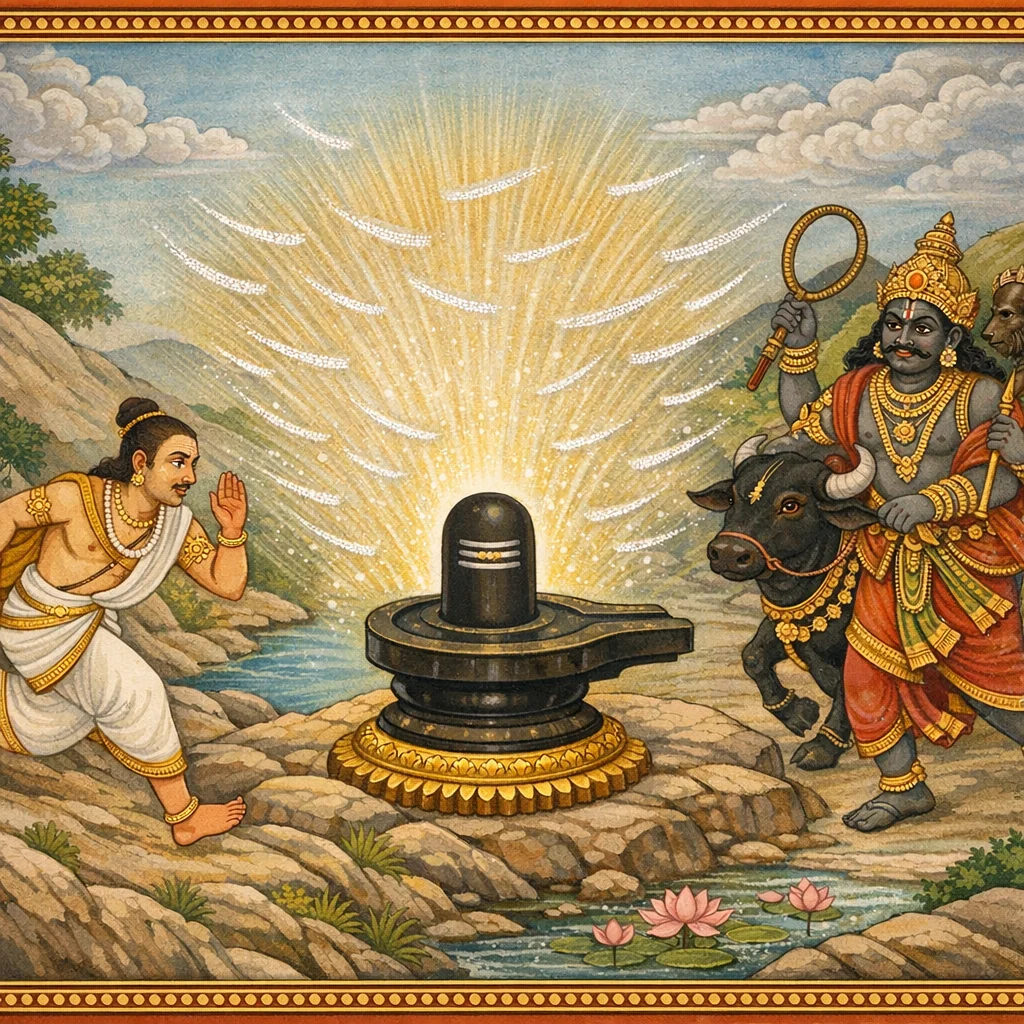
This chapter first proclaims the glory of the tīrtha called Ko-hanasva, praised as a place that removes sin and, in its saving promise, destroys the fear and power of death. Mārkaṇḍeya points it out, and Yudhiṣṭhira then asks about the karmic duties and origins of the four varṇas; the reply is cast in cosmogonic terms, with Brahmā as the primal cause and the familiar body-metaphor: brāhmaṇa from the mouth, kṣatriya from the arms, vaiśya from the thighs, and śūdra from the feet. The chapter lays down ethical patterns of life—householder duties, study and teaching, tending the ritual fires, the pañca-yajñas, and later-life ideals of withdrawal and renunciation—while distinguishing the kṣatriya’s obligations of rule and protection and the vaiśya’s agrarian and protective responsibilities. It also voices a restrictive, normative claim regarding śūdra access to mantra and saṃskāra. Next comes an exemplum of mortality and divine refuge: a learned brāhmaṇa hears the ominous command “hanasva,” encounters Yama with his attendants, and flees while reciting Rudra’s praise (the Śatarudrīya). He collapses beside a liṅga, where Śiva intervenes with a protective utterance and scatters Yama’s forces. The place becomes famed as Ko-hanasva, and the chapter ends with phala: bathing and worship there yield Agniṣṭoma-like merit; dying there prevents the vision of Yama; and specific afterlife results are stated for death by fire or by water, followed by a prosperous return.
Shlokas
Verse 1
श्रीमार्कण्डेय उवाच । ततो गच्छेन्महीपाल कोहनस्वेति विश्रुतम् । सर्वपापहरं पुण्यं तीर्थं मृत्युविनाशनम्
Śrī Mārkaṇḍeya said: “Then, O king, one should go to the sacred ford famed as Kohanasva—holy, remover of all sins, and a tīrtha that destroys the fear of death.”
Verse 2
पुरा तत्र द्विजः कश्चिद्वेदवेदाङ्गपारगः । पत्नीपुत्रसुहृद्वर्गैः स्वकर्मनिरतोऽवसत्
Formerly, there lived there a certain twice-born, well-versed in the Vedas and their auxiliaries, dwelling with his wife, sons, and circle of friends, devoted to his own duties.
Verse 3
युधिष्ठिर उवाच । ब्राह्मणस्य तु यत्कर्म उत्पत्तिः क्षत्रियस्य तु । वैश्यस्यापि च शूद्रस्य तत्सर्वं कथयस्व मे
Yudhiṣṭhira said: “Tell me in full—the duties of the Brāhmaṇa, and the origin (and duties) of the Kṣatriya, and likewise of the Vaiśya and the Śūdra.”
Verse 4
धर्मस्यार्हस्य कामस्य मोक्षस्य च परं विधिम् । निखिलं ज्ञातुमिच्छामि नान्यो वेत्ता मतिर्मम
“I wish to know completely the supreme method regarding Dharma, Artha, Kāma, and Mokṣa; in my understanding, there is no other knower fit to teach me.”
Verse 5
मार्कण्डेय उवाच । उत्पत्तिकारणं ब्रह्मा देवदेवः प्रकीर्तितः । प्रथमं सर्वभूतानां चराचरजगद्गुरुः
Mārkaṇḍeya said: “Brahmā is celebrated as the cause of creation, the God of gods—the primal preceptor of all beings in this moving and unmoving world.”
Verse 6
द्विजातयो मुखाज्जाताः क्षत्रिया बाहुयन्त्रतः । ऊरुप्रदेशाद्वैश्यास्तु शूद्राः पादेष्वथाभवन्
The twice-born arose from the mouth; the Kṣatriyas from the arms; the Vaiśyas from the region of the thighs; and the Śūdras then came to be from the feet.
Verse 7
ततस्त्वन्ये पृथग्वर्णाः पृथग्धर्मान् समाचरन् । पर्यायेण समुत्पन्ना ह्यनुलोमविलोमतः
Thereafter other distinct classes arose and practiced distinct duties—coming into being in due sequence through unions considered in the direct and reverse orders (anuloma and viloma).
Verse 8
तेषां धर्मं प्रवक्ष्यामि श्रुतिस्मृत्यर्थचोदितम् । येन सम्यक्कृतेनैव सर्वे यान्ति परां गतिम्
I shall declare their dharma, as enjoined by the intent of Śruti and Smṛti; by its proper performance, all attain the supreme state.
Verse 9
गतिर्ध्यानं विना भक्तैर्ब्राह्मणैः प्राप्यते नृप । अध्यापयन्यतो वेदान्वेदं वापि यथाविधि
O king, devoted Brāhmaṇas do not attain the higher goal without meditation; they attain it by teaching the Vedas, or by studying the Veda as prescribed.
Verse 10
कुलजां रूपसम्पन्नां सर्वलक्षणलक्षिताम् । उद्वाहयेत्ततः पत्नीं गुरुणानुमते तदा
Then, with the teacher’s permission, he should take in marriage a wife born of a good family, endowed with beauty, and marked by all auspicious signs.
Verse 11
ततः स्मार्तं विवाहाग्निं श्रौतं वा पूजयेत्क्रमात् । प्रतिग्रहधनो भूत्वा दम्भलोभविवर्जितः
Thereafter he should duly honor the marriage-fire according to the Smārta rite, or the Śrauta fire as well—living on what is received as gifts, yet free from hypocrisy and greed.
Verse 12
पञ्चयज्ञविधानानि कारयेद्वै यथाविधि । वनं गच्छेत्ततः पश्चाद्द्वितीयाश्रमसेवनात्
He should perform the ordinances of the five great sacrifices according to rule; thereafter, after fulfilling the second āśrama, he should go to the forest.
Verse 13
पुत्रेषु भार्यां निक्षिप्य सर्वसङ्गविवर्जितः । इष्टांल्लोकानवाप्नोति न चेह जायते पुनः
Entrusting his wife to his sons and renouncing all attachments, he attains the desired worlds and is not born here again.
Verse 14
क्षत्रियस्तु स्थितो राज्ये पालयित्वा वसुंधराम् । शश्वद्धर्ममनाश्चैव प्राप्नोति परमां गतिम्
But the Kṣatriya, established in kingship, having protected the earth and keeping his mind ever in dharma, attains the supreme goal.
Verse 15
वैश्यधर्मो न सन्देहः कृषिगोरक्षणे रतः । सत्यशौचसमोपेतो गच्छते स्वर्गमुत्तमम्
The duty of a Vaiśya is, without doubt, to be devoted to agriculture and the protection of cattle; endowed with truthfulness and purity, he attains the highest heaven.
Verse 16
न शूद्रस्य पृथग्धर्मो विहितः परमेष्ठिना । न मन्त्रो न च संस्कारो न विद्यापरिसेवनम्
For the Śūdra, the Creator (Parameṣṭhin) has not laid down a distinct dharma—there is no recitation of Vedic mantras, no sacramental rites (saṃskāra), and no formal pursuit of sacred learning.
Verse 17
न शब्दविद्यासमयो देवताभ्यर्चनानि च । यथा जातेन सततं वर्तितव्यमहर्निशम्
Nor is there occasion for the discipline of sacred word-learning, nor for worship of the deities in that Vedic mode; rather, one should continually conduct oneself, day and night, in accord with the station into which one is born.
Verse 18
स धर्मः सर्ववर्णानां पुरा सृष्टः स्वयम्भुवा । मन्त्रसंस्कारसम्पन्नास्त्रयो वर्णा द्विजातयः
That dharma for all the varṇas was established long ago by Svayambhū, the Self-born. The three varṇas, endowed with mantras and sacramental rites (saṃskāras), are called “twice-born” (dvija).
Verse 19
तेषां मतमनादृत्य यदि वर्तेत कामतः । स मृतो जायते श्वा वै गतिरूर्ध्वा न विद्यते
If, disregarding their established rule, one acts according to mere desire, then after death he is indeed born as a dog; for him there is no upward passage to higher realms.
Verse 20
न तेषां प्रेषणं नित्यं तेषां मतमनुस्मरन् । यशोभागी स्वधर्मस्थः स्वर्गभागी स जायते
One need not be constantly commanded by them; remembering their teaching and abiding in one’s own duty (svadharma), one becomes a sharer of good repute and a sharer of heaven.
Verse 21
एवं गुणगणाकीर्णोऽवसद्विप्रः स भारत । हनस्वेति हनस्वेति शृणोति वाक्यमीदृशम्
Thus, O Bhārata, that brāhmaṇa—his mind crowded with a multitude of troubling impressions—remains there and hears such a command: “Strike! Strike!”
Verse 22
ततो निरीक्षते चोर्ध्वमधश्चैव दिशो दश । वेपमानः स भीतश्च प्रस्खलंश्च पदे पदे
Then he looks upward and downward, and in all the ten directions. Trembling in fear, he stumbles at every step.
Verse 23
शृङ्खलायुधहस्तैश्च पाशैश्चैव सुदारुणैः । वेष्टितं महिषारूढं नरं पश्यति मन्मुखम्
Before him he beholds a man mounted upon a buffalo, encircled by attendants bearing chains and weapons, and by fierce nooses—an ominous presence facing him directly.
Verse 24
कृष्णांजनचयप्रख्यं कृष्णाम्बरविभूषितम् । रक्ताक्षमायतभुजं सर्वलक्षणलक्षितम्
He is dark as a heap of black collyrium, adorned in black garments; red-eyed, long-armed, and marked with every fearsome sign.
Verse 25
दृष्ट्वा तं तु समायान्तं निरीक्ष्यात्मानमात्मना । जपञ्जाप्यं च परमं शतरुद्रीयसंस्तवम्
Seeing him approach, the brāhmaṇa examined himself inwardly and began to recite the supreme mantra—the Śatarudrīya hymn of praise to Rudra.
Verse 26
ततः प्रोवाच भगवान्यमः संयमनो महान् । शृणु वाक्यमतो ब्रह्मन्यमोऽहं सर्वजन्तुषु
Then the revered Yama, the great Lord of Restraint, spoke: “O brāhmaṇa, listen to my words—among all living beings, I am Yama, the ordained regulator.”
Verse 27
संहरस्व महाभाग रुद्रजाप्यं सुदुर्भिदम् । येनाहं कालपाशैस्त्वां संयमामि गतव्यथः
“O fortunate one, withdraw that Rudra-japa—so hard to overcome; for by it you become free of torment, and I restrain you with the nooses of Time.”
Verse 28
तच्छ्रुत्वा निष्ठुरं वाक्यं यमस्य मुखनिर्गतम् । महाभयसमोपेतो ब्राह्मणः प्रपलायितः
Hearing those harsh words issuing from Yama’s mouth, the brāhmaṇa—overwhelmed by great fear—fled away.
Verse 29
तस्य मार्गे गताः सर्वे यमेन सह किंकराः । तिष्ठ तिष्ठेति तं विप्रमूचुस्ते सोऽप्यधावत
All of Yama’s attendants, along with Yama himself, went after him on his path. They cried to the brāhmaṇa, “Stop! Stop!”—but he kept running.
Verse 30
त्वरमाणः परिश्रान्तो हा हतोऽहं दुरात्मभिः । रक्ष रक्ष महादेव शरणागतवत्सल
Hurrying and exhausted, he cried, “Alas, I am being slain by the wicked! Protect me, protect me, O Mahādeva—O compassionate one who cherishes those who take refuge.”
Verse 31
एवमुक्त्वापतद्भूमौ लिङ्गमालिङ्ग्य भारत । गतसत्त्वः स विप्रेन्द्रः समाश्रित्य सुरेश्वरम्
Having spoken thus, O Bhārata, the foremost brāhmaṇa collapsed to the ground, embracing the liṅga; his strength failing, he took refuge in the Lord of the gods.
Verse 32
तं दृष्ट्वा पतितं भूमौ देवदेवो महेश्वरः । को हनिष्यति माभैस्त्वं हुङ्कारमकरोत्तदा
Seeing him fallen on the ground, Maheśvara—the God of gods—said, “Who will harm you? Do not fear,” and at that moment he uttered a thunderous huṅkāra.
Verse 33
तेन ते किंकराः सर्वे यमेन सह भारत । हुङ्कारेण गताः सर्वे मेघा वातहता यथा
By that huṅkāra, O Bhārata, all those attendants—together with Yama—were driven away, like clouds scattered by the wind.
Verse 34
तदाप्रभृति तत्तीर्थं कोहनस्वेति विश्रुतम् । सर्वपापहरं पुण्यं सर्वतीर्थेष्वनुत्तमम्
From that time onward, that sacred ford became renowned as “Kohanasve”. It is holy, removes all sins, and is unsurpassed among all tīrthas.
Verse 35
तत्र तीर्थे तु यः स्नात्वा पूजयेत्परमेश्वरम् । अग्निष्टोमस्य यज्ञस्य फलमाप्नोत्यनुत्तमम्
Whoever bathes at that sacred ford and worships Parameśvara attains the unsurpassed merit that is the fruit of performing the Agniṣṭoma sacrifice.
Verse 36
तत्र तीर्थे तु राजेन्द्र प्राणत्यागं करोति यः । न पश्यति यमं देवमित्येवं शङ्करोऽब्रवीत्
O king of kings, whoever gives up the body at that sacred ford does not behold Yama, the god of death—thus Śaṅkara declared.
Verse 37
अग्निप्रवेशं यः कुर्याज्जले वा नृपसत्तम । अग्निलोके वसेत्तावद्यावत्कल्पशतत्रयम्
O best of kings, one who enters fire—or casts oneself into water—abides in the world of Agni for as long as three hundred kalpas.
Verse 38
एवं वरुणलोकेऽपि वसित्वा कालमीप्सितम् । इह लोकमनुप्राप्तो महाधनपतिर्भवेत्
Likewise, having dwelt in Varuṇa’s world for the desired span of time, upon returning to this world one becomes a lord of great wealth.
Verse 122
। अध्याय
End of the chapter (colophon marker).