Adhyaya 119
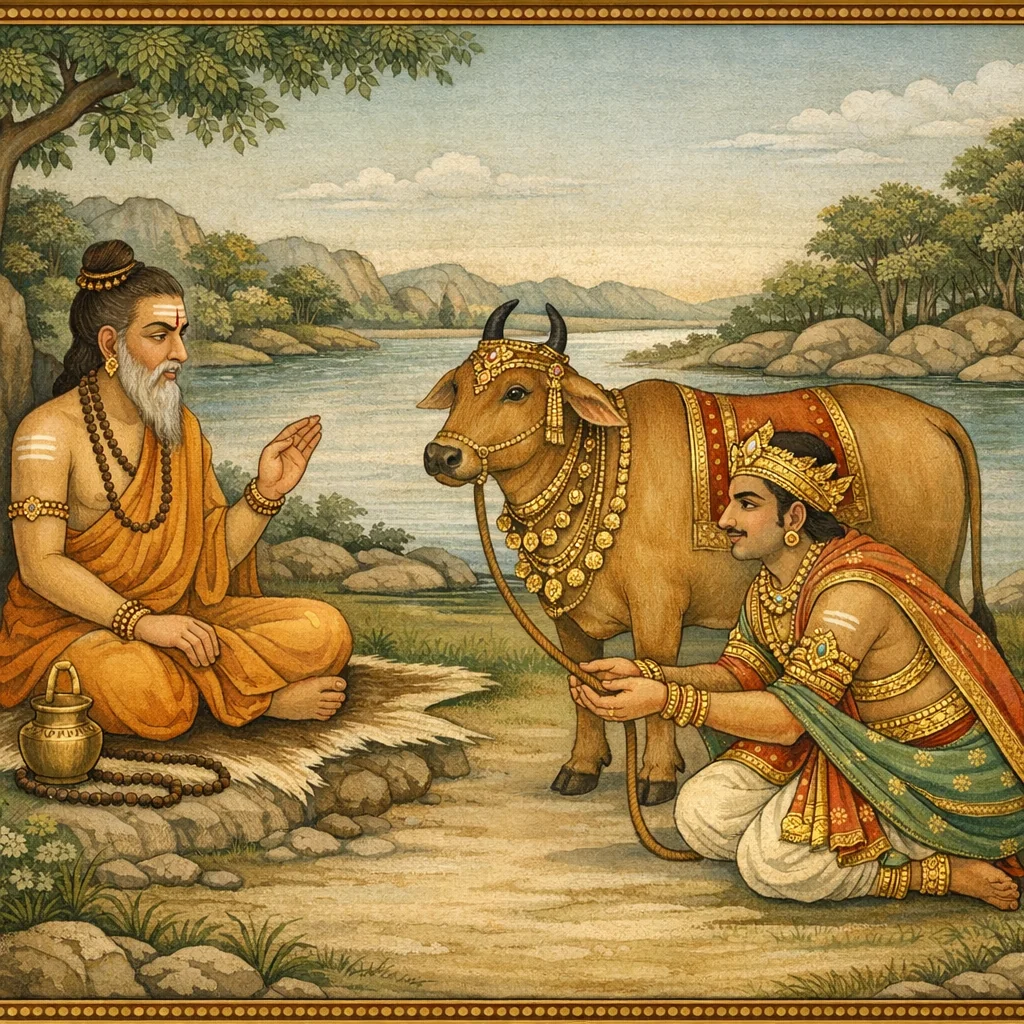
Mārkaṇḍeya instructs a ruler to go to the excellent Kahlodī-tīrtha on the northern bank of the Revā (Narmadā), praised as a universally sin-destroying holy ford. It is said to have been established by ancient sages for the welfare of all beings and exalted by ascetic power in connection with the Narmadā’s mighty waters. The discourse then highlights Kapilā-tīrtha and enjoins Kapilā-dāna: the gift of a kapilā cow, especially a recently calved, auspicious cow, offered with fasting and disciplined self-control—above all, conquest of anger. A hierarchy of gifts is presented, declaring kapilā-dāna superior to donations of land, wealth, grains, elephants, horses, and gold. In the phalaśruti, donation at this tīrtha is said to destroy sins of speech, mind, and body accumulated over seven births. The donor attains Viṣṇu’s realm, praised by apsarases, enjoys a heavenly duration proportionate to the cow’s hairs, and later returns to human birth in a prosperous lineage endowed with Vedic learning, śāstra-competence, health, and long life. The chapter closes by reaffirming Kahlodī-tīrtha’s unsurpassed efficacy for release from sins.
Shlokas
Verse 1
श्रीमार्कण्डेय उवाच । ततो गच्छेत्तु राजेन्द्र कह्लोडीतीर्थमुत्तमम् । रेवायाश्चोत्तरे कूले सर्वपापविनाशनम्
Śrī Mārkaṇḍeya said: “Then, O king, one should go to the excellent Kahloḍī Tīrtha, on the northern bank of the Revā (Narmadā), which destroys all sins.”
Verse 2
हितार्थं सर्वभूतानामृषिभिः स्थापितं पुरा । तपसा तु समुद्धृत्य नर्मदायां महाम्भसि
For the welfare of all beings, the sages (ṛṣis) established it long ago; and by austerity (tapas) they raised it up and set it in the great waters of the Narmadā.
Verse 3
स्नात्वा तु कपिलातीर्थे कपिलां यः प्रयच्छति । श्रुत्वा चाख्यानकं दिव्यं ब्राह्मणाञ्छृणु यत्फलम्
He who bathes at Kapilātīrtha and gives a kapilā—a tawny cow—and also listens to this divine sacred account: O brāhmaṇas, hear what fruit (merit) arises from it.
Verse 4
सर्वेषामेव दानानां कपिलादानमुत्तमम् । ब्राह्मणान्वेषितं पूर्वमृषिदेवसमागमे
Among all gifts (dāna), kapilā-dāna—the gift of a tawny cow—is supreme. In former times it was sought out and affirmed by the brāhmaṇas at an assembly of sages (ṛṣis) and gods (devas).
Verse 5
सद्यः प्रसूतां कपिलां शोभनां यः प्रयच्छति । सोपवासो जितक्रोधस्तस्य पुण्यफलं शृणु
He who donates a beautiful kapilā cow, freshly calved—while fasting and having conquered anger—hear the meritorious fruit that is his.
Verse 6
ससमुद्रगुहा तेन सशैलवनकानना । दत्ता चैव महाबाहो पृथिवी नात्र संशयः
By him, O mighty-armed one, the earth—together with oceans and caves, with mountains, forests, and groves—has indeed been given; of this there is no doubt.
Verse 7
वाचिकं मानसं पापं कर्मणा यत्पुरा कृतम् । नश्यते कपिलां दत्त्वा सप्तजन्मार्जितं नृप
Whatever sin was formerly committed by deed—whether of speech or of mind—perishes by giving a kapilā, even that accumulated over seven births, O king.
Verse 8
भूमिदानं धनं धान्यं हस्त्यश्वकनकादिकम् । कपिलादानस्यैकस्य कलां नार्हन्ति षोडशीम्
Gifting land, wealth, grain, elephants, horses, gold, and the like—none of these equals even a sixteenth part of the merit of a single kapilā-dāna.
Verse 9
तत्र तीर्थे नरः स्नात्वा कपिलां यः प्रयच्छति । मृतो विष्णुपुरं याति गीयमानोऽप्सरोगणैः
At that tīrtha, the man who bathes and donates a kapilā—when he dies, he goes to Viṣṇu’s abode, praised in song by hosts of apsarases.
Verse 10
यावन्ति तस्या रोमाणि सवत्सायास्तु भारत । तावद्वर्षसहस्राणि स स्वर्गे क्रीडते चिरम्
O Bhārata, as many hairs as that cow has—together with her calf—so many thousands of years he sports in heaven for a long time.
Verse 11
ततोऽवकीर्णकालेन त्विह मानुष्यतां गतः । धनधान्यसमोपेतो जायते विपुले कुले
Then, when that allotted time is spent, he returns here to human birth; endowed with wealth and grain, he is born into a great and prosperous family.
Verse 12
वेदविद्या व्रतस्नातः सर्वशास्त्रविशारदः । व्याधिशोकविनिर्मुक्तो जीवेच्च शरदां शतम्
Having bathed with the observances enjoined by Vedic knowledge, becoming well-versed in all śāstras, and freed from disease and sorrow, one lives for a hundred autumns.
Verse 13
एतत्ते सर्वमाख्यातं कल्होडीतीर्थमुत्तमम् । यत्कृत्वा सर्वपापेभ्यो मुच्यते नात्र संशयः
Thus, everything has been explained to you regarding the supreme Kalhoḍī sacred ford; by performing its rites and visiting it, one is released from all sins—of this there is no doubt.
Verse 119
। अध्याय
“Adhyāya” — a “Chapter” marker, serving as a colophon or section heading/end.